A Relational View of Faith and Science
For Ed Rosado, relationships are vital to the work of faith and science. Through relationship building, the church can help diverse communities flourish.

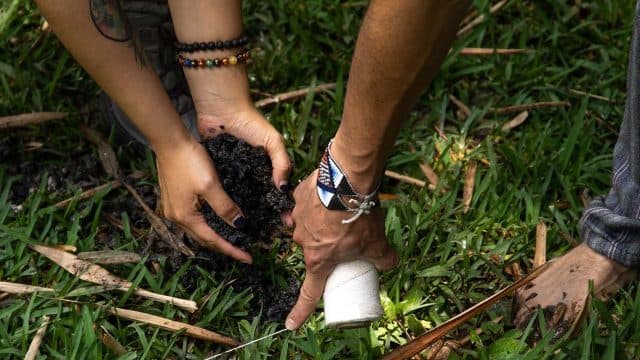
Image used under license from Shutterstock.com
Although I started ministry as a pastor, I currently work at the intersection of faith and science. I come from the Wesleyan tradition where ministry is relational at its core. John Wesley once wrote: “Find out what people need, and then tend to their needs.” This is the heart behind what I do.
I have had the privilege of serving diverse communities of faith, and have learned the importance of building strong relationships. In Proverbs 27:17, the biblical writer says that “iron sharpens iron.” For me, this means that our relationships with others make us better. But how do we build relationships in the world of faith and science? One way we can do this is by bringing people together and listening. We must listen to others in order to learn what issues are impacting and affecting them and their communities. Not every community faces the same challenges. What may be a challenge for one community may not be for another. Sadly, it is the most vulnerable communities and marginalized populations that have the most to lose.
Science is a very tangible vehicle to community improvement and transformation. Especially for those living on the margins in our communities, scientific advancements have the greatest potential to impact them. However, in my work, I’ve seen that those who could benefit most from science remain underrepresented in STEM fields, and churches don’t seem to value STEM as a Christian vocation compared to other roles.
I believe that the Church is in a strategic missional position to help. By leveraging relationships between pastors and scientists, whole congregations and communities can be revitalized.
I’ve seen this first hand through my work with Science for the Church, where I serve as Engagement Coordinator. We have seen science-engaged congregations bear much fruit. Their congregations experience spiritual renewal and numerical growth, and their community relationships are strengthened. There’s much work to be done in our communities, but I wholeheartedly believe that the Church is equipped and certainly called to help.
I come from the Wesleyan tradition where ministry is relational at its core. John Wesley once wrote: “Find out what people need, and then tend to their needs.” This is the heart behind what I do.
Increasing Access and Equity in STEM
Some think that education is an even plane field. Everyone has access to the same resources and opportunities. But, nothing could be further from the truth. Families in urban and rural contexts face significant challenges accessing the American dream. Instead, they contend with complicated social dynamics. They struggle against systemic hurdles, reduced access, and equity in the educational process. Even where increased access to educational resources exists, there is no increased access to STEM careers.
Our social scaffolding has created a context of exclusion. So, disenfranchisement, and marginalization are very real for ethnic and racial minorities. These dynamics often result in the underrepresentation of Black and Hispanic individuals in STEM. The Pew Research Center affirms that minorities represent about 8 percent of the workforce. Even with increased resources, minority students remain underrepresented in college attainment. The data is troubling and has profound consequences for minority communities.
Through my work with Science for the Church, I’ve had the priveldge of serving diverse communities and working with insitutions like Howard University School of Divinity and the Hispanic Theological Initiative at Princeton Seminary. These relationships have shown us that often marginalized communities have an inadequate understanding of the value of a STEM education. When life revolves around basic needs, thinking about college and science is for others.
Through mutual respect and dialogue, we can increase access and equity. We can create spaces where diverse communities can regain agency and reach their full potential. In my experience, by helping pastors, educators, students, and other interested stakeholders see STEM as a door to equity and increased agency, we can open a new pathway to community transformation, robust and vital communities of faith, and a significant reduction in the perceived tension between science and religion.

Image used under license from Shutterstock.com
In my experience, by helping pastors, educators, students, and other interested stakeholders see STEM as a door to equity and increased agency, we can open a new pathway to community transformation, robust and vital communities of faith, and a significant reduction in the perceived tension between science and religion.
STEM as a Christian Vocation
One of the most compelling aspects of my work is observing how new scientific advancements affect people living on the margins. If you are like me, you enjoy same-day delivery, scan-and-go, and self-checkout options. Yet, implementing these technologies can affect workers and displace them from the workforce. Look around, and you will see how businesses favor these options. You will see how industry giants leap to AI-dependent technologies. But you will also see how tasks once available to low-skilled workers vanish. As industries increase their dependence on these, more families will suffer.
History underscores the vital role played by Black scientists and STEM professionals. Yet, a lack of diversity and opportunities continues plaguing the field. Present needs are the driving force behind diverse communities. This causes tunnel vision, preventing them from seeking long-term solutions to present problems. This is why pastors can play a vital role in harnessing their influence. By leveraging their influence, they can empower congregations for lasting and sustainable opportunities.
Consider Dr. Dawn Shell, professor of microbiology and immunology at Philadelphia College of Osteopathic Medicine. She serves her community as a youth pastor and provides spiritual leadership. Her small Church provides scholarships to deserving STEM students. Or consider Rev. Luis Cortez. Under his guidance, organizations like Esperanza are working hard to make STEM education possible for minority students in Philadelphia’s Hunting Park neighborhood.
In my work I have learned that engaging diverse voices creates opportunities for a brighter future. This type of engagement, however, must focus on promoting equity. This means racial and theological diversity. Also, it presupposes a willingness to listen to the needs of diverse communities. Moreover, diversity and inclusion means inviting everyone to the table. Not as a way to push an agenda, but to listen and learn together—to discern solutions and create spaces where people and communities can flourish. Pastors, STEM professionals, and others must have the opportunity to share their dreams. This helps in understanding how science and faith can work together. Leveraging diversity helps improve lives by presenting STEM as a Christian vocation.
…diversity and inclusion means inviting everyone to the table. Not as a way to push an agenda, but to listen and learn together—to discern solutions and create spaces where people and communities can flourish.
Tending to the Needs of Others
Relationships are vital to the work of science and faith. We cannot do this important work alone or in isolation. The Church must reach beyond its own walls and get its hands dirty and feet wet so to speak. We must boldly follow Christ’s example of servant leadership, which John Wesley so beautifully encapsulated in the words: “Find out what people need, and then tend to their needs.”
In the Gospels, we see countless examples of Christ recognizing the needs of others, and responding. He healed those who were sick, fed thousands, and embraced social outcasts. We too must do the same. Let’s build relationships that matter, that make a difference so that we can see whole communities transformed and be transformed as well.
About the author

Ed Rosado
Related resources
If you enjoyed this article, we recommend you check out the following resources:

Podcast Episode

Podcast Episode
Podcast Episode