Are Humans Just Animals? Scripture, Science, and Identity
Are we "just" animals? How bringing theology and biology together can help us understand where we belong and what makes us unique.
Image used under license from Shutterstock.com
When I was teaching at a Christian college, I once made a comment in a general studies class about “humans and other animals.” A very earnest young woman raised her hand, clearly concerned with what I said.
“Professor Stump,” she said, “I have a real problem with saying ‘humans and other animals.’ Do you think humans are animals?”
I answered perhaps a bit too quickly, “Well, I don’t think we’re plants.”
Obviously her concern was not taxonomy; it was dignity. She was asking whether Christians should see humans as just animals—no different, no special calling, no image of God. That fear is understandable. But it’s also unnecessary.
I should have answered: Yes, humans are animals. But no, we are not just animals. Those two statements are not opposites; they describe different things. They offer different perspectives.
Let’s unpack this a bit.
How Taxonomy Classifies Humans
To understand the scientific perspective, let’s start with taxonomy.
You might remember Carl Linnaeus’s system of classifying living things from biology class. He set it up long before Darwin proposed evolution. It was based on obvious similarities between organisms: what they look like, how their bodies work, how they reproduce.
While the system has evolved in light of scientific advances over the past nearly three centuries, the general structure Linnaeus put in place still serves us well.
Here’s how humans are classified, along with the criteria for including us there:
Kingdom: Animalia
Animals require a source of food, and most can move at least part of their lives. That’s us. We are not plants (which make food from sunlight) or fungi (which absorb nutrients in other ways). We’re animals because of how our bodies are built and how we get energy.
Phylum: Chordata
Chordates are vertebrates, rather than invertebrates. That is, we have a backbone. This lands us among the chordates—think fish, amphibians, reptiles, birds, and mammals.
Class: Mammalia
Mammals have hair, produce milk from mammary glands, and keep a steady internal body temperature. Humans do all three. That places us squarely in the mammal class, along with everything from mice to whales.
Order: Primates
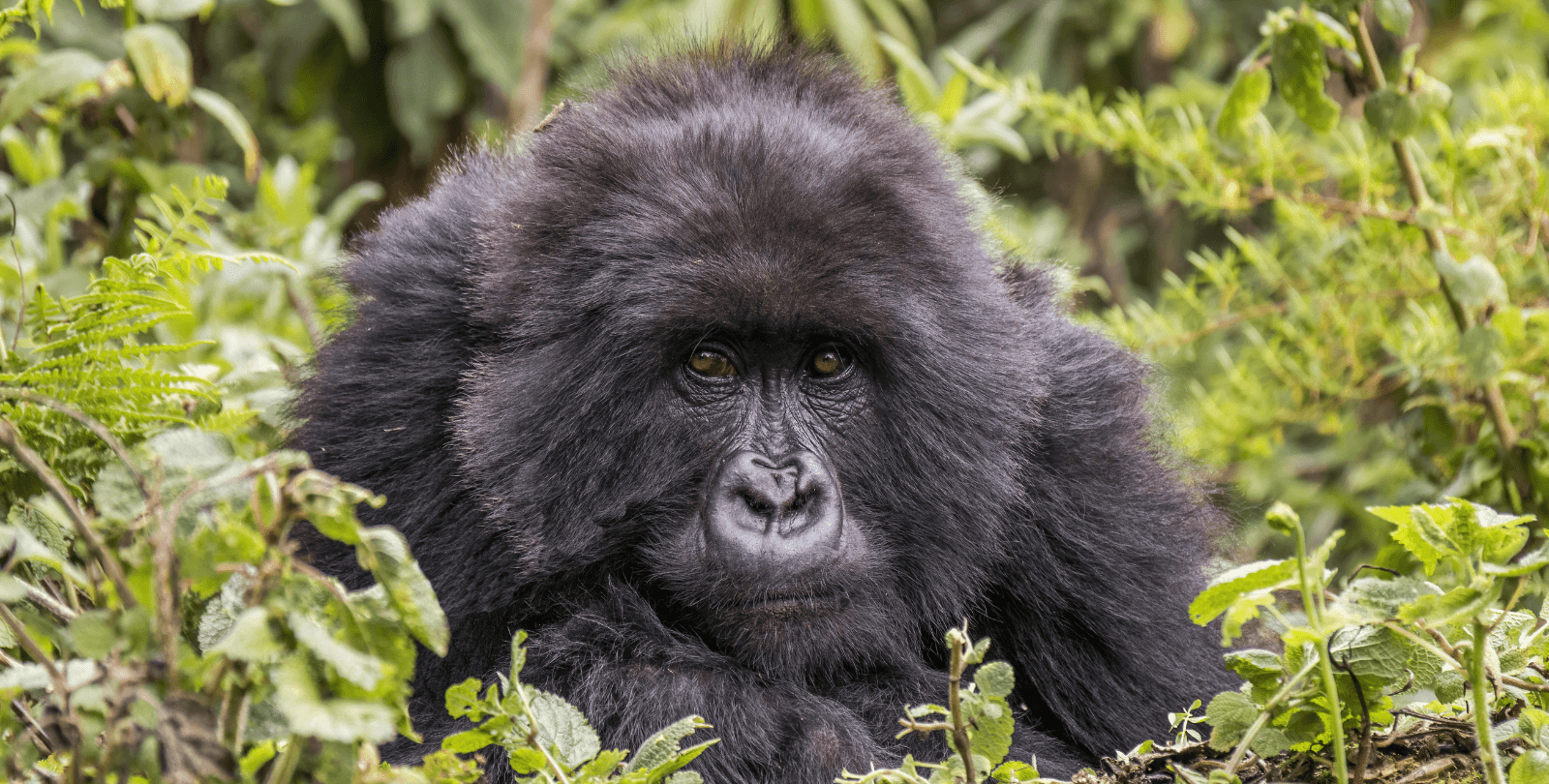
Primates typically have grasping hands with opposable thumbs, forward-facing eyes for depth perception, and bigger brains for their body size. They also rely on vision and social learning. That describes us well, which is why we’re in the primate order with lemurs, monkeys, and apes.
Charles J. Sharp, CC BY-SA 4.0 <https://creativecommons.org/licenses/by-sa/4.0>, via Wikimedia Commons
Family: Hominidae (the great apes)
Great apes are larger-bodied primates without tails, with flexible shoulders and complex social lives. Genetic studies also show very high DNA similarity among the great apes. Humans, chimpanzees, gorillas, and orangutans all belong here.
Genus: Homo
The Homo genus includes species with larger brains, more advanced tool use, long childhoods for learning, and anatomy suited for long-distance upright walking. That’s us and our close fossil relatives (like Homo erectus and Homo neanderthalensis).
Species: Sapiens
We’re the only species left in the genus Homo, but we’re distinguished from the skeletal remains of other Homo species by our high and more rounded skulls, distinct chin, reduced brow ridge, and lighter skeleton.
No matter what you think about the science of evolution, this kind of classification rests on shared traits we can all observe. It should be uncontroversial.
When I hear pushback about this, it isn’t about us being vertebrates or mammals. It’s about being animals or primates.
Those words feel loaded. They sound like they threaten human dignity.
Biological Continuity does not Threaten Human Dignity
Christians confess that God created a real, coherent world. We should therefore expect to find continuity—shared chemistry, shared body plans, shared features across many creatures.
Our bones, our genes, and even the way we develop in the womb show patterns we share with other animals. Far from being a rival story to creation, these similarities describe how God’s world is knit together.
The Bible affirms our creatureliness. In Scripture, humans are made from “the dust of the ground,” (Genesis 2:7) like other creatures. We breathe, eat, sleep, grow, and die. We nurse our young. We learn from others. We bond in families and groups. We have instincts and emotions. In all of this, we are part of the animal world God called “very good” (Genesis 1:31).

Image used under license from Shutterstock.com
Seeing that continuity should move us toward gratitude, not fear.
It means we belong to this creation. Our life depends on the wider web of life. We are not floating souls with disposable bodies. We are embodied creatures, and that is good news.
What Makes Humans Different from Other Animals?
At the same time, humans are radically unlike chimpanzees or any other animal. We do things that are odd and wonderful in relation to the rest of the animal kingdom.
We use symbolic language to think and plan far into the future. We live inside stories, laws, and promises. We create art and music that outlast us. We develop science and technology to understand and reshape our world. We form moral communities that hold each other accountable. We care for strangers and give resources to people we will never meet. We reflect on our own motives and choose to change.
Other animals show important precursors of many of these behaviors—communication, cooperation, even problem-solving. But in humans these capacities scale up and combine in a way that becomes something new.

Uniquely Unique: A Language of God Podcast Series
The quest of this Language of God podcast miniseries? To try to come to a better understanding of what it means to be human, to bear the image of God.
Differences in degree can, at some point, become a real difference in kind. That’s why culture, science, and worship appear in human history in ways we don’t see elsewhere.
God often works like this: through what already exists, raised into new purposes.
This is also how I think about the image of God—not as a single gene or a magic spark, but as a calling to reflect God’s character in the world, to exercise wise and self-giving rule, and to receive and return love.
Our biology prepared us for this—hands free for making, mouths and brains shaped for language, long childhoods for learning. In this way, evolutionary continuity actually equips us to live out our calling.
So, yes, we are animals. And, yes, we are more than “just” animals.
Holding Our Continuity and Uniqueness Together
Considering both of these perspectives leads to greater truth and a healthier posture.
Humility. We are kin with other creatures. We rely on soil, water, air, and countless living systems. We are vulnerable to hunger, sickness, aging, and death. That should make us gentle with the world and with each other, with whom we share so much. It should push us toward care of all creation, not exploitation.
Preston Keres/USDA/FPAC, Public domain, via Wikimedia Commons
Responsibility. We have real agency. We can restrain our appetites. We can tell better stories and build fairer systems. We can repent and forgive. Other animals cooperate; humans can covenant. With our power comes duty—toward neighbors, toward the poor, and toward the Earth itself.
Psalm 8 holds the tension well: we are crowned with glory and honor, yet placed within the works of God’s hands alongside “beasts of the field, birds of the air, and fish of the sea” (Psalm 8:7-8).
Crowned creatures—not little gods, not mere animals.
Conclusion: A Better Way to Answer the Question
I don’t know what happened to that earnest girl in my classroom all those years ago.
Also read:
- Human Specialness: Reconciling the Image of God in Scientific Evolution
- Scientific Testimonies to Human Uniqueness
- Why Should Christians Care for Creation?
I wish I could go back in time and give a less cheeky answer than “we’re not plants!” That doesn’t pay sufficient attention to her concerns.
If I could follow up now, I’d want to emphasize how our continuity with animals does not take away from the uniqueness of our calling as God’s image bearers, saying something like:
Yes, humans are animals—creatures in God’s good world. That truth keeps us grounded and grateful. But we are not just animals. We are called to bear God’s image: to love, to create, to seek justice, to worship. The capacities we’ve inherited from other animals have developed in us into something more.
That answer honors what science shows about our place in life’s family tree and what Scripture says about our purpose.
Editor’s Note: Jim Stump further explores humanity’s place in creation in his book, The Sacred Chain. You can preview the book here.
About the author

Jim Stump
Related resources
If you enjoyed this article, we recommend you check out the following resources:
Podcast Episode
Common Question