Joining the Chorus of Prophetic Voices on Climate Change
Dianne Glave shares her environmental story, which is shaped by her identity as an African-American, woman and Christian in the hopes that it will inspire others.

Image used under license from Shutterstock.com
My name is Dianne Glave, and I am an environmental scholar, African American, Woman, and Christian. At first glance, the order in which I’ve listed these parts of my identity may give the impression that I am a scholar first and Christian last. Or that my African American identity precedes my identity as a woman. But that isn’t necessarily true. I have come to view these aspects of my identity less as an ordered list of fragmented parts, and more as an interconnected circle or web.
I’ve certainly experienced my share of tension among these various identities. I’ve felt like a wind-up academic doll highly valuing what an elite, educated and mostly white world valorizes through my scholarly work. I’ve had to balance my identity as a scholar and a Christian when it comes to my environmental advocacy. As an African American woman my heart yearns to lift up those in the Black diaspora as a whole. Being a scholar and African American are deeply personal, academic interests, and commitments—I want to more than survive in this space; I want to thrive as an African American woman in a white world. Thankfully, these days these diverse aspects of my identity more often than not help ground me in my work as an environmentalist.
I have loved nature since I was a child. I remember traveling to Jamaica to spend time with my grandparents and other relatives, staying on a farm and playing by the ocean. I also remember my parents often taking my brother and I to a cabin in the woods in upstate New York. I had complete freedom roaming the woods, crawling into caves, fishing on the pier, and rowing on the lake. Much of this initial child-like love of nature naturally seemed to lead me to my current profession and vocational call.
I hope that by sharing my own environmental story, which has been shaped by my experiences with nature and my identity as a scholar, African American, Woman, and Christian, I can help others as they navigate their own.
I have a Ph.D. in United States social history with an emphasis on African American and environmental history. I also have an M.Div in Faith, Health and Science which has allowed me to expand my knowledge on the environment and religion. Part of my passion is advocacy for impoverished and marginalized people affected by environmental disparities, including access to recreational spaces and healthcare.
I also care deeply about changing the narrative that African-Americans are anti-environmentalists and about getting people of African descent of all faiths, including the Black church, to join together, fall in love with the planet and meet the needs of those in our communities that need it the most.
I hope that by sharing my own environmental story, which has been shaped by my experiences with nature and my identity as a scholar, African American, Woman, and Christian, I can help others as they navigate their own.
The Beginning of My Journey
The 1990s was the beginning of my environmental story. I was a graduate student at the time growing in my knowledge about the environment as I studied the humanities and social sciences. This was a different time, a happier time—I know this sounds trite.
Al Gore righteously shook his prophetic fist at us during his talks and interviews based on his 1992 best selling book “Earth in the Balance: Ecology and the Human Spirit.” It was one of the first environmental books I’d read. Still, I felt safe about the planet because global environmental disasters felt mostly theoretical, and seemed quite distant. My naïveté left me stuck. My guess is many at the time felt the same. Even with Mr. Gore prophesying, I clung to a hazy, gentle vision of our planet. My idyllic short sighted rendering of earth soothed me. Many of us soothed ourselves with bucolic tableaus and shining cities. We thought we had time.
During the early aughts, I wrote my book “Rooted in the Earth: Reclaiming the African American Environmental Heritage.” The book was largely based on my graduate thesis, which easily may not have happened if I would’ve listened to a graduate studies advisor that discouraged me—writing a broad thesis on African-American environmental history was deemed too ambitious. Nonetheless, I pursued my thesis, and I wrote my book.
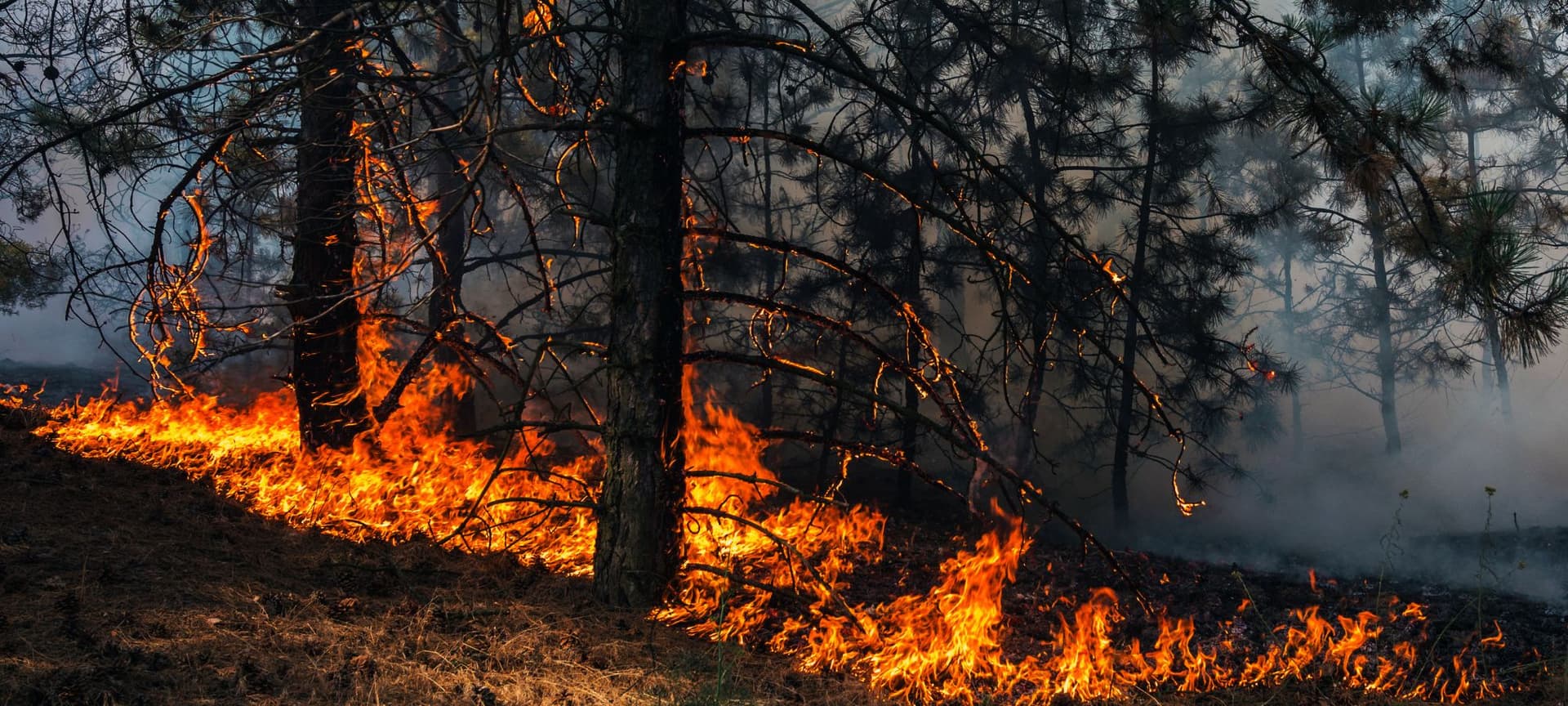
Image used under license from Shutterstock.com
During COVID, we took a collective breath and reversed some of the damage we’d done: pollution decreased and greenhouse emissions diminished…After that brief time of a healthier planet, the urgency of climate change emotionally and literally bombarded us in ways we could no longer ignore, in ways I could no longer ignore. It consumed us; it consumed me.
In retrospect, my book was overly positive and hopeful. The cover featured a brown hand hovering above grass invoking a gentle connection to nature. I had the hope typical of a bubbly happy well-adjusted teenager. Though by this point in my life, I had experienced my own share of oppression, often feeling like an outsider as an African American woman in life and nature, my perspective about the environment remained somehow hopeful.
I continued to avert my gaze from Al Gore—his vision of a darker reality in which we now live with climate change—to a romanticized ancient perspective of nature. I should have paid closer attention after Hurricane Katrina in 2005 and Hurricane Sandy in 2012. My excuse was that I was paralyzed by 911 as a native New Yorker and evacuated Katrina from Louisianan before the storm hit. I was a mess. And still, I did not take Al Gore’s prophecy about climate change seriously.
My story is entwined with the COVID pandemic. I found myself leaning more deeply into my spirituality during this environmental and medical crisis. The beginning of COVID in the US felt like society was being torn asunder. The impact was a worldwide pandemic, which felt like a plague of biblical proportions.
During COVID, we took a collective breath and reversed some of the damage we’d done: pollution decreased and greenhouse emissions diminished. This restored my hope, but that hope didn’t last long. After that brief time of a healthier planet, the urgency of climate change emotionally and literally bombarded us in ways we could no longer ignore, in ways I could no longer ignore. It consumed us; it consumed me.
Our Shared Story
Today, in 2023, we live on a planet we have abused; I live on a planet I have abused. We are headed toward a near extinction of humanity because of climate change: hurricanes have drowned black and brown people in basement apartments in Queens, NY; war in Ukraine and the Middle East is taking lives, destroying built cities and keeping clean water out of the reach of civilians; and we seem to have forgotten the higher morbidity of COVID affecting millions of people of color because racism and poverty.
What does this have to do with my environmental story? I struggle with the implications because I am a native New Yorker, but also a global citizen. These terrifying global environmental stories are not just someone else’s story, they are a part of my story too. They are our stories. My once idyllic pre-2020 vision of the environment and life on our planet has been crushed, and in its place I have a more sobering view of our modern environmental crises. My heart is broken, but when hope is hard to find, I pray for the Holy Spirit to move as I add my voice to the growing chorus urging prophetic action in response to climate change.
My heart is broken, but when hope is hard to find, I pray for the Holy Spirit to move as I add my voice to the growing chorus urging prophetic action in response to climate change.
About the author
Dianne Glave
Related resources
If you enjoyed this article, we recommend you check out the following resources:
Podcast Episode
Jason Fileta | Faith, Justice, Climate
Common Question