Learning to “Look Up” with Courtney Ellis
Pastor Courtney Ellis started birding during the pandemic. Her life was forever changed the moment she started looking up. She found hope, amidst grief.
Made in Canva

In this interview, we talk with Pastor Courtney Ellis about her new book “Looking Up.” “Looking Up” is a meditation on birding as a practice of hope amidst grief. Weaving together stories from her own life with reflections on birds of many kinds, Courtney Ellis invites us to open our eyes to the goodness of God both in the natural world and in our own lives. By “looking up” to the birds, she found the beauty and wonder of these creatures calling her out of her darkness into the light and hope of God’s promises. She hopes to inspire others to do the same.
Ciara: For you, birding wasn’t something you always did. You got into it after you encountered your “spark bird.” Your life was forever changed by this encounter. What’s a “spark bird,” and how did God use it to change your life?
Courtney: Most birders can trace their fascination with birds back to a single encounter with a particular species. A “spark bird” is the first one that grabs a person’s attention in a deep and delightful way. Whether or not that becomes their favorite bird in the long term, it tends to hold a special place in their heart.
My spark bird was a Black Phoebe, a solitary flycatcher that likes to perch in parks and backyards. It’s a very cute bird with a black head and back and tail and a white belly, kind of like it’s wearing a tiny bird tuxedo. Just a couple of days before the pandemic began a friend visited our home, looked out our back window, and said, “Hey, you have a phoebe!” I thought, “We do? What’s that?” I’d never even heard of a phoebe, yet we’d had one in our backyard for who knows how long. They’d been around me all this time. I began wondering, “What else haven’t I noticed?”
That question drove me deeper into the world of birds and birding, but also deeper into spiritual practices, contemplative prayer, and a study of the natural world. Each of these threads is reflected upon in “Looking Up.” But it all began with birding. More than any other spiritual practice, birding teaches me how to pray with attention, hope, and expectation. It tunes my senses, quiets my frantic thoughts, and centers me in the present moment which is, after all, the only time we meet God.
More than any other spiritual practice, birding teaches me how to pray with attention, hope, and expectation.
Ciara: In your book, you beautifully weave your personal story with encounters and reflections on specific birds. For example, in your chapter on death, you bring up vultures, in your chapter on peace, doves. Can you pick one example and unpack the symbolism and metaphor that a specific bird holds for you? Can those of us who are not (yet!) birders learn something too?
Courtney: One of my favorite chapters was on beauty and corvids. The Corvid family includes crows, jackdaws, ravens, jays, and nutcrackers. These birds are incredibly smart. One study showed that the American Crow is as smart as the average fourth grader! They also have a bit of a reputation as bully birds. Most of us have seen a Blue Jay drive a smaller bird away from a nest, or a crow steal a kid’s lunch, or a raven pestering a hawk. But here’s the thing: corvids are really, really good at being corvids. They are uniquely intelligent, and they use those smarts to survive in habitats that often squeeze out more fragile species.
As I’ve approached midlife, I’ve had to make peace with what I am and what I am not, realizing that God uniquely creates and gifts each one of us. I’m very no-nonsense. I am incredibly driven. I tend to have a lot of strong opinions. And these were always things I tried to mute about myself or play down. I often felt ashamed of them. But as I studied corvids I began to see that their brashness was part of their strength. God has created them with a certain hardiness to use for their good and God’s glory. I’ve learned by watching the corvids that I can (and should!) always seek to keep growing in gentleness and kindness, but also that my inner drive and desire for clarity are special strengths that are beautiful in their own way.
For those less interested in birds, there are so many beautiful lessons about major themes woven into the fabric of creation. If birds aren’t your thing, perhaps it’s the spring bloom or a burgeoning thunderstorm or the way canyons are formed over millennia that piques your interest. Keep your eyes open. Keep looking up.
Ciara: You write that “it is difficult to get into birding without becoming an armchair ecologist” because birding opens our eyes to more than just birds. The more we become in tune with creation, the more aware we also become of how our sin and brokenness impact it. You describe this as a pull between ‘sorrow and transcendence.’ Can you elaborate on this inner tug-of-war? How do you find respite from this tension or remain hopeful?
Courtney: Oh, this was so difficult for me at first. I got into birding as a respite from all the heaviness of the pandemic, but it was only a few weeks in that I began to discover how many birds are threatened or endangered and how humans have played a part in the destruction of so much habitat and the pollution of so much ocean space. Birding became this dance from delight to grief and then back again.
We have a choice when we feel this inner turmoil, don’t we? We can pull back entirely, determining that the cost of love is too steep. Or we can press in, learn more, and seek to live with integrity in the face of creation’s groaning. The weight of all that’s gone wrong can crush us if we let it, but I think God’s invitation is to feel the ache while living open to the joy and beauty. We must do what we can—recycle, bird-proof our windows, keep our cats indoors, use less plastic, etc.—but at the end of the day we have to leave the work of ultimate restoration in the hands of the only one who is able to redeem the world.
Our lives are lived in these liminal spaces as an already-and-not-yet people…We are called to live into both until Christ returns and makes all things whole again.
I don’t often feel a respite from the tension, but I think that is a good thing. Our lives are lived in these liminal spaces as an already-and-not-yet people. The joy of Easter is born out of the darkness and pain of Good Friday. We are called to live into both until Christ returns and makes all things whole again.
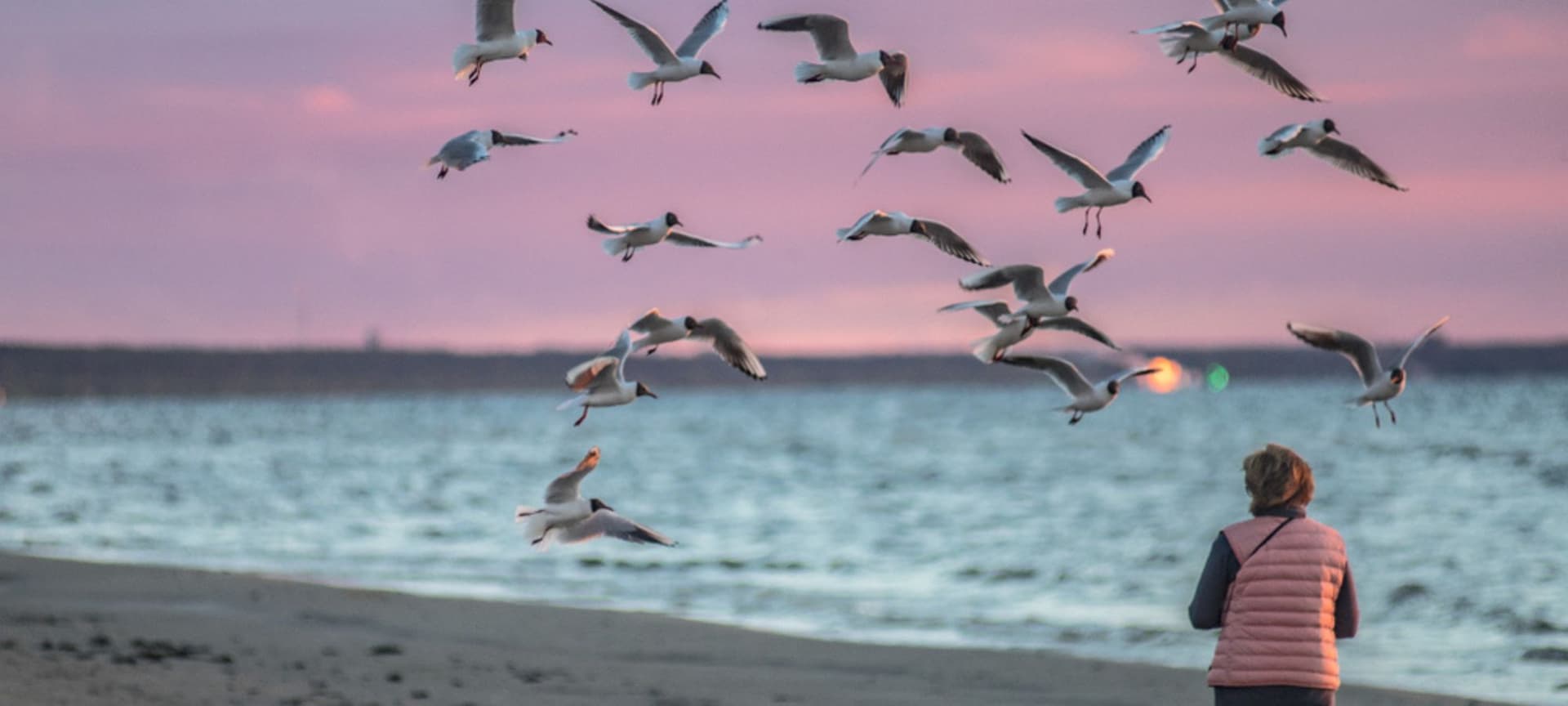
Image used under license from Shutterstock.com
Birding reminds me, day after day, that I am not alone; someone is always there…God’s goodness is woven through the fabric of the cosmos and because of Jesus we are never, ever alone. Even in the depths of our sorrow. Even in our darkest hours.
Ciara: You share BioLogos’ view that the conflict narrative between faith and science is a false dichotomy. You write that creation is a window into the heart of God and that exploring, enjoying, and studying God’s creation is an act of worship. Did you always feel this way? How can we help others find this harmony too?
Courtney: I was raised in a tradition that was fairly literalist about the Bible. They taught 7-Day Creationism and were fairly anti-evolution, things like that. I picked up not exactly a fear of science, but definitely what I’d call an unhealthy skepticism of it.
But as I grew in my faith and my understanding of the world, and as my mentors and faith-leaders were patient with me in my stridency, I realized I was in error in two ways: The first was in fearing ideas or believing the very ideas themselves posed threats to me. My second error was failing to practice a generous curiosity toward others and the world.
Refusing to be run by fear and practicing generous curiosity have changed my life.I don’t have to live in fear of ideas that may seem to contradict what I believe about Scripture or bombard people with my theology or opinions. The goodness of God is alluring enough on its own!
In terms of helping others find this harmony, I believe that joy, wonder, and beauty are often the quickest paths to worship. Rare is the person who can be argued into the kingdom, but nearly everyone is hungry for awe and happiness and loveliness. Sometimes a painting or a nestling or a symphony can preach so much more effectively than a sermon. And I say that as a pastor! Like anything else, science is a tool to help us understand and discover the world. It too can drive us farther into wonder and beauty when we are open to its lessons.
Sometimes a painting or a nestling or a symphony can preach so much more effectively than a sermon. And I say that as a pastor!
Ciara: In addition to being a birder, you are also a pastor and former hospice chaplain. Your heart for caring for those who are grieving and hurting really comes through in your book, especially as you take the reader on your own journey of grieving the loss of your grandfather. Can you speak a word of encouragement to those in our audience who are in the thick of grief right now, and also the pastors who are caring for them, perhaps even carrying their own grief?
Courtney: If you are in the thick of grief, be so kind to yourself. Experiencing grief is a little bit like being dropped in the middle of a foreign country. Everything becomes more difficult, confusing, and unfamiliar. Grief makes us tired; it changes our natural rhythms; it can stress our memory. But like moving to a new country, grief will not always feel so obscure. We will slowly learn its new rhythms. The pain will not always be quite so acute. Go slowly. Give yourself lots and lots of grace.
It is in grief that I’ve learned to take solace in Jesus as a man of sorrows. He is no stranger to the pain of loss, and he meets us in those deep places with such kindness. Birding reminds me, day after day, that I am not alone; someone is always there. As the old hymn says, “In the rustling grass I hear him pass. He speaks to me everywhere.” God’s goodness is woven through the fabric of the cosmos and because of Jesus we are never, ever alone. Even in the depths of our sorrow. Even in our darkest hours.
On my very hardest days, in the deepest throes of grief, God keeps sending me birds.
That’s what helps me keep looking up.
About the authors

Courtney Ellis

Ciara Reyes-Ton
Related resources
If you enjoyed this article, we recommend you check out the following resources: