Cicadas: Making a Joyful Noise?
Cicadas are emerging in 'biblical proportions' this year, singing the loudest song in the insect world. God delights in their life and song.
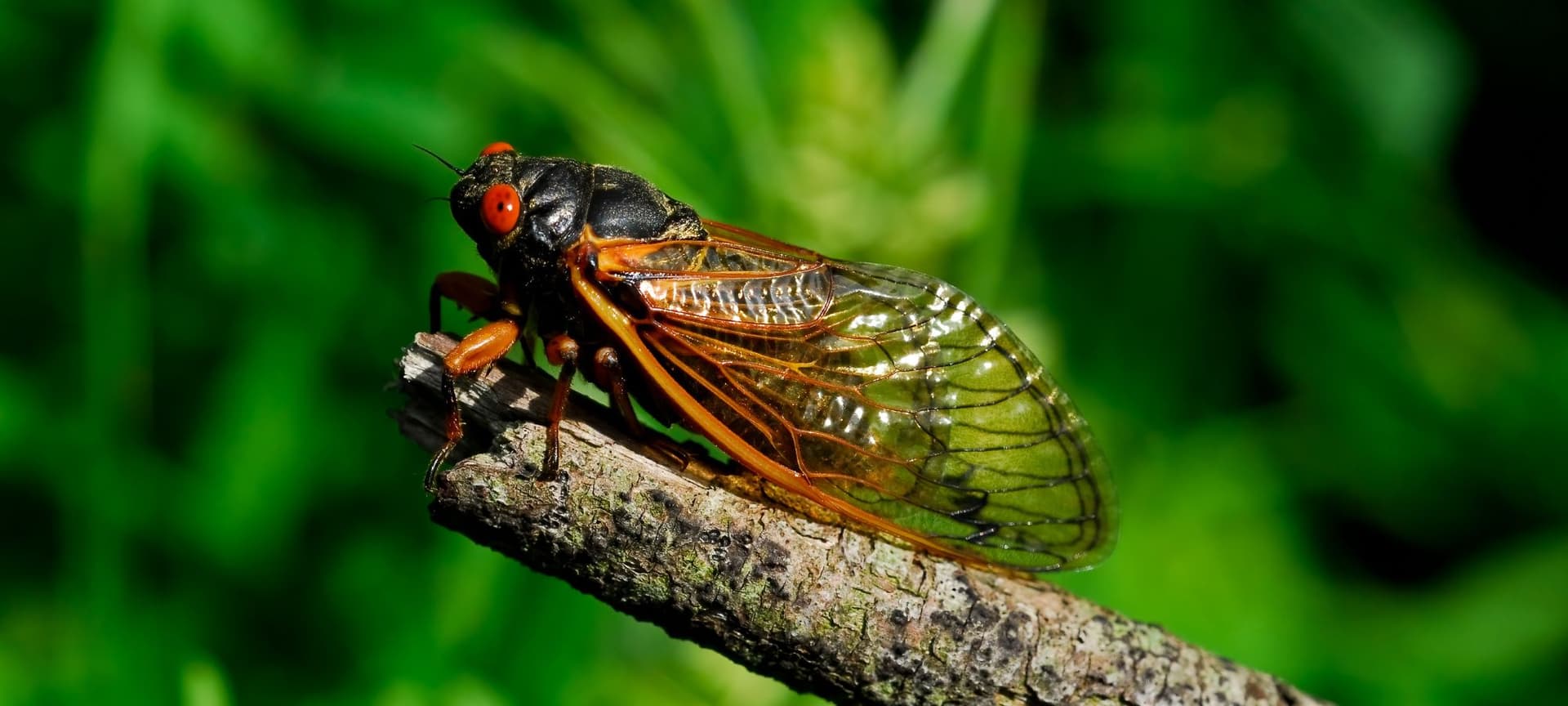
Image used under license from Shutterstock.com
Spring this year brings more than the usual fragrant blossoms, flowering trees, buzzing bees, and cooing doves. Along with these annual reminders of the changing seasons, this year includes millions and millions of singing cicadas in some regions of the United States. If you happen to live in a region where cicadas will emerge this spring, there is a good chance you have already noticed their discarded exoskeletons or other signs of their emergence. Over the next several weeks they will continue to come up out of their burrows, climb into the trees, and serenade us with their joyful noise.
As a scientist who studies insects, I am fascinated by cicadas and their unusual habits. But I have to confess that they don’t rank very high on my list of favorite insects. They aren’t as beautiful as butterflies, as interesting as beetles, or as useful as bees. In fact, even though I know cicadas are a natural part of God’s good creation, I think cicadas are a little creepy. The exoskeletons they leave behind when they molt look like aliens. They have beady eyes, and they are loud! In fact, they hold the record for being the loudest insect on the planet! As with any situation that puts me outside of my comfort I find it helpful to remember that “God has not given us a spirit of fear [of cicadas] …, but of power, love, and self-discipline” (2 Timothy 1:7).
Cicadas are not harmful to people or pets. They prefer to stay in wooded areas, and the few that do get into our homes are a nuisance rather than a hazard. Although the sounds cicadas make is more like screaming than a song, take comfort in knowing that it is only the males using their God-given gift of tymbals to woo a suitable mate in order to be fruitful and multiply. I hope that knowing a bit more about them will help you to appreciate these weird insects that God delights in just as he does all living things.
Although the sounds cicadas make is more like screaming than a song, take comfort in knowing that it is only the males using their God-given gift of tymbals to woo a suitable mate in order to be fruitful and multiply.
Spring Emergence
The cicadas that emerge this spring are not the everyday run-of-the-mill green cicadas that emerge near the end of summer every year. Cicadas that emerge in the spring are the Magicadas. The Magicicadas are black and orange periodical cicadas that are genetically programmed to come out en masse every 13 or 17 years. Most years bring the emergence of one brood of Magicicadas somewhere in the United States, so that isn’t newsworthy by itself. What makes this year different is the emergence of 2 broods of cicadas. This hasn’t happened since 1803. The Great Southern Brood of 13-year cicadas is already emerging, and the Northern Illinois brood of 17-year cicadas will start emerging soon.
In most ways, Magicicadas are very similar to all the other ~ 3000 species of cicadas found worldwide. All cicadas are insects that are classified as Hemiptera along with aphids, bed bugs, spittlebugs, planthoppers, water boatmen, giant water bugs, and other insects that also have piercing-sucking mouthparts. On the insect family tree Hemiptera are most closely related to thrips and lice. A zoomed out view of the family tree shows cicadas and their kin are positioned between cockroaches and beetles.
Lifecycle and Song
Cicadas spend the majority of their lives underground. As specified by their genetically programmed lifecycle, mature females deposit eggs on the trunks of trees. The nymphs that emerge, looking very much like miniature versions of their parents, migrate down the tree and burrow underground. Here, they will spend the next several years feeding on the fluids found in tree roots. Once the nymph stage is complete and the soil temperature warms to at least 64 °F, cicadas make their way back up to tree trunks and become mature adults. There is a good chance that you have seen an exoskeleton, or exuvium, left behind after a cicada’s final molt.
Soon after they emerge, male cicadas begin making their joyful noise while females listen and wait. Although some refer to the sound cicadas make as singing, the way they produce sound is more like playing a musical instrument. The loud sound cicadas make comes from a sound-producing organ called the tymbal. It is made from alternating flexible membranes and stiff exoskeleton. Expanding and contracting the tymbal produces sound waves that make up the loudest songs ever made by an insect. Some can be as loud as a chainsaw or jet engine!

Image used under license from Shutterstock.com
Although some refer to the sound cicadas make as singing, the way they produce sound is more like playing a musical instrument…Some can be as loud as a chainsaw or jet engine!
All cicadas are remarkable in their own way. What is exceptional about the 7 species that belong to the genus Magicicda is the synchronized emergence of the several million individuals that belong to a geographically defined brood. As a general rule, insect development is controlled by interactions between genetics and soil temperature. Warmer temperatures mean faster development. When an individual reaches a predetermined size, it becomes sexually mature and begins searching for one or more suitable mates. The availability of mates depends on the number of other individuals that matured about the same time. Any cicada that develops too much faster or slower than the rest of its cohort will have a very limited number of others to partner with.
The Magicadas get around this potential problem of mate availability using a strategy that likely evolved while large portions of the United States were covered by glaciers. The cold temperatures significantly slowed the rate of development for the population as a whole. And, rather than maturing as soon as they grew to the critical size, individuals started to wait until their neighbors were also ready to emerge. Not only did this strategy improve their chances of survival by significantly increasing the mating pool, but it also reduces the chance of being preyed on by birds, praying mantises, or cicada killer wasps. Eventually, the long development times and synchronous emergence became genetically hardwired through the processes known as natural selection.
In Wisdom He Has Made Them
Although scientists like Anna Botsford Comstock have been studying and writing about cicadas for over 100 years, many details about the biology and evolution of Magicicadas remain a mystery known only to God. Why, for example, do these cicadas, and only these cicadas, have such specific 13 or 17 year lifecycles? What are internal chemical processes that regulate these extended lifecycles? How do periodical cicadas know when the specified amount of time has passed? How do they know when their neighbors are ready to emerge? Do they have some kind of internal clock? Are the trees involved? What about the rest of the ecosystem? How does the mass emergence of cicadas affect the birds and insect-eating mammals? How will cicadas, and other insects, deal with climate change?
Thanks to the hard work of many scientists, some of these gaps in our knowledge of cicadas are beginning to be filled. But there are many more questions left to answer about the “hows” and “whys” of Creation. As a scientist who studies insect development, digging deep into the mysteries of the natural world is one way that I worship God. Every new detail discovered about the unusual biology of periodical cicadas, especially their weird developmental timing, their role in the environment, and perhaps even their joyful noise, increases my awe of the God of Creation. “O Lord, what a variety of [cicadas] you have made! In wisdom you have made them all.” Psalm 104: 24 (NLT).
Although scientists like Anna Botsford Comstock have been studying and writing about cicadas for over 100 years, many details about the biology and evolution of Magicicadas remain a mystery known only to God.
About the author

Julie Reynolds
Related Resources
Podcast Episode