Finding the Heart of COP29 | An Excerpt
In an excerpt from an article in the Reformed Journal, Colin describes his experience at COP29 and shares the stories from Christians around the world who are working toward climate solutions.
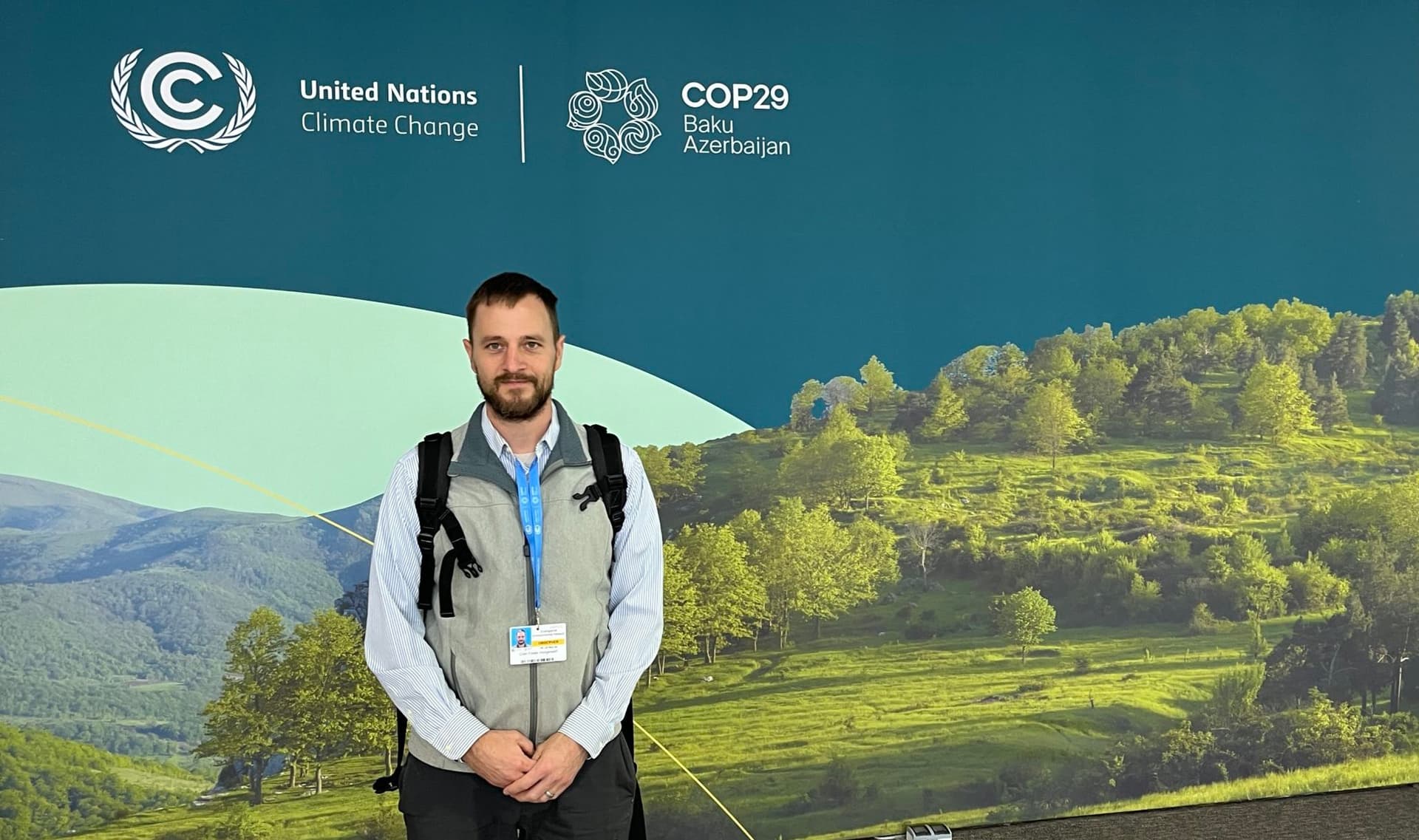
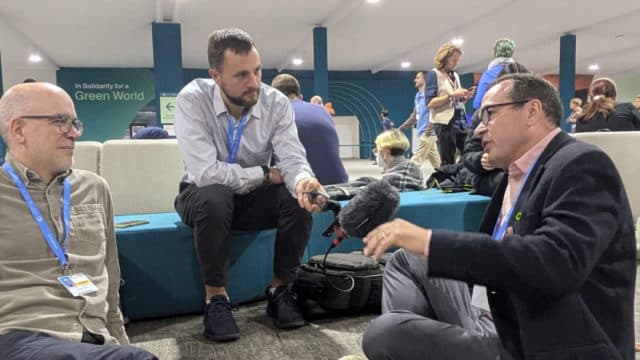
Colin at COP29. Photo by Jim Stump
When I awake at night to the least sound
In fear of what my life and my children’s lives may be
I go and lie down where the wood drake
rests in his beauty on the water, and the great heron feeds…
The following is an excerpt from an article published at The Reformed Journal on December 16th. Find link at bottom to read the full article.
For most of my adult life I have wrestled with what I can do in the face of a climate and environmental crisis that casts a dark shadow over my future and the future of my young children. I have always taken to heart Wendell Berry’s wisdom of dealing with despair by going to the places where I can rest in the peace of wild things. That has meant retreats to woods and water, learning to grow food from the soil outside my back door, and trying to learn from the wild things in this place where I come from. But I also know that the scale of the problem requires something bigger, action taken at a grand scale by governments, countries, and the world as a whole. So when the opportunity arose to attend COP29, the United Nations Climate Change conference in Baku, Azerbaijan, I was curious. Yet it also felt a bit out of character.
Baku is a city of 2.5 million people, halfway around the world from my home in Michigan. What would my knowledge of tree names in the Midwest bring to this global gathering of professional negotiators from 198 countries? What did I know about global politics, or the formalities of United Nations policy making? What’s more, this COP was being called “the finance COP,” another issue that doesn’t often make its way into the woods, and which I therefore know very little about. Would this experience leave me with relief or with greater despair?
The climate crisis has been called a wicked problem—that is, a complex problem that is hard to define and where solutions often contradict each other. The problem is so big and complicated that even individuals who are deeply concerned don’t feel like they have any part in a solution. Solutions need to happen at a grand scale, far beyond any individual action I can take. COP29 offered me a way to witness that high-level solution making and to see where individual actions might fit in.
I had the chance to attend COP29 in Baku with a group called the Christian Climate Observers Program (aptly abbreviated CCOP). CCOP partners with dozens of organizations who are accredited with the U.N., pools the available observer badges, and invites emerging leaders and climate activists from around the world to come to COP. The group shares lodging and begins each morning with conversations and devotions to help prepare for a day inside the Blue Zone, the U.N. managed zone behind security, where the negotiations happen.
It turns out Baku is not an easy place to get to. After traveling for 54 hours with little sleep, I arrived a few hours after midnight and found my way to the first night’s lodging. After a few hours of rest, a group of us made our way to the COP Conference grounds to get our observers’ badges. While much of the work at a COP is done by party delegates, the U.N. also welcomes observers and members of the press into the Blue Zone. COP29, while not the largest COP, had just under 11,000 people registered as observers from non-governmental organizations. These are people who have come, like me, to watch, to learn, and sometimes also to speak.
While the negotiations were going on, many of them out of public view, I not only followed as best I could, but also heard stories from around the world, attended panel discussions, and simply reflected on the beautiful diversity of the people who gathered. The stories and the people were the heart of COP29. Allow me to share a few of them.
Jocabed comes from the Gunadule indigenous people of Panama. The Guna inhabit small islands off the Caribbean coast of Panama, many of which are threatened by sea level rise. Jocabed described how people forced to move due to flooding face more than geographical displacement. Their culture has a close relationship with the sea, and moving to the mainland takes away a deep part of their identity. Sea level rise is only one of the climate effects, she also spoke about the effect on agriculture: “For my people, poverty does not mean when you don’t have money…poverty for us is when you don’t know how to cultivate the land. And for us, poverty is when we cannot read the cycle of the air or land.”
As the climate becomes more unpredictable, it becomes harder to incorporate indigenous knowledge built over centuries. Jocabed is also a Christian who came to COP29 not only to share the importance of heeding indigenous wisdom, but also to call Christians toward the work of advocacy: “I believe the Christian people, we have to respond, and we have to advocate in this place, at a COP, to raise our voices as people who believe in the creation and in the Creator, and to maintain and to understand what shalom means, what justice means, what it means to live an abundant life.”
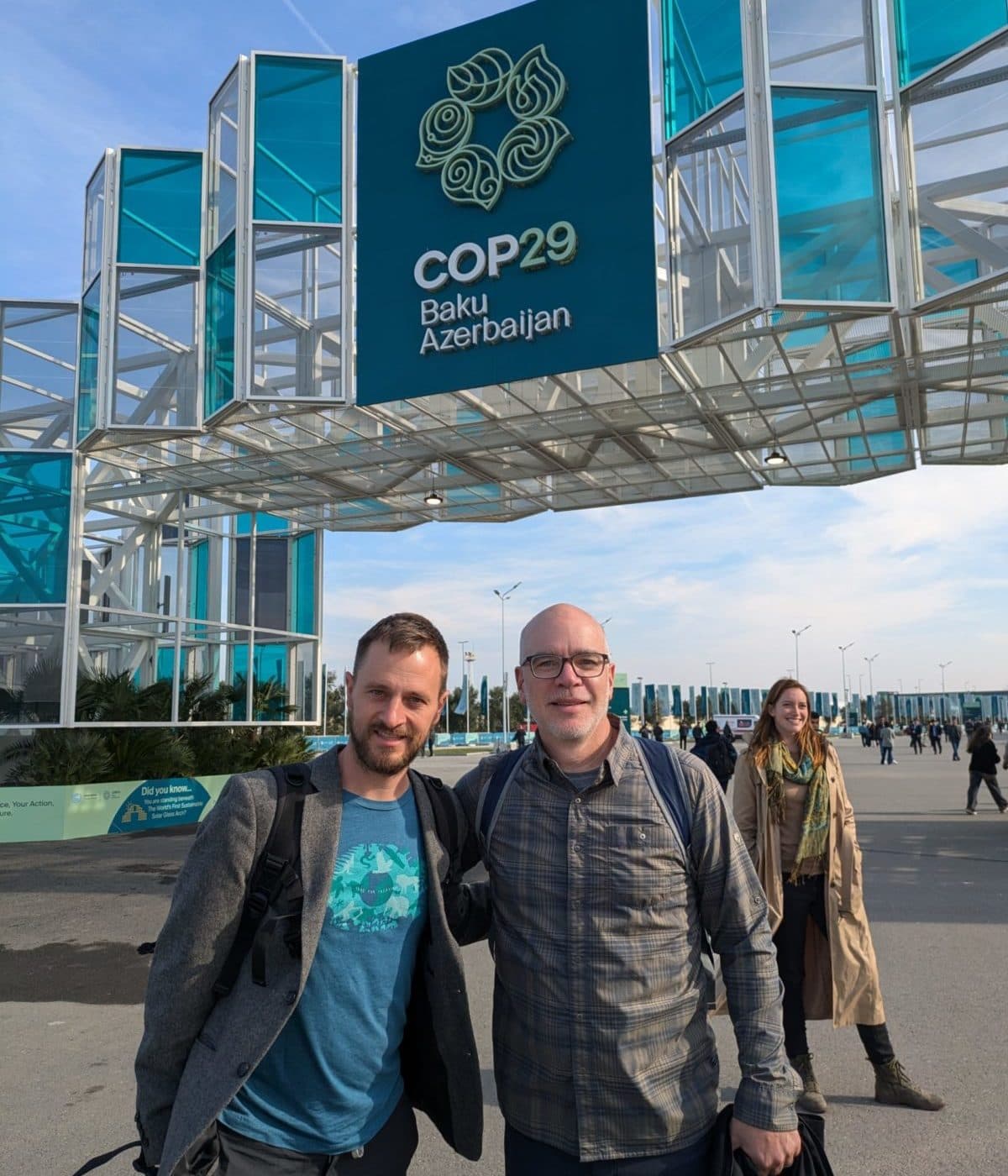
Jim and Colin at the entrance to COP29. Photo by Samuel Chiu.
About the author