A Lenten Reflection: Drought, Water, and the Resurrection Fern
How the resurrection fern’s response to drought can help us reveal deeper truths about spiritual dryness, resilience, and renewal.
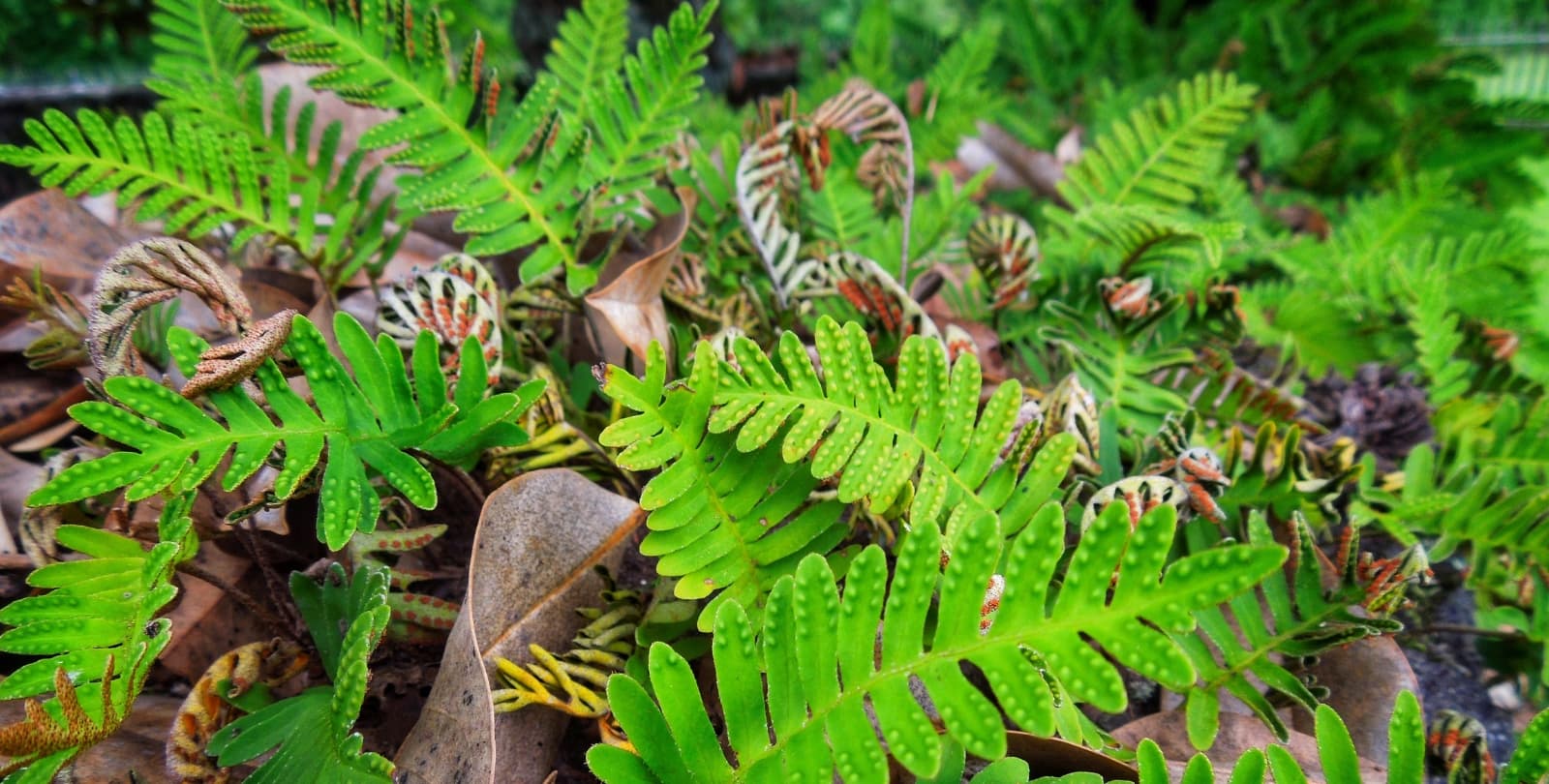
Image used under license from Shutterstock.com
“You, God, are my God, earnestly I seek you; I thirst for you, my whole being longs for you, in a dry and parched land where there is no water.” (Psalm 63:1, NIV)
Water means many things. It is a physical requirement for animals, plants, and all other life on Earth. For Christians, it also represents spiritual health throughout Scripture.
Water therefore offers a unique meeting place between faith and science. We can study it as a necessity for life, and at the same time reflect on what its meaning might reveal about our spiritual life.
This article will do so through the lens of the resurrection fern, a small plant with an extraordinary ability to survive long periods of drought and then return green and lush when rain comes.
As this Lenten season comes to an end, the resurrection fern’s unique relationship with water offers a way of thinking more deeply about our own quest for spiritual renewal.
The Life-Giving Nature of Water
Water in Scripture: Following Our Thirst for God
Lent is a time of waiting for the celebration of the Lord’s resurrection.
Throughout the history of the church, Lent has been a time of self-reflection and repentance. It is a season when Christians are encouraged to follow David’s example in the 63rd psalm, to seek God as if we are parched and desperate to find a source of life-giving water.
Modern followers of Jesus recognize the symbolic significance of water most often when we feel distant from God, and we say that we are “spiritually dry.”
Given the Lenten focus on introspection and self-denial, this sense of spiritual dryness can be a common experience during this season. While this feeling is uncomfortable, it should not be denied, since a greater spiritual vitality may await us on the other side.
Image used under license from Shutterstock.com
Water in Nature: A Life-Giving Force
Just as water symbolizes spiritual vitality in Scripture, it corresponds to physical vitality in nature.
We can see this in our everyday lives. Anyone who has grown houseplants, maintained a lawn, or tended a vegetable garden knows the importance of water for plant health.
On the other hand, we see the devastating effects of drought, both in natural settings and human communities. These effects continue to grow worse and more frequent as global climate change worsens.
The Resurrection Fern
Water is essential to life, and throughout the Bible it also serves as a powerful symbol of spiritual vitality.
Scripture and nature both teach us about the Creator. When we wonder how to navigate feeling “spiritually dry,” perhaps we can learn something by considering a living illustration.
The resurrection fern is a plant that survives long periods of drought and springs back quickly when water returns. By looking more closely at how the resurrection fern endures drought, we may find insight and encouragement for seasons of dryness in our own lives.
Of course, people are not plants. However, pondering how the resurrection fern responds to drought can help us think more deeply about our faith formation.
Science of the Resurrection Fern
The resurrection fern (Pleopeltis polypodioides) is a small fern that grows harmlessly on trees and rocks throughout much of the southeastern United States.
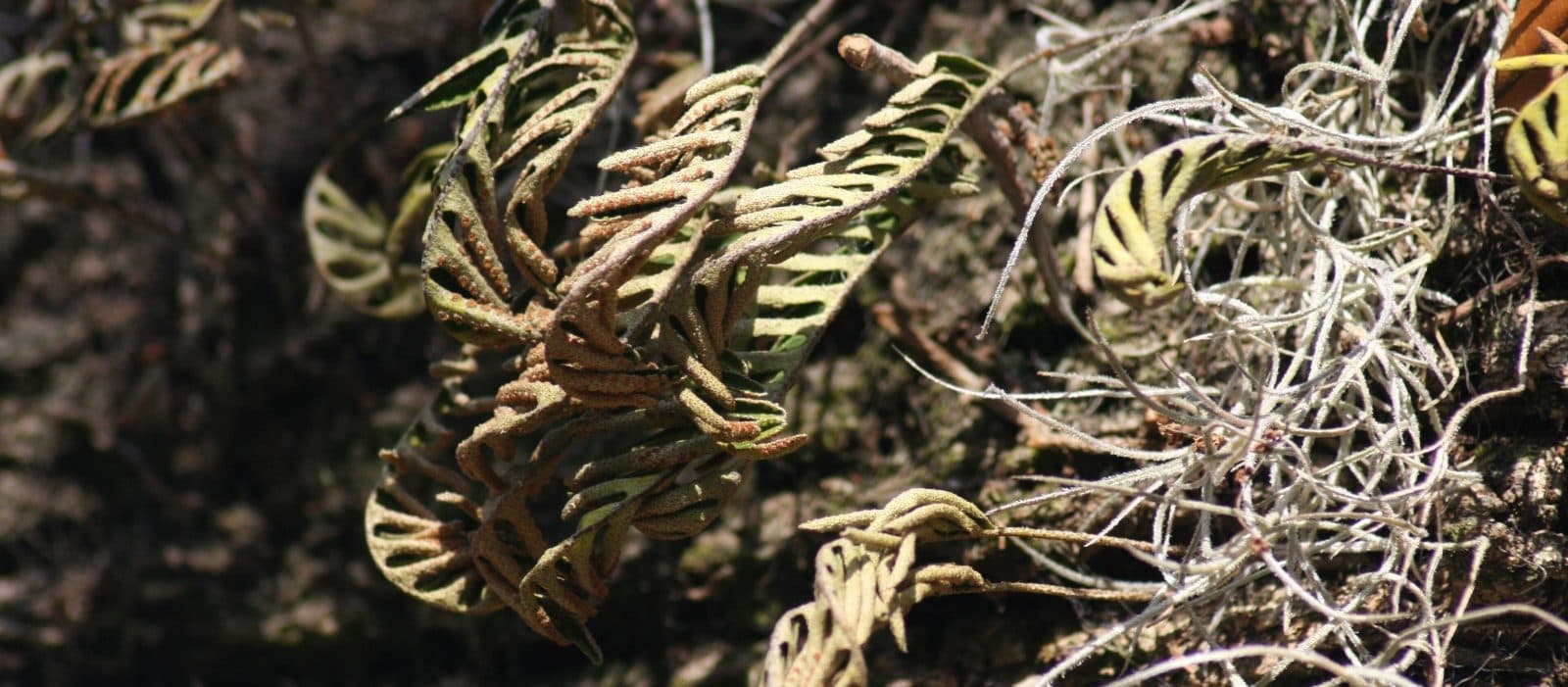
When water is plentiful, this fern grows as a mass of lush green fronds that cover the growing surface in a carpet of foliage. But during dry periods, its fronds shrivel and turn brown, losing up to 95% of their water content.
a.dombrowski, CC BY-SA 2.0 <https://creativecommons.org/licenses/by-sa/2.0>, via Wikimedia Commons
In this state, the resurrection fern appears shriveled and dead. And yet when the next rainfall comes, the plant can completely revitalize, unfurling and turning bright green again in just a few hours (Pessin, 1924; Stuart, 1968; John and Hasenstein, 2017).
Amazingly, this plant can remain viable in its dry state for years at a time, perhaps even as long as a century (Balsam and Bush, 2022).
Though the resurrection fern has been studied since the early 20th century (e.g. Pessin, 1924), many insights regarding its ability to resist drought have only recently been discovered.
Lessons from the Resurrection Fern
Location, location, location
The resurrection fern’s habitat is characterized by climates that have at least moderately warm winters and sufficient moisture for them to become established and persist.
Cool Creatures | Ferns
If you give ferns much thought, it may be only as understated plants. What could they teach us about theology? It turns out quite a lot.
Water is essential for resurrection ferns to begin life. Ferns exhibit a fascinating life cycle that involves two distinct stages: the gametophyte and the sporophyte. The gametophyte, a tiny plant, produces sex cells, including swimming sperm that need moisture to fertilize an egg. The fertilized egg then grows into the larger and more familiar sporophyte plant.
While its need for moisture limits where the resurrection fern can become established, its extreme drought resistance allows it to persist in regions inhospitable for other ferns.
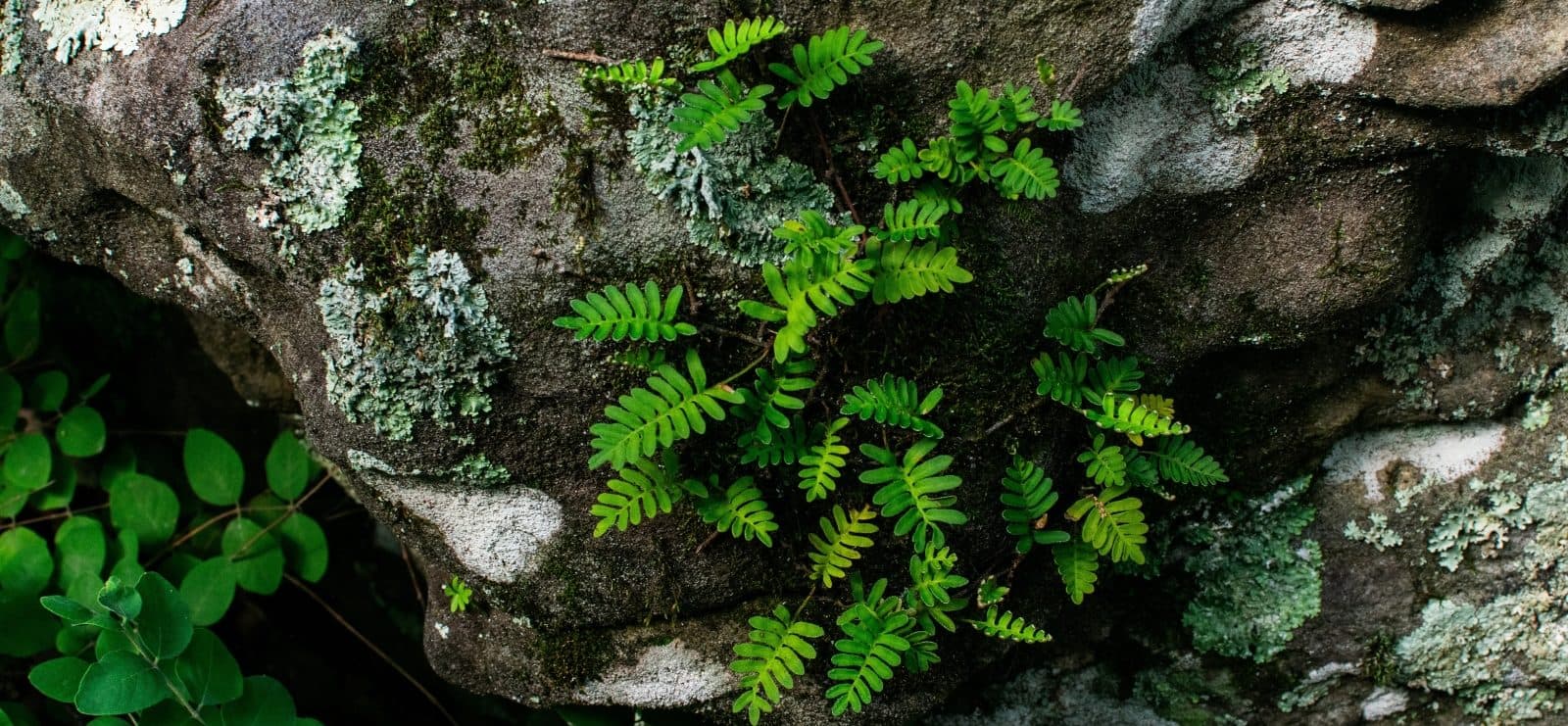
Image used under license from Shutterstock.com
This resilience is a major advantage for the resurrection fern. Whereas most ferns grow low to the ground (where moisture is more abundant), the resurrection fern can live on high branches or exposed rock faces, reducing its competition for sunlight.
Takeaway: The quality of our lives, and even that of our spiritual lives, is influenced by our environment. Our inner life can be affected by factors like weather patterns and local topography, but even more by things like where we went to school, what churches we’ve attended, and what jobs we’ve held. When choices are possible, we should choose wisely.
It Pays to Have Good Friends
Interactions between living things are often competitive—but not always. From beavers creating new ecosystems with their dams to fungi connecting tree roots, there are many interactions in nature that are beneficial all the way around.
The resurrection fern also has many associations that help it thrive.
First, consider the trees on which the ferns often grow. Its branches serve as an elevated growth surface, bringing the fern closer to the Sun. Additionally, its bark provides a foothold for rhizomes. These creeping, stem-like structures serve as a repository that holds moisture and decaying organic matter, which the fern uses to obtain its nutrients.
The fern often shares its perch with other plants and plant-like organisms, including various types of mosses, vascular plants, and lichens. None of these epiphytes (plants that grow on other plants) are parasitic to the tree.
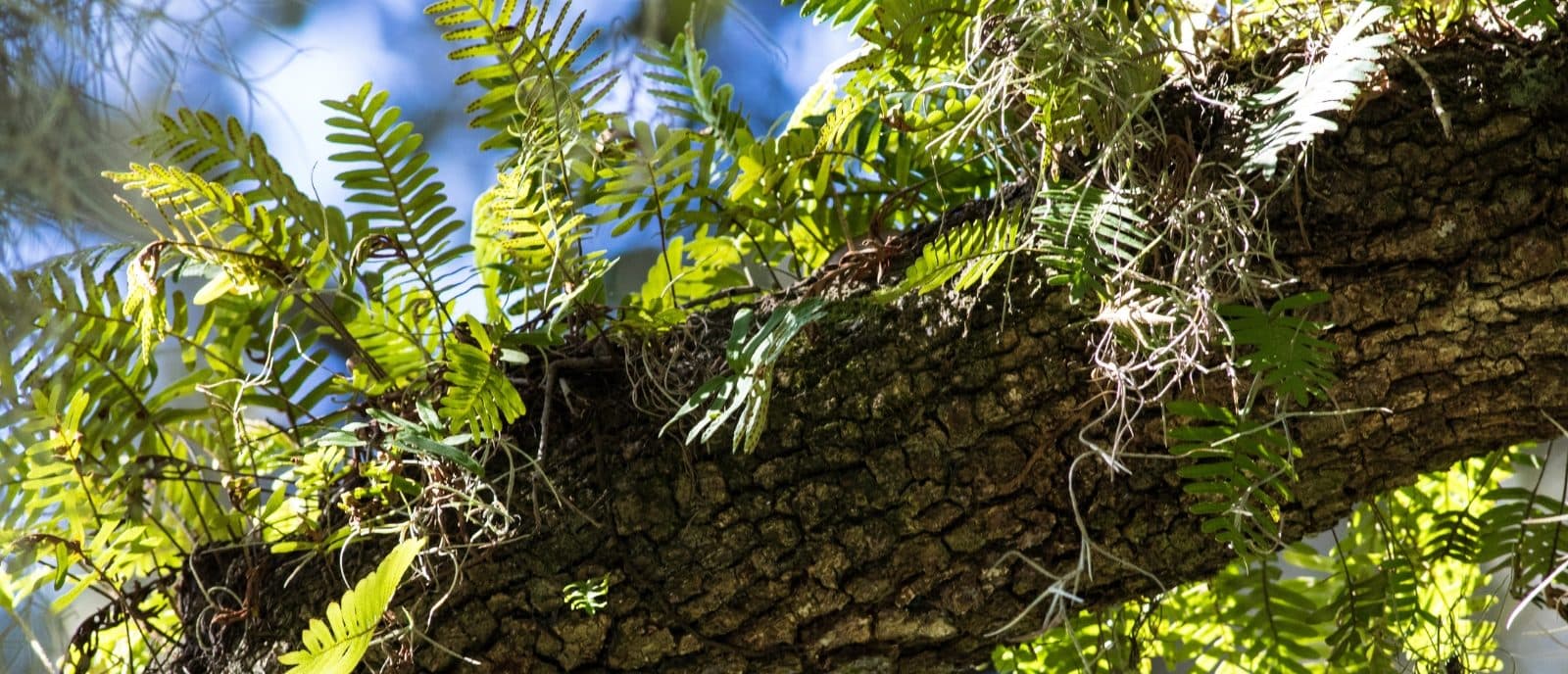
Image used under license from Shutterstock.com
On the contrary, they are thought to positively affect the microhabitat associated with tree bark, making it more humid (Heffernan, 2017) and allowing more nutrients to accumulate (Gargallo-Garriga et al., 2021).
The resurrection fern isn’t supported only by the tree it lives on. One study (Jackson et al., 2006) hints at possible symbiotic interactions between the fern and the bacterial microbiome that lives on its surface.
Takeaway: As social creatures, we all need good friends in our lives, including those who can support us when times are difficult and those who can serve as mentors throughout our lives.
Getting Through the Dry Times
The resurrection fern’s mechanisms for drought tolerance are so numerous and detailed that they cannot be fully explored here. However, the descriptions below offer a glimpse and may inspire further curiosity.
Frond Curling and Protective Scales: During drought, air spaces inside the frond become drier, causing the fronds to curl inward. This protects the photosynthetic apparatus of the leaf from light-induced damage that would otherwise occur during desiccation (Prats and Brodersen, 2021).
Physiological Protection of the Photosynthetic Machinery: The resurrection fern has more ways to protect its photosynthetic apparatus when dehydration and/or high temperatures inhibit normal functions. Studies by John and Hasenstein (2018 and 2020) show highly coordinated changes in two key antioxidant enzyme systems during both the dehydration and rehydration process that protect photosynthesis.
Dehydrins Protect Cellular Structures: In fronds and other nonwoody plant parts, structure is maintained by turgor pressure.
In a well-hydrated plant, water is drawn into cells via osmosis. This produces outward pressure, causing the cells to swell and press against the surrounding cell wall structures.
When plants begin to dry out, water leaves the cells, causing them to shrivel and pull away from the cell walls. The plant wilts, and on a cellular level, the cell membrane and the cell wall may be damaged.
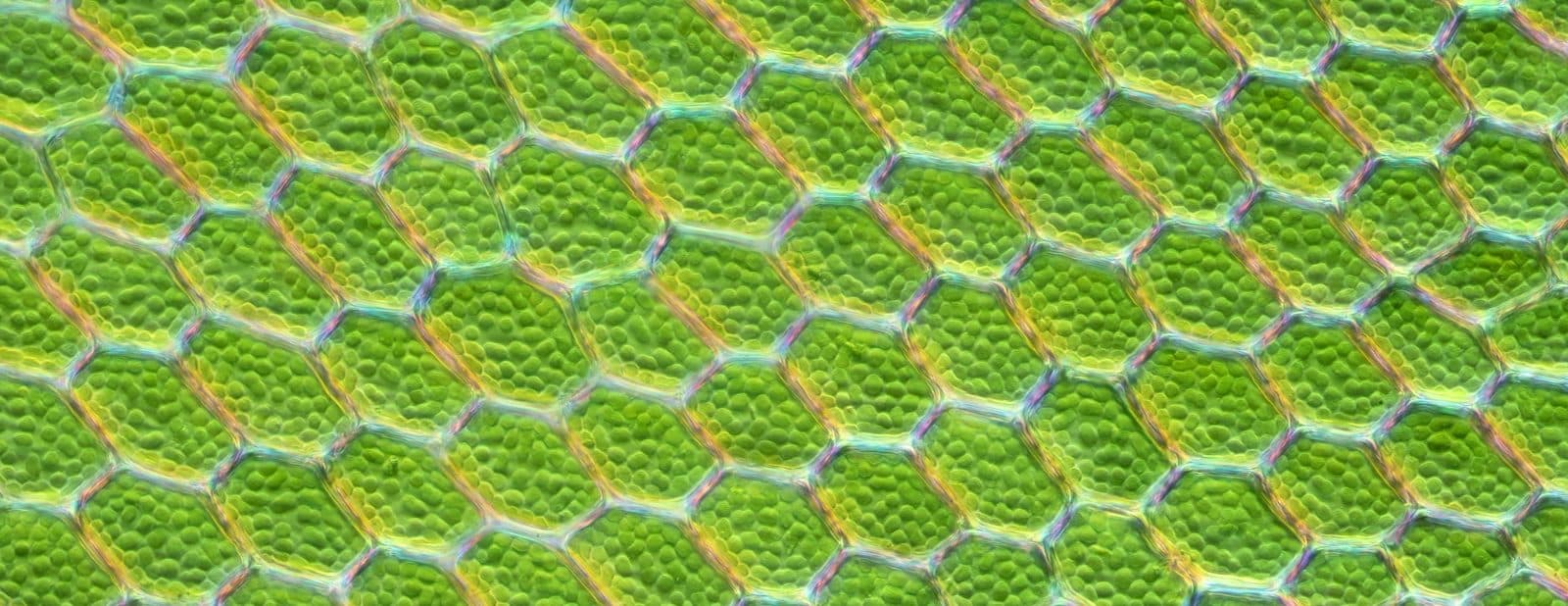
Bryophyte (moss) leaf cells. KarlGaff, CC BY-SA 4.0 <https://creativecommons.org/licenses/by-sa/4.0>, via Wikimedia Commons
The resurrection fern largely avoids such cellular damage due to a protein called dehydrin. Produced during water stress, this protein helps stabilize cellular structures during dehydration and rehydration (Layton et al., 2010).
For most plants, cellular damage becomes too extensive for recovery once tissues become extremely wilted. But due to these protective mechanisms, resurrection ferns remain viable even when frond tissue becomes so dry that it is brittle to the touch.
Takeaway: Difficult experiences are part of the human condition. Similarly, spiritual dry times are inevitable for believers. Knowing this and being ready for such times is key to enduring them.
Responding to Refreshing Rains – Transitioning from Lent into Easter
The resurrection fern is quick to rehydrate once water is again present in the environment. In fact, a fern that was dry and brittle can return to a form that is green and lush in mere hours.
This occurs through at least two mechanisms.
First, the wick-like action of the scales on the underside of the frond rapidly moves water to the frond surface.
Also read/listen:
- Cool Creatures | Ferns
- Water | Exploring Spiritual & Scientific Depths
- LENT | Reflections from Wild Hope: The Hawksbill Turtle
- Living Water: How a Remarkable Chemical Shaped the Land and Life of Earth
Second, unlike most plants, the fronds of the resurrection fern can absorb water directly from the environment, rather than relying on its roots alone (Prats and Brodersen, 2021).
The complete physical “resurrection” of this plant upon the return of life-giving water is an inspiring example of life’s ability to persist under extremely harsh conditions. As we followers of Christ celebrate his actual resurrection, may we experience a reanimation that restores us to an equally full and vital spiritual life.
About the author

Rodney Scott
Related resources
If you enjoyed this article, we recommend you check out the following resources:
Podcast Episode
Cool Creatures | Ferns

Podcast Episode

Podcast Episode
Podcast Episode
Podcast Episode
Podcast Episode
Podcast Episode