Are mRNA Vaccines Safe and Effective? Hear it from the Source
Dr. Kizzmekia Corbett-Helaire helped develop Moderna’s COVID-19 vaccine. Her story shows how mRNA vaccines are made and what Christians can do to support this work.
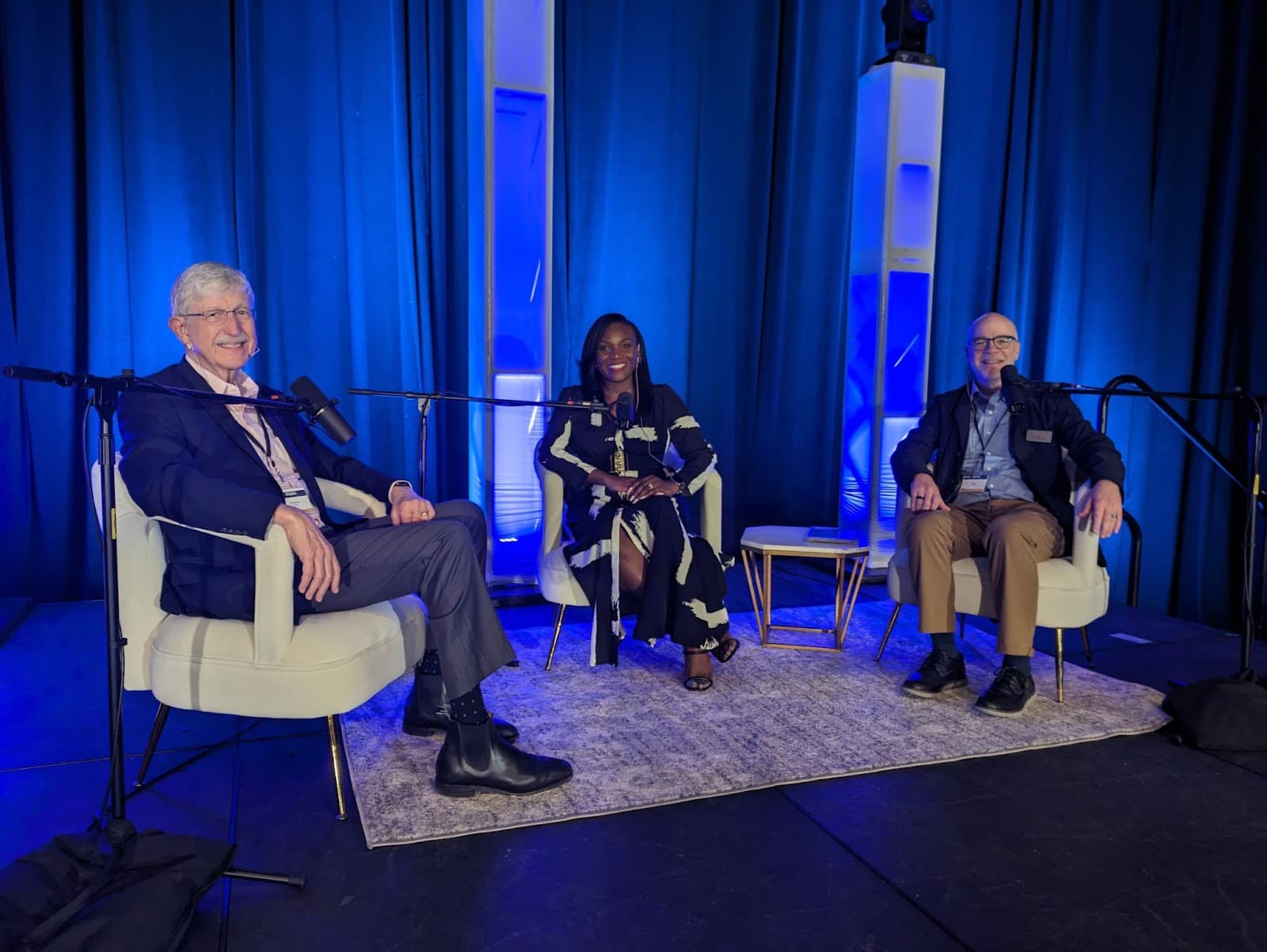
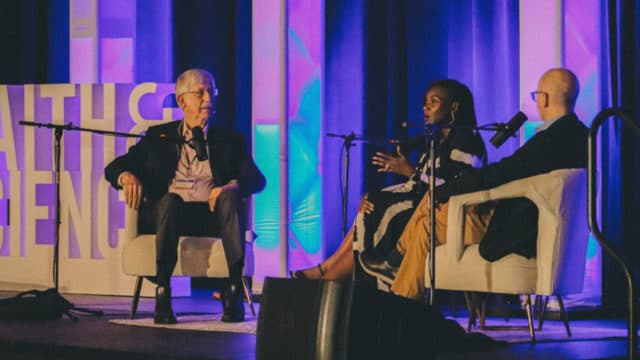
Photo: Chris Stump, 2024 BioLogos Conference.
A Conversation About Faith, Science and mRNA Vaccines
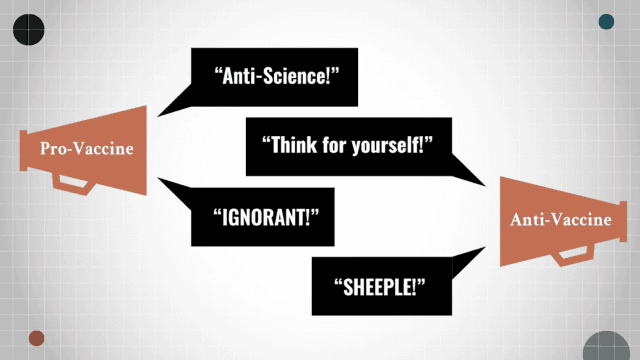
The debate around mRNA vaccines has flared up again in the public square.
Yet the basic facts remain unchanged: these shots were built on decades of careful research, validated by layers of testing, and have protected millions of lives. Few stories make that clearer than Dr. Kizzmekia Corbett-Helaire’s, whose work at the National Institutes of Health’s Vaccine Research Center was pivotal in developing the Moderna COVID-19 vaccine.
I had the privilege of interviewing Dr. Corbett-Helaire, along with her former mentor and colleague at the NIH, Dr. Francis Collins, at the BioLogos conference in April 2024. (We’ve since made the interview available online in both audio and video formats.)
I’ve interviewed many scientists over the last few years, but this felt different. Our topic was one of profound importance, and my guests had, quite literally, helped save millions of lives.
And yet, there we were, not in a research lab or federal hearing room, but in an almost churchy setting, singing worship songs and talking science and faith to a live audience filled with believers.
This was more than just a conversation. It was a moment of witness. In a culture where misinformation still casts long shadows over the incredible achievements of medical science—today, these shadows fall on mRNA vaccines—I believe this story bears revisiting.
Kizzmekia Corbett-Helaire’s Calling
Dr. Corbett-Helaire grew up just down the road from where we were talking in Hillsborough, North Carolina, in a large and loving family. She proudly calls herself a science nerd now, but the occasion that brought her into sciences was… a pair of shoes?
At sixteen, she really wanted a nice pair of shoes for back to school. “My parents were like, ‘There’s no way we’re spending that much money on a pair of shoes. You got to get a job.’ My mom said, ‘Well, you have to get a job that’s educational.’ So, I found a job in a science lab at the University of North Carolina in Chapel Hill, and my life was changed forever.”
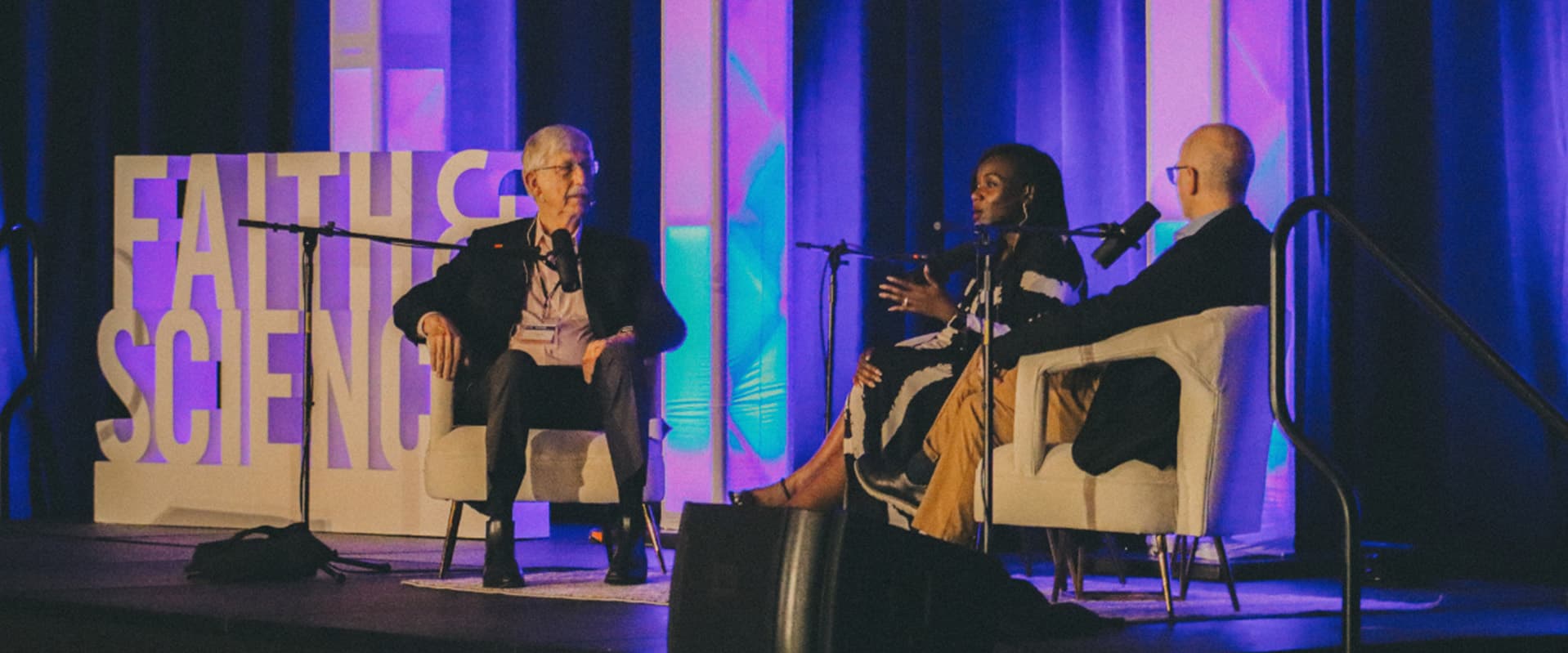
Kizzmekia Corbett-Helaire & Francis Collins | Live from Faith & Science 2024
Francis Collins and Kizzmekia Corbett-Helaire share some key moments from behind the scenes of the COVID pandemic and vaccine development.
There she came to realize that “for every fact in the textbook, someone had to discover it” in a lab like the one in which she was working. That spark set her on a path to a Ph.D. in immunology and then to the National Institutes of Health.
What makes her story even more compelling for Christian audiences is her deep faith. Kizzmekia grew up attending a small Baptist church near her grandmother’s house. Church was family. Faith was love. And that upbringing continues to shape her worldview and her work.
She spoke openly about God’s timing in her scientific work and how she found spiritual renewal during the exhausting days of the pandemic. During the vaccine’s development, her faith gave her “a whole ’nother level of confidence,” because prayer was as much a part of the process as any lab notebook or microscope.
Faith and the mRNA Vaccine
It was early January 2020, and news had just broken of a mysterious respiratory illness in China. Kizzmekia was sitting on her mother’s couch when she received an email about it from her boss.
It read: “Get ready for 2020.” She got in her car, drove back to Washington, D.C., and immediately began planning.
At the time, she had already spent five years at the NIH studying coronaviruses—particularly the “spike protein” that allows them to enter our cells. She knew that understanding this protein would be the key to designing an effective vaccine.
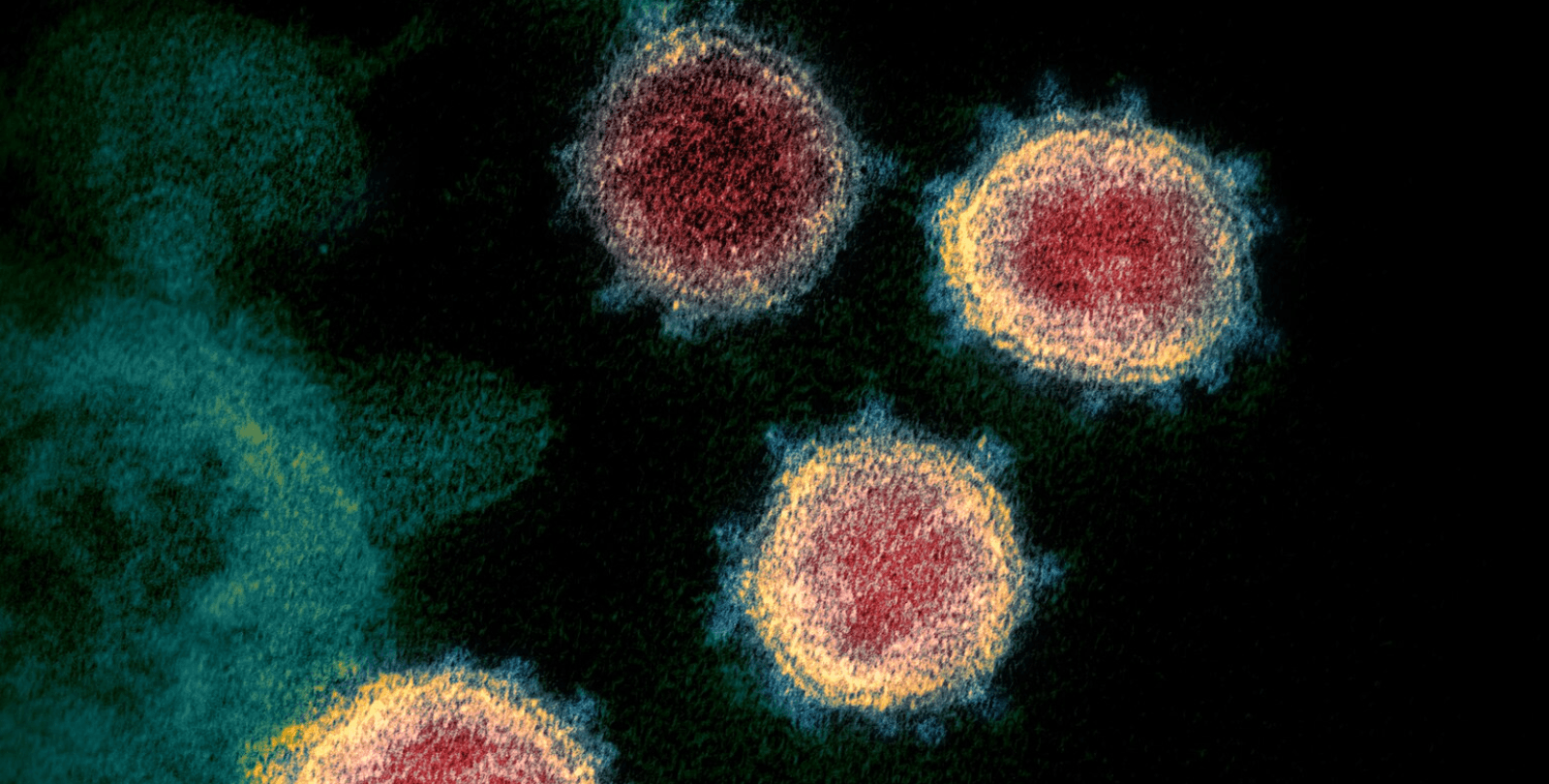
Image: NIAID-RML, CC BY 2.0 <https://creativecommons.org/licenses/by/2.0>, via Wikimedia Commons
When the genetic sequence of SARS-CoV-2 was posted online on Friday, January 10, her team was ready. Over that same weekend they designed a vaccine using a cutting-edge technology: messenger RNA.
For those still unsure about what an mRNA vaccine is, it helps to start with an understanding of how vaccines work. Traditionally, vaccines have used a weakened or inactivated form of a virus to teach the immune system how to fight it—these are called ‘live attenuated’ or ‘inactivated’ vaccines.
Another common approach is to use just a piece of the virus, often a protein from its surface, to trigger the immune response. This method avoids using the whole virus but requires growing large amounts of protein in factories, which takes lots of time.
mRNA vaccines take a different path. Instead of injecting the virus or its parts directly, they deliver a set of instructions—messenger RNA—that tells your body’s own cells how to make a harmless piece of the virus, such as the spike protein found on the surface of the coronavirus.
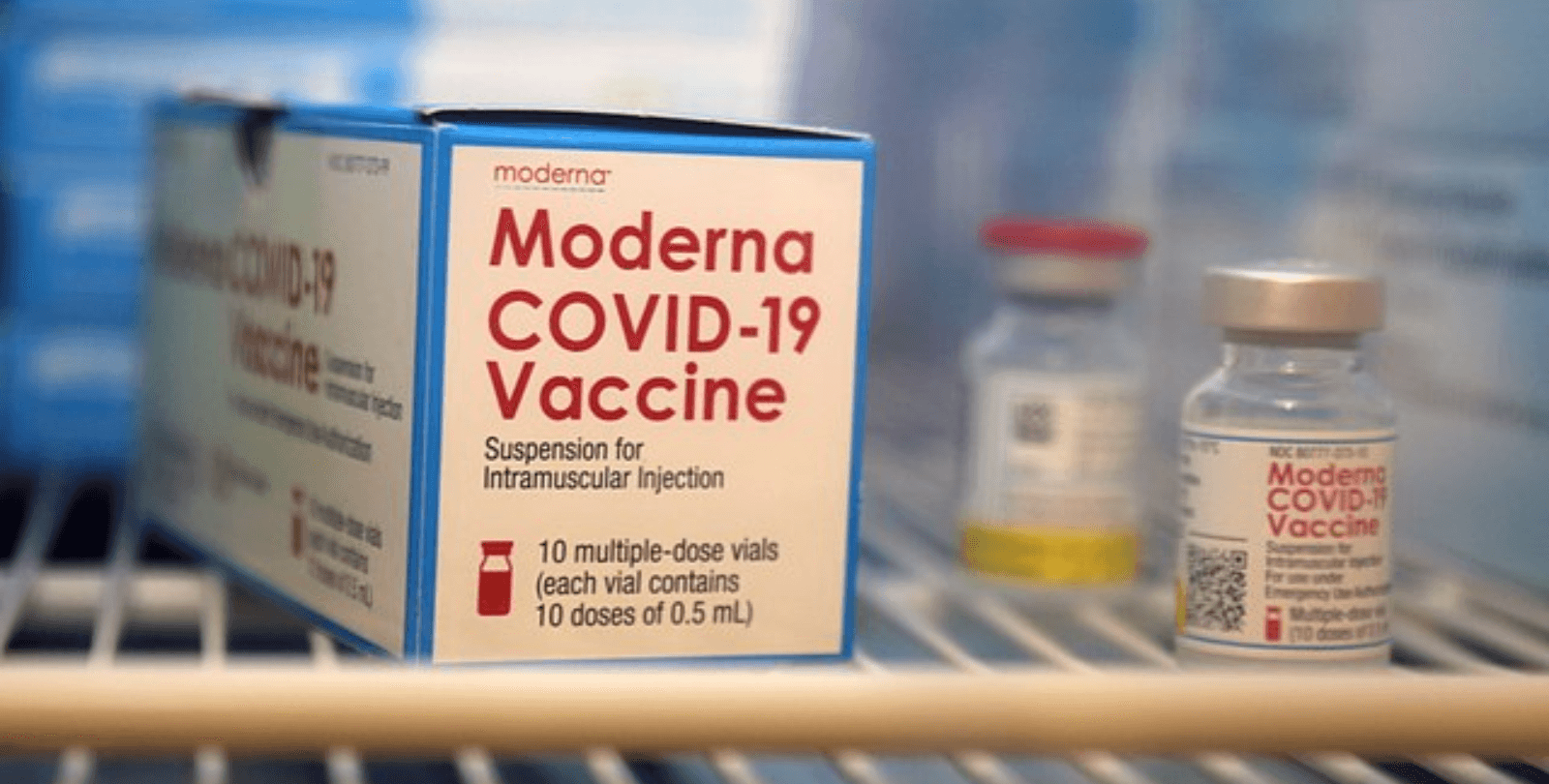
Photo: Navy Medicine, Public domain, via Wikimedia Commons
Your immune system sees that protein, learns to recognize it, and builds defenses (antibodies and T-cells) that are ready to destroy the real virus if it ever shows up. All our vaccinated bodies become the protein factory.
And no, this doesn’t alter your DNA or stay in your system—it’s more like a temporary blueprint that gets discarded after the job is done.
This technology had been in development for over twenty years at the time of the COVID-19 pandemic. Moderna, the company Kizzmekia worked with, had primarily been researching its use for cancer therapies. But when the pandemic hit, it proved to be the fastest, safest way to produce COVID antibodies.
The Results Were Miraculous
When trials began, both Kizzmekia and Francis hoped for a vaccine that might be 50% effective. That would have been considered a major success.
It turned out to be over 94% effective.
Dr. Collins remembers crying when the data came in. Not just from scientific joy, but from the overwhelming grief of a year of watching case counts and death tolls climb, and from the relief and gratitude of answered prayers that this vaccine would work.
“God is our refuge and strength, an ever-present help in trouble,” he quoted from Psalm 46, a verse he kept taped to his desk throughout that year.
Addressing the Skepticism
Despite the vaccine’s success, both scientists expressed heartbreak over how many people—especially in the U.S.—chose not to take it. According to Collins, the data showed that nearly 230,000 Americans died who likely would have lived if they had been vaccinated.
Kizzmekia took this personally. She began speaking in churches, town halls, and Bible studies. She wasn’t just sharing data—she was opening the floor for questions and conversation.
Most people just needed to hear from the source… They wanted someone to listen.
“Most people just needed to hear from the source,” she told us. “They wanted to ask the questions. They wanted someone to listen.”
Her presence and testimony has helped bridge the gap between science and faith for many people. Kizzmekia is not a nameless scientist in a lab coat—she is a fellow Christian, a neighbor, someone who can look people in the eye and say, “This vaccine is safe. And it’s here because we loved you enough to spend years preparing for this moment.”
A Word to the Church
Our conversation was not just a celebration of past achievements—it was a call to action for the Christian community. The last question I asked Kizzmekia and Francis was, “How can we as people of faith do a better job in helping and assisting you in what is very directly the healing mission of Christ that you’re involved in, in your laboratories?”
Photo: Saz00, via Shutterstock
Dr. Collins said, “Welcome and celebrate the fact that science is, after all, a gift, that we are talking about God’s world as well as God’s Word, and the scientists may have something really helpful to contribute to those conversations. I’ve talked to people at this meeting who are part of churches where science is just embraced and the scientists feel they can be themselves and they can completely talk about what they’re working on and it’s all good and it’s positive. But it’s not that way everywhere.”
Helping the members of your congregation prioritize their health in a way that is evidence-driven is really, really, really important.
Dr. Corbett-Helaire answered with, “The biggest thing I think the church can do for me and the type of work that I do is to aid in the communication. Open the doors to scientists when there is science or health communication that needs to get out. In the same way that you have your church announcements, include those things. Helping the members of your congregation prioritize their health in a way that is evidence-driven is really, really, really important.”
To that end, here are some quick evidence-driven things Christians should remember and communicate about mRNA vaccines:
- They were not rushed from scratch. Researchers had explored mRNA delivery and coronavirus spikes for two decades before COVID-19. The 2020 timeline was possible because the groundwork was already laid.
- They were studied thoroughly. Hundreds of animal experiments, multi-phase human trials, and ongoing global data add up to an unprecedented safety record.
- The side effects are minor. Side effects that have been systematically collected and analyzed are significantly less frequent than the manifestations of disease the vaccines prevent. For example, though about 1 in 10,000 younger males developed a heart inflammation called myocarditis, which was virtually always reversible.
- Vaccines embody loving our neighbors. When everyone is vaccinated, it especially protects the vulnerable among us—infants, the elderly, the immune-compromised. Jesus said in Matthew 25 that when we care for such people, we are caring for Jesus himself.
The Path Ahead
We know another pandemic is likely. We don’t know what it will look like, but we can be certain that misinformation and distrust will still be part of the public conversation.
That’s why the church’s role is so important—not just as a sanctuary for prayer and worship, but as a place where truth is honored, even when it is dressed in a lab coat.
I left that stage in Raleigh with a renewed conviction. If we’re going to embody Christ’s healing mission in the world, we need to trust the tools and the gifts God has given us.
That includes vaccines. That includes science. And yes, it includes scientists like Dr. Kizzmekia Corbett-Helaire and Dr. Francis Collins—believers who are living testimonies to our claim that Science is Good!
Let’s make sure their work is not in vain.
Keep exploring with BioLogos.
Enjoying the article? Sign up for content that explores the intersection of science, faith, and wonder, delivered right to your inbox.
About the author

Jim Stump
Related resources
If you enjoyed this article, we recommend you check out the following resources:
Podcast Episode