Authentic Faith in Medicine: A Call and Response
Physician-scientist Julia Wattacheril feared she'd lose trust if she was public about her faith. But then she discovered she was living it out all along.

Image used under license from Shutterstock.com
Julia Wattacheril is a transplant hepatologist, physician-scientist, and Christian. Her faith is something she finds joy and fulfillment incorporating into her life’s work authentically—from her interactions with patients, to how she writes grants, and how she mentors those in her lab.
But, what does authentic faith look like? It’s a question that many of us ask when we represent our faith in our lives and professions. It is something that Julia, too, struggled with as she forged her own path forward to become the compassionate doctor she is today.
Especially in a profession like healthcare, burnout is an epidemic. Physician-scientists like Julia face numerous challenges, from busy schedules, long work hours, and even interpersonal challenges when communicating with patients or colleagues who do not see eye-to-eye with them.
These days, Julia’s authentic faith, in part, looks like having a compassionate heart and practicing “generous whole-body listening.” This, Julia explained, is attentive listening with the entire body, without the common distractions of phones, computers, noise, or anything else vying for attention. Recently, Julia spoke at the BioLogos 2024 Faith and Science conference about her faith and work in medicine.
Julia’s authentic faith, in part, looks like having a compassionate heart and practicing “generous whole-body listening.”
Desiring More
When Julia was in medical school, she dove into an intense schedule—being on call, taking shifts at all hours of the day and night, and studying the rest of the time. It didn’t leave a lot of room for spiritual development. “I went to church when I wasn’t in the hospital, but I was seeking a lot more,” she recalled. This was not an ideal situation to establish a relationship with a Bible Study, student group, or even regularly attend the same Sunday service.
Julia felt isolated and felt spiritually hungry, so she reached out to her pastor. She was grateful that he took the time to meet with her and listen. She recalls: “My pastor took the time to hear me, a medical student, who wasn’t a substantial donor, who wasn’t necessarily always present at every church event because of my call schedule. I said ‘I’m desiring more, can you help me?’ He listened. He didn’t plug me into an instant Bible study group. He didn’t write off the fact that my schedule was complicated. He listened to the heart that was calling out for help, much like the Lord has trained me to do with the people that I get the privilege to take care of.”
In response, he set her up with someone in the congregation to pray for and mentor her. It may have seemed like an odd pairing on paper because Julia and her prayer partner didn’t have much in common. She could have easily dismissed her pastor’s recommendation and the connection because of this. But she didn’t. Their connection proved to be just what she needed. “This person played an instrumental role in praying for me in a critical stage of development that I didn’t know I needed prayer for,” shared Julia.
This is a resource that is available to us all. “Know that there are people that are willing to offer time and space outside of the proscribed schedule to help you particularly develop,” she said. Sometimes, we just have to step outside of our comfort zones, and ask for help, even if we aren’t exactly sure what we need.

Image used under license from Shutterstock.com
“My pastor took the time to hear me, a medical student, who wasn’t a substantial donor, who wasn’t necessarily always present at every church event because of my call schedule…He listened to the heart that was calling out for help, much like the Lord has trained me to do with the people that I get the privilege to take care of.”
Compelled to Do More
As she moved further into her career as a medical practitioner, she saw that even with the best of intentions, there were times when patients did not receive the care or compassion they needed. Julia was not satisfied with this outcome. Her faith compelled her to do something more.
As an investigator, she knew how to ask scientific questions, but she felt like she was not asking the right questions of her patients. She especially wanted to help those of her patients with lesser known risks. She decided to pursue trauma-informed training to see how she, the practice, or any other component of medical care may be missing the mark. Listening and safety were vital, she found.
After this, she felt more prepared and empowered to better understand her patients and their concerns. It also helped her create a better environment for her patients to communicate their needs—before technical information and treatment options like genomic sequencing or clinical trials. Again, without even realizing it at the time, Julia was living out her faith. It manifested as persistence, compassion, listening, and humility.
But then, ten years ago, Julia was invited to speak at a faith and work conference about her faith.
“‘It’s going to be public,’” she recalled them telling her. “’We want you to be public about talking about your faith.’ And I remember thinking…woooo! It wasn’t a hard no initially, but I thought this will be career suicide,” she worried. “If I will be open about my faith, then people who are not believers or who’ve been harmed by Christianity are not going to trust me.”
She decided to call and talk to her mentor, who was not a particularly religious person, and she asked him what she should do. A conversation unfolded that she says she hopes every mentor and mentee can have. He was able to see something in her that she hadn’t seen in herself, particularly about her faith.
“Julia,” he said, “I’ve seen you in the lab, I’ve seen you at 11 o’clock at night helping Ph.D.s with their presentations the next day, I’ve seen you write grants, I’ve seen how you work in the hospital…everything about you aligns with your true values, and I know where those values come from. They come from your faith. So you might lose one, or two, or five or six people who will not align with that for various reasons, but because it is you who is being true to who you are…that is authenticity, and it’s a reflection of who you are in the world.”
“Julia, I’ve seen you in the lab…I’ve seen how you work in the hospital…everything about you aligns with your true values, and I know where those values come from. They come from your faith.”
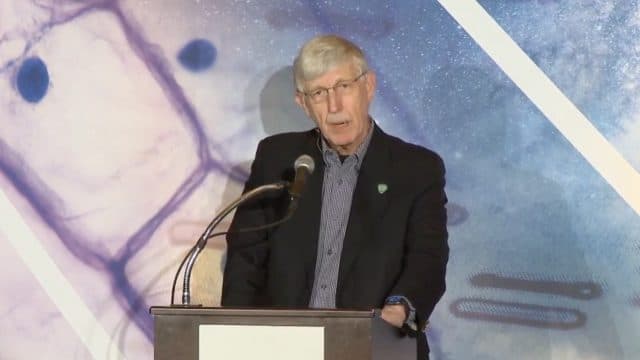
Julia Wattacheril at the 2024 BioLogos Faith and Science conference giving a talk on spiritual formation and authentic faith in medicine.
Saying Yes
Julia ended up saying yes and gave an amazing presentation about the completed work of Christ when doubts surface.
Now it’s quite possible that Julia did lose a few patients after they saw the video of her speaking. But that’s not the whole story.
Recently, a patient said to her: “Dr. Wattacheril, we knew that you were the right doctor for us when we saw that video.”
What a powerful testimony. It’s one that illustrates that living out your faith comes not just with your words, but with your actions, interactions, and whole being—and is formed not just in isolation but in scientific, spiritual, and educational environments.
About the author

Elizabeth Fernandez
Related resources
If you enjoyed this article, we recommend you check out the following resources: