The Church’s Esther Moment in the Era of AI
For Joanna Ng, the Church is called to shine Christ’s light in dark places, and the world of technology is no exception. Like Esther, we were created for such a time as this.

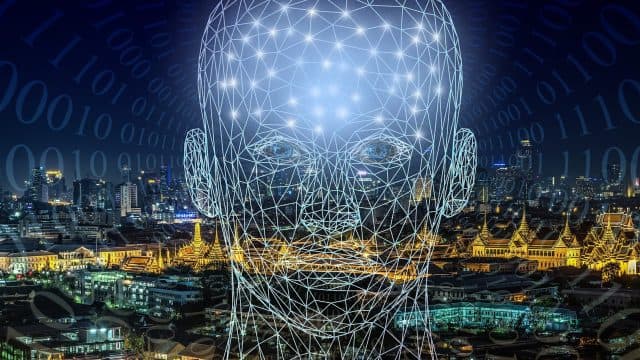
Image used under license from Shutterstock.com
The Book of Esther is a powerful story of a strong woman in the Bible who used her position as Queen to save her people from being destroyed. Esther came from humble beginnings, and as a woman in a male-dominated society, probably had limited expectations for her life. But God orchestrated her story for a greater purpose than she could’ve ever imagined. It wasn’t easy though. It required courage, wisdom, and conviction. It also required great risk-taking and sacrifice. But the story of Esther teaches us that God can use our audacious obedience to establish his will and plan on earth. And Scripture tells us that his will and plan are for our good and his glory.
The phrase ‘Esther moment’ is often used in the present day to affirm God’s call and divine purpose for our lives. He writes our stories with intentionality. And when we find ourselves unexpectedly in a position of opportunity to shine Christ’s light in dark places, it is not by accident. Like Esther, it may be hard to grasp the eternal significance at the moment, but once we see God’s plan unfold, we are glad that we didn’t walk away or give up. Importantly, the use of ‘Esther moment’ isn’t meant to just mean a call for women in the Church to lead in times like these, although there is especially a need for women to do so.
As a Christian inventor and technologist, I see myself as an Esther in this space, tasked with an urgent call to help raise up more Esthers…The stage has been set, it is our moment to rise to the occasion.
But what does the story of Esther have to do with technology, specifically AI? As a Christian inventor and technologist, I see myself as an Esther in this space, tasked with an urgent call to help raise up more Esthers. Undeniably, AI has great potential to solve problems and improve human lives. However, I am equally aware of its potential for harm and worried that it may be obscured in a cloud of spiritual darkness before we ever see the good it can do. AI technology is accelerating at an unprecedented pace, faster than we can regulate it. And there are real concerns that AI technology will be dominated by big tech companies, thereby monopolizing it. We have been thrust into an era of technological advancement, of AI in particular, that could cause great harm. The stage has been set, it is our moment to rise to the occasion.
I believe we the Church should not sit on the sidelines when it comes to AI and technology. We don’t have to let spiritual darkness obscure it. As God’s people, we are the salt and light of the world. We have an obligation to step up because we were made for such a time as this. Here, I discuss some of the ungodly presumptions of AI that threaten to cloud it in spiritual darkness. I end by offering some tangible ways that the Church and Christians in Tech can combat this.
“Ungodly” Presumptions of AI
At first glance, AI technology isn’t very Christian, or at least the presumptions embedded in it aren’t. It is embedded with unbiblical views that honestly do set itself up against the knowledge of God. However, I still believe that there are redeeming qualities to AI, and that God’s light can shine into it. I unpack some examples below:
1. AI presumes that humankind is just a brain like a computer.
This presumption was recorded in a 2011 interview with Stephen Hawking, who stated that the brain is “a computer, which will stop working when its components fail.” This perspective reduces humans solely to a physical body by devaluing the soul and spirit. It also makes AI’s aspiration of reaching artificial superintelligence (ASI) seem attainable when it is not.
The Bible informs us of the divinity in each person as unique individuals, wonderfully and fearfully made in God’s image. As his image bearers, we are a spirit, living in a body, with a soul. We also have emotions, a mind, and free-will. While we may be able to come close to digitizing human intelligence, I don’t think we could ever capture the human spirit or embodiment of the divine.
Reducing human identity to a mere machine undermines our status as image-bearers of God. Godly wisdom is superior to human intelligence, and divine nature is superior to any human-made artificial nature.
I believe that the current fear-mongering surrounding AI—that it will one day be superior to us and take over—is based on an exaggeration of AI’s capabilities on one hand, and diminishes human uniqueness and the Imago Dei inside us on the other hand. These inaccurate presumptions need to be called out.
2. AI presumes that data holds the ‘ground truth.’
Further, AI presumes that data holds the ultimate truth; this is a fundamental concept of machine learning. However, data, especially internet data, is only a snapshot of our behavior at a point in time. It is not the ground for truth. Real truth does not change and can stand the test of time, independent of data. And because humans are imperfect and sinful, data is bound to reflect the lies, deceptions, injustices, and biases of our broken world.
For example, there is bias in today’s internet data. Not all people groups are represented fairly in the data used to train AI models. The resultant machine learning models and large language models of Generative AI are products of these biases. Left unguarded, usage of these models for hiring, loan approvals, insurance calculations, and more, may further propagate existing bias, but at a speed and magnitude that we have never seen before. Silently and unknowingly, bias-victims will be further marginalized. Instead, we need truth-based models that will seek to provide guidance and reduce such bias or at least ones that communicate the limitations and inherent biases embedded within them.
Apart from the two AI presumptions above, there is the reality that AI technology is dominated by big tech companies. This concentration of power is concerning. If AI technology is concentrated in the hands of a few, this can lead to inequities and safety concerns without proper regulation. The current ‘black box’ approach of AI commercialization, the practice of non-disclosure of AI algorithms, data sources, and data quality as the industry ‘norm,’ shields AI companies from public accountability and liability for misrepresentation, negligence, and inaccuracy.
An Esther-like Response
Esther responded to her moment with bold and audacious faith. Why isn’t more of the church responding to cultural moments like this? Fear is one reason. The current unhealthy fear of AI can inhibit Christians in tech and the Church from arising to its Esther moment.
Long ago, Daniel was given a prophecy that at the time of the end, knowledge would increase (Daniel 12:4). Apostle Paul warned us about the era of deception in the last days (2 Timothy 4:3-4). It is not far off to assume AI plays a significant part in these narratives of the last days.
But what does the story of Esther teach us about how we are to respond to AI and technology? It may look different depending on our position of influence and profession, but I believe we are all called to do something. Whether we are a user of tech, an investor in tech, a scientist or a technologist, God can use us to shine his light. Below, I highlight some ways Christian tech users and the Church, along with Christians working in the tech industry, can do so.
Esther responded to her moment with bold and audacious faith. Why isn’t more of the church responding to cultural moments like this?
Christian technology users and the Church:
- Supporting Christians in the tech field in their congregations or personal networks
- Starting initiatives for AI literacy for the public and for the Church. This will help combat ignorance which can feed fear. In contrast, knowledge empowers and equips us to give Esther responses.
- Advocating governance and legislations to ensure transparency in data sources, audit in data quality, in models and algorithms, to guard against silent discriminations.
- Advocating governance and legislations in fairtrade of data, promoting data rights as a human right.
Christians called into the tech field, especially in AI:
- Seeking excellence in the skills of our trade
- Calling out unbiblical presumptions and practices of AI
- Pointing out negative effects and consequences of architectural and design flaws and omissions in AI advancements. For example, the current architecture of the Large Language Model (LLM), designed as a probabilistic next-word generator, is not designed to provide confidence-indicator of correctness, nor to cite sources of generated content. The public widely uses it without being fore-warned that there is no guarantee of the correctness of any AI-generated content.
- Asking the right questions. The current AI trajectory was fundamentally shaped by Turing’s question of “Can machines think.” Instead of the current techno-centric AI trajectory, how about shaping AI’s future trajectory by asking more human-centric questions, such as, ‘How can AI be advanced to better benefit, serve and bless people?’
- Pushing for guardrails to ensure AI is used as a tool that upholds the sanctity of humans, and not be abused to degrade our quality of life, such as substituting meaningful friendships with chatbots.
- Working to enhance internet infrastructure to enable users to own their own data.
- Building technologies that enable more transparency of AI, such as explainable AI.
These are just starter lists. As AI technology continues to develop, I hope that those of us who work in technology can responsibly communicate to the general public about it. I hope that we will do so with care, in ways that do not over-promise or deceive, because that will only cause more confusion and fear. I hope that those of us in the Church who work in technology can also rise to the occasion, and do our part to start conversations there.
Sin is the root of all evil in our world, and it infiltrates everything. AI and the tech industry are not exempt from its reach. AI has already been abused and used as a tool to accelerate deception on an exponential scale, a salient characteristic of the last day. We need more of Christ’s light everywhere, but especially in AI of the tech world. This is an opportunity for Christians in the tech industry to lead and help equip the public and the Church.
With the Spirit’s help, I believe we can be the light and shine light into the next generation of digital technology in ways that glorify God.
We cannot foresee what else will be birthed out of this new technological era. But we can let the Holy Spirit guide and empower us to lead the way. With the Spirit’s help, I believe we can be the light and shine light into the next generation of digital technology in ways that glorify God.
Join the conversation on the BioLogos forum
At BioLogos, “gracious dialogue” means demonstrating the grace of Christ as we dialogue together about the tough issues of science and faith.
About the author

Joanna Ng
Related resources
If you enjoyed this article, we recommend you check out the following resources:



Podcast Episode
Joanna Ng | Data, Truth, & AI
Podcast Episode
ChatGPT | AI on Faith and Science
Podcast Episode