What Can the Bible Tell Us About Climate Change?
From Genesis to Revelation, the Bible describes humanity’s place within creation. Here’s how Scripture can shape a faithful response to climate change.
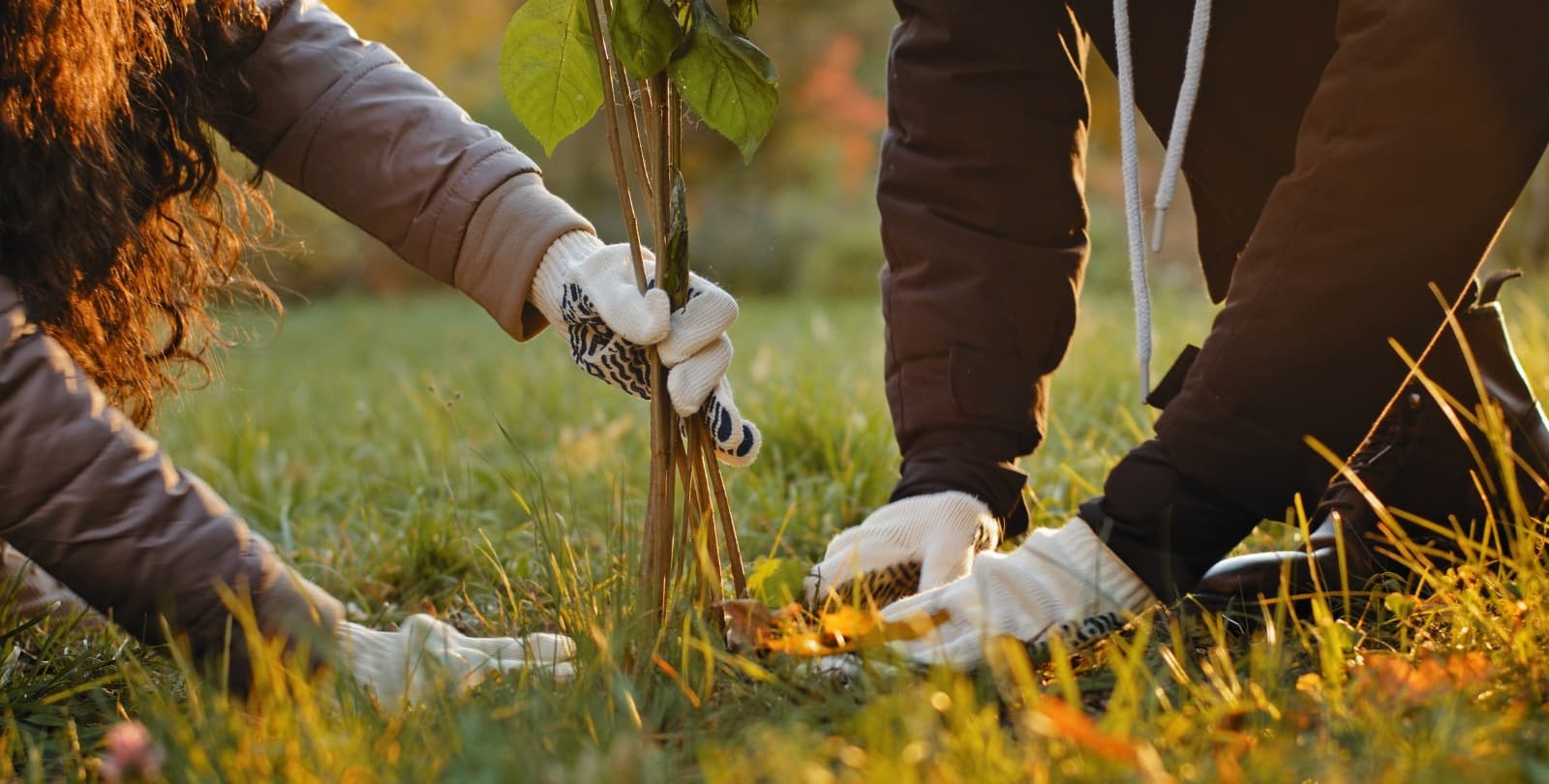
Image used under license from Shutterstock.com
Climate change is harming God’s creation. Increasing drought, rising seas, and intense heat waves are already impacting millions of people and countless other creatures.
For Christians, this moment raises pressing questions: What can the Bible tell us about climate change? And how should Scripture shape our response?
While we shouldn’t expect the Bible to comment directly on climate change, it does offer profound insights on our role in caring for creation.
In considering a faithful response to climate change, it’s worth listening to those who have reflected deeply on our role as stewards. One such voice belongs to Kentucky farmer, novelist, essayist, and poet Wendell Berry.
In a 1993 collection of essays, Berry says that criticisms of Christianity’s environmental indifference are “in many respects just.”1
However, Berry insists that this issue does not arise from the Bible itself. Instead, he argues that it stems from a misreading of Scripture and its traditions. Our task, he writes, is “to learn to read and understand the Bible in light of the present fact of Creation.”2
In that spirit, let’s turn to Scripture to better understand what it teaches us about the present fact of creation.3 In doing so, we will see that caring for creation is integral to Christian faith.
Creation Care in the Bible
All Creatures Great and Small
And God said, “Let the waters bring forth swarms of living creatures and let birds fly above the earth across the dome of the sky.” And so God created the great sea monsters and every living creature that moves, of every kind, with which the waters swarm, and every winged bird of every kind. And God saw that it was good. God blessed them, saying, “Be fruitful and multiply and fill the waters in the seas, and let birds multiply on the earth.” (Genesis 1:20-22)
Many years ago, my family took a trip to the Boundary Waters Canoe Area Wilderness, a vast wilderness in northeastern Minnesota.
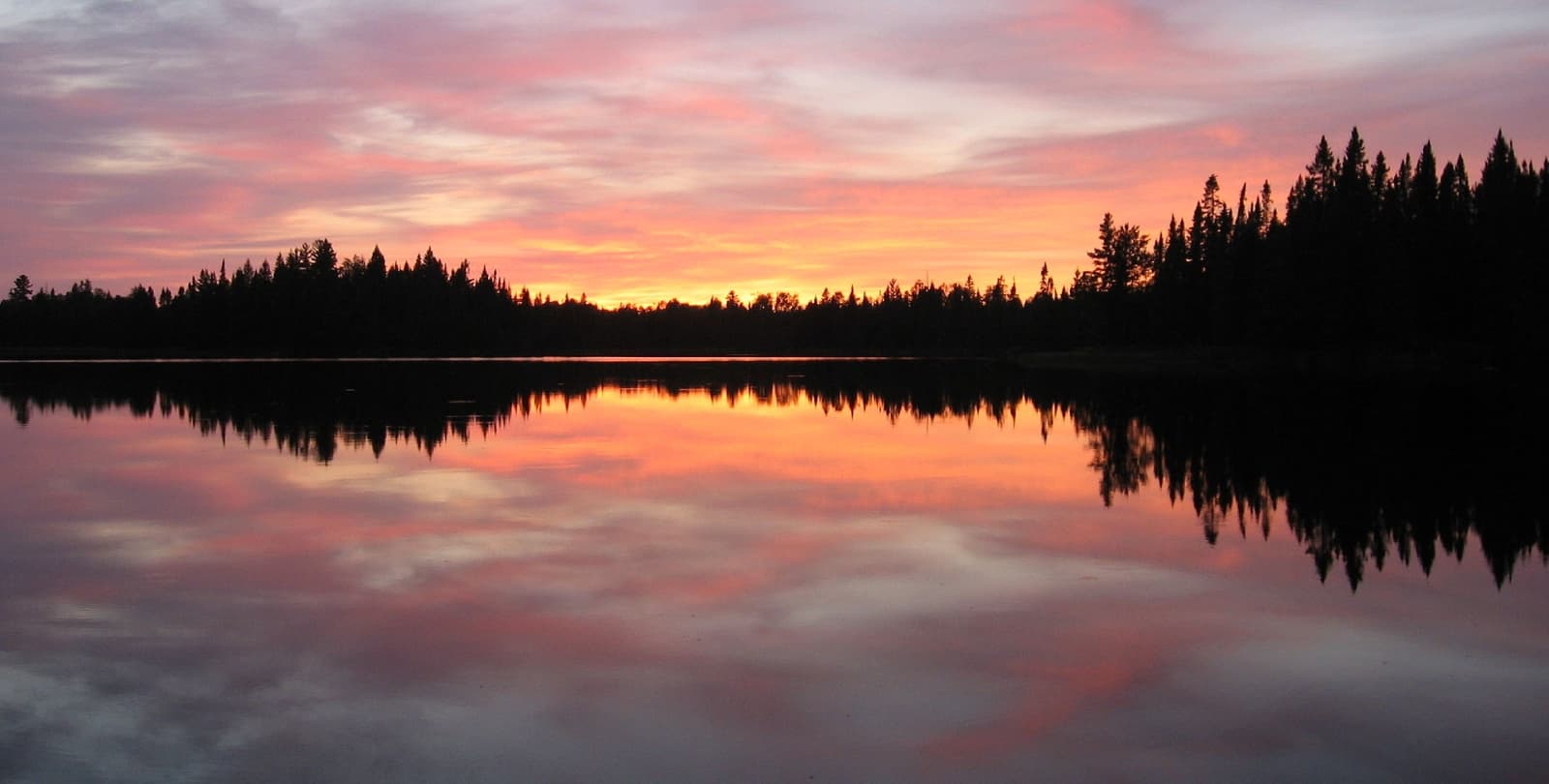
Sunset over Pose Lake, a small lake in the Boundary Waters Canoe Area Wilderness. R27182818 at the English-language Wikipedia, CC BY-SA 3.0 <http://creativecommons.org/licenses/by-sa/3.0/>, via Wikimedia Commons
After a muddy portage, I plopped down in our canoe and rinsed my feet with lake water. Most of the muck came off, but one patch between my toes did not. Slowly, I realized that the “mud” was actually a large leech.
That leech, as unwelcome as it was to me in that moment, was part of God’s good creation.
The Bible teaches us that God creates all creatures great and small. That includes sparrows and swallows, warblers and woodpeckers, lions and—yes—even leeches.
The Earth is not just our home. It is the same for sea creatures and land animals, creeping things down low and winged birds up high.
Belonging to God’s creation means learning to share this world with our non-human neighbors so that they too may flourish. When climate change threatens habitats, species, and ecosystems, this biblical vision of shared creatureliness should spur us to action.
To Serve and Protect: Humanity’s Role in Creation
The LORD God took the human and put him in the garden of Eden to serve and protect it. (Genesis 2:15)4
For several years I lived in Chicago, where police cars are emblazoned with the phrase We Serve and Protect.
This succinct summary of the duty of law enforcement also happens to be our job description as humans, as stated in Genesis 2:15.
The verse says we were put in the Garden of Eden by God to abad (serve) and shamar (protect) it. Made in God’s image (imago Dei) and created from the dust of the Earth (adam from the adamah), we are called to care for the Earth so that we and the rest of creation may flourish.
Today, this calling should inspire our response when climate change threatens to upend ecosystems and harm the natural world.
God’s Will on Earth
Your kingdom come, your will be done, on earth as it is in heaven. (Matthew 6:10)
In the Doxology, we Christians sing, “Praise God, from whom all blessings flow/Praise him, all creatures here below.” In the Apostles’ Creed, we pledge allegiance to God the “Maker of heaven and earth.” And in the Lord’s Prayer we pray that God’s will be done “on earth as it is in heaven.”
Christian hope is about a renewal of life on Earth, not an escape from it. God’s will is to be done right here—in our homes, workplaces, gardens, and parks.
God’s Good Future is Earthy
Then I saw a renewed heaven and a renewed earth; … And I saw the holy city, the new Jerusalem, coming down out of heaven from God, prepared as a bride adorned for her husband. And I heard a loud voice from the throne saying, “Behold, the home of God is among humans. God will pitch his tent with them as their God; they will be his peoples, and God himself will be with them; God will wipe every tear from their eyes. Death will be no more; mourning and crying and pain will be no more, for the first things have passed away.” And the one who was seated on the throne said, “Behold, I am making all things new.” (Revelation 21:1-5)5
God’s good future is earthy. In the future described in Revelation, we are not taken to heaven; rather, heaven comes to us on Earth.
Having brought this world of wonders into existence, covenanted with it, and persistently worked to redeem it, God doesn’t junk it and start over. Instead, God renews it.
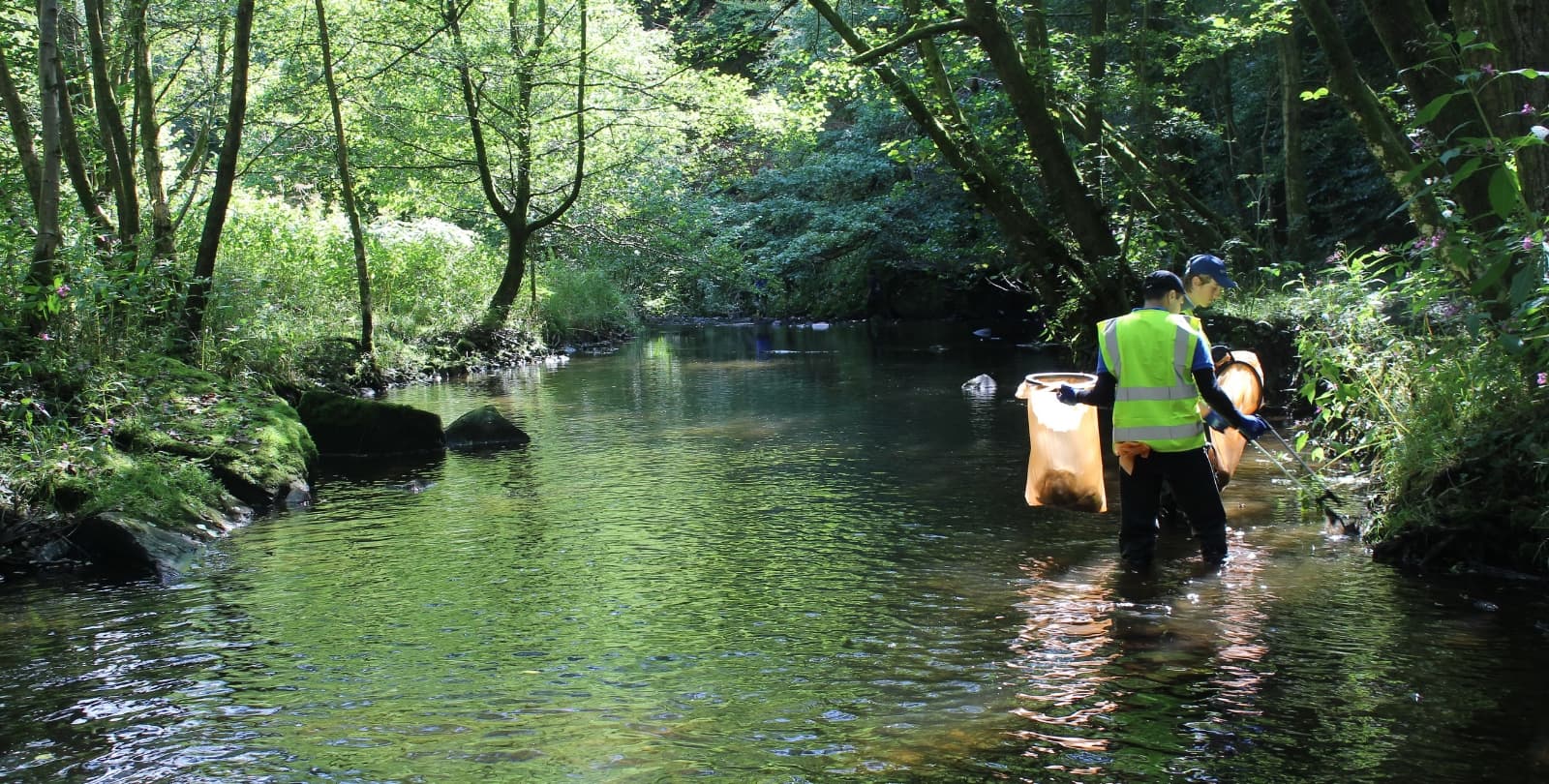
Cleaning the River Ebbw by M J Roscoe, CC BY-SA 2.0 <https://creativecommons.org/licenses/by-sa/2.0>, via Wikimedia Commons
God does not make all new things, but all things new—renewed, renovated, and redeemed.
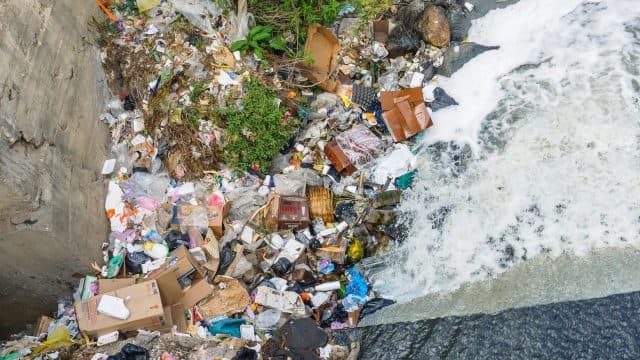
We catch glimpses of this future when we act to renew creation—in polluted streams made clean, forests replanted after fire, and animals returning to where they once roamed. These acts of transformation, which help to counter the destruction wrought by climate change, preview God’s good future of heaven on Earth.
The City of Rivers and Trees
Then the angel showed me the river of the water of life, bright as crystal, flowing from the throne of God and of the Lamb through the middle of the street of the city. On either side of the river is the tree of life with its twelve kinds of fruit, producing its fruit each month; and the leaves of the tree are for the healing of the nations. (Revelation 22:1-2)
In God’s good future, we inhabit a most unusual city. There is no temple, for God himself is the temple. People of all kinds stream into this city, whose gates never close and whose light never ceases.
Through the heart of this city flows the crystal-pure river of life, watering trees that line its banks. Rivers and trees, present in the beginning of the Bible (Genesis 1-2), also endure at its end.
The treasure we find laid up in heaven turns out to be the best we have known and loved on Earth, redeemed of all imperfections and transfigured by God.
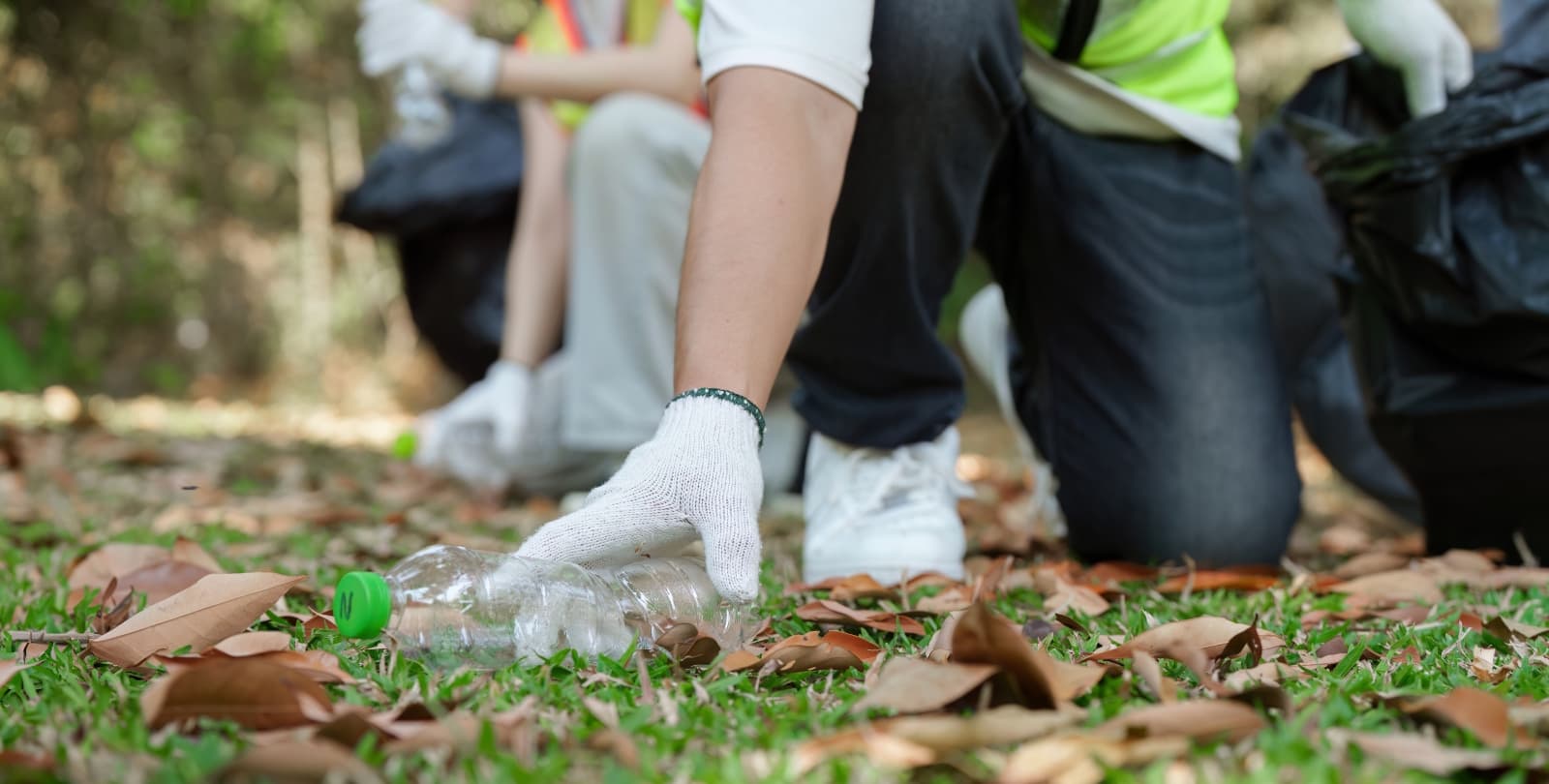
Image used under license from Shutterstock.com
What the Bible Teaches About Caring for Creation
What do these biblical texts tell us about how we should care for creation? Wendell Berry offers four insights that can guide our response to climate change:
We are Stewards, Not Owners
First, Berry writes that in the Bible, we discover “that we humans do not own the world or any part of it.”6
We do not inhabit a world of our own making. Rather, we are guests, and we have been entrusted with stewarding what God owns.
God Created All of Creation—Even Leeches
Second, Berry notes that “God made not only the parts of Creation that we humans understand and approve, but all of it.”7
God’s creation includes not just flowers and trees, but stinging insects and poisonous weeds. Like Job, we learn that God made all creatures, including Leviathan and Behemoth.

Cool Creatures | Ticks
Ticks are among the most detested creatures in all of nature—but what happens when we look closer?
We should remember that we have been called to steward all of God’s creation, not just the parts that we find beautiful or useful.
The World is Worthy of Our Care
Third, Berry writes that “God found the world, as He made it, to be good, and that He made it for his pleasure, and that He continues to love it and find it worthy, despite its reduction and corruption by us.”8
If God takes pleasure in the created world, it is certainly worthy of our care. Seeing it harmed by climate change shouldn’t lead us to deep despair, but rather it should deepen our sense of responsibility.
Creation Depends Continually on God
Finally, Berry says that “Creation is not in any sense independent of the Creator, the result of a primal creative act long over and done with, but is the continuous, constant participation of all creatures in the being of God.”9
Creation is not a finished project abandoned by its Creator. Christians do not believe in a God who creates and then goes on holiday, but rather one who continues to animate all things.
Use Without Abuse
Taken together, these insights should move us toward practices that care for God’s world.
Berry concludes his essay by writing that the Bible does not give us the right to destroy creation. While we are free to use the gifts of nature, we are not to abuse or waste them.10
In stark contrast to a reading of the Bible that underwrites the exploitation of the Earth, Berry affirms:
“The Bible leaves no doubt at all about the sanctity of the act of world-making, or of the world that was made, or of creaturely or bodily life in this world. We are holy creatures living among other holy creatures in a world that is holy. Some people know this, and some do not. Nobody, of course, knows it all the time. But what keeps it from being far better known than it is? Why is it apparently unknown to millions of professed students of the Bible? How can modern Christianity have so solemnly folded its hands while so much of the work of God was and is being destroyed?”11
Berry’s words bear repeating: We are holy creatures living among other holy creatures in a world that is holy. The way we treat creation should reflect this.
Conclusion: Creation Care and Christian Faith
Creation care is integral to Christian faith. From the Bible beginning and ending with rivers and trees to the Doxology singing that all creatures here below praise God, caring for the world is woven into Scripture and tradition.
Also read/listen:
- End Times and the Environment
- Why Should Christians Care for Creation?
- What Can One Person Do? A Creation Care Dialogue
- Climate Conversations: Here’s How to Do It Better
I’ll conclude with the following words from minister and theologian Joseph Sittler:
“When we turn the attention of the church to a definition of the Christian relationship with the natural world, we are not stepping away from grave and proper theological ideas; we are stepping right into the middle of them. There is a deeply rooted, genuinely Christian motivation for attention to God’s creation.”12
About the author

Steven Bouma-Prediger
Related resources
If you enjoyed this article, we recommend you check out the following resources:

Common Question


Books