Camille Dungy | Dandelions and Bindweed
With a poet’s close attention, Camille Dungy reflects on the interactions between humans and the greater-than-human world.
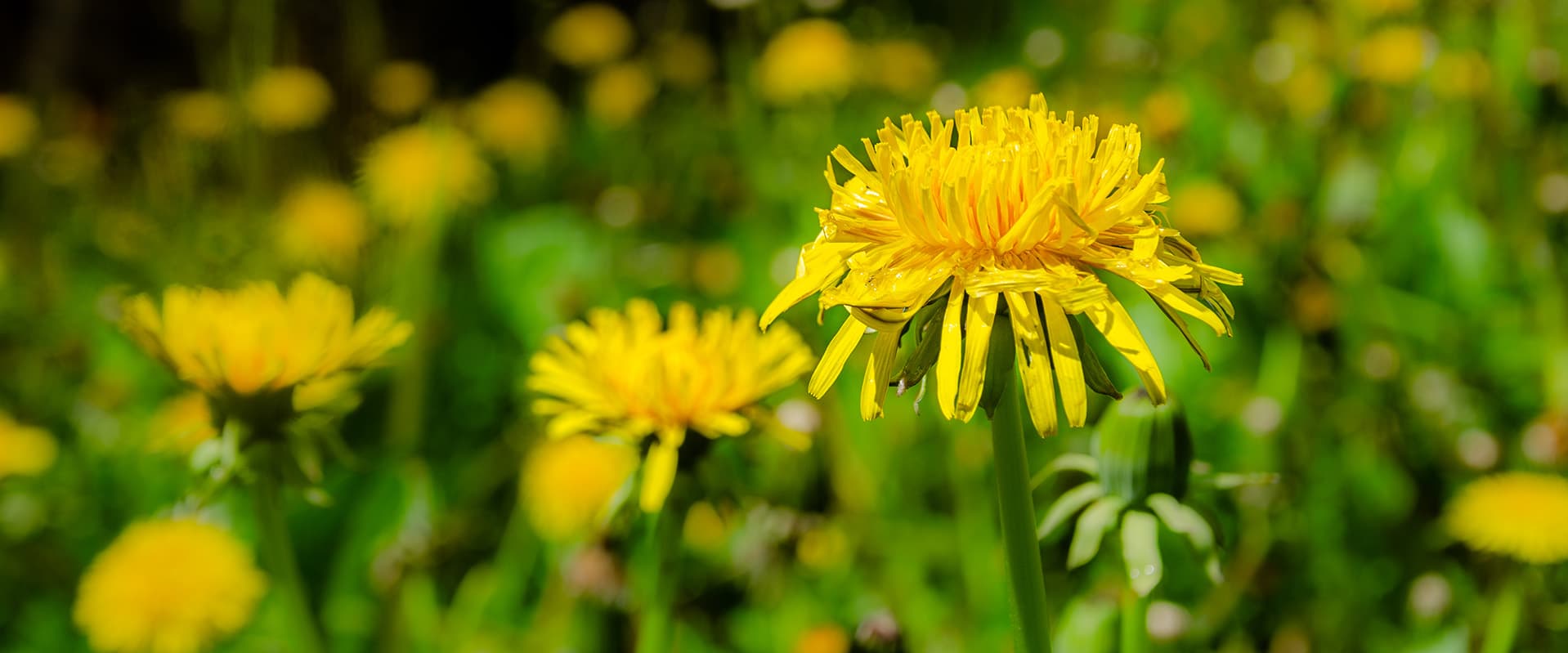
Photo by Colin Hoogerwerf
With a poet’s close attention, Camille Dungy reflects on the interactions between humans and the greater-than-human world.
Description
Camille Dungy is a poet, and it is with a poet’s close attention that she reflects on the interactions between humans and the greater-than-human world. In the conversation, Camille talks about how she came to her connection to the greater-than-human world, about the need to include family and home in nature writing and about the definition of a weed and how good cultivation often requires hands-on management. She ends by reading a poem from her collection, Trophic Cascade.
Theme song and credits music by Breakmaster Cylinder. Other music in this episode by Titan Sound, courtesy of Shutterstock, Inc.
- Originally aired on May 09, 2024
- WithColin Hoogerwerf
Transcript
Dungy:
Each and every one of us whether we have child care, elder care, work, things that keep us for the most part, inside, we all also have these really deeply connected greater-than-human realities, urban center or not, right? And so for me, if as a writer, I am an imagination builder, not just my own imagination, but whoever my readers are, then I want to make space for people to feel that they don’t have to separate the parts of themselves in order to connect with the greater-than-human world.
Hoogerwerf:
Welcome to Language of God. I’m Colin Hoogerwerf, producer of the show and guest hosting for Jim for today’s episode.
I was pretty excited to get a chance to sit down for a while with Cammile Dungy, whose voice you just heard. Camille is trained as a poet and is the author of four collections of poetry, most recently Trophic Cascade, winner of the Colorado book award and she’s poetry editor at Orion Magazine. Her latest book is called Soil: The Story of a Black Mother’s Garden. Soil is one of the hard to define books, which I think are the best kind. It is memoir and nature writing and includes poems and images throughout as well. We talk about that book but also the craft of poetry and hear her read one of her poems.
We also talk about many of the themes that come up in her work, about the natural world and our connection to it and within it and what it means about how we live and work and nurture the abundance of life around us.
Let’s get to the conversation.
Interview Part One
Hoogerwerf:
Camille, thanks for joining the podcast. Happy to be here, Colin. So we like to start these conversations by learning a little bit, a little bit about our guests. Can you start by telling us where and who you come from? I’m specifically interested to if you can, like trace back your connections to soil and creatures and
Dungy:
Such an interesting question. I was actually born in Colorado. My father’s a physician, and his first academic job was at the University of Colorado. So I was born in Denver, but I moved, we moved to Southern California when I was a toddler. So I am a Californian by upbringing. Though, then, in high school, he got a new position at the University of Iowa. And so I finished high school in Iowa City, Iowa, which was very different than Southern California. It was a big change in so many ways, you know, culturally, but also the flora and fauna. And so I think that might have been one of the first times where I wasn’t taking for granted that everything is just what it is, you know, that things are, what they are in their place, and in their context. And some things transfer and some don’t. So where I came from, part of the story, I think, is part of the way that I pay attention to the living world. Then I ran back to California for college immediately, a little boomerang, and finished college in California. And then ended up in the south east for 11 years and for graduate school and my own first jobs. So that again, was this very different because Iowa City is technically, not actually, but technically west of the Mississippi, it’s so close to the Mississippi River. So my entire youthful experience was the Western experience. And then all of a sudden, I pop over to this very different landscape in North Carolina and Virginia and trying to figure out what that was, and never forgetting how much I loved the West. And so my imagination is so deeply steeped in the flora and fauna of the landscape, the space of the American West, and yet I am aware that not everybody has that experience. So part of my writing to me is about figuring out how to translate those, that world that I know and love and now live back in, to folks who might not otherwise know them.
So then you ask this, like, where I’m from, it sounds like kind of my family etc. My father who’s this physician also studied botany and biology in college and is the kind of person where the plants taxonomical name is important because the common names get all mixed up. And so I was raised with paying attention to the taxonomical names of plants in addition to just Black Eyed Susan, right?
Hoogerwerf:
So I’m not ruining my kids by doing that?
Dungy:
I think it’s a little trickier but I don’t think you’re ruining them. And it also especially if you also use it interchangeably with a common names that just among other things, that just helps people understand that there’s all these different ways of paying attention to the world and naming it and so it just gives them more tools for connection, not fewer, right like so no you’re not ruining them.
And so that’s kind of on one end is I was raised by a family My father in particular who really loves plants, and they’re great gardeners and indoor house plants and etc. And then I think I have, my grandfather was a minister, American Baptist minister. And I think I attribute some of my story telling behaviors to that part of my lineage, like to understand there’s storytelling, but there’s also storytelling that is meant to instruct and move, right? That all of those pieces coming together, you’re not just telling a story to tell a story. And I’’=m not just telling a story for myself. Like there’s a congregation to which I want to convey some ideas that feel reflective of where they may be, but also feel like, you know, there’s nothing worse than sitting through a sermon where there’s no growth space. Right? There’s no charge for action or direction. And so that, to me, feels really important in writing.
Hoogerwerf:
So your parents obviously passed down kind of this attention—I like this idea of attention—to the more-than-human world. In reading Soil, I sensed maybe like a growing attention over the writing of the book. Maybe that was me. Have you felt like there’s been a journey over your life and over the writing of this book, to a different kind of attention to the more-than-human world?
Dungy:
That’s an interesting question. I mean, Soil follows seven years of my family’s work of rewilding and creating a more sustainable landscaping in our yard. And so that growing attention may be as we got more, right, there was more that we had renewed in that landscape. And so more things for me to talk about as the years progressed. But I think because there were more things for me to talk about, more things for me to see, my knowledge increased and improved. And my connection with my yard increased and improved because there were more lives with which to connect. So as we did more and more of the pollinator garden planning, and drought tolerant planning—planning and planting—more animals came and more fauna in addition to more flora, and so there were more things for me to describe. So that may be part of what you’re seeing.
Hoogerwerf:
You mentioned your grandfather. What was the faith background of your childhood with your your parents, was that…?
Dungy:
Yeah, these Baptist people raised not-Baptist children. My aunt is Catholic, my uncle is Episcopalian, and my parents are Presbyterian. So different, similar, but different faith traditions, but not Baptists. So that’s very interesting to me. So I was raised Presbyterian, and Methodist, alternating, depending on what the congregation in the town where we were, you know, Methodists are just Presbyterians with fewer books. [laughs] There is more difference than that. But you know. So that’s to me, as I like my magnet point, I guess, in terms of faith, faith tradition is more of the Presbyterian.
Hoogerwerf:
I’m sure your dad’s background in science, I imagine there wasn’t a kind of science, faith tension in the house. Did any of those kind of conflict narratives enter your life?
Dungy:
The science, Faith conflict is present now, because my daughter is 13 and in the very legitimate age of questioning, and so she’s a very mathematical, scientific minded person, and has a lot of questions about how this faith tradition fits. And so I don’t feel like I questioned in the way that my daughter does. And it’s been very interesting. Hearing my father and my parents try and communicate with her, the ways that they came to their conclusions.
Hoogerwerf:
Okay. I’ll get back to that at the end. I have some more thoughts about this. But let’s talk about your book. We’ve already mentioned it. Soil, The Story of a Black Mother’s Garden. I understand you didn’t necessarily start out to write a memoir, how’d that come about?
Dungy:
I did not. I thought I was writing a book of poems. I’m like, I’m trained as a poet. I teach poetry. And I won this Guggenheim Fellowship, which was super exciting, for writing a collection of poetry about—it was, the working title was Soil, you know, for the grant application, and it was going to be about what grew up around me. And it was going to, you know, many aspects of the idea of what the poetry collection was gonna look like, do fit what Soil became. But 2020 happened to me. That was the year that I had my fellowship. And so I was home, my daughter was home. You’re just looking at your own yard became impaired, like there wasn’t a choice, because we were shut in. And so in those ways, the book really flipped, because I might have unconsciously written much more into the solitary environmental tradition where you don’t bring, you don’t talk about what’s happening behind the scenes or in the domestic space, you just write the poems about your interaction with the outside world. But I, you know, childcare was so all consuming, and there was so much laundry. I was cooking all the time. And if I were to write, and not include, I wouldn’t have had anything to write about. Because all those things were what my life was. And so those, there’s a moment that one section opens where I’m stooped over the dryer, pulling, you know, moving socks, wet socks into the dryer, and I just that was what was happening when the conversation happened, that needed to be described in the book. And so I included all of that.
And so the book really shifted and prose became a better vessel to hold these kinds of complexities and interrelations. There are poems woven throughout the book. And that also is a very different thing. Usually—I have published prose, another prose collection before, and a collection of poetry within six months of each other that were being written at the same time, and it was separated entities. And instead with Soil, because so much of the book became about thinking about the integration of all parts of our lives so that we could more sustainably support all parts of the living world, I wanted that integration to show up in so many different ways. And so there’s poems in the book, there are maps in the book, there are visual images in the book, like all these ways in which I was engaging with thinking about and trying to help be a vessel for these beings and these experiences. I wanted them to gather as opposed to trying to hold them separately.
Hoogerwerf:
Yeah. And that came through. And I’ve been thinking about this. So I’ve been thinking about this craft, the craft of writing and the craft of poetry. And so you’ve kind of mentioned these two things, and one doing something better than the other. I’ve been wondering if there’s an analogy here even to the science and faith world. Like poetry seems to access a kind of truth better than prose that allows for silence and things that aren’t specifically stated, where prose is much more linear. Does that have any traction for you for like, as faith as a way to access truth as opposed to science? Which both may bring you to something but in really different ways?
Dungy:
Isn’t science also a kind of faith? But I think one of the big differences may be the proof part. And that in science how we get there is you test it, and it’s proven. And then there’s the data that can be there to support it. Where in faith, you have your theory and test it. And you’ve just got to have faith that whatever comes back to you is, in fact, the proof that the faith is being answered. Right. And so that, to me, feels like one of the big differences between a rational scientific way of moving through the world. And of course, you know, science is completely fungible. Like, definitely like shifts and changes and our ideas of what facts are, like, keep moving. And so that feels also right, like a kind of, you have a kind of faith that this proof is static, which it often isn’t.
The difference—one of the differences between poetry and prose is similar about how information is received that, with the prose, there’s a degree to which we expect prose to deliver us information like the newspaper does: the who, what, when, where, why, how. And that material is there and covered in some way, as we’re moving through prose. With poetry, there is an expectation, which is one of the reasons a lot of people find poetry very scary, there’s an expectation that it is not going to deliver that who, what, when, where, why information. Or certainly not in a linear narrative fashion that is easy to access. And also, poetry is a lot closer to music, where you are experiencing sensation through, I call it a paralogical track, that there’s all kinds of ways of understanding the world and what’s happening that are through senses and etc. And poetry takes you closer to that. You’re not engaging the rational, logical brain all the time, or as much, which is a different kind of faith, right? It’s like how do I prove that I’m thinking this way? Well, I felt it. And it was something about the sonic quality of this, but I can’t like, give you the exact multiple choice test answer for why that is. And so yes, your idea had traction. That was a really long way around getting to that.
Hoogerwerf:
Yeah. And that just, you know, I see this tendency in. at least in American culture, to be more and more reliant on things being very explicit. And it’s harder for people to need to find meaning that’s not stated. And so this is why and I think you kind of said. science—it’s a myth, maybe that science is as defined as we think it is. But I think people feel like that. And so I think poetry has an opportunity to help people to kind of move back into a world that’s—mysterious? In ways that are challenging. Is that…
Dungy:
I hope so. I hope so. I’m personally and like, actually, immediately, like, right in the present moment, really disheartened by not seeing that. Even within the literary community. Because there’s so many issues that are so—there are some facts that are cut and dry and absolutely clear. And next to those facts that are cut and dry and absolutely clear, there’s a lot of really complex ways of moving towards responding to those facts that are—and I feel that that can be the space for art and, and poetry in particular, but it does not always— It’s not, it hard to work with and around.
Hoogerwerf:
Yeah, I mean, I would love to see art and literature as a way, as a bridge between science and faith in some ways.
Dungy:
Yes, that makes sense. I think that does make sense. It does make sense. How open to walking that bridge People are can become a question.
[musical interlude]
Interview Part Two
Hoogerwerf:
Let’s talk about dandelions because I can probably talk about them all day. I’ve talked about them before on the podcast. So listeners are like, “Oh…” I’ve been, over the years, trying to grow as many edible things in our yard as possible, which means that there is as much dandelion as grass, by design. Like, my kids, will blow them out and say, “Dad, look, I’m spreading your crop.”
Dungy:
Do you then, do you eat them?
Hoogerwerf:
We do. We make pesto out of them. I make bitters out of the roots. We make dandelion wine when we have time to pick all the little petals off the tops. And your list. I think I even saw something in your list of things, pickled in dandelion capers?
Dungy:
The caper, those little capers?
Hoogerwerf:
Yeah. So that’s, on my list.
Dungy:
That would be a good thing for your kids. Like, “go get, get get all those little capers.” And then you can sort of maybe slow down
Hoogerwerf:
Most people see dandelions as a weed. Can you describe that moment with your daughter, when you’re picking dandelions?
Dungy:
There remains in me a kind of concern for respectability that, like I understand that the dandelions are good for the early pollinators. And they’re actually incredibly good for the soil and renewing the soil. And they do a variety of things. But I’m already making a somewhat crazy yard in a suburban space. And so like, I just feel like they can, my neighbors might be able to get the wildflowers and the pollinator garden, but like, the sea of dandelions might be a bridge too far for them in terms of my community care. So we were out trying to get the dandelions before they turned to seed, you know, I’m not I was, we weren’t even pulling them up really, by the roots. I was just like, let’s just get these flower heads. So that we don’t share the love too much with everybody else. And she’s picking and we have, we’re having a little speed contest who can fill the most in the buckets. And she had a couple questions about whether these are useful, right, because here I am, the like, the neighbors don’t want to see this. But at the same time, I’m telling her all these incredible things that we can eat with them, and whether they’re useful in that way.
But then she also wanted to know, if people used to pick dandelions the way we were picking them in the olden days. And forgetting that my daughter’s idea of olden days is like 1994. I went all the way back to the 19th century, and told her that enslaved children probably would have been picking weeds and then a long story about who and how. Which was not what she had signed up for that morning and that history, but got me really thinking about who has the power and the agency to choose when and how they grew things, and when and how they weeded and what counted as a weed and how much labor went into. So among the things that I found interesting, from that conversation with my daughter is that one, the first patented lawnmower was invented by a formerly enslaved person. And that like a lot of these inventions that are labor saving devices, invented by people who would have been the labor. And so that feels like instructive knowledge about how we’ve chosen to or forced other people to control our landscapes.
Hoogerwerf:
Yeah. What is a weed, a weed is just. . .
Dungy:
Yeah, what does my father say: “a weed is just a plant that is growing in a way or a place that you don’t want it to.”
Hoogerwerf:
There’s this verse in Hebrews that says, “the land that produces thorns and thistles is worthless and is in danger of being cursed.” And I guess I get it. It’s being used as a metaphor. But clearly that was the case a long time ago. I don’t totally know what to do with that.
Dungy:
You’re wanting me to go here? Because I definitely believe that the King James translation of the Bible and the derivative translations that have come from the King James translation of the Bible is in many ways responsible for the disconnection that’s so many people who have been raised consciously or not in the Judeo Christian tradition, and then particularly the Christian, American Christian tradition have with a thriving living world. There is a great deal of separation between the wild landscape or an untended landscape or a not-human controlled and directed landscape, and what paradise is supposed to look like and what desirability is supposed to look like. So portrayals of the desert, portrayals of wilderness, portrayals of thorns and thistles. A lot of these are deeply problematic and divisive. And feel to me very separate of a second significant portion of the New Testaments portrayal of expansive, connected love where you can you go to the wilderness to in fact, create a connection and and find the answers, right, but we just stay in that that Old Testament: it’s bad out there, we’re kicked out of Eden and in trouble.
Hoogerwerf:
Yeah. Well, in the realm of plants that might fall into the category of cursed is another one you talk about. Bindweed.
Dungy:
Oh, yeah, well, that one is.
Hoogerwerf:
So describe bindweed.
Dungy:
Oh bindweed. Bless it. Bindweed is a plant that I want to know. like what it is like in its truly native environment, if it does this, but it has traveled all over the world, it is not native to North America. And it is incredibly opportunistic. And so it hasn’t deep deep roots, rhizomatic, like just spreads all over the—it’s not literally rhizomatic, but it spreads all over the place. The roots travel vertical and horizontally. And then with tendrils that come off, and any part of the bindweed, if it’s just a little piece of it will create this root structure. So like the leaves are a little bit of the stem. So if you pull it out improperly, or you till the soil, then it’ll spread even more. And it’s like once it’s established, it is nearly impossible to remove, and it binds other plants. So it climbs up anything it sees towards more light and will pull down other plants and choke them out. And so it’s a highly competitive opportunistic plant. It is not a gardener’s great love.
Hoogerwerf:
No, I have been fighting it.. . .
Dungy:
But it has a lovely flower.
Hoogerwerf:
It does. If you let them get that far. It’s hard not to.
Dungy:
Yeah [laughs]
Hoogerwerf:
So I have been fighting Bindweed, maybe improperly I learned, but I’ve come to realize that any kind of cultivation—so a garden or ecosystem conservation on a bigger level, really just comes down to nurturing some life, while eliminating other life. Like a garden, you can’t give the equal amount of care to every living creature. It wouldn’t work. Right?
Dungy:
Correct.
Hoogerwerf:
So how do you find that balance between caring for these things? Bindweed, we care for bindweed? And creating something productive. Productive is defined by us of course, right? But food, we need food and we need beauty?
Dungy:
In her book, Braiding Sweetgrass, Robin Wall Kimmerer has a section where she talks about this research that really, she was part of that if you went out to, like, she wanted to know, if you tended and trimmed and cut these wild grasses, would you hurt that wild grass population. And the science said, of course, you know, because you’re trimming and you’re cutting and so it won’t grow as well because you’re messing with it. And so they had a control field where they didn’t do anything. And then they had another field where they did a lot and then they had this other where it was like a sort of carefully managed trimming and cutting like a you know, in a sustainable way, that is the field that did the best. And so I understand that to be telling me that, in fact, interaction is more useful. If I did not do anything to support my child, give my child some limits and parameters to instruct my child you know, positively but sometimes also negatively, because that is in fact, part of what we need to do, my child wouldn’t grow up as well. And then there’s too much, there’s definitely a too-much kind of attention, care, management, cutting-down that we can do to a child as well. It’s the same with the living world, these interactions that we have. Managed in the right way help a flourishing to develop. My the milkweed in my yard milkweed is in fact rhizomatic, like it will spread everywhere if I let it and yes, I want the milkweed for the caterpillars and all the other pollinators and so there’s a part of me that feels like I need to just let it do it’s thing. But in fact, the caterpillars want new growth. And so when I’m trimming it back because it’s taking too much space and it grows fresh shoots I am in fact making the best platform for nutritive establishment of these beneficial pollinators that I’m trying to get, right? And there’s case after case like this, where I feel like hands off is not the answer, hands off is going back to another kind of division and separation. Interconnected care with the greater good in mind is really what I am trying to attain.
Hoogerwerf:
Can we extend that metaphor to living in good community with each other?
Dungy:
We cannot hands off make social justice happen. You have to have interconnected care. You have to be willing to take risks. You have to be willing to support and cut and prune and etc., otherwise there’s no positive social change either. Yes.
Hoogerwerf:
So you I think you already mentioned the solitary wood walker earlier. You make some really valid critiques of some of my favorite nature writers
Dungy:
I know.
Hoogerwerf:
And probably they are writers that you also like too. Annie Dillard and Robert MacFarlane are some of my favorites. And there’s a lot of them that write with this eye outward towards, quote unquote nature, that doesn’t include any humans. Or if it includes—so my first thing was to defend Robert MacFarlane is like, in his book Underland, he brings in these characters these human characters—but what I realized is it’s not family, and it’s not mundane people. It’s only kind of almost eccentric characters. And he maybe prunes out a lot of that kind of domestication of life. And I was even thinking, when we go on a vacation my wife always jokes when we get home all her pictures are for family and all mine are of scenery. [laughs] And I’ll wait for people to move, right, before I take the picture. There’s something we’ve taken in that tells us that this perfect nature is without humans and definitely without laundry and childcare. But you’re trying to do something else and there are other people doing this too. Can you talk a little bit about the importance of changing that, in that genre maybe and beyond?
Dungy:
Yes, okay. So you’re right, all of the writers that I criticize at one point or take to task or in one part of a book I will praise and connect with in another because we are complicated people. Except for Robert MacFarlane, it is true, I simply call him a solitary wood walker. And that’s the last I say about because I’m talking about him in a different context. But MacFarlane proves a really interesting, I think, point, because one of his most fascinating works is that Last Words project, where he’s thinking in a really deeply imaginative way about these words that are removed from the Oxford Children’s Dictionary, which many of us, who are connected to environmental writing flipped out about because there were all of these Earth-based words that that the Oxford Children’s Dictionary lexicographers tried to argue weren’t part of children’s lives. And then I, you know, I wrote a piece, right when it happened in 2008, where I used every word in daily context, right? Like, in fact, there are a lot of ways that these things come into our daily context.
But if we write our family and our children and the mundane aspects of just living out of our environmental literature, then it has more trouble seeping into the imagination, and it becomes easier for people to say, well, you know, there’s nature and then there’s like life. And so we need to be talking about what life is because nature is esoteric, and completely out there. And so to me, it becomes this charge, that I have to show this direct connection with the living world and my lived world. Furthermore, what ends up starting to happen is that people believe that they can’t, they don’t have a connection with the living world, and then they don’t have to care about it. And they’re not environmentalists and they recycle. And that’s it. And they’re done. As opposed to seeing the ways that each and every one of us, whether we have child care, elder care, work, things that keep us for the most part, inside, that we all also have these like really deeply connected greater-than-human realities, urban center or not, right? And so for me, that just became, if as a writer, I am an imagination builder, not just my own imagination, but whoever my readers are, that I want to make space for people to feel that they don’t have to separate the parts of themselves in order to connect with the greater-than-human world.
Colin Hoogerwerf
Will you read a poem for us?
Dungy:
I will.
Hoogerwerf:
I picked out Trophic Cascade.
Dungy:
Oh, see, here we go. This is a great segue. Trophic Cascade
[reads Trophic Cascade]
Hoogerwerf:
Thank you.
Dungy:
Thank you.
Hoogerwerf:
I love that poem, for a lot of reasons. I spent a lot of time in Yellowstone in the summers. But mostly that shift at the end, like you do this whole thing, and somebody’s like, tempted into thinking it’s just, it’s just gonna kind of end at that last—but you don’t let it. And I think that’s kind of what we’re just talking about this interconnectedness.
Dungy:
And that, you know, in the composition of that poem, it was me being completely obsessed with the story. It was a YouTube video, I was like, I just like kept watching the video. And then I just did all this other research about the that particular example of this trophic cascade, which is the the ecological term for when you reintroduce a trophy predator when you remove or introduce a trophy, like a top predator like the changes that happened down the cycle. And I was fascinated by the topic, but spent a lot of time just playing with it and researching it and like writing up this list. And then I was like, “wait, why do I care? Why does this matter to me, that I am so obsessed with this.” And that’s when the turn in the poem happens. That’s when the poem happens, as opposed to just being like a list of really fascinating things that I put into my journal. Because I figured out that I cared because there was a connection to my own life as a mother. That otherwise it was just like a thing out there. That was interesting. But then the second I realized that, “oh, I am implicated in this landscape.” then something had changed in my fundamental understanding.
Hoogerwerf:
Well, we’re coming to a close here. We often ask our guests what books they’re reading and I’m especially interested to know what’s on your bedside table or what are you going to read on the trip home?
Dungy:
My kid is really into Percy Jackson right now so I never read the Rick Riordan books and so I’m very—like that is that is the true story. I’m also reading Kaveh Akbar’s book Martyr! .
Hoogerwerf:
Yes, I just heard him speak.
Dungy:
So that is—I’m going back and forth between Rick Riordan and Kaveh Akbar’s book Martyr! I have a summer of really, reading that I’m really excited for but it is the very end of the semester right now. So before that, we got some student projects I’m super excited about. I’m teaching an environmental literature class and the students are like, they’re not all English majors. They’re biologists and natural resource people and forestry folks, and just watching them kind of pop into new understandings about how we can communicate about the living world and how they can incorporate their science in a way that makes—that’s engaging and drives action. So I’m actually really excited to be reading the final projects of my students in the coming weeks.
Hoogerwerf:
Thank you for being here.
Dungy:
Thank you
Credits
Hoogerwerf:
Language of God is produced by BioLogos. It has been funded in part by the Fetzer Institute. Fetzer supports a movement of organizations who are applying spiritual solutions to society’s toughest problems. Get involved at fetzer.org. And by the John Templeton Foundation, which funds research and catalyzes conversations that inspire people with awe and wonder. And BioLogos is also supported by individual donors and listeners alike you contribute to BioLogos. Language of God is produced and mixed by Colin Hoogerwerf. That’s me. Our theme song is by Brakemaster Cylinder. BioLogos offices are located in Grand Rapids, Michigan in the Grand River watershed. If you have questions or want to join in a conversation about this episode, find the link in the show notes for the BioLogos forum. Or visit our website biologos.org, where you’ll find articles, videos, and other resources on faith and science. Thanks for listening
Featured guest
Camille Dungy
Camille T. Dungy is the author of four collections of poetry, most recently Trophic Cascade (Wesleyan UP, 2017), winner of the Colorado Book Award. She is also the author of the essay collections Soil: The Story of a Black Mother’s Garden (Simon & Schuster, 2023) and Guidebook to Relative Strangers: Journeys into Race, Motherhood and History (W.W. Norton, 2017), a finalist for the National Book Critics Circle Award. Dungy has also edited anthologies including Black Nature: Four Centuries of African American Nature Poetry and From the Fishouse: An Anthology of Poems that Sing, Rhyme, Resound, Syncopate, Alliterate, and Just Plain Sound Great. A 2019 Guggenheim Fellow, her honors include NEA Fellowships in poetry (2003) and prose (2018), an American Book Award, two NAACP Image Award nominations, and two Hurston/Wright Legacy Award nominations. Dungy’s poems have been published in Best American Poetry, The 100 Best African American Poems, the Pushcart Anthology, Best American Travel Writing, and over thirty other anthologies. She is University Distinguished Professor at Colorado State University.
Join the conversation on the BioLogos forum
At BioLogos, “gracious dialogue” means demonstrating the grace of Christ as we dialogue together about the tough issues of science and faith.