Cool Creatures | Lemurs
A look at lemurs, what their evolutionary story reveals about being human, and the importance of caring for endangered species.
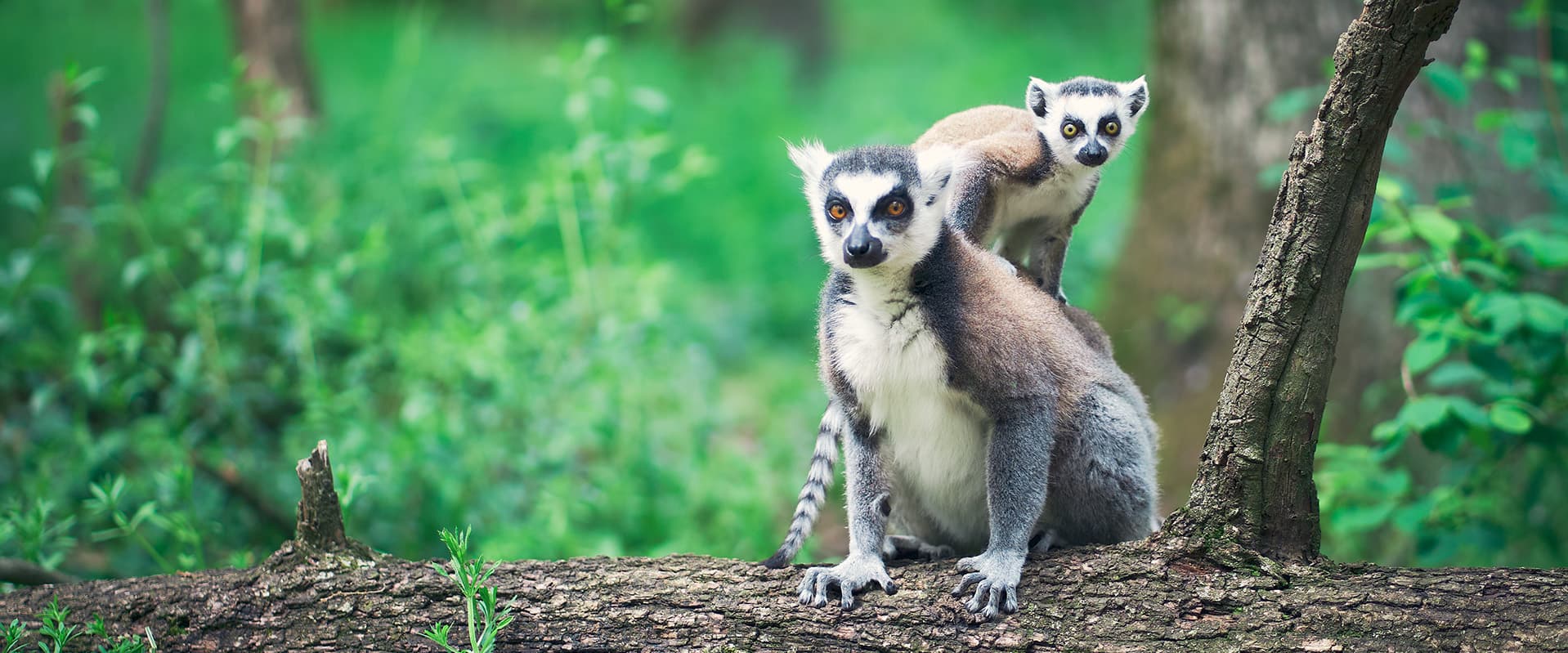
Image used under license from Shutterstock.com
A look at lemurs, what their evolutionary story reveals about being human, and the importance of caring for endangered species.
Description
What if one of our closest relatives had taken a completely different evolutionary path?
In this episode of Language of God, we continue our Cool Creatures series with a journey to Madagascar and also to the Duke Lemur Center, to explore the strange, beautiful, and deeply revealing world of lemurs. These primates split from our own lineage tens of millions of years ago, evolving in isolation into an astonishing diversity of forms.
Along the way, we meet scientists who study lemurs in the wild and in conservation settings, uncovering what makes them so unique: female-led societies, rich social bonds expressed through grooming, and a reliance on smell rather than sight to understand their world.
But this episode isn’t just about lemurs—it’s about what they reveal. Lemurs help us ask deeper questions about what it means to be human, how evolution unfolds in different directions, and what responsibility we carry for other species. With nearly all lemurs now threatened by habitat loss and human activity, their story is also one of urgency and conservation.
From evolutionary history to field research to theology, this episode invites you to see lemurs not just as fascinating creatures, but as mirrors—reflecting both our past and our present.
Theme song and credits music by Breakmaster Cylinder. Other music in this episode by Pink Marble, Nick Petrov, Animated Music, Vesper Tapes, Rick Bombino, Zeonium & MS Elyascourtesy of Shutterstock, Inc.
- Originally aired on April 02, 2026
- WithColin HoogerwerfandMadeline Chrome
Transcript
Field Recording:
My name is Scott and I’m going to be your tour guide today. … We’re going to go just around the corner…
Hoogerwerf:
Welcome to Language of God. I’m Colin Hoogerwerf. Scott was a tour guide in North Carolina, to show a group of us around someplace I’ve wanted to go for a long time.
Field Recording:
Awww, so cute. Oh my gosh
Hoogerwerf:
To see a creature that is not so different from us in a lot of ways.
Field Recording:
[sounds of awe from tour at seeing lemurs]
Hoogerwerf:
That place was the Duke Lemur Center
We’re back with another episode in our cool creatures series. Today is all about lemurs.
Part One: Lemur History and Ecology
Fuentes:
Lemurs are fascinating because they show us one way in which primates could have gone.
Hoogerwerf:
That’s Agustin Fuentes. He’s a professor of anthropology at Princeton University. That means he studies what makes us human. To do that, means that he also studies a lot of the creatures that are closely related to us.
Fuentes:
So lemurs are fascinating, because lemurs and the rest of the primates—the anthropoid primates, right—we’re talking about a division probably 30 million, if not 50 or 55 million years ago, right? So there’s this huge evolutionary trajectories, and then especially sort of evolution and isolation on Madagascar, where humans didn’t even arrive till a few 1000 years ago. We know the anthropoid way, we know the monkey and ape and human way. But what’s amazing about the lemurs is that’s another way. And so it’s like an evolutionary laboratory.
Tattersall:
Well, you know, they’re relevant to what it means to be a human, because they are the substrate on which the humans are ultimately constructed.
Hoogerwerf:
This is Ian Tattersall.
Tattersall:
So if you want to know what your ancestors were like 50 million years ago, lemurs are the closest thing you’re going to find.
Hoogerwerf:
Ian is a paleoanthropologist. And he’s done a lot of work with lemurs. He literally wrote the book on Lemurs…he gave me a copy. Lemurs of Madagascar, first edition, published in 1995. There have since been a bunch of updated versions of that book with other authors but Ian’s love of lemurs runs deep.
Tattersall:
And they are extraordinary. I mean, they are female dominant. They use their sense of smell much more than we do, not only to understand the environment, but to communicate with each other. And on the other hand, they’re incredibly diverse.
Hoogerwerf:
Both Ian and Augstin have touched on this point, which especially for an anthropologist, makes Lemurs interesting, which is that while they are very closely related to us, they also have 50 million years or so of evolutionary separation from us.
So let’s do a little history lesson for how lemurs got to Madagascar in the first place.
And to help me not make this sound like a lecture…I’m bringing in some help from my newest BioLogos colleague.
Madeline, welcome.
Chrome:
Hi! I’ve been told I’m here to represent ”the people.”
Hoogerwerf:
Perfect. That’s exactly what I need.
Chrome:
No pressure.
Hoogerwerf:
Alright—so we’re going to rewind way, way back. About 200 million years ago.
Chrome:
Okay, already uncomfortable with that number.
Hoogerwerf:
It’ll be alright. Just a couple blinks of an eye in Earth’s 4.5 billion year story.
Chrome:
Sure. A blink.
Hoogerwerf:
At that point, there’s this massive supercontinent in the southern hemisphere called Gondwana.
Chrome:
Like… everything’s just one big landmass?
Hoogerwerf:
Yeah there’s actually another land mass at this point too, but this one of them is Gondwana—Africa, South America, Antarctica, Australia, and India—all stuck together. And at this point dinosaurs are still running the show. Mammals—or at least their early versions—are kind of small, living in the background.
Chrome:
So not exactly a great time to be a mammal.
Hoogerwerf:
Not yet. But we’ll get there. Because tectonic plates do what they do—they move.
So by about 160 million years ago, Gondwana starts breaking apart.
Chrome:
So this is where continents start drifting into place?
Hoogerwerf:
Yeah their finding their way closer to where we know them to be now. And then around 90 million years ago, something really important happens for our story—A chunk of land splits off from what we now know as India…Madagascar…
Chrome:
Wait—Madagascar didn’t come off of Africa? It’s right next to it.
Hoogerwerf:
Right not what you expect from where it is now, but that’s how it happened. And then that chunk—starts drifting, slowly, toward Africa. Eventually it settles about 250 miles off the African mainland.
Chrome:
250 miles doesn’t sound that far… but for animals, that’s basically impossible, right?
Hoogerwerf:
For non-flying and non-swimming animals, yeah. It might as well be another planet.
So Madagascar becomes this isolated island. Life there evolves mostly on its own.
Chrome:
But not…entirely on its own?
Hoogerwerf:
Exactly. Because while 250 miles is a long way… it’s not completely impossible. At the time, ocean currents could carry floating rafts of vegetation—basically mats of trees and plants—out from Africa toward Madagascar.
Chrome:
Ok, so you’re telling me animals just… accidentally rafted across the ocean?
Hoogerwerf:
That’s the leading idea. It sounds wild, but it’s actually a well-supported explanation for how a lot of island species got where they are. In some cases scientists think animals may have crossed even vast ocean distances on natural rafts, like from Africa and South America.
Chrome:
That is both very impressive and deeply unsettling.
Hoogerwerf:
Fair enough. Now—fast forward again. Around 66 million years ago, there’s a lot going on globally.
Chrome:
This is asteroid time, right?
Hoogerwerf:
Yes. Massive asteroid impact. Dinosaurs go extinct. And in the aftermath, mammals start to diversify. They spread out, try new ways of living.
Chrome:
So this is when mammals finally get their moment.
Hoogerwerf:
Exactly. And around this time, the first primates show up.
Chrome:
Okay, now we’re getting somewhere.
Hoogerwerf:
And at some point—scientists think around 50 to 60 million years ago—A few of those early primates from Africa likely made that journey… across the ocean… on one of those floating rafts…and ended up in Madagascar.
Chrome:
That is an absolutely wild origin story.
Hoogerwerf:
It really is. And here’s why it matters—That moment marks the last common ancestor between lemurs and us. Because the primates that stayed in Africa went one direction—
Chrome:
Let me guess… skyscrapers.
Hoogerwerf:
Eventually, yes. And the primates that ended up in Madagascar went a completely different direction. And that’s what makes lemurs so fascinating—they show us another way primates could have gone.
Tattersall:
Well, today’s lemurs are very diverse. And there’s no one, no single lemur you can point out and say, “that is the most primitive of the lemurs, the most likely.” Because you got lemurs as different as mouse lemurs, these tiny, tiny little bills, scrambling nocturnal creatures. You’ve got your wrong legged Indrid leapers. You’ve got your semi-terrestrial quadrupeds, like Lemur catta. I mean you’ve got lemurs doing all kinds of things.
Hoogerwerf:
Today there are over 100 recognized species of lemurs, but this is one of those creatures where the number always seems to be changing with many taxonomy debates in the primate journals.
And add to that the fact that lemurs are pretty hard to study—many of them are small and nocturnal and in very remote places—so we are also still finding new species. In fact that book Ian gave me, published in 1995 only lists 32 species. That increase probably has a lot of do with simply doing more on-the-ground study in Madagascar combined with the use of DNA to show relationships in a new way.
But the point Ian is making is not just the number of species, which we know is partly just a philosophical exercise of what we say a species is, but he’s also pointing out how different one species can be from another within the same group—from size to diet to color to behavior—in the 50 million years since the common ancestor of all of these lemurs came to Madagascar, they have radiated over the island into all these different forms.
Field Recording:
This is from our gray mouse lemur, the smallest lemur we have here.
Hoogerwerf:
We got to see a bunch of the different primates on our tour at the Duke Lemur Center.
Field Recording:
We’ll see some Ring Tailed Lemurs down here.
Hoogerwerf:
The Duke Lemur Center is the world’s largest sanctuary for endangered lemurs outside of Madagascar, focused on research, education, and lemur conservation.
Field Recording:
This is a pair of blue-eyed black lemurs. This is probably the most critically endangered lemur that we have here.
Hoogerwerf:
When I was in grad school I worked right next door to it and always drove along the high electrified fence, looking for lemurs leaping around in the trees. (I never saw any). In the United States, it seems to be a hub of sorts for the people studying lemurs.
Tattersall:
I was lucky enough to be there when they first released lemurs into the outdoors. And nobody had done this before. They had these lemurs that have been in captivity for, you know, two, three generations. And nobody knew what a lemur when sort of let out of a cage, whether it would have any idea what to do. And it was an extraordinary experience, because they were in these little carry cages, put them down and opened the door. The lemurs came out, looking around, yeah, this was something completely new for them. And then suddenly they’re up the nearest tree, leaping around in the branches, sniffing and trying whatever fruits and leaves they could find up there, it was wonderful. It was the most terrific experience.
Hoogerwerf:
But back to the lemurs themselves…even with all these differences—ranging from a few ounces, the size of a mouse and nocturnal, to several feet long with long curling tails and piercing eyes, all lemurs also have some things in common.
Tattersall:
So they have diversified amazingly. There’s five family of lemurs, all of which do sort of basically different things in terms of their ecological strategies and their means of getting around. But they all retain this, these, these, these features. They have a relatively small brain. They have a lot of olfactory apparatus. Some of them are tetrachromats, but most are not. And they all have this membrane at the back of the eye—the tapetum.
Fuentes:
And so what we see with lemurs is a particular set of orientation around sensory apparatus that are slightly different from the others, that is a much longer, a much larger olfactory apparatus, sort of smaller brains. But—and here’s what’s really fascinating—really fascinating and complex social relations. This reminds us that at the heart of being a primate, it’s about social relations..
Part Two: Lemur Behavior
Hoogerwerf:
A big part of sociality for primates shows up in one particular behavior that we see across all primates: grooming.
Fuentes:
Many lemurs have this really fascinating thing called a grooming tooth, right? So they have a tooth comb. So they actually groom with their hands, but they also groom with the incisors on their lower jaw, absolutely fascinating. So again, grooming is this sort of center of social relation. Yes, it’s really important about cleaning, but lemurs really have invested heavily, right to the point of having an anatomical adaptation to do some of this cleaning and social relating.
Wright:
So when they groom you—I’ve been groomed by a lemur—and, you know, it’s a little rough
Hoogerwerf:
This is Patricia Wright.
Wright:
I’m a Distinguished Professor at Stony Brook University in New York.
Hoogerwerf:
Patricia has been studying lemurs for decades, and also got her start at the Duke Lemur Center but she has also spent a lot of time studying them in their natural habitats in Madagascar, which starts to explain how she found herself being groomed by a lemur.
Wright:
Lemurs are extremely social. Grooming is one way that they show their friendship to another.
Hoogerwerf:
Agustin mentioned this thing called a tooth comb, which shows how ancient this practice of grooming is, to have evolved a special body part for.
Wright:
They have a way to look good all the time. They have a tooth comb, and it’s built in, and their bottom incisors are pointing outward and they use it like a comb. And it’s a very useful tool to carry around with you. So anytime you want to groom a friend, you’re ready to have the best possible tool to make them fluffy and beautiful, and it also removes lice and and helps with all those ectoparasites. It really is a soothing activity for the lemurs. I mean, you see them getting very dreamy eyed when they’re grooming each other. You know, and they feel very comfortable and they are obviously enjoying being groomed and grooming too.
Hoogerwerf:
Grooming, as we’ve said, is a practice that spreads to all primates, but the lemurs put their own spin on it.
Wright:
And unlike primates, other primates—monkeys and great apes—where one individual will groom another subordinate will groom a dominant, in lemurs that groom each other at the same time. So you know, you have somebody going over, you have one lemur going over to another lemur, and they start to groom, and one grooms the first, and then the groomed animal turns around and starts to groom the other. So it’s called mutual grooming to show that they both are really good friends, and you can tell how deep that friendship is by actually counting how many minutes a day they groom with that individual.
Hoogerwerf:
It’s not necessarily that mutual grooming never happens with other primates, but it is common practice with lemurs and it is not the case for apes and most monkeys. This might be partly because of another kind of odd thing lemurs do which Ian mentioned earlier.
Tattersall:
People are always tickled by this idea of female dominance, an alternative strategy that wasn’t taken by the higher primates.
Fuentes:
Ring tailed lemurs have a fascinating social system, which is what they call female dominant but it’s actually a little bit more complicated but it’s really fascinating, because the dominance relations, or rather, I would say the relations of power is absolutely fascinating, is really complex.
Wright:
The social fact that I like the best is the females lead. So females are the boss. They are the ones that lead the groups into the trees. They decide where we’re going to go today and what we’re going to eat today, and they are the leaders. And that’s very different than a lot of primates.
Hoogerwerf:
Like with grooming, we don’t need to make strictly definitive statements about this…there are some examples of female dominance in some monkey populations and there some examples of male dominance in some lemur populations…but we can say that lemurs are the only of the primates where female dominance is a common trait.
We can make some guesses as to why exactly this trait evolved on Madagascar and not elsewhere but we can also expect that it’s probably much more complicated than a simple story we can tell. Patricia speculated it might be because of how harsh the Madagascar conditions are—with food that is scarce and seasonal, and trees that have smaller crowns so they don’t blow over in the cyclones—
Wright:
And so if there’s room for less lemurs and less food and it’s very important that the females get as much food as possible, because they’re the ones that are producing the offspring—I think that’s related.
Hoogerwerf:
The story with lemurs so far seems to be that they are a lot like other primates in very different ways. The story continues with another behavioral trait—communication.
Tattersall:
People are quite interested to know that we have fairly close relatives that actually communicated using olfactory signals.
Hoogerwerf:
This is another evolutionary trait from those early primates that went in a different direction than most of the other apes and monkeys, who really moved toward a vision dominated lifestyle. Lemurs have relied more on their olfactory senses and use it for communication like scent marking territory. But smell isn’t the only way they communicate. Like other primates, they also have a rich system of vocal communication.
Wright:
Lemurs, like most monkeys have have about a set of between nine and 15 vocalizations. And, you know, and and so they communicate with their voices like we do. Sometimes they have a special vocalization for to protect territories. They have vocalizations to say, this is the best food we’ve we’ve ever had. They have vocalizations that say, Come, come. Then we found something really interesting. They have vocalizations to say, I hate you and I’m going to beat you up.
Field Recording:
[lemur calls]
Wright:
And I think one of the the most operatic of all the primates are the idris with this incredible dawn duet that they do, where males and females have different parts and they and they go on for, you know, maybe five minutes or 10 minutes, giving this extraordinary call that’s echoing through the rainforest. Just beautiful.
Field Recording:
[lemur calls – Indri duet]
Wright:
And then there’s the black and white ruffed lemur, who also has an incredible call that we wouldn’t call beautiful, but we certainly call it loud.
Field Recording:
[lemur calls – black and white ruffed lemur]
Part Three: Human Lemur Interaction
Hoogerwerf:
For 50 million years the lemurs had Madagascar to themselves, without any other primates to compete with. And for a very long time there were primates very much like lemurs and related to lemurs spread out all over the globe.
Tattersall:
You had them in South America, you had them in North America, you had them in Europe, you had them in Asia, you had them in Africa. They were all over the place. And that was what primates were back in the Eocene. And in Madagascar, where monkeys and apes never got, they were able to sort of flourish in their diversity and preserve that degree, not that exact diversity, but that degree of diversity all the way from the eocene right up to the present. So what you’re seeing in Madagascar is the best representation of what a diverse early primate population would have been like.
Hoogerwerf:
But while Madagascar was isolated, the monkeys and apes in the rest of the world tended to out-compete the other primates.
Tattersall:
As always, It seems to be a history of exclusion. You know, you had one particular kind of primate all over the place, and when another new one comes along, you know, suddenly the other ones are marginalized or disappear. So it happens at a lot of different levels.
Hoogerwerf:
One of the most dramatic ways that happens is when humans come into contact with other primates.
Fuentes:
As the story between human and lemurs is lovely and awful at the same time, right? Awful in some ways, because there is a correlation between the arrival of humans and the disappearance of many lemur species. And we also see conflict between human, economic and political realities on the island of Madagascar and lemur habitats.
Wright:
So we know that people came to Madagascar about 2500 years ago from Indonesia. And because we could now look at the genetics of the people that are here now, we can see that exactly where they came from in Indonesia, very brave people that would go so far. It’s a very long ways.
Hoogerwerf:
This is epically far away. I know this is an episode about lemurs, but we have to just stop for a moment to really appreciate this human feat. This is 5000 miles. If you thought the first humans getting to Hawaii was impressive, this is twice as far. It’s probably the longest ocean voyage pre-modern humans ever made.
Wright:
And then about 1000 years ago, there was another group of people that came from Africa.
Hoogerwerf:
And what either of these groups of people would have found on Madagascar is something we can only imagine today from the fossils we’ve found from that time.
Wright:
There were 17 species of giant lemurs. There was the world’s largest bird, 10 feet tall, the elephant bird. There were hippopotamus, maybe three species. And there were crocodiles, the horned crocodile, an extinct species. And also giant tortoises.
Hoogerwerf:
And all the best evidence shows that a lot of the megafauna on Madagascar started to go extinct around 2000 years ago.
Wright:
So there seems to be a relationship.
Hoogerwerf:
We don’t know exactly what happened in that first interaction between humans and the island of Madagascar, and to say that humans arrived and immediately wiped out all of the life on the island isn’t accurate—obviously a lot did survive—and that story oversimplifies things quite a bit. It seems that the early people and the wildlife co-existed for a long time even if humans did play a role in some of the extinctions over time. So while there is a dark side to the story of that first interaction, there’s also something more positive.
Fuentes:
We also see an incredible deep time relation, a couple 1000 years, of least, of narrative stories of relations between humans and lemurs, of lemurs seeing the humans as sort of these ecological challenges, or sometimes partners, but humans seeing the lemurs in a number of different cultural ways, and including them, right, in their transcendent explanations of how the world is and why the world is. And I think that’s really important.
Hoogerwerf:
For thousands of years people and lemurs shared this island. Sometimes there was cooperation and sometimes conflict. While the largest of the lemurs did go extinct many of the smaller species survived. And like Augustin says, this interaction became part of the deep understanding of the world, probably for both lemurs and humans. But that doesn’t mean that we’ve arrived at some sort of perfect harmonious existence with humans and lemurs today.
Wright:
About 94% of lemurs are critically endangered, endangered, or vulnerable. 94% yes. And some of the genera, like the indriidae, are quite endangered, all of them. It’s the tragedy of Madagascar that these ancient primates, these cousins of ours, who are so incredibly they contain so much information about primates in themselves because of the variety of social systems that they have and the variety of food that they can eat and their lifestyles that it would be a shame to lose them and to have them go extinct.
Hoogerwerf:
This becomes the goal of a lot of the scientific research on lemurs.
There’s actually a lot of things we can learn from lemurs that could be important to medicine
Wright:
Lemurs have been there 60 million years so they have adaptations that are quite extraordinary. Like some of the lemurs hibernate like bears, but the lemurs that hibernate are really small, and they go underground, so they have to gain enough fat from the time that they come out of hibernation to raise their offspring to breed gestate, raise their offspring to the point where the offspring can survive and hibernate too. So that’s an extraordinary thing. Then we have other lemurs that can eat this bamboo that contains cyanide. They have the adaptations to tolerate huge amounts of cyanide, which is an amazing thing. Then they’re primates, right?
And then we found, in captivity, that some lemurs get Alzheimer’s disease, diabetes, obesity, all these things that humans also get. And the most recent paper is about arrhythmia and the heart. The same genes that people that have arrhythmia are also in mouse lemurs. And there’s so many ways that we can learn from our lemur cousins about how to help our own health. You know, it’s really quite amazing what they offer us, this potential. And if they go extinct, of course, that potential is gone.
Hoogerwerf:
But a lot of the scientific research on Lemurs is not purely for what can benefit humans but simply to protect another species that deserves the chance to climb and sing and groom and play.
Part Four: Lemur Conservation
Wright:
I think probably one of the things that have kept me in Madagascar all these years is the challenge of keeping them off the fossil list and keep them on the living primates list. That’s what I do all day long every day—try my best to save those animals.
Hoogerwerf:
Patricia has made some progress on that front. Starting back with her first trip to Madagascar.
Wright:
I actually went for the Duke Primate Center to Madagascar in 1986. And what we had discussed that I would do is try to look for an animal that was extinct, a lemur that hadn’t been seen in almost 50 years.
Hoogerwerf:
That would be the greater bamboo lemur. But Madagascar is a big island. 1000 miles long and 250 miles wide. Finding something that everyone thinks is extinct in a place so large is not an easy task.
Wright:
And what I did was I went back to the old records to look where the last time they were seen alive, and that’s where I started. But they weren’t there because there was a problem with deforestation in Madagascar. Almost 90% of the forests that once were Madagascar are gone.
Hoogerwerf:
So right away Patricia starts to realize that the survival of lemurs is going to be tied closely to the protection of the forests. She tucks that away and they keep looking in nearby areas where the forests haven’t yet been destroyed.
Wright:
It was an early morning. I got up with my graduate student, Deborah Overdorff, made some coffee. It was raining. It was cold and foggy, and we, you know, as we did every day, we got up and walked the trails to see whether could find the greater bamboo lemur. And it was about 7:15 in the morning. I heard something and the bushes to the right, and I looked and there was this animal pretty close to me that was sounding like a motor. It was a really growling sound. And then the sound got louder and louder and higher and higher. And finally it ended up—it really was like the animal was throwing up. And I had never heard the sound before. And then the animal was startled by my presence and suddenly disappeared. And I turned to Deborah, and I said, “Did you hear it? Did you see it?” And she said, “I heard it, but I didn’t see it.” And I said, “it was, it was beautiful. It was in the bamboo. And it was, well, it was golden colored.”
Hoogerwerf:
The greater bamboo lemur they were looking for was supposed to be gray not golden.
Wright:
And it wasn’t for a couple weeks that we understood that, no, that was a totally different species that we had just found, because we found the greater bamboo lemur in the same forest, and the greater bamboo lemur was gray with white ear tufts. So it was like a real celebration to realize what we’ve seen. We’ve actually seen the new species to science.
Hoogerwerf:
So not only did they find the lemur they were looking for but they found a lemur that hasn’t yet been described by scientists.
Wright:
And I would have been very comfortable just studying the differences in the niches of these different bamboo lemurs, except what happened next was the timber exploiters came into that forest, and the timber exploiters started to chop down all those trees. They were local people, local loggers paid for by a logging company. And I was very upset, of course, because my lemurs are running away, and the trees were falling around me, and it was a very disturbing time
Hoogerwerf:
Patricia is a young assistant professor at this point, but she had put something of herself into these creatures she’d been studying and she could see where the future would bring them if the forests were destroyed. So she headed to the capitol to visit the Director of Water and Forests.
Wright:
And told him that he had to stop the logging because we had new species of primates in there. And he said, “but they have concessions.” “I sold them myself,” he said. I said, “but you didn’t understand that we have a new species to science, a new lemur, and also one that we thought was extinct.” And he looked at me and he said, “do you know what country you’re in?” “Yes, I’m in Madagascar.” And he said, “do you have any idea how poor we are? There is no way that we can afford to protect that area.”
Hoogerwerf:
Protecting a piece of land like this isn’t as simple as drawing a line on a map and making a law. The forests here had already been spoken for. And local people were relying on the income of the timber for their livelihoods. Protecting the forests would be a job that would take infrastructure and monitoring, all of which takes money.
Wright:
And then he looked me right in the eye, and he said, “but if you get that funding, if you get that money, we’ll be happy to help you make that a protected area to make that a national park.”
Hoogerwerf:
That’s where their meeting ended. And Patricia walked out into the hall feeling like all her years of training to study primates probably wasn’t sufficient for creating a national park in a foreign country.
Wright:
And then I thought to myself, I couldn’t live with myself if those two animals went extinct and it was on my watch. So that was the moment that I actually became a conservationist and realized that we had to save those species and all the other lemur species.
Hoogerwerf:
Well I guess it turns out that either primatology training is all you need, or more likely that Patricia is one of those people that puts her mind to something and gets it done, because she did raise the money.
That might not even have been the most complicated part. What she found out was that protecting land is like putting together a jigsaw puzzle of the needs and desires of all the different governmental levels, ngo’s, and the local people. It’s worth noting that even including the local people in the process is probably something that could have been overlooked, and has often been overlooked. But Patricia knew how important that was going to be for the long term success.
Wright:
Then we brought them together and explained, tried to explain to them why we were there, that we wanted to protect the forest. But we wanted to ask them how we could make up for them not being able to go into the forest for medicinal plants, for crayfish, for hunting lemurs, all the things that they were using the forest for. So that was our first conversation.
Hoogerwerf:
The first of many where they started working out the details of how the relationship was going to work.
Wright:
And so that’s when they told me that they wanted health care because they were sick. And when they were sick, they would have to walk two days to a clinic, and then they get there and there would be no medicines and no doctor. They really wanted to have education, because they would point to their kids and they would say, you know, if our kids can’t read and write, how do you expect them to do anything but slash and burn agriculture? And then they said that they wanted, of course, economic improvements with the rice. They wanted to be able to have more rice production, and they wanted a soccer ball, because they loved playing soccer, and they only had rags that were, you know, made into a ball, and they would, they would still play with that. So, you know, it was a it was a negotiation, just discussion, a collaboration, a real relationship, that we started from the very beginning,
Hoogerwerf:
That was 40 years ago.
Wright:
And now, when I go into the villages, you know the village elders will talk about the old days when we first came through, and you know how things had changed and you know they would tell me how their grandchildren are going to high school now and graduating, and some of them are actually going on to college, which is, I mean, it’s just amazing to me, the change in what it’s like to educate people and give them the chance that they deserve to to make a good living and be and have a good job.
Hoogerwerf:
And what about the lemurs, 40 years after their rediscovery and with protections now in place?
Wright:
Bamboo lemurs, you know, I just was a Madagascar, just a week ago, and I was looking at the incredible babies that were born in December. You know, they’re just such a lively group, the golden bamboo lemurs. I can say that their population has nearly doubled in the time that we have that protected area. And then groups that we would see that were monogamous pair and an offspring or two groups of three or four are now groups of seven or nine, you know. So that’s really changed.
Hoogerwerf:
As for the Golden Bamboo Lemur.
Wright:
Hasn’t fared quite so well, and there’s less of them than there were when we were first there, but they’ve moved also into a different area.
Hoogerwerf:
Most of the population of the greater bamboo lemur has moved into the Northern part of the park. But in the Southern part, where Patricia rediscovered this species 40 years ago, that group has dwindled down to just one individual.
A few groups of the greater bamboo lemur have moved into the northern part of the park, but in the southern part, the place where Patricia first found the greater bamboo lemur 40 years ago, that group has dwindled down to just one individual
Wright:
And Simone is her name. And she’s a star with a tourist, because she has no group. So she feels that she kind of takes well to tourism. And she will come down to tourists. Not, of course, more than three meters, but she will come down and say hello. But she’s very—because she’s alone and the only one of her species, she’s actually started to follow a golden bamboo lemur species, I mean the group. So we have a greater bamboo lemur that’s actually joined a golden bamboo lemur group. She doesn’t stay with them all the time. She doesn’t sleep in the same places that they sleep, but she’ll join them for two or three hours a day, and she’ll wrestle with them and play with them some of the juvenile, which looks ridiculous because she’s twice the size of them, and sometimes she will even share food with them. But for us it’s been quite an interesting journey to see her go from a—she and her father were alone for a very long time, and then her father took off to, I think, find a female that he wasn’t related to and left her alone. And so that’s now been a couple years.
Conclusion
Hoogerwerf:
Lemurs across Madagascar are still in danger even if Patricia and many others are working hard and creatively to protect them and connect that protection to the flourishing of the people who live alongside them. But there are signs of that work bearing fruit.
Fuentes:
And today we see lemurs contributing to the economy in the sense of being resources for research, but also tourism engagement. And we see interesting, very, very fascinating ground up conservation and sustainability movements coming from Malagasy peoples in relation to the lemurs. But it’s always a challenge, and the lemurs, most lemurs, are highly threatened. And moving forward, we hope for some kind of positive outcome.
Hoogerwerf:
This story we heard of the bamboo lemurs is one of threat and loss but also one of resilience. The golden bamboo lemurs seem to be doing well. The greater bamboo lemurs are dwindling, and Simone, the last of her group of great bamboo lemurs in that part of the forest is now alone, but even there we see something remarkable…we see something we recognize in ourselves, the need to be a part of something. And it might serve as a reminder for us.
Fuentes:
There’s actually many ways to successfully do primate, which is something people have to remember, we’re not the best. There’s lots of different ways to do it. And at the very heart of everything primate is the social relation.
Hoogerwerf:
Humans, like lemurs and all the other primates, are social creatures. We usually think about that within our own species but our sociality extends further than that. And the human twist on this primate trait is that we can also understand ourselves in relation to the rest of creation.
Octopuses show us a really different route to intelligence. Ferns show us that individuality is not what we thought it was. Lemurs show us another way to be a primate.
Wright:
What I’ve learned about being human is not to take things quite so seriously and to enjoy life while you’re going through it. Because lemurs, they they really do enjoy their lives. They leap through the trees with joy. They. Enjoy each other’s company, and, and, and they are into the moment.
When I’m in the rainforest, it’s really spiritual. It’s such a calmness, it’s reassuring. I love being with the lemurs, because I really feel that. You know, life is really worthwhile. It’s a beautiful, beautiful, calm and and spiritual place.
Hoogerwerf:
Our world is a richer place with lemurs in it. Not only because of what they give to us, but simply because creatures are not meant to exist alone, like Simone living out her last days without any of her own species. Simone’s story is inherently sad because we know that individuals— especially social creatures—are meant to be in groups. I think it’s the same for all of life. All of creation was made for relationship and all of life is better off when the abundance of God’s creation is on display.
Credits
Language of God is produced by BioLogos. BioLogos is supported by individual donors and listeners like you. If you’d like to help keep this conversation going on the podcast and elsewhere you can find ways to contribute at biologos.org. You’ll find lots of other great resources on science and faith there as well.
Language of God is produced and mixed by Colin Hoogerwerf. That’s me. Our theme song is by Breakmaster Cylinder. BioLogos offices are located in Grand Rapids, Michigan in the Grand River watershed. Thanks for listening.
Featured guests

Agustín Fuentes
Ian Tattersall
Ian Tattersall is Curator Emeritus at the American Museum of Natural History on New York City and author of several popular books including Understanding Human Evolution (2022), Masters of the Planet: The Search for Our Human Origins (2012), and The World from Beginnings to 4000 BCE (2008).
Patricia Wright
Patricia Wright is the Distinguished Professor in the Departments of Anthropology and Ecology and Evolution at Stone Brook University. Her work led to the discovery of the golden bamboo lemur and the establishment of Ranomafana National Park in Madagascar.