Dorothy Boorse | The Eyes of Flies are like Jewels
The eyes of flies are one example of ecological attention and how scientific knowledge shapes intention for Dorothy Boorse.
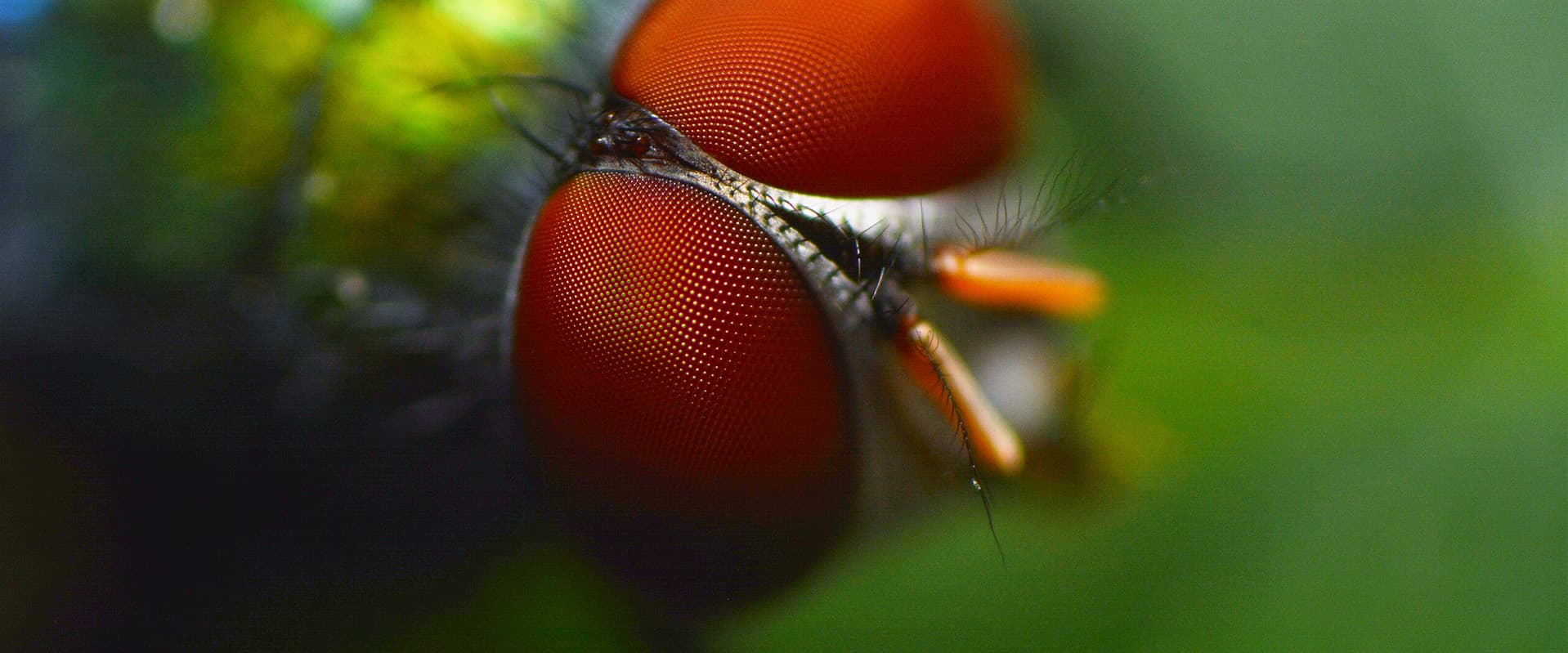
Image used under license from Shutterstock.com
The eyes of flies are one example of ecological attention and how scientific knowledge shapes intention for Dorothy Boorse.
Description
Dorothy Boorse describes herself as a child who used to be caught up looking at ants and other small and overlooked things. Later microscopes enhanced the possibilities of her attention. She followed science as it revealed its beauty to her but science also became a tool to help solve problems, to promote health and to improve the lives of people. She hasn’t worked out the answers to all the questions but she offers the wisdom gained over a career studying ecology within a community of Christian faith.
- Originally aired on July 31, 2025
- WithJim Stump
Transcript
Boorse:
I had deeply spiritual experiences, where I was looking down a microscope at the most beautiful things I’d ever seen. And those are, like the eyes of flies are like jewels. They’re so beautiful. And, and just thinking about how God had created all of these things and, and we just don’t spend the time looking at them.
Hello. I’m Dorothy Boorse and I’m a Professor of Biology at Gordon College.
Stump:
Welcome to Language of God I’m Jim Stump.
Science has a way of making visible many things which don’t often capture our attention—whether it is the workings of a cell, the happenings in distant galaxies, or the beauty found in the eyes of flies. What is revealed by science has often led to positive contributions for life on earth. Science is Good! As BioLogos has been proclaiming the last few months.
But of course there’s always another side of the story. Science and technology have also fueled the climate crisis we’re experiencing, and it will not be science that gets us out of it. For that we’re going to need a moral vision that trumps political allegiances, and a new attentiveness to things around the world we’ve not seen.
Dorothy Boorse has found that her own attention to her local place has helped her to understand the global situation with a new perspective. She shares the story of how she came to study the natural world, nurtured by curious parents, and eventually finding her way to a career in biology. Dorothy also discusses how we can keep from being paralyzed by the immensity of the climate crisis by staying tuned to what is happening locally, tapping into long-held knowledge from people who have a more articulated sense of place, and by learning to see the interconnectedness of all things from a Christian point of view.
This is faith and science in the field of ecology.
Let’s get to the conversation.
Interview Part One
Stump:
Well, Dorothy Boorse, welcome to the podcast.
Boorse:
Thank you. Greetings from Beverly, Massachusetts.
Stump:
Oh, very nice. Well, you and I have bumped into each other casually at conferences and workshops over the year, but I’m glad to be talking to you more seriously now here.
Boorse:
You too.
Stump:
We’ll get talking about ecology and the environment and our sense of place in the world, but first, I want to situate some of that in your own story. So, start with some autobiography if you would. I don’t think I know too much of this. Where’d you grow up and what was your family like?
Boorse:
Okay, so I grew up in Pennsylvania in the southeastern side, which I was west and a little bit north of Philadelphia, but I lived in a rural township and my parents had actually bought a 250-year-old farmhouse, and it had been abandoned for 40 years before they bought it. So, it was in terrible repair, but it was an old stone farmhouse and some outbuildings. And my dad, who was a high school biology teacher who also was ordained and had been to seminary, he had this vision of us sort of living off the land and him being a Christian school teacher. And then, we had four kids in the family, and so, we had a huge garden and my grandparents lived right there. But it turned out my parents were not as good at repair as… So, there was quite a bit of work involved in my childhood, but I spent endless time outdoors and gardening in particular. And we had a menagerie of different animals including sheep and a goat and rabbits and dogs and cats and everything. So, I really loved where I lived and I still love Pennsylvania quite a bit, just driving through and seeing the kinds of vegetation and everything just brings me joy.
Stump:
So, is that nature exposure where your aptitude and inclination for science came from then too or?
Boorse:
I think I was always like that, but my dad in particular would take us on field trips, places and took us to the—
Stump:
Like where? What do you remember from those?
Boorse:
He would take a class and I’d get to tag along and he’d go to the pine variants in New Jersey, which are a specialized kind of ecosystem and have bogs in them. And I was really into that. Because we had a lot of animals, I was really into that. So, yes, a lot came from my dad in particular, and just my love of learning came from both my parents. My mom was a social studies and English teacher, and they both really loved Christian education, both taught in Christian schools at different times. And then, my family went to a number of different denominational churches. We began in a Baptist church. We went to some others, but I went to Mennonite schools and those in particular, were very important in forming my thinking about the natural world and about how we live as community and care for the natural world as a part of peacemaking actually and as a part of caring for our neighbors. So, that was very important.
Stump:
So, biology sounded like it was the natural route for you, not physics or geology or something like that, but take us through a little bit of that journey through school and through college and into graduate school. Why did you end up focusing on the things that you did?
Boorse:
So, actually it’s interesting. From the time I was six until the middle of college, I thought that I would be a missionary doctor, and that was really because I loved God. I loved other people. I loved biology. And I thought if you wanted to serve God, this was how you did it. And I still really like anatomy and physiology and all that stuff, but I also really loved two other things. One was just ecology and one was writing and English literature and that kind of thing. So, several times, I had to make a decision whether I was continuing with biology and if I did, where I was going to go with it. But I went to Gordon College where I’m now on faculty, came back 12 years after I graduated. But when I was there, I met faculty who just really were very deeply devout Christians and who were ecologists and who cared about the environment. And then, I went to Au Sable Institute of Environmental Studies.
Stump:
In northern Michigan?
Boorse:
Yes, yes. And it was just really transformative experience. Even at that time, I was very sensitive to the degradation of the environment and I was really struggling in my spirit with how we as humans, we’re not doing a good job with the environment. And I met all these people that had the same concerns and were also Christians. I met so many people that were honoring God with their lives and they were ecologists. So, I felt freed to do that.
And then, I had an internship in college where I went into salt marshes. They were doing this experiment that involved altering the ditches that people put into salt marshes in the 1930s on the north shore of Boston in an attempt to keep down mosquitoes. But it didn’t work that way as many things don’t work the way we think they’re going to. And in the end, they wanted to change the ditches so that water would actually stay on the marsh and little fish called mummichogs could stay on the marsh and eat the larval mosquitoes. So, that was the goal, but my job was to map vegetation.
And then, also I identified insects, and that was where I fell in love with insects because I’ve always been that kid that was staring at little things, like staring at ants and thinking deep thoughts about what it might be like to be an ant. Well, guess what? There’s a role for that person in society, it turns out, in case you see a little kid like that and you worry about them. But anyway, I had experiences of deeply spiritual experiences where I was looking down a microscope at the most beautiful things I’d ever seen. And those are, the eyes of flies are like jewels. They’re so beautiful. And just thinking about how God had created all of these things and we just don’t spend the time looking at them. So, a lot of my love of science is actually just the beauty of everything, and then, also how everything fits together. I really enjoy that.
Stump:
Well, go back over some of that same story with the eyes of faith a little more intentionally here too, because it sounds like, so you’ve got a dad who’s a biology teacher and a seminary trained person. Did science and faith in that regard always just simply fit together for you with no problems or in the communities you were part of? Or did you ever experience any resistance in that regard?
Boorse:
So, I will say this. I personally did not have any problem putting science and faith together. And my dad never presented them as in opposition. But in my life, in the community of believers around me, I have often struggled with people that have had strong opinions. Or in the secular world where people have had strong opinions about whether or not my faith could be met, could fit with some science. And so, when I was a kid, my dad just said, “Oh, you know…” One of the big ones that always comes up, of course, is about the age of the earth and my dad said, “You know some people just think the Hebrew word yom means a long period of time.”
And that’s all it took. It didn’t take actually having to have exactly the right answer for how that fits together. It’s more the fact that there could be a way for it to fit together. Of course, as an adult and a professor at a Christian school, I spend a great deal of my time trying to mentor young people who are struggling. And a great deal of their struggle really comes from the people around them telling them it’s a struggle, telling them that there’s an inherent conflict.
Stump:
So, as you know, the work of BioLogos over the years has primarily been related to things like evolution and origins, the age of the earth, those kinds of questions. Your work has been more focused on ecology and the environment. Are there different kinds of tensions between faith and science in those sub-disciplines of biology that you’ve experienced? Or maybe more positively, ways that your science and faith have more positively interacted or been synergistic in some ways in those fields that maybe they’re not always in evolutionary biology? Or I don’t know, talk a little bit about that and the relationship between faith and your specific area of biology.
Boorse:
So, I think that’s a great question. I think in our particular society right now, there’s a lot of loud voices, and some of the loud voices… And in fact, I often talk about what we really need is a loud middle because the voices are drowning out the actual thinking. But unfortunately, when you work in environmental work, some of the opinions that people have about other areas of science bleed in, and there’s a general sense of not wanting to believe the findings of science that goes with a disregard of any kind of expertise and a sense that everybody is lying to you that I think it is inherent right now in almost any conversation in our society in America right this minute. I’m hopeful that that will change. I don’t know all the solutions to it, but I think those are bigger society-wide issues that are not specific to any one topic.
And you see that on even the fact that we’re having conversations about vaccines, for example, which 50 years ago, would not have made any sense. Everybody was so grateful for vaccines. But anyway, that’s all to say that there are some big differences. And I think one is there are some trigger words, but I think there’s fewer. I mean, when you’re talking about the environment, then when you’re talking about evolution or something. So, sometimes just using the wrong vocabulary will derail a whole conversation because somebody has got so many ideas loaded on a verb or a noun. But for me, there’s a lot less of that. But there’s also a lot of really ingrained ideas. And so, two things that I think come really out of my thinking as an ecologist that affect my faith, one is just that in ecology, everything is connected. And there’s really, I hate to say no free lunch.
Stump:
What do you mean by that?
Boorse:
I mean, there’s energy budgets and there’s nutrient cycling, and if an organism has many small offspring, it can do that, or it could have very few larger offspring, but it can’t do both. It can’t have many large offspring. So, everything is trade-offs, and there’s always effects from something. So, a fish, for example, that swims in really fast water and swims very quickly can get more oxygen, but they have to have a lot more finely and divided gills to get the surface area to get all that oxygen. But then if they’re in sluggish water, their gills might clump together and not be able to get oxygen. So, they are adapted to where they live, but they can’t just go any place else.
So, that doesn’t mean that everything’s a specialist. That’s not what I mean. But I mean, there’s trade-offs for everything. And that’s one thing that I think Christians really struggle with because we’re supposed to pray, and the Bible says, “If you pray, you can move mountains.” So, there’s somewhat of a sense of we shouldn’t maybe be living under normal laws of nature if we’re Christians. The idea of having limits, limits to what we can do, limits to what we ought to do, there’s a sort of a part of our Christian faith that doesn’t know what to do with that for a lot of Christians. You might understand that you should stay inside your household budget, but the idea that we can’t just do everything and expect God to solve all of it when we cause a problem. So, that’s one.
The second thing that I think comes really out of my sense of ecology is that not everything I dislike in nature came from the fall. So, I honestly think that many Christians actually do believe that they’ve never thought it through, but they do really sort of think that. And when I bring it up, lots of people think, oh, mosquitoes came from the fall, or that’s the biggest one that I hear. But people will say that, and they sort of feel like that about predators. They think that… I mean, honestly—
Stump:
And thorns and thistles.
Boorse:
Thorns and thistles, right.
Stump:
That’s explicitly stated by one of our sister organizations, competitor organizations, that all such things came about after sin entered the world.
Boorse:
Well, and I don’t even super follow organizations that are saying that kind of thing, but I do think that living with that tension, that God created things that I may personally not like that might even be injurious to me, but that they have a quality that keeps them from being eaten by every herbivore. And that’s actually a good thing because it keeps everything in balance. That’s an idea that I don’t feel like it’s in tension with my faith, but I feel like it’s in tension with what many fellow believers think.
Stump:
I’m guessing there must be some aspect of that, even the way you were talking about looking at the eyes of a fly under a microscope and finding that beautiful. There must be elements of a mosquito that are beautiful, aren’t there?
Boorse:
Oh, they are. Oh my gosh, yes. I could have said that mosquitoes are very beautiful. They are actually. But it’s not just about the beauty. I mean, things have roles, right? And God created a complex world in which things have roles that keep other organisms from overgrowing. And when you look at it from the point of view of the other organism, you might think it was negative. When you look at it from the point of view of everything else that gets to grow because something’s keeping something else in check, then it’s positive, right?
Stump:
How do you think about things like genetically engineering mosquitoes so they can’t spread malaria or something? How do you think about proposals like that as a Christian and as an ecologist?
Boorse:
Well, as an ecologist, my first question is are there unintended consequences?
Stump:
Yeah, right.
Boorse:
There almost always are, right? And so, I’m very leery of things that involve doing something dramatic that could get out of control. And many of the things we’ve done to try and solve what we think of as pests are that way. But another way to think about it is that we’ve set up a world in which mosquitoes live many places and a lot of things that would keep them in check no longer can. So, for example, there’s a lot fewer birds, there’s a lot fewer bats, there’s a lot fewer amphibians. And we used to kill mosquitoes using chemicals that killed a lot of other things. And mosquitoes breed where people are because we’ve got little bits of water everywhere. So, I think the real answers have got to be one, recognizing that it’s not really everything is natural, or we do this thing with GM mosquitoes. The reality is it’s not like quote, “natural,” the world that we’re in right this second, right?
Stump:
Yeah. We already modified the environment fairly significantly.
Boorse:
We’ve already done a lot, right? And so, there’s mosquitoes that live in abandoned tires everywhere. And there’s all this stuff that we’ve done, and climate change is changing where mosquitoes can live. So, in the context of that, it might be good to ask what is the least disruptive thing that we can do to solve a problem? Now, in Hawaii, mosquitoes are not native, and they spread bird malaria. Hawaii is the bird extinction capital of the world. So, if you’re concerned about taking care of nature, it might make sense to prioritize stopping mosquitoes, right?
Stump:
Interesting.
Boorse:
So, one of the ways that you could do that is to produce sterile males. And you can’t do this with every single insect species because they have different ways of reproducing. But for some species, if you produce sterile males, then they’ll mate, the females may not mate again, and then, there will just be fewer mosquitoes. I have a background. My master’s at Cornell is in entomology, and my area was in integrated pest management. Integrated pest management is about using all the tools at your disposal to do the least toxic or least damaging solution to a problem with pests.
And I really think that thinking is ideal because we have some really advanced tools that actually are much less likely to harm the environment than spraying chemicals against mosquitoes broadly. And this is where I would say that the genetic modification tools are like that because they’re focused on one species. They’re focused just where you release them. They don’t continue. If you produce something that’s sterile, then it doesn’t continue into the next generation. And it’s unlikely that we’re actually going to cause the eradication of a species of mosquitoes. Mosquitoes are pretty good at survival.
So, I personally would differ from some people who are environmentalists in that I would be more cautiously optimistic, and I would compare the risks with the risks of things that we’re currently doing and we know are really negative. It’s sort of like when you compare the risks of something to coal, and you’ve gotten used to the risks from coal, and the idea of moving over to something that’s unknown seems really big, but in fact, coal is very, very, very harmful to human health and to the environment. So, that shouldn’t be your baseline for comparison.
[musical interlude]
Interview Part Two
Stump:
Talk a little more generally about Christianity and environmentalism. You’ve been doing this work for a while. I don’t want to make it sound like you’re at the end of your career or on your deathbed or something, but you’ve been around a little bit. How have you seen the conversation change or evolve over your career with Christianity and environmentalism? Those have often been packaged on opposite sides of culture wars, right?
Boorse:
Right. Yes.
Stump:
Do you have any stories or episodes that stand out from earlier in your career, perhaps times when you felt like a prophet crying in the wilderness, and any success stories along the way or hopeful change that you’ve seen in how Christians and environmentalism interact and get along?
Boorse:
So, yes, I’m happy to report I do have some, but let me just say, let’s not let the term Christianity in this context represent the whole world, because what happens in the U.S. is very different. The conversation is really different than it is in many parts of the world where people’s daily lives are… It’s just a completely different conversation.
So, let me just say, when I was in college in the ’80s, I knew my professors and a few other students who were really into caring for the environment, but I didn’t know a lot of people like that. And there were a lot fewer books about it, for example. And even though scientists knew about global warming and climate change, that wasn’t a topic that was out in public. And when I came back, in fact, that was just about when we were figuring out that UV light caused skin cancer and that the ozone layer… That was right in there when the ozone layer, it was being detected. So, I started a college back when you rubbed yourself with baby oil, laid out in the sun.
And I think actually, it’s worth mentioning that because that’s one place where you can see everything has changed. People talk very differently. They wear rash guards. Everything is changed because people understand that that’s a real problem. And likewise, with acid rain. Acid rain, very early ’80s, people were figuring out that the burning of fossil fuels was releasing sulfur and nitrogen oxides into the air where they encountered water and formed sulfuric and nitric acid that was coming down. I remember reading Time magazine and seeing pictures of destruction of marble in Italy and that kind of thing, and hearing about all these lakes that were being killed because of the acid. Well, acid rain is very much improved, and that’s because we got laws about it. The laws about it have been impressive, and they’ve worked, and we’ve had international treaties about it. Same with the ozone layer, which still has somewhat of a hole, but it’s much less than it would’ve been and much less than it used to be. And that was because we had an international treaty.
So, one of the things we’ve seen over time, and this is less about Christians, but just everybody seeing that when we actually try to solve a problem, we often can. So, that’s a positive. When I started teaching at Gordon, I teach this course in environmental science, and I would assign a little essay and I would ask people, if you were talking to a fellow believer about why you should care about the environment, what would you say? And I would have people say, “I don’t care about the environment. I care about people.” I never get that response now. I never do. People sit in my class and they say, “I care about the environment because I live in California, and I see fire everywhere.” They say, “I care about the environment because I went to the beach and there was trash everywhere.” They say, “I care about the environment because I saw a YouTube video where that sea turtle had a straw pulled out of its nose.” There’s a famous video about that.
But what I’m saying is that people… Or they say, “I’m worried about climate change,” or they say, “I am anxious about everything.” Their concerns are not, I need to be convinced that there are problems. Their concerns are I feel paralyzed by those problems. I don’t know how to solve them. And the other big one that comes up in my teaching is students not knowing how to talk about these things at home with their parents or grandparents or uncles or pastors who dismiss these concerns. And so, that’s where the conversation is, at least for me at a Christian college with my students. Of course the conversation is going to be different depending on where you are in the country, what kind of church you’re talking about and whatever. But lots of people have concerns, but they may not want to use the vocabulary of climate change or environment or environmentalism. Most people think, well, of course I care about stewardship. So, that’s a good term to start with. But what they think of as stewardship may or may not be really useful.
Stump:
So, speaking of where you’re from and how that affects what you see in the world and what your concerns are, I note that one of your kids is adopted from Guatemala. How has that affected your perspective on how we should be caring for the planet and its people?
Boorse:
Well, it’s interesting because I always cared about the planet, but I have internally attention over a couple of things. And one is that adoption is a very painful process sometimes for the adoptees and the bio parent. But also I’m very sensitive to the fact that adopting from a poor country to a wealthier country comes with almost a sense of colonialism. And we were genuinely trying not to promote that at all.
But I think for me, what’s been most both distressing and eye-opening is after we adopted, I was writing something about Guatemala, and I realized that Guatemala has this long history of American intervention in which America policy and even material help and military help helped to disenfranchise and remove people from the land that were indigenous people. And they now are extremely poor, living in these very limited areas. And I was adopting one child and pouring all this effort into one person, but my country had made those conditions harder.
And to add to that, I also sponsor a child down there, but decisions being made in my country and maybe even my own life, the way I live, was making it harder for my sponsored child at the same time that I was good-heartedly trying to pay to help them. And I think that just sitting with that complexity, mourning the fact that my life is within systems, and those systems may be unjust and they may be unfair, and I didn’t start all those systems, but I can be a part of stopping them. However, let me just say I have not solved problems in Guatemala because I’ve only solved problems for a very limited number of people.
Stump:
But it’s certainly given you the eyes to see the kinds of problems that many of us are sheltered from, right?
Boorse:
Yes. Right. Yes.
Stump:
One of the things we constantly hear about climate change is that it’s going to affect people in places like that much more severely than it is us. My own situation, I’m fairly sheltered by the Great Lakes around here, that we’re going to be okay for a while at least. But climate change in Guatemala right now is a crisis, right?
Boorse:
Yeah, it combines with other crises. And yes, it is. But I guess I would say I think that it is helpful to think about ourselves as being a part of the greater body of Christ. And sometimes when I talk to people about climate change, they are very unaware of the lives of Christians around the globe.
Now, I think we should care about people, whether they’re Christians or not. But the Bible does talk about the body of Christ and does talk about us being brothers and sisters. And if we take that really seriously, then we need to think about that. So, I think that phrase, think globally, live locally is probably pretty helpful. You can’t solve all the problems in the world, but it changes how you think about things when you know that, for example, in Vanatua and Kiribati and Tuvalu, all nations in the South Pacific made of small coral islands, that they are all outspokenly yelling on the world stage, that they’re drowning, that this isn’t a future. This is now. And like you said, it’s not in the future, it’s now and it’s extreme. And when you think about it that way, it helps.
So, one of the things that I find is that when I talk to people, you have to find the vocabulary that helps them. And it doesn’t always help to talk about climate change. Sometimes it helps to talk about it in terms of the great commission. How can you carry the gospel to the world if you don’t care about the problems of the people you’re encountering? This is one of the reasons why we have medical missions, which I mentioned before. It’s one of the reasons why we have world vision and the great humanitarian efforts. If we can picture this being a part of humanitarian work, which I’ll tell you, world vision has climate change staff because they care so much about this. If you can think about it in those terms, then it changes the conversation a little bit.
Stump:
In the wake of events related to science that have ensued since the most recent inauguration, BioLogos has been involved in a campaign to proclaim that science is good, which sounds fairly basic, but has needed to be proclaimed a little bit. And given the expertise of our founder, Francis Collins, and our new president, Kristine Torjesen, they both come from the worlds of health and medicine. Lots of our examples have been drawn from things you’re talking about there of health and humanitarian aid around the world. But that’s not the only way science is good, right? That’s not the only way that science can be leveraged for what we Christians call the Kingdom of God. Can you make a little speech about how ecology is one of those good things for the world, for people, for the Kingdom of God? Can you connect those at all for us?
Boorse:
Oh, my gosh, yes. So, I think a lot of times when ecology is good, it’s because it shows us how to prevent a problem rather than have a problem and solve it afterwards. So, a lot of health, unless you’re talking about public health, a lot of health is we have a problem, somebody is sick, now, we’ve got to solve it. But the tools to prevent problems then come out of public health and policy. Well, ecology is sort of the same way. When we find out, for example, here’s an example. When we discovered that phosphorus getting into lakes was causing a lot of the pollution that causes algal blooms, then we knew something that allows us to put up vegetation buffer zones around lakes, to have rules about what septic systems you can have. And I don’t know about you, but every place I’ve lived that’s had lakes, there’s been lake management associations because overdevelopment of lakes has caused so much water pollution.
So, I am sometimes trying to explain to people, but I’m using science to do it. It’s the science that showed us what the problem was. It’s the science that explains some of the things we could do to solve those problems. Water pollution is a really good example. Another is, it was scientists who figured out the impact of lead and mercury on human health. While that’s health, it’s environmental regulations that have resolved a lot of that in the U.S. And people in the U.S. are more than 90% less likely to be overexposed to lead than they were in 1970. And there’s several other criteria pollutants that are the same way that they’ve dropped precipitously because of the Clean Air Act and the Clean Water Act. So, it was the science that showed us that we needed to make policies to protect the environment, and that was for the purpose of protecting human health.
And let me just say, as an ecologist, I don’t believe that the only reason to protect the environment is to protect human health. But many of our laws, that is the flow of thinking. But I believe as a Christian, we ought to be protecting the rest of creation. Humans are part of creation, and then, there’s the rest of creation because God told all of the creation, both in Genesis… At creation, but also after Noah, to go and be fruitful and multiply. That was for all the creatures. That wasn’t just for humans. So, we can’t be saying the rest of creation can’t be fruitful because that clearly honors God when trees can grow and rivers are not polluted.
Stump:
Okay, good. I think there’s one more topic I’d like to get to here before we get to the end. And it’s something you’ve thought a good deal about. It’s our sense of place, our connection, or maybe lack of connection to the land. How did this become an important topic for you?
Boorse:
Well, I love it that you’re asking this because 20 years ago, I got a grant to promote a sense of place at Gordon, and we did all these different things, including opening up the Gordon Woods and giving guided tours. The woods are always open, but giving guided tours to people from all these churches around us. And so, having a sense of place is really important to me. But I think there’s a couple of ideas there that are critical. And one is that when you look around the world and you look at the people who live lightly on the earth, that is, do less damage or alteration, very often, they have a very strong sense of place. That is, they know where they are, they know where they’re from, they know about the other organisms that live there. They know about the rocks. They know about the weather.
And for many, it’s indigenous people that have that sense because their background may go back many, many generations. And yet, most of us don’t get that. I did in Pennsylvania because my father’s family had been there since the 1700s. And my mother’s side was from West Virginia. So, they’d only been there for one generation in Pennsylvania, but that’s regional. And they went back for generations in West Virginia. So, I grew up with local history and local natural history, and we were always going to these historical things where people enacted being colonists and settlers and all this stuff, or learning about how Native Americans had done things. And when I left, I’ve learned about the nature in different places that I’ve lived, but I’ve never had that complete sense of place that I had growing up. And I somewhat mourn that, and I wasn’t really able to give that to my kids the way I’d hoped. We’ve done a lot of hiking, we did some camping, but people have different interests, and we’ve had the electronics revolution, which completely changed everything. So, yeah.
Stump:
Earlier this year, Colin and I were in Hawaii with A Rocha, the environmental group, and had the privilege of interacting with a couple of different ecological projects run by indigenous Hawaiians. There was this palpable sense of their connection to the land that their ancestors had inhabited. They identified themselves by their family’s names for the wind and rain and the valleys they’re from, and they emphasized your relationship to the land stands alongside your relationship to God and your relationship to neighbor.
But given the way I grew up, it feels a little romanticized because I grew up in I think, four different subdivisions that were on the outskirts of small towns in Michigan and Indiana, and we had no words for the wind and the rain besides wind and rain. And there were farmers not far from me who worked the land. And all those subdivisions I grew up in used to be farmers’ fields, I’m sure. But over my lifetime, even those local farmers were bought out by big corporations who did the best to extract whatever they could from the land. So, given that kind of background, how do I develop a sense of place? Sorry, if I’m turning this into a therapy session, but what can I do about it?
Boorse:
So, I have a number of comments that are coming to mind. First of all, thanks for mentioning Hawaii. I had told you before that I recently went to Hawaii as the faculty member talking about the environment and ecology and whatever with a group of students. And I’d never been to Hawaii. And so, I studied like a crazy person so I could talk intelligently about volcanic island formation and the natural history. But we also went to a number of different places where we had tours or whatever, where we met native Hawaiians talking about their own experiences. And we had exactly that same sense. And I think I don’t have a simple clear answer in part because I haven’t solved it, but I do have some ideas.
So, one thing that I saw in Hawaii and that I also saw in New Zealand was people who were not indigenous recognizing the value of indigenous wisdom and experience. So, signs would be in multiple languages, including indigenous language, or even people that we talked to who were Hawaiian residents, but not indigenous Hawaiians would use Hawaiian terms for things. And they bothered to learn them. They bothered to learn what the birds were and the plants were and these other things. And I was really struck by that because I’m in Massachusetts and I don’t see everybody paying as much attention to what the Native American terms were for different things were in my place. So, one thing that I do think you could do is just personally try to find out some things about what lives in your place and what the history of that would be. I don’t think we’re going to end up with special vocabulary for the kinds of wind, but I think that might be too much of a reach.
The other thing though is to say, “Okay, so one way of having a sense of place is to live in the place where your ancestors lived for 1,000 years.” Most of humanity does not get to do that. Or maybe I’m wrong, but it feels like most of humanity doesn’t get to do that. Certainly in America, most people don’t. So, you might ask, there are other ways of having a sense of place, and one might be as a traveler. And there are people that go to Hawaii, and what they try to learn about is what’s there, like you did, like I did. And there’s people that go and what they want is, what can I get there? And I think even in your subdivision, you could ask, what is here? What should I know about it?
So, one year, I tried to write every day for a year about my yard. I did not succeed at that, I will tell you. But I did write a lot. I wrote a lot. I wanted to know, what kind of dirt do I have in my yard? What kind of grass do I have in my yard? What kind of weeds do I have? Where does the water come from? Why are there so many acorns some years and not other years? How come all of my chipmunks disappeared? Well, that was because there was a cat in the area. How come that squirrel is dead? Oh, why did the mourning dove suddenly make a nest in my rhododendron? We have a third of an acre, which for some people is going to sound enormous and for other people, it’s going to sound very small, but it is not an enormous plot of land to have to study. But it was really interesting how many questions I could ask. And I think it all comes down to where you put your attention and intentionality.
Stump:
Well, thanks, Dorothy. This has been a stimulating, fun, engaging conversation with you, and I’m grateful for the opportunity to hear about your place and to hear about the work you’ve been engaged in, and to hear about the issues that are important to you and ought to be important to all of us. So, thank you for that. And thanks so much for talking to us.
Boorse:
Thank you. It was wonderful.
Credits
Language of God is produced by BioLogos. BioLogos is supported by individual donors and listeners like you. If you’d like to help keep this conversation going on the podcast and elsewhere you can find ways to contribute at biologos.org. You’ll find lots of other great resources on science and faith there as well.
Language of God is produced and mixed by Colin Hoogerwerf. That’s me. Our theme song is by Breakmaster Cylinder. BioLogos offices are located in Grand Rapids, Michigan in the Grand River watershed. Thanks for listening.
Featured guest