Kipuka to Kipuka | Islands of Life, Faith & Restoration
In Hawaii, kipukas are where life persists amidst disturbance. But biological life isn't the only thing that can grow and thrive in a kipuka.
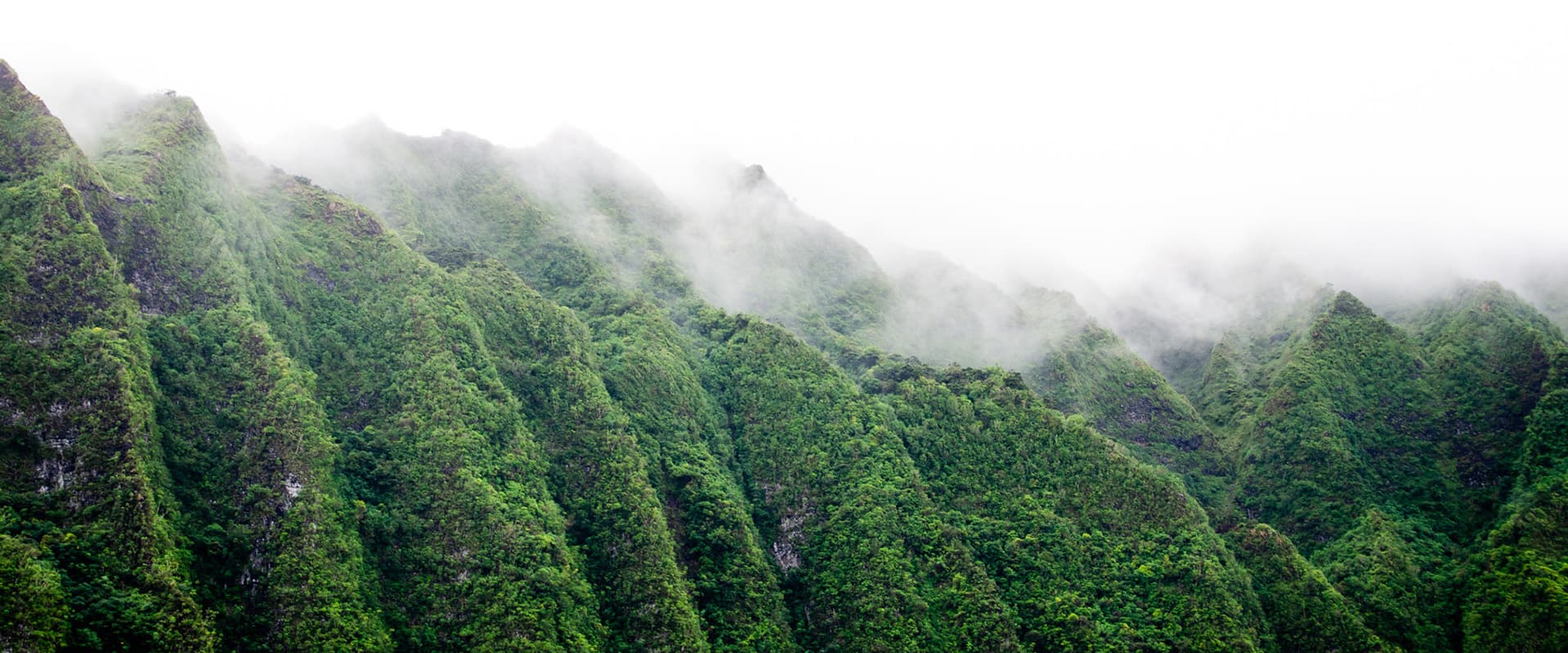
Photo by Colin Hoogerwerf
In Hawaii, kipukas are where life persists amidst disturbance. But biological life isn't the only thing that can grow and thrive in a kipuka.
Description
Life has a way of persisting through ecological disturbance in small protected places and then radiating outward. In Hawaii, those places are called “kipukas.” But biological life is not the only thing that can grow and thrive in the refuge of a kipuka.
In this episode we hear the story of three places where people are caring for the land. At the base of the Ko’olau mountains in Oahu, a church is setting out to bring 246 acres back to the community and back to health. Down by the sea, the restoration of an ancient fish pond has become an educational opportunity for thousands of children. And over the ridge, into the next valley, the growing of kalo provides a place for people to reconnect with old traditions and knowledge.
These stories reveal an important truth: that as we care for and find connection with the land, the land cares for and supports us. And it leads us to ask, can our relationship with God be complete without a healthy relationship with the rest of creation?
Thanks to Herb Lee and Dean Wilhelm for sharing their songs with us. Theme song and credits music by Breakmaster Cylinder. Other music in this episode by Northern Points, Harpo Marks, Cosmo Lawson, and Sarah Chapman, courtesy of Shutterstock, Inc.
- Originally aired on April 03, 2025
- WithJim StumpandColin Hoogerwerf
Transcript
Stump:
Welcome to Language of God. I’m Jim Stump.
Hoogerwerf:
And I’m Colin Hoogerwerf. You know, we’ve introduced ourselves like this a lot of times, without thinking about it too much. Just a simple name.
Stump:
You think we should start each episode by saying our names and also the names of our wind and rain?
Hoogerwerf:
Yeah! Well maybe. So this needs a little explanation. We were recently invited to Oahu, Hawaii to go visit with a church and a community that is part of a pretty cool land restoration project. And while we were there we learned about this tradition in Hawaiian culture, that when someone introduces themselves they say their name and the name of the valley they come from—which in Hawaii a valley is called an ahupua’a—and then they say the name of the wind and rain they experience there.
Stump:
In Hawaii, the wind and the rain are a pretty constant force. And so they have a lot of different words for wind and rain. And I can imagine how there would be something really orienting about connecting yourself like this to a place. And when you meet someone you tell them something about how you experience the world, how you are connected and formed by the world. That gives a lot of context for beginning a relationship.
Hoogerwerf:
Right. I think this would be a pretty cool thing to associate with who we are. But there are a few problems. One is that wind and rain are not the defining features of every place. In Michigan where it’s pretty flat, even a valley is a little abstract. So, if I were to adopt this, I might say something like, I’m Colin and I come from the Plaster Creek watershed and the name of my sky is mostly gray except for a few glorious months when the sun shines bright and warm.
Stump:
Yes, I’d have to say something like, “I’m Jim and I come from the Crystal Valley…” which for some reason is what they call my little corner of northern Indiana, even though we don’t have valleys either, and there isn’t even a Crystal River anywhere so far as I can tell. I’m afraid we’ve lost whatever connection to that place there once was.
Hoogerwerf:
That brings us to the other problem, which might be bigger. A lot of us these days are barely from a place at all. I did a little poking around at some numbers and it seems like only around half of the population in the US lives in the same state they were born in. That varies a lot between states, but clearly we move around a lot. That number would go down a lot for people who live in the same state as their grandparents.
Stump:
Or even more for their ancestors 1200 years ago, as might be the case for some Hawaiians.
Hoogerwerf:
Right. So it’s just a fact that many of us have lost the association between a place and what it means about us and our families and our histories.
Stump:
So this way of connecting to land through language actually has something to do with our story today. When we set out, we knew the basics. We knew that we were going to the Island of Oahu to learn about a community that has been on a journey exploring their connection to land.
Hoogerwerf:
This is a project we learned about through our friends at A Rocha USA.
Lowe:
And this sounded like such a great example of a local congregation trying to do that within their unique context, and with a really exciting opportunity that they had inherited because of other decisions that they had made that weren’t related to caring for creation, but now they had this huge opportunity to figure out what it could look like to be faithful in their context.
Stump:
That’s Ben Lowe.
Lowe:
I’m the Executive Director of A Rocha USA.
Hoogerwerf:
A Rocha is a non profit organization with a mission to inspire Christians to care for the environment and to equip others to do the same and they have many other inspiring projects around the country.
Stump:
A few years ago you and I had an invitation to spend a weekend with a group of people in Titusville Florida at a different A Rocha project. That turned into an episode we called The Oceans Declare, and it’s still one of our favorites we’ve ever done.
Hoogerwerf:
And with the help of a grant A Rocha received from the Lilly Foundation, we were invited to partner up with A Rocha to tell more of these stories of people and churches who are responding to the call to care for creation. So we went to tell this story of a church involved in a land restoration project, but the story ended up being a lot deeper than that.
Stump:
What we thought was a story about people caring for their church property, turned into a story about how the land cares for its people, and about people caring for people, and about people’s relationship to God through this kind of caring.
Hoogerwerf:
Let’s get to the story.
Part One: Hakuhia
Stump:
This story that brought us to Oahu starts with a local church.
Lowe:
The First Presbyterian Church of Honolulu.
Stump:
First Prez, as it often goes by, was outgrowing its building in the city of Honolulu and was looking for a bigger space. And there was a property, just over the remnant ridge of a 2-million year old volcano—just around the corner of the island—with a building that would work perfectly for the new church… but there was a catch.
Lowe:
Through a whole series of very unlikely, but perhaps providential circumstances, they actually obtained the property, and then it came with this golf course.
Miyamura:
So I was in my 20s, a junior at the time, and I was sent to hike the mountains and to do a survey around just the boundaries of the property.
Hoogerwerf:
This Kelly Miyamura.
Miyamura:
And I remember looking out and saying, like, “okay, this feels like God is in this. This is an amazing place. I can see the church here. I can see so much more than what we could even imagine at the time of just needing a sanctuary.”
Stump:
Kelly is the board chair of Hakuhia, which is the non-profit that has since been set up to manage the project we’re about to describe.
Hoogerwerf:
She’s also one of the people that told us about the way of introducing your wind and rain.
Miyamura:
Ko’u inoa—my name is Kelly. My ahupua’a is Kapalama, so on that side. My wind is uluniu. So it’s the wind that the palm trees are swayed by that wind. and Kukala-hale, I believe, is the rain. Hale is a house. It’s the rain that comes down and pierce it like you can hear it on the rooftops.
Hoogerwerf:
So First Prez moves their church to this property and turns the clubhouse into a sanctuary, with windows looking out onto the Ko’olau mountain range. And for a while they keep running golf on all 18 holes. But pretty quickly it becomes clear that golf isn’t going to be sustainable.
Stump:
There are a few reasons for that. One is because this is a really wet piece of land, being on the windward side of the island. The other is that this particular golf course was built to be one of the hardest courses in the world and so you needed a really special clientele which weren’t all that easy to come by.
Hoogerwerf:
So it didn’t seem like golf was going to work. The church had to figure out what to do.
Stump:
Now, there are a few ways you can tell this story, and probably depending on who you ask you’d get a few different versions. One is that the church bought this property with no thoughts of restoration or creation care at all, but that those only came up once it became clear that golf wasn’t going to work. There’s probably some truth in that at least for some people.
Hoogerwerf:
Yeah, but as we heard a minute ago, Kelly had a vision about this place from pretty early on.
Miyamura:
It wasn’t a hard sell for me to see it as something more than a golf course. [laughs]
Stump:
And there were others who had ideas about the place and the spark of a vision to restore this land and make it available again for the community. And as time went on that vision started to take hold. Even then, there were challenges.
Miyamura:
When you think about the church, the first sort of challenge was moving a church to a golf course and understanding why we would do that.
Hoogerwerf:
It wasn’t necessarily active resistance to caring for land as much as just not sharing a vision for what the place could be if it wasn’t a golf course.
Stump:
Not to mention, restoring a golf course takes a lot of work.
Miyamura:
People were like, how are we going to move this and transform this? And it feels like a very daunting task
Grzebik:
So the 246 acres managed by a golf course are now mainly introduced invasive species because of how it was managed.
Hoogerwerf:
This is Jayme Grzebik
Grzebik:
I’m the Malama Aina Manager with the Hakuhia, 501 c3 with the First Presbyterian Church of Honolulu at Ko’olau.
Stump:
There’s a few Hawaiian words there that are worth translating because we’re going to keep hearing them. Malama means to protect or to take care of. And aina is… land.
Hoogerwerf:
And one of the things I learned is that in the Hawaiian language just about every word has many layers of meaning. And aina is a word that is really central to Hawaiian culture.
Miyamura:
When you say things like aloha aina, malama aina, like growing up here, we everyone grows up with that value set, so it’s very familiar, and when you connect it with your faith, it’s even more powerful, realizing that God is at the center motivates us. This is how we live, how we steward our aina is about how we care for our community.
Stump:
So what does it look like to malama aina, care for land, on a property that has been managed as a golf course for many years?
Grzebik:
I’ve never described our mission as taking all invasive species out and having a native returning to native plants, the state that it is right now. We can never get there. It’s not a reasonable goal. But what we’re doing is focusing on the big native plants, the big species that are causing the most harm, and that’s the albizia.
Hoogerwerf:
Albizia are trees. Big trees. And they aren’t native to Hawaii.
Stump:
Hawaii is pretty interesting in this regard. Because it is so isolated and relatively young geologically speaking, it took a long time before plant life colonized there.
Grzebik:
Millions of years ago, there were these big lava rocks in the middle of the ocean, and by wind, wing or water, a few 1000 plants actually landed here and survived.
Hoogerwerf:
Then, when the Polynesians came they brought with them some of the plants that were important to them, plants like banana and coconut, breadfruit and taro. They introduced those plants to the islands and cultivated them for a thousand or more years.
Stump:
Then…only 250 years ago, Europeans stumbled upon the islands. And in those last 250 years, plants from all over the world have found their way to Hawaii, either intentionally or unintentionally. Some of those plants very much liked what they found in the soil. Those are what we call exotic invasive plants.
Hoogerwerf:
The albizia are one of those. They grow very fast and very large. And they can do a lot of damage.
Grzebik:
So they are taking up water from the watershed. They have very shallow root systems, to the point that if we had any kind of wind event, if it’s a hurricane or a wind shear, they can take that entire tree because, because the canopy actually acts as an umbrella, it actually pulls it up out of the ground and can put it on top of this building. It’s that easy.
Stump:
Albizia are far from the only invasive species but they have taken some precedence at Hakuhia at least at this stage. But just like the plants that came in from around the world and decided to call Hawaii home, people also came to Hawaii and liked what they found.
Miyamura:
And the history of Hawaii is one all the way from the way that it was annexed from the United States, one that felt very top down, that felt like external forces were coming in and took something away. And so the approach to that healing is very much one about embracing community and empowering community and the intergenerational families that know this place and making them a part of this process.
Hoogerwerf:
Because of this history of colonization, Hakuhia wanted to make sure they acknowledged what this land had been and what it meant to the community.
Miyamura:
This particular area of the island is very significant, very special. Kamehameha the First—Mokapu, which is right out here, it’s the piece of the island that jets out, was where he would bring all of his ali’i, or chiefs. Like it was a very special place for him to gather all of his leaders and the people who led Hawaii, and bring them to the place for retreat, his special lo’i patches, or where he would grow his food are on this Kailua side.
Stump:
When the property got turned into a golf course back in the early 90s, there was a pretty big community outcry. What was a place with cultural significance suddenly became a place that the community was not even allowed to visit.
Miyamura:
I was reading all of this testimony from the community. It was very painful, very painful testimony of how these families—they knew that this was a place where they could grow food. They knew that they were sacred places and stories and they knew the stories.
Hoogerwerf:
And so First Prez and Hakuhia set out not with bulldozers—or even with bags of seeds—but simply with open ears.
Miyamura:
It was first about listening to them, and also listening to the land, in knowing that this land, it’s conservation land, it can only do certain things, certain things historically grew here, that you can’t grow somewhere else, or that would do well here.
Grzebik:
I mean, this is really important that we’re we’re stewarding 246 acres, and it’s going to be really important that we listen to the land, that we listen to the community, that we bring young people alongside us, that that’s always been something that Kelly has said, that it’s going to be so important how we bring people along our journey and and I’m excited for that.
Stump:
We had a chance to walk around the property for a bit. And I guess my first thought was…it still looks like a golf course.
Hoogerwerf:
Yeah. The project is still in the beginning stages, even though the church has been on the property for a while. And there is still even a little golf happening on front nine, for the time being. But much of the property has been opened to the public and now connects to hiking trails in the mountains behind the property.
Stump:
One of the most striking things about this for me was how the concept of time played into this project. This stage of listening has not been rushed, there has been a careful intention not to rush into making those changes.
Hoogerwerf:
Which means that, at least when we were there, there is still maintenance of a lot of the fairways, to keep invasive plants from taking over, and to make sure that action, even with good intentions, doesn’t continue a pattern of making hasty decisions about how to use land without the buy-in of the people who are from that land. And in that time the vision continues to grow.
Grzebik:
So what I imagine is that each one of these fairways is a different partnership. So there’s a whole nonprofit organization that just does seed banking. And they would come in and they would do their seed banking on fairway 17, and we would kind of parcel it out like that, and maybe some of their kuleana, or their knowledge would be used to fight the invasive species that we have while they’re on the aina.
Hoogerwerf:
Maybe another fairway would have a group growing breadfruit and another one working on composting.
Stump:
That’s the practical vision, even just one idea of what this place could look like after they have gone through the process of listening to the land and the people. But the vision extends beyond just the variety of flora and fauna or the landscape design.
Miyamura:
I see it as an opportunity for the church to become really relevant. I think that, especially with a young generation like our young generation here, and a lot of our native populations here, get it, and if they could understand that the church also embraces this, I think it would make them more open to faith.
Grzebik:
These types of spaces are an opportunity for those in the community to come and join us as a church, and it’s not as daunting as coming through that church door.
Stump:
But even in island time, the kind of patient listening and waiting they have committed to is not always easy. And there are those who want it to move faster.
Hoogerwerf:
And on the other side there is also a feeling like this is too big, too hard.
Grzebik:
The albizia are a really good analogy, like they’re daunting, and they’re so big, and there’s so many of them, but unless we just get our boots out there and start. And then little by little—there’s a little saying, kipuka by kipuka. So little like hole by hole, we can start to do this restoration, or turn it into some kind of community. You know, use and then this kipuka will start to touch this kipuka.
Stump:
Here’s another Hawaiian word, kipuka, which is full of meaning. As Jayme mentioned, puka means hole. Kipuka is actually a word that has become used in geology and describes a place where lava has flowed and surrounded a piece of land, but has left a little island in the middle unharmed.
Hoogerwerf:
I visited a kipuka on the big island of Hawaii, where the volcanoes are still active. In fact I saw a volcano spitting lava while we were there which was pretty cool. Much of the land in this part of the island is just bare black lava rock. As you drive, you pass stretches with signs of recent lava flows. Rr So when driving to the kipuka you pass a bunch of these, and then you come to a place that is still lush and green and the trees are huge and old. There are hundreds of these on the big island. Many of them have species that are only found within that little kipuka.
Stump:
Kipuka also has some other less geological meanings and can be used to describe a place where life endures. And there’s actually another word biologists use for this same concept, and it’s one that long time listeners here might recognize.
Rienstra:
The concept of Refugia.
Hoogerwerf:
This is Debra Rienstra, previous podcast guest and author of the book Refugia Faith.
Rienstra:
So refugia are places where biodiversity persists and can expand from in the midst of crisis or disturbance. There’s a whole field called refugial biology where you basically study places that survive like a wildfire or maybe an insect invasion or maybe some extreme event like a volcano eruption.
Stump:
Debra was with us in Hawaii, along with her husband Ron Rienstra who is a professor at Western Seminary in Holland Michigan. They lead a cohort of seminary students who are all working on various ways of seeing the church as refugia.
Hoogerwerf:
Refugia as a metaphor is really helpful for thinking about what the church can be and how we can assist the world in flourishing amidst environmental disturbance.
Stump:
The Hakuhia project is a kipuka. A refugia. But refugias often don’t exist on their own. They come in communities too. And this was one of the most exciting things that we found on Oahu.
[Herb Lee speaking in Hawaiian]
Miyamura:
What we do here at the top of the mountain affects what Herb does at the bottom, in terms of water quality, the type of fish, right? Like it’s all connected.
Part Two: Waikalua Loko Fishpond
Stump:
To meet Herb Lee we need to travel—as they say in Hawaiian—mauka makai, from the mountains to the sea.
Lee:
What really started the conversation with First Prez Church, when they bought the property up mauka is that all of that area that they hold, that water, eventually flows to me.
Hoogerwerf:
This is Herb Lee.
Miyamura:
And I said, I’ll be very interested in what you guys do up there, because whatever you do up there affects me.
Hoogerwerf:
Herb is a board member for Hakhuhia but has spent the last 30 years down near the sea working to restore the Waikalua Loko fishpond.
Stump:
Fish ponds are an ancient technique that Hawaiians used to farm fish in a protected area next to the sea.
Lee:
This is old knowledge, okay, old wisdom.
Hoogerwerf:
Hawaiians arrived on these islands probably around 600 AD. And at some point they realized that instead of going out into the sea to catch their fish they could have fish much closer by.
Lee:
The transition from being a hunter gatherer to actually farming fish was huge, and I call it probably the first and foremost economic disruption in Hawaii.
Stump:
So the gist is, you find a bay or inlet and you build a rock wall to cut it off from the rest of the ocean. And then you make a little gate.
Lee:
So they designed this thing called the Makaha gate.
Hoogerwerf:
So the gate has a little hole, and when the tide goes out, the little fish swim against the tide, through the gate, which they just fit through and into this protected little pond, full of tasty seaweed and without predators.
Stump:
Well, except for one bipedal predator.
Hoogerwerf:
Right. But unlike the barracudas the human predators let the little fish grow until they get too big to leave through the little gate and eventually could pick them out of the water and bring them to their tables.
Lee:
And so the ponds were developed so that, we know now from a scientific standpoint, they’re 100 times more efficient than mother nature in terms of being able to grow fish, almost in a natural condition. But it’s still remarkable. And you know, this is again, I think I mentioned, it’s 400 years old. This still works.
Stump:
At one point there were fish ponds all over the Hawaiian Islands. But in the last 800 years a lot has changed.
Lee:
90% of the ponds are gone. There are 500 of these ponds built on the six major 90% of them are gone. And we are 80 and 90% dependent on ships and planes to bring us food.
Hoogerwerf:
When the Hawaiian practices were disrupted by colonization in the 1700 and 1800’s, the fish ponds fell into disrepair and started to fill in with invasive species.
Lee:
It took us 26 years to remove the mangrove from inside the pond.
Stump:
26 years to remove the mangroves and a few more for some other clean up projects…
Lee:
So first 30 years was fix this place up, clean it up, did a lot of education programs, a lot of community programs. And after 30 years, last year, we spent a year reflecting on, what did we learn in the first 30 years?
Stump:
Ok, can we spare a minute here to talk about the fact that they took 30 years to prepare the place. Then they decided to spend a year reflecting on what they did in those first 30 years. In my world, reflection is an important thing… so important that we might decide to take a weekend away to think about things. In the Hawaiian world, you take a year to think about things! That’s a different pace.
Miyamura:
So herb has, he’s been like the master mentor in this, and it has made me so much more relaxed and less anxious. So that’s another part of the healing aspect of this. 25 years. You think in a generation. You think in a generation because things take time. Jamie is really good at this too. People who work with land understand that you need patience, you need this long arc timeline and perspective to understand that change and transformation takes time. And that helps in a couple of ways. One, it helps you to be less anxious, like she would always calm me down and be realistic and give you perspective of how long change and transformation takes. And two, it makes you think about depth versus breadth. And Herb—like 30 years to do that right? And he’s still working on it.
Hoogerwerf:
Back at Hakuhia, one of things they have started to grow is koa, a native hardwood that was used by ancient Hawaiians to build canoes and surf boards.
Miyamura:
And so the work that we’re doing at Hakuhia, the decisions that we’re making are ones that are about growing koa. We want to invest in the future. We want to invest in the next generation, and we want to know that we might not be able to see some of that for the next 10 years, realistically, maybe for the next 20 years, right?
Stump:
Over at the fish pond, having spent 30 years clearing out the mangroves, the next step is to figure out how to have the fish pond actually produce food. So far the fish growing there haven’t met the standards needed to bring them to market. Herb has partnered with lots of different research groups to start experiments and tests to learn how to make the pond viable for producing fish. They’re not just trying to do exactly what their ancestors did. They are also open to innovation—they aren’t simply trying to reclaim the old ways. It is learning from the old ways, and then improving where you can in our context today.
Hoogerwerf:
We’ve talked mostly about the work Herb has done to physically restore the fish pond, but that work, while interesting and important, is really not what motivates Herb. From the very beginning, this project has been much more about education.
Lee:
To see that transformative process in the faces of kids when they come down here and they’re learning science or math and they don’t even know it. It’s wonderful. And it still happens 30 years later when these new kids come down.
Stump:
It’s not just science and math they’re learning either.
Lee:
What we’re trying to teach here is the concept of aloha aina. How do you love the land like your family, right? Because it takes care of you, right? I think that’s what God also, you know, intended. So my theory is that aloha aina, malama aina—malama aina means to care for the land, but if you don’t have aloha for the aina, why would you care for it? Because that’s the hard work. So what we’re trying to teach here is how these kids can have aloha for the land, for the places in which they live, so that they would want to malama aina, not pollute it, you know, all that stuff, not just, you know, feeding it, feeding people, but also having that kind of familial relationship, a kin relationship with land.
[Herb singing with guitar]
Part Three: Ho’Okua’Aina
Hoogerwerf:
Let’s keep going outward. Kipuka to kipuka. So we’re going to travel from where we’ve been, just a few miles to the next ahupua’a—remember that’s the Hawaiian version of a valley—really just a few miles away from Hakuhia, to an 8 acre taro farm or kalo as it’s called in Hawaiian.
Stump:
Just like the fish pond when Herb started restoring it, this place hadn’t been cared for in a long time.
Wilhelm:
So you can imagine this over this whole area, and these trees were here, there. This road was just like a path. We didn’t even have this area to turn around.
Stump:
This is Dean Wilhelm. He’s another board member of Hakuhia, which is further testament to how these kipukas are beginning to reach out to each other and spread their bounty around. But most of Dean and his wife Michelle’s work today happens on these 8 acres.
Hoogerwerf:
There was a long journey for Dean and Michelle to even find themselves and their family on this land. That story involved many moments of careful listening and prayer and several moments of wondering whether they had made the right choice. But there they were and the first step was to start clearing out the plants that had taken over.
Wilhelm:
And so I remember vividly. It was a Saturday. So I’m mucking around. I’m trying to dig a ditch, and I got a shovel, and I’ve got a pick, trees on the side and roots are coming in. I’m just trying to drain some of this water to see if I can actually start planting. And I’m having, I’m in this place where I’m really questioning God and like, “Lord, is this what you really have for me and my family?”
Stump:
At this point they had gone pretty far down the path toward their vision of creating a community gathering place. There wasn’t a lot of choice to go backward.
Wilhelm:
So it’s like, “Lord, is this really what? Because I don’t see progress, and I just don’t feel any traction.” So I’m in this kind of place. And so it’s about a month or so later that I got one morning, and I have this Bible Revell dictionary that I can learn cool stuff. So I’m like, Okay, Lord, what do you have to say about farming?
Hoogerwerf:
So he turns to farming. But there’s…nothing.
Wilhelm:
But it says, “see gardening.” Okay, so flip to gardening and there’s about 10 verses.
Stump:
Unsurprisingly the first is from Genesis. Chapter 2, verse 8.
Wilhelm:
And in the east, the Lord planted a garden. As a English person, the verb “planted” jumped out at me, because he didn’t create it. He didn’t breathe life into it. He didn’t. He planted it. And for me, that was like clearing out this land and gathering what we call a huli and hand planting it. Because that’s how taro farming is, still not mechanized. You plant that kalo and you care for it, and a year later you pull it with your own hands. So to me, that’s what planting is. And it’s like I had this vision of the Lord God Almighty in the middle of this Taro patch, clearing out all the weeds, grabbing a kalo—kano, as we say—planting.
Hoogerwerf:
Planting of kalo is what has been happening on this land since it has been cleared. And this kalo patch has become one of the largest producers on the island. But for Dean and Michelle this was never just a desire to grow food.
Wilhelm:
We do farm, and we do—but we’re not, I wouldn’t necessarily call ourselves farmers in the sense of we’re just growing food. You know, we’re really in the people business.
Stump:
Just like we heard with Herb, here is another project where the restoration and caretaking of land becomes a conduit for taking care of people. Dean and Michelle have been inviting people to this place, and especially kids and at risk youth, to walk into the mud where the kalo grows, to work with their hands and their bodies, and to take up a stone and pound the kalo into poi in the traditional method.
Wilhelm:
So we know that God’s hand is upon this place, and that it’s through His creation that he’s doing a work in people. Like we can we facilitate it? We, provide an opportunity, this gathering place for people to come, whether it’s at-risk kids or older, you know, kupuna, elders who come through. Every week we have community groups on Saturdays.
Hoogerwerf:
Today, this work is through the Wilhelm’s organization which they named Ho’okua’aina.
Stump:
There’s that word aina again.
Wilhelm:
So kua means back and aina means land, but it was the people who lived in the back land, kalo farmers in the valleys, stuck in these valleys, who are the kua aina. They were the backbone of society. And anytime you add ho’o to a Hawaiian word, it means to make or to become. So to make or to become kua aina is the name of our organization.
Hoogerwerf:
And actually at some point after Hawaii became a state and the growing of kalo in the valleys lost some of the relevance it once had, that term okua’aina, back-lander, became more of a demeaning term, someone who was out of touch, out of modern times. The Wilhelms want to change that. And so, as they bring life back to this land, they are also bringing people back to the land through the growing of kalo.
Wilhelm:
So we have this expression here that we use, and we share this with everybody. The expression goes nani ke kalo. And nani means pretty or beautiful. So beautiful the kalo or kalo is beautiful. For Hawaiians, kalo was the staple food. It was the food eaten every day.
Stump:
Think bread, corn, potatoes, rice.
Wilhelm:
It comes out like a corm. It’s not a tuber, it’s a corm. And I still have to figure out why. It’s denser than a potato. And they say that it’s one of, if not the best, complex carbohydrate, if you track those kinds of thing. So very healthy. It sustains your energy, as opposed to spikes in energy.
Hoogerwerf:
Kalo actually comes from India, but was spread eastward and eventually brought on boats as people began exploring and spreading into the pacific ocean and reaching as far as Hawaii. In Hawaii, the plant has become intertwined with the earliest stories of the people and with the very identity of Hawaii and Hawaiians.
Wilhelm:
There is a Hawaiian story of creation. We know that all peoples around the world have stories of creation, so I just share it with you, because there’s a deep to share, that there’s a spiritual connection to this plant unlike others. So the story goes, there was a God and a goddess. They came together. She became hapai, or pregnant. Unfortunately, the baby was still born. So where they buried that that baby sprung forth the first kalo plant. And they named that kalo plant Haloanakalaukapalili.
Stump:
That translates to “the long stemmed leaf that quivers in the wind”
Wilhelm:
So The Goddess becomes hapai again, pregnant again. This time she gives birth. And she gives birth to the first kanaka, the first human being. And they named that child Hāloa, in honor of the elder sibling, Haloanakalaukapalil. And what happens is something really beautiful, is the younger sibling stewards and cares for the elder sibling, and in return, the elder sibling reciprocates that care in the form of sustenance.
Stump:
There’s a really beautiful metaphor in this creation story about reciprocity between land and people. This is pretty common in a lot of indigenous creation stories. But Christianity has its own creation story and it turns out that humans were made out of the land itself. That connection is obvious in the ancient Hebrew when it says God formed a man—Adam—from the ground—adama. There’s an echo of that same relationship in our English words humans and humus… We are humans who came from the humus; or as Scot McKnight said at a BioLogos conference, we might understand the connection better if instead of Adam from the adama, we translated it as Dusty coming from the dust.
Hoogerwerf:
Here’s Ben Lowe again.
Lowe:
Humans were created unique among all the rest of creation in that we were created not in our own image, but in God’s image, so that we could represent God and God’s will and God’s heart to one another and the rest of creation. And that’s what we understand Shalom to be, this flourishing of right relationships between all the different entities in God’s world and with us and God.
Hoogerwerf:
When Dean went to go look up those verses about farming and gardening he was led to the second chapter of Genesis where God plants a garden in Eden. But he kept reading a bit further.
Wilhelm:
And then a few verses later, chapter 2, verse 15. “And he placed man there to steward it care for it.” And once I read that, I never questioned what God had for me. I said, “God. This is all you have for me? That’s what I’ll do.” And you know my mindset is that God didn’t place man in his garden to steward care for it, because he doesn’t need us. He placed us there for our own well being and for our own vivi by our own because that’s where wealth comes from. That’s where abundance comes from. So he designed us to live like this, with our hands in the soil, close to the Earth, living off of it, breathing off of it.
[Dean singing in Hawaiian with guitar]
Conclusion
Stump:
In only a few days on Oahu we were able to see several communities acting as refugias or kipukas, harboring life even when they are surrounded by disturbance.
Hoogerwerf:
Yeah it was really inspiring. But I kept coming up against the same two problems from the beginning of the episode. One is how to replicate this in a different physical context and the other is about how to rebuild a cultural and spiritual context where these things happen.
Stump:
So that first one may be a bit easier. It is true that most churches or faith communities won’t ever find themselves with the same decision, what to do about a failing golf course on their property just inside the eroded edge of a 2 million year old volcano.
Lowe:
This project is pretty unique. You’re right. I don’t know any other churches that have the opportunity to manage or decide what to do with a golf course. But that said, I hope it can still be an inspiration, because if this congregation can figure out how to restore 260 acres of golf turf filled with invasive species, then what isn’t possible for a church to do? So I would not say this is prescriptive for other congregations, but a lot of churches do have their own facilities and are on land. And some churches have quite a lot of land, and some Christian ministries, or Christian colleges and universities have a lot of land that they steward and manage. And so how can they if this one church can take on restoring 260 acres of golf turf, what can other congregations do with the 10 or 50 acres that that they manage?
Miyamura:
I really think we’re all in need of healing, whether we live in urban places, whether we live in Hawaii, we are all in need of healing. I think we’re all searching for some kind of wholeness. I think that’s why our country’s in the crisis that it’s in. I really think that Hawaii can teach the world. I think that, and it’s not just because we live in a beautiful place. It’s a mindset. It’s a value set. It’s the way that you see the world, it’s the way that you see others, it’s the way that you take care of what you have. It’s not just about—I know that it seems easy because we live in such a beautiful place, but it’s really so much more. It’s about really loving God in a way that you care for others, and you invest in the place that you are in. And I think you can do that wherever you are.
Hoogerwerf:
These three places we saw are biological refugias, harboring literal life—Koa trees and breadfruit, striped mullet and barracuda, kalo. But they are also refugias of hope in a world so often filled with violence and degradation, harboring a different idea about what it means to be a caretaker, which is much more about relationship than it is about some specific action.
Lee:
And I keep telling everybody, they ask me, what is the key? I said, relationships, relationships, relationships.
Stump:
In the Hawaiian worldview they talk about three relationships that are needed to be in a state of harmony, or maybe even what we would find in the Hebrew notion of shalom—a sense not just of peace, but of being at peace with all things.
Wilhelm:
And the first is our spiritual relationship.
Hoogerwerf:
The second relationship is with people
Wilhelm:
Our relationship with our fellow kanaka, our fellow human beings, right?
Hoogerwerf:
That one is probably one we think of most often, caring for our human neighbors, the sick and the poor and the needy.
Wilhelm:
And then the last relationship is our relationship with the aina and kai, the land and the sea.
Hoogerwerf:
Aina and kai, the land and the sea.
Stump:
That one might seem a bit odd, or incongruous, or even not applicable, at least for most of the religious communities I’ve been part of.
Wilhelm:
I would argue that for most of us, and it’s not to fault any of us, that when it comes to having a relationship with the land or sea, in our case, in Hawaii, we’re very challenged. Again, it’s not to fault us. It’s just because of the way society and civilization is has progressed, right? We’ve come further and further away from our connection and relationship to God’s creation.
Lowe:
This aspect of being in right relationship with God, with each other, our neighbors and the land is not just something that we see in traditional Hawaiian cultures and worldviews, but it’s something we see from the beginning of the Bible in Genesis one and Genesis two and three, where, when this world was created it was created to flourish in right relationships.
Stump:
So the big question, and the most challenging aspect of this trip for me, was whether we can get just one or two of these relationships right. Can we live in right relationship with God and our neighbors, if we do not live in right relationship with the land? And what does it even mean for me in my midwest subdivision to live in right relationship with the land?
Lowe:
How can we as individuals and households who every day wake up and breathe, breathe the air and drink the water and consume food and produce waste. How then can we live in right relationship ourselves with our own lifestyles and how we relate to our neighbors and the rest of creation around us? So unfortunately, if we’re alive and we’re human, there seems to be no getting around the reality of our impacts to the world around us, and of God’s calling to be less of a curse and more of a blessing.
Hoogerwerf:
If we accept that even some level of finding a better relationship with the land is a part of living in shalom, then we still have to ask how to do that in our own contexts.
After spending several days with these people and seeing these projects, I was really inspired by how so many people were reaching into their cultural identities and finding language and ritual that connected them back to the land, and then, back to God. And one of the things it made me realize is what I have missed from not having this long connection to a very specific place through generations of ancestors and the stories they tell about the place.
I have spent a lot of time and effort attempting to grow things on my little quarter acre here in Grand Rapids, Michigan. And even though I’ve learned a lot, I often feel like I’m just having to make it all up from scratch. Of course I have youtube and a thousand gardening blogs to answer any specific question I have, but it just doesn’t feel the same. And so this brings me back to my comment from the very beginning of the episode about our lost connection to place.
Stump:
Indigenous Americans and Hawaiians and many other people around the world have some really beautiful and meaningful ways of reconnecting with the land, even after acts of colonization and removal of people from the places they came from. You and I both count as our ancestors many of the people who did that colonizing. And as with any act of violence, there is a loss on both sides. And many of us still don’t know what we have lost by being so disconnected from place.
Hoogerwerf:
But we were reminded…
Lee:
Everyone is from some place, right?
Hoogerwerf:
And so maybe while I don’t have songs and stories passed down through my family about when to plant tomatoes or how to get through the bleak winter, I do have some history here. I know by the sound of walking in the snow when it is good packing snow and my parents still tell stories about the blizzard of 78. I’m never going to have the Hawaiian context here, but I can be attentive to what I do have and pass that down.
Stump:
And there will always be people who are more connected to a place, whether it is through local indigenous people who do have generations of knowledge through ancestors or others who have spent a lifetime being attentive to their place. We can tap into them and their wisdom.
Lee:
You have to be sensitive and observant enough within your area to kind of understand what the lay of the land is, and who are the people that really have the passion and understanding and the depth of knowledge to understand land like how we are talking about right now. And go form relationships with those people to figure out how you know you guys can collectively aloha aina—love land—in ways that it can be productive for your community.
Hoogerwerf:
Refugias and kipukas have always been a feature of the biological world. It’s how life has always endured through disturbance. And the church too has a history of finding places of shelter, an upper room or maybe even a grave, and then sending new life out into the world.
Stump:
These stories we heard are of people who have taken the time to listen, to be attentive, and to do what they can to build refugias in their own context. And the most paradoxical thing about it all, is that it ends up not only being about the places we protect and restore.
Wilhelm:
And again, we’re just so human centric, yeah, that we think, Oh, we’re restoring these lands! No, No. When you start to do this kind of work, you realize it’s the land that restores us. I mean, it is symbiotic, I would say too, because we do have a part, and it’s different than I think what environmentalism and conservative, you know, is today that, you know, it’s like man is separate and void from creation. I believe man, we have the capacity to impact creation. We’re not just consumers. We can be contributors too. And I believe God designed us that way.
[Herb Lee singing in Hawaiian]
Credits
Hoogerwerf:
Mahalo to all of the communities that were a part of this story: to Mark and Vicki for their hospitality, to First Prez community and the Wilhelms and Herb Lee for sharing their stories with us and of course for the work they are doing to build kipukas in Oahu. We hope the life and spirit we found there will find other safe places to take hold.
[Song ends, credit music starts]
Language of God is produced by BioLogos. BioLogos is supported by individual donors and listeners like you. If you’d like to help keep this conversation going on the podcast and elsewhere you can find ways to contribute at biologos.org. You’ll find lots of other great resources on science and faith there as well.
Language of God is produced and mixed by Colin Hoogerwerf. That’s me. Our theme song is by Breakmaster Cylinder. BioLogos offices are located in Grand Rapids, Michigan in the Grand River watershed. Thanks for listening.
Featured guests
Ben Lowe
Kelly Miyamura
Kelly Miyamura is the Board Chair of Hakuhia.
Jayme Grzebik
Jayme Grzebik is the Malama Aina Manager at Hakuhia
Herb Lee
Herb Lee is the Executive Director of the Pacific American Foundation.
Dean Wilhelm
Dean Wilhelm is Executive co-Director, along with his wife Michele, of Ho’okua’aina.