Rob Dunn & Aminah Bradford | The Spirituality of Paying Attention
A theologian and an evolutionary biologist meet in a lab to study yeast, microbes, and dust—discovering surprising connections between matter, meaning, and faith.

Image used under license from Shutterstock.com
A theologian and an evolutionary biologist meet in a lab to study yeast, microbes, and dust—discovering surprising connections between matter, meaning, and faith.
Description
What happens when a theologian and an evolutionary biologist walk into a lab together—one asking questions about God through the strange world of microbes, the other studying the tiny ecosystems in our armpits and sourdough starters? In this episode, we hear the answer through the story of Aminah Al-Attas Bradford, a theologian who found herself researching yeast in the ecology lab of Rob Dunn, a biologist known for uncovering the microbial life all around us. Their collaboration leads to surprising questions about dust, microbes, matter, and meaning, and shows what can happen when science and theology meet in the middle in curious, unshielded conversation.
- Originally aired on September 04, 2025
- WithColin Hoogerwerf
Transcript
Bradford:
We kept finding questions that we didn’t know we had that worked better together, in between, than they did in either of our own disciplines. And so slowly over time, I think our questions have found a way to meet in the middle.
Dunn:
It’s the tangliness of any particular thing at this interface that it’s just enjoyable,
Bradford:
I’m Amina Bradford. I am a research affiliate at NC State, in the Dunn lab, and then I’m also an Assistant Professor for Christian Theology and ethics at CDSP in Berkeley.
Dunn:
I’m Rob Dunn. I’m a professor in the Department of Applied Ecology at NC State, and I guess my job in that role is to think unusual things about daily life.
Hoogerwerf:
Welcome to Language of God. I’m Colin Hoogerwerf.
What happens when a theologian and an atheist biologist walk into a lab together—one asking questions about God through the strange world of microbes, the other studying the tiny ecosystems living in our armpits and sourdough starters? You might end up in a conversation about dust—as in from dust to dust. Could that mean from molecule to molecule?
Clearly, this isn’t just a hypothetical.
I first came across Aminah Al-Attas Bradford when Jim Stump and I were producing a series of episodes on food. We spent some time with baker and theologian Kendall Vanderslice, and she mentioned Aminah—who was, at the time, researching yeast as a theologian embedded in an ecology lab. I said, wait, really?
That led to an interview with Aminah for that food series where we talked a lot about yeast. But we didn’t get to the rest of her story. Because how exactly does a theologian end up in an ecology lab? And what happens when she does?
As it turns out, the lab in question was led by Rob Dunn, a biologist known for studying the microbial life all around and on us—everything from sourdough starters to belly buttons. He’s also a self-described atheist and materialist. Aminah, meanwhile, brings theological and ethical inquiry into scientific spaces, often inviting spiritual questions that most labs aren’t designed to ask.
Rob and Aminah are both deeply curious people, and to allow labels like “atheist” or “theologian” to define the terms of their conversation would be like turning off the light in the lab room before beginning the experiment.
Along with her work at NC State, Aminah also teaches theology and ethics at the Church Divinity School of the Pacific. Rob, for his part, continues to lead research on microbiomes and biodiversity at North Carolina State University and is the author of several books that explore the wild life of the everyday world. His latest, The Call of the Honeyguide, was just released.
And so I found myself in a lab, upstairs in a building at NC State—not Rob’s lab, but one nearby that happened to be open and quiet, except for the hum of lab equipment from a side room. We sat at a table surrounded by beakers and tubes and microscopes, and let the conversation unfold. Mostly between the two of them. I asked only a few questions.
Let’s get to that conversation.
Interview Part One
Hoogerwerf:
So The Dunn Lab, what happens in your lab?
Dunn:
Yeah, so I enjoy when simple questions are complicated to answer. And so the question of what a lab is one of those questions. And so I have a physical lab space that has lab stuff, microscopes and vials and fume hoods. But my lab is also a conceptual space. And so in ecology, we often use labs to—I mean, both that physical space and the kind of think tank that’s typically gathered around students. And at various points in my career that’s also had these field spaces where you have the physical lab, you have somewhere that’s out in the non-university world, and then you have this think tank element. And we use the lab in that way to describe all of those different things. And I don’t know if that’s lab MV or what it is, but it’s code for all kinds of complexities. And so my lab, for example, when Aminah was here at NC State, it included Aminah. And so the lab with yeast and bubbling things and insects included the theologian. And so the boundaries of what the lab is are usefully porous.
Hoogerwerf:
So that leads into my next question, which is how does the theologian end up working at an ecology lab?
Bradford:
Yeah.
Dunn:
Yeah, I don’t know. You have to remind me of that.
Bradford:
I think it’s because, so I was doing my doctorate in theology on the microbiome, and Rob wrote the stuff that was most accessible but also not boring on the microbiome. So I read it and with your interpretation called you, and I think you were having one of your worst weeks ever. And you said, “Sure, let’s meet.” We met for coffee and you handed me a chapter that you were writing and asked if I’d read over it. And then another one. And then I think six months later we found accidental funding and we just kept making it work because we kept finding questions that we didn’t know we had that worked better in between, interstitially between our two disciplines than they sat in either discipline better. They sat better together in between than they did in either of our own disciplines. And so slowly over time, I think our questions have found a way to meet in the middle.
Dunn:
And I think if I’m being honest, part of what’s happening in those six months is me coming to terms with my own naivete about what a theologian is and what it is to study religion and what that offers to the questions that I’m interested in. And we’re taught as scientists to look down the microscope, look into the world and find truth. But we all know that that truth is influenced by our perspective, by the history of our fields. If we look at universities in the US, they’re largely built out of a religious history. And so as Aminah and I talk, there are more and more of these intersection points when the history of religion related to what we were doing, but also that the thinking of religious scholars offered insights that we were missing. And so that just kept happening. And I think if we went back to those first six months, there are probably a hundred questions that we cracked open a little bit in that time that we still keep coming back to as we both continue to learn more about each other’s fields.
And for example, early in the conversations, Aminah would mention, “for those of you who care about matter,” I thought, where are we in conversation? Which meant for those of you who are focused on the material world? And I thought, oh, that’s the whole thing. That’s my entire thing. And that there was from a scholarly perspective, an option that there was an “other than” was news to me. And so in some ways you could cartoon it that some version of the entirety of my scholarship and the entirety of Aminah’s scholarship were non-overlapping, but microbes were this little connection point that brought them together. And then in fact, they had lots of overlaps.
Bradford:
Yeah, and if there’s a move that if I could wave a magic wand over the North American church, we’ll just say the Euro-Western Church in the United States, it would be to convince them that matter matters, matter matters to God, to the church, to the divine, to the future of whatever is. And that’s the given. That’s the place that you would begin. And that’s the place I hope we might be able to end as a church. And so if we’re asking these questions that help you get underneath a history and hidden traditions that have been infusing science at the same time, I think wisdom traditions of which I would certainly include Christianity, Judaism, and many more. I think their deepest truth is wisdom means living according to the structure of the universe, not trying to live against the order of what’s been made, not for these traditions.
It’s because they believe that the creator has infused that world with wisdom. Meanwhile, there’s very little attention paid within Christian tradition to matter itself, and you’re staring down a microscope, Rob, and we’re staring often into someplace else. And so I think there’s a gift, certainly gifts for the tradition for Christianity found here in the lab, including formational gifts, just the ways of paying attention that are the bread and butter of what it means to do science, to be attentive, to be curious, to wonder, to delight, to want to know things. And that’s what Thomas Aquinas said, “A human in good working order is somebody who desires to know.” So I think there’s possibility here.
Dunn:
And maybe to connect—today’s a really, really hot day in Raleigh, North Carolina. And I walked into the building next to the one we’re in, and in front of that building is a wooden bench. And for years there have been carpenter bees in that bench. And Elsa Youngsteadt, a faculty member here studied them. And the carpenter bees plant their babies in sets of sacks and each sack, they plant food and their babies and the babies sort of crawl out of those sacks. Well, the babies are starting to crawl out to fly away and it’s too hot. And so they’re just falling to the ground and dying. And so in front of that bench, there were two graduate students and the graduate students had contrived a little device with water in it and they were grabbing the bees one by one to place them in the water so that they could drink.
And I actually don’t know what those two graduate students study. I don’t think it’s carpenter bees, but what is that act? And so in the same way that there’s a bunch of science that a bunch of our inquiry that’s germane to thinking about religious practice, there’s also an insufficiency often in our study of the living world where other things are in play. And so what is the act of care that those graduate students were undertaking? It’s not defined by my science, it’s defined by something else in their lives, that they thought that on this hottest day we’ve had so far this year, that the thing they most needed to do was to get under their knees in front of this bench, pew-like bench, and to give water to these bees. And so that’s one little package of that story.
But as I’ve walked away from it, then I started to unpack, then my science brain kicks in and I start to unpack the other pieces. And I know that those carpenter bees have unique microbes that do unique things. And I think, oh, if those bees are dying, we should probably sample them anyway. And I think if we did, we would probably find novel yeast and we could use those to make bread that we would eat with butter, and then we would have the bread and butter of the whole thing. And so it’s the tangliness of any particular thing at this interface that it’s just enjoyable.
Hoogerwerf:
You’re talking about convincing some people that matter matters. Do we need to convince some people that spirit matters if spirit is the other half? I don’t think that’s a perfect way of explaining that dichotomy if it’s even a dichotomy. But is that the thing that—do scientists need to see that kind of act in the world in a new way? And can theology help do that?
Bradford:
While you muse on that, I would say that the only given that we began with is that matter matters. But here you were struck and taken by the fact that you see graduate students acting like that’s true. And so there is something happening culturally that has all sorts of roots where we are delighted and maybe surprised in a way that we shouldn’t, we would hope that we aren’t by graduate students caring that baby bees are dying. And maybe that’s because baby bees aren’t as cute as the baby lemurs we were looking at earlier. And maybe there is something about thinking about the spirituality of difference and what leads us to care versus what leads us to discard. But I’m still not sure where I would put in the word spirituality just because it becomes an excuse to look away. But if I think about spirituality in the language of connectedness, there’s all sorts of places where I think scientists are so much more attuned to the entwinement of all things than many of us are trained to see.
Dunn:
Yeah, interesting set of questions. And I think where my mind goes in that context is to think about that there’s something, every scientist brings something more than the science to their study of relationships. And that’s religiously contextualized, that’s historically contextualized. And what they’re bringing with is important to how we make sense of what they’re studying. And if I look around, that takes many different forms, but Aminah and I talk about monastic traditions fairly frequently, and one of the reasons is that there’s something about the practice of many scientists, not what you see in papers, not what you see reported, but the actual practice that is quite monastic. It is attentive.
And some part of that gets caught up in the social system of science and the esteem of science and what kind of science is the science that’s valued. But there’s another part that I actually find far more beautiful, which is people just being present to the act of paying attention and that new things can be revealed through that attention. And so I mean, would ask the question back, I mean, what are the ways in which that’s different from monks in the Middle Ages paying attention to making cheese? And there are ways that it’s different, but there are also ways that it’s really similar. And if I think about the scientists making new kinds of cheese, whoa, it’s not just metaphorically similar, the physical act is often very close to just being the same. And in a time that we’re so distanced from the living world, we’re so distanced from paying attention to the species around us, it seems to me that paying attention is important in a way that transcends religious identity and thinking about spirit.
That’s something that’s being lost in general. And so it might be just a place that we can converge. We did a study a number of years ago where Stephanie Manka was studying students in middle schools across North Carolina, and we were looking at what they knew about the species of animals around them. And what we thought we would find or what Stephanie thought she would find is that students in the city no longer, if they were asked about the species they liked or disliked, would no longer name local species. What we found is that almost none of the students, regardless of where they live named local species, they named their pets in TV species. And so in North Carolina, regardless of where kids were living, the most salient animals around them were no longer those they lived alongside.
And so in that context, I think that there’s a way in which attention matter that we can come together around the value of looking at what you see. And I’ve had the luxury of being able to work in traditional societies here and there around the world and what I’ve seen in those places, if the average 10-year-old can name tens of species of insects, and one place I lived tens of species of ants, and if I went around Raleigh and asked people, name 10 kinds of animals that you might see, most people can’t. And so that gap. And so how does religion help us to repair that gap? Is there some work to be done there? And that’s not what we work on, but it’s in the conversations.
Bradford:
Yeah. Well, and I started my project on microbes asking, how is God using other than humans, and in this case microbes to make humans more like God, or maybe we would just say at least better humans? And I think in this space I’ve started to ask how might the divine, however you characterize that, be using scientists to help Christians be better Christians or better humans at least to be well and whole? Again, if you think about medieval Christians, there’s a conversation, and it’s not a quirky or idiosyncratic claim amidst the religions in that time to say that part of why there is such a diversity of ants in creation is because it takes all of this diversity together just to begin to give an ounce of the witness to the greatness, the manifold greatness of the divine. And so who’s being more spiritual? The kid that knows 10 species of ants? I mean, if we’re going to… And maybe I’m being clever and unfair, but what I—
Dunn:
I think you called me a tool somewhere in the middle there. [laughter]
Bradford:
You become utilized for things against your own will. What I will say is that probably a year in I wasn’t doing very well. I’d spent so much time behind a computer and I was lonely as heck as a grad student. And I think I was starting to cry one day in the lab and you realized I was lonely and not doing very well and just needed contact. And so you sent me to an actual physical lab and said, “Go study carpenter bees with Elizabeth Wiles.” And that was a transformative experience.
It made me very jealous of my colleagues here because just the repetitive act of paying severe attention to what you’re petting and not over and over again as I would do accidentally spilling everything all over the linoleum left my brain feeling good after three hours. I would go home and feel like I’d worked. My brain was organized in a way that maybe I feel after I read Karl Barth, a Swiss theologian. So I think there’s something that put myself back in good working order, studying with another human being in a very attentive way, the practices of these mama carpenter bees who were baking bread along with microbes. Yeah, there’s something there.
Hoogerwerf:
So near the end of the call, The Honeyguide, you have this quote, you say, “In many cultures, people look up to find themselves in their religion. I have to admit that I’m much more partial to a world in which the sacred is below us crawling through the soil. Soil is just another word for the living ground.” And I read that and I was like, yes, I love that. I wonder if you can maybe reflect a little bit more on that idea, but then I want to hear the response too. Maybe that’s what we should all be doing.
Dunn:
Yeah, it’s not a bad sentence now that I reflect.
Bradford:
You stinker. I never heard that. So that’s great.
Dunn:
So one version that’s conspicuous to me is in my neighborhood just north of NC State, a bunch of houses have recently been scraped. And when the houses are scraped, the trees are scraped and then the soil. And here in North Carolina, the soil is very shallow. It’s also scraped. And so you’re left with the world that is far more geological than what we get to see most of the time. And I took a picture of one of those sites yesterday because of how austere that geological world was and how off to one side you could see the profile of what was present in the neighbor’s lot. And that profile was this thin world of life on which everything around us depends. And if you step back from the earth and you were to take a cross-section and cut it like you would a jawbreaker or something, it’s easy in that abstraction to say that that layer of life is thin.
But to see it on one of those sites, how just extraordinarily thin it is and how dependent we are, but also how embedded we are. And that I like thinking with archaeologists because they were quick to remind us how shallow our current moment is. And so to a first approximation yesterday we were all living in forest and grassland, our ancestors and forest and grassland-like environments underneath the tree canopy over this shallow soil. And so embedded in that and the way that an algal cell is embedded in a lichen, and I don’t know what that is, what the fullness of that connectedness of being within is, but I like that stuff. It’s very powerful to me. It’s very meaningful to me.
And it is not far away. It is right here, but it is also simultaneously the specific permutation of that living world beneath us that supports us is fragile. And at the same time, the full dimensions of what is possible are not fragile. The living world is very, very persistent. The living world that has the parameters that sustain us is not. And so if I go back to that clay landscape where everything seems to be scraped away, it’s not really, there are microbes that just love to live in that cold and clammy and hot and inhospitable clay, and they’re delighted that we’ve gotten rid of the rest of it. And so there’s something, one part of my brain is awed and finds sublimity in the fact that that clay is still alive and the other part has some other relationship, I don’t know how to describe it, to that version that is in some sense “whole and encapsulates us” and is founded on that soil.
So that’s the kind of thing I’m thinking about there. And I think if I look globally, there aren’t very many cultures that celebrate soil life and termites are often associated with bad stuff. But on the other hand, there’s never been a time when it wasn’t dependably present. And so it’s hard to build a culture of worship towards something you never knew could go away. And we’re in a time in which in many places it’s gone away. And so how do you think about that? I don’t know.
Hoogerwerf:
I’ll follow up on that. One of the things I think science does is that it makes visible things that are mostly invisible too. I mean, in some cases literally invisible to us. And I wonder if soil life is something that was not traditionally worshiped because without science it’s really hard to know what’s happening there. So is one of the things science does make visible to us, the things we depend on so that we might be prayerful about it, might celebrate it?
Dunn:
Yeah. I’ll do a quick pivot and then I want to hear Aminah’s response to this, but I’ll say, yeah, so I think this is fascinating. What is it? If we think about the stories embedded in religions, they’re grounded on what is observable and not necessarily just with what is available to the senses. And so microbes make their way in in wine, in beer and bread, but when you can’t make sense of, if you don’t have a way of naming that life, it’s hard to bring in and you can’t… I mean, go into the forest and lie down and you will smell that collective being. So it is present to the senses, but not in that same nameable way. And so I think that’s really interesting. And so what does it look like to take science? And a lot of Aminah’s work is in this space to make available those stories and that meaning from those species we’ve revealed that are there. And so I’d love to hear you think about that. And then we should come back to Swammerdam at some point.
Bradford:
Yeah, we should. I’ve been thinking about hoping you would bring them up. Gosh, there’s so many threads. One is simply that Christianity is a tradition that’s constantly revising itself and also trying to recuperate fragments that are worth recycling and how to shed things that we realize are unhelpful or untrue to the tradition or to what we see. And there is a hierarchy or this binary of humans over everything else. And when I talked about the structure of the world and figuring out how do we submit to it, there’s one narrative in Christianity that says the structure is a hierarchy. And the more human, the more important. And we didn’t get to where we are in the climate situation because we didn’t know anything about the gift of soil. I mean, any farmer who’s given 40 years to the soil knows a wisdom that I haven’t known as long as all I’m doing is purchasing my food each day.
And so that’s a place where we’ve asked, what is it in a monastic tradition or what is it in religious traditions or spiritual practices that might allow humans to not act foolish, to not act in favor of their own death or the death of their future? I mean, part of what I understand it means to be native, and this is Robin Kimmerer, is to live in a place like you care about who’s going to be there after you. And I think the best of spiritual traditions or joining with scientists and ask what does it mean to be wise? But we both need the science to help us figure out how to move forward, how to discover, how to keep delighting. I mean, it’s not just to solve problems, it’s also to discover, to delight because we can’t turn it off. I don’t think you could turn it off if we didn’t need you at all.
I mean, you would still be out there, but humans seem to act in favor in all kinds of crazy ways and in all kinds of wise ways. And so one of the things that I’m trying to do is look at the places where spirituality or attentiveness to the invisible ends up granting permission to behave foolishly in a way that no tradition would celebrate. And I also think about somebody like the early 20th century mystic, Evelyn Underhill. She prayed a lot, but I think she would say being on her knees, on hot bricks in North Carolina trying to rescue a carpenter bee would be one of the best forms of prayer.
[musical interlude]
Interview Park Two
Dunn:
Aminah, you were mentioning what farmers know about the soil. I mean, this is one of the other things that I would love to find ways to re-embolden, which is our ways of listening to people who still are paying attention. And so there’s lots of indigenous connectedness and intention to place, but you also find that connectedness in other contexts. And so if I talk to a farmer in Eastern North Carolina, historically people sniffed and licked the soil and in some places still do to figure out what will grow here and what are they doing. They’re literally partaking of that life, so to make sense of it. And that’s a kind of intimacy of connection that has not been supplanted by some science. That is a way of knowing that still as long as it persists and a separate question about whether and when it’s safe, it is a complementary way of knowing. That’s interesting. And I think maybe we could talk more about complementarities of ways of knowing.
The other thing this brings up is that when people were first starting to use microscopes to plumb the invisible world, it didn’t catch on initially. And so Leeuwenhoek in the Netherlands was looking and for him, the world just cracked open and he could imagine nothing else. And I’ve never seen a sufficient accounting for why him and not others, but really, I mean, he just fell into the invisible world and could do nothing other than to report back from it. And he was better with microscopes, certainly. He was better at making them, but it wasn’t a categorical… He wasn’t categorically better. It wasn’t as like he had this and no one else could do it. And so it was available to people all around him and they didn’t. And that’s interesting. I’ve never known what to make of it. But then there are also other characters in roughly the same time period.
And Swammerdam is one of them. He was a biologist interested in microscopy, and he started to make these amazing depictions of development. And so he would see with some organisms, embryos, and there was a religious confrontation about whether it was appropriate that he was seeing them. And at the time he was married to or dating a woman who conveyed to him that what he was doing was sacrilege, that he was seeing further than one was meant to see. And so there was a time period in which he destroyed all of his notes. And then later in his life he came back and thought, oh yeah, those embryos were pretty darn interesting. And maybe that was not a great relationship. But there’s this interesting question about these pivots in history and prehistory to a lesser extent, and what is available to perception and how do we think about that? How do we bring that into our storytelling? What meaning do we make of it?
And I’ll say, I struggle as a scientist with the tension between what I have intellectually figure out about the world and what I see with my embodied senses on an average day. And so I can tell you there are 10,000 species in your house, but it’s very difficult to act as though there are 10,000 species in your house. I can tell you that there are 300 species living on your body. It’s very difficult even for me to act as though that’s true and to act as though my thoughts are partially also their thoughts. And so one of the only groups of people I’ve found able to really tangle with that have been artists. And so this is another space where that kind of disruption, how do we actually make meaning of what… seeing further than we thought, than our senses on their own allowed shows us and how do we build that back?
Bradford:
This is a lot of fun. I’m thinking about Leeuwenhoek and his microscope and how it takes what a couple centuries for science to not mock him or punish him. You’ve said it’s been insufficiently explored or under-examined, why it is that the scientific academy is uninterested or even offended by this idea that there are all these creatures in and on and around, that there’s a ubiquity to life that we hadn’t known and that we don’t have access to, but for these instruments? And that’s part of my question is what is it about some kinds of humans? Because I don’t think it’s fair to just universally categorize us that is offended by something that would all of a sudden expose us to an intimacy with the rest of the world that we aren’t in control of. So this sense of control and mastery and exceptionalism and hierarchy is something that I do think that Christianity in some of its best and most material moments speaks to.
So if you think about Ash Wednesday, when Christians take dust and scrub it across their foreheads, and the words that are spoken over them are, “Remember you are dust, and to dust you will return.” And I think of that as a spiritual intervention exactly for people like the scientific academy that would’ve rejected Leeuwenhoek’s sketches, but also for me and anybody who thinks it’s pointless to grab the carpenter bee off of the clay except for the fact that like you said, I struggle spiritually is how I would say it or morally with what I know ethically and intellectually to be important about how to live in a world in a sane, wise way and not according to folly or even just according to compassion. So if Jesus says to care for the least of these, that’s what wisdom and love looks like. I struggle to know how to act in that world. And so there’s all kinds of tensions that I’m experiencing intellectually, ethically, and spiritually about why don’t I live the way I want to live and why isn’t the world set up for me to live the way I’m trying to live?
Dunn:
I mean, is there a difference between, “remember we are all dust” and “remember we are all molecules?” The Christian turn.
Bradford:
Yeah. So I would suspect that the tradition and the prayers that have been written, that liturgy or practice of saying those words was trying to find the thing that humans think of as the lowliest ss the most insignificant, I don’t know. What would you say?
Hoogerwerf:
But is there a call back to Genesis being created from dust?
Bradford:
Yeah.
Hoogerwerf:
You’re created from dust. So in that sense, the lowly is also just the small.
Bradford:
The elemental. And maybe just simply back to matter, the material. So if in Torah, the story is how does God make the world its breath of God plus humus. Adama soil, dust or the elemental, I don’t know. What are you after when you ask that?
Dunn:
Oh, I was just trying to… Dust is an interesting word. What meaning do we make of it today? And so I was trying to work back to what else is under there. And I mean, if it’s humus, that’s a very different thing. To me, dust is the falling apart of things, whereas the molecules would be the essentialized, smallest parts of things. And then humus is a different part in the triangle. It is a living foundation for everything. And so those… And then there’s the question of how are those understood when dust is being framed? But to my scientists mind, those are really different. Remember you are dust means remember that you’re falling apart, that in this room we are surrounded by dust that is the falling apart of our own bodies and of the things in this room, which is different from, remember that you’re composed of pieces which is different still from, remember that your pieces come from this living stuff.
Hoogerwerf:
Can all those answers be true?
Dunn:
Remember, you’re dust. Remember, you’re molecular. Remember—
Hoogerwerf:
We are falling apart.
Bradford:
We are being being recycled into something
Hoogerwerf:
I mean, the Ash Wednesday thing really is about mortality. So the falling apart thing there, I think it’s real, but as we fall apart, we become something new again. And so I think there is a cyclical element to that.
Dunn:
So remember you are dust mites. In this room. So there are tons of dust mites. That’s what’s eating our falling apart.
Bradford:
As we speak. So I have that picture, the icon where the angels wings or the figure of the Trinity’s wings, if you will, on this Rublev icon. I’ve superimposed dust mites from colleagues in our lab to be the wings. And then the halos around the figures of Trinity or of the angels visiting Abraham are Petri dish samples with samples cultures from I think belly button, there’s Demodex face mites, there’s belly button microbes and armpit microbes. And earlier—
Dunn:
I’m just laughing because there’ve been lots of conversations about belly button and arm pit microbes, and everybody always gestures—
Bradford:
Like this.
Dunn:
Listeners can’t see—gestures to their armpits or belly buttons.
Bradford:
I just stuck my finger into my belly button. [laughter] You didn’t know where it was. My point is I spent three days with a group of Christians up in Canada talking about how God loves matter and flesh and dust and microbes, and God had a microbiome in the person of Jesus. It’s copacetic. Everyone’s loving it. It’s super sexy. And then the last day I share this image and people told me, it was like I had peed on the Mona Lisa. They were so offended that on a slide, not on God, but on a slide of a PowerPoint of an icon that a human wrote, I had superimposed an image of microbes, which nevertheless already always are on slides and on icons and on faces and certainly on Jesus’s body. And it was just too much. So what is it that is so resistant and some religious traditions to thinking of being just as not a failure?
And then the only other thing I want to say is what you just did, Rob, when you actually wanted to meditate for a while on these words in Torah, that’s what’s been so fun for me in the lab, one of the things is all these words that it’s easy to glaze over. I mean, religious scripture and sacred texts are chock-full, especially if they’re old with biological imagery and your brain goes to a place that mine doesn’t. But then we can dig in history together and have all sorts of ways of exploring both history of science and history of religion in ways that open up again new questions and avenues for exploration.
Dunn:
And just to let listeners in on what that next step would be. In this case, it would invariably be that I would say to Aminah, “Can you check on the translation of ash?” And some scholar here or down the road who has spent way more time than seems reasonable on a particular bit of language weighs in. And we spend weeks on the word ash and it’s wonderful. But when we scientists study, we train our microscopes somewhere. And a little secret, it’s almost entirely arbitrary. The world is full, conservative estimate of 8 million animal species. 1 million have been named. So seven out of eight unnamed. And so in that context, even if you’re just saying, which species do I study? There is an entirely arbitrary choice of where to spend your life. And calling back earlier, where are you going to be a tool?
That’s how we think about it. And we don’t have any time in our career when we talk about that. And then if we open up the microbial world, no one has any clue how many species there are. There’s a great paper that’s probably wrong that says there might be a trillion species of bacteria. There are 30,000 named. And so somewhere between 30,000 and a trillion is the right number. But it means if you’re a graduate student like Margot Rufio who works in this lab that we’re in right now, she has a choice about which one she’s going to focus on. And there is just no way to make that choice reasonably. And so you make it on the basis of what your advisor studied, what you just read in that whatever. But going back to the dust mites, it also means that these species that are culturally salient are as good a place to focus as any. And we often don’t.
And so almost no one studies dust mites, two groups in the world studied face mites, and one of them is me and I don’t do it very much. And then you get things like pigeons. Pigeons to me are so interesting because pigeons are rock doves, pigeons are doves. And there’s a time in history and in prehistory and Christianity in which pigeons are doves and doves are harbingers of extraordinary things. And it’s true in a pre-Christian context, in the Gilgamesh, the doves signal, it’s true in the Bible. And then you go to downtown Raleigh and you say, what do the pigeons signal to you? And if anything, it’s like the dirtiness of the living world. So what happens there? And so I mean, that to me is this other interesting thing is that you can study pigeons and their evolution and their biology and how we’ve shaped them and the ways in which their color patterns speak to what kinds of diseases they’re likely to be infected by.
But whether they’re good or bad is framed by these cultural terms that are then interesting. And if you go back to the Gilgamesh pigeons, there are two sets of doves that are translated as speaking to each other but as different species. And so there’s something messy about our translation right now. And so that’s interesting. How do we then go back to the biology to make sense of that? Because we’re choosing arbitrarily which species we focus on. Those seem pretty salient ones. And then how do we think about ourselves and what it means to take a sacred species and make it profane and vulgar and then all of the social systems that sit around that. And so I think that’s also a kind of conversation that’s been really generative is to think about, because we can study any species, because we can study almost anything, why would we not study species that are meaningful to people and help them to make sense of being in the world? And sometimes those are sacred doves and sometimes those are dust mites that are implied by a sacred tradition.
Bradford:
I just have to say, I mean, I just want to speak the obvious in case it isn’t. But the generosity of the atheist scientists sitting across from me saying, why wouldn’t I study and help you study and know in a different, more intimate way the creatures that matter to you in your text, even though parts of your religious community have historically tarred and feathered or murdered people who are just trying to understand the structure of the world. And so I think that’s been something that I don’t know that people who aren’t getting to be a part of these cross-pollinating conversations realize that there’s a lot of generativity, but there’s also a lot of generosity and hospitality that I think Christians might want to use words like, that’s sacred, that’s holy, that’s gift.
Hoogerwerf:
It seems like we’ve talked about Leeuwenhoek and there’s all these examples of scientists who saw something I think had some idea that was challenging to a worldview. And today it’s like plant intelligence is this thing some people know about.
Bradford:
Yesterday it was Freud or Darwin or Copernicus.
Hoogerwerf:
And it seems like what you’re doing in the lab is looking for things that really do present some kind of challenge. I don’t know if that challenge is the goal, but I’m curious just how do you cultivate that kind of questioning that does allow you to challenge something that’s maybe deep or challenge something that isn’t a consensus idea?
Dunn:
Yeah, it’s a good question. So I don’t have a quick answer. So I’m going to try to answer this three times and three different kinds of answers. And so one answer would be really proximate, what do I actually do to look for these things that challenge what we know? And one of my observations is that unusual things that are really connected to humans tend not to be studied. And so they tend also not to have a conceptual framework around them because nobody studies face mites. Nobody has a standard way of thinking about face mites, of talking about face mites. And so then there are this… And so that would be an example that’s also a little weird. And so it invites a new conversation. And so I try to find those spaces. And another context would be something that’s not weird, but it’s really vital, which is sourdough bread.
We were studying shower heads, and I almost at the same time started studying sourdough bread. And it was amazing the contrast between those two things. And the shower heads were scientifically satisfying because we could help figure out what influence which microbes live in the shower heads, but it was very dissatisfying and we couldn’t re-engage with people to help them think about what to do because people’s control was at the water system level at the city level or even at the country level. And so you come back to people and say, “Well, here’s what you got, nothing you can do about it, or very little.” In contrast, sourdough, microbiologically very similar phenomena. And yet it’s connected to daily life and action. And so it has that same feature of being weird. And the sourdough, people are used to sourdough, but they’re not actually used to thinking about it as being alive. And we recently had a lab meeting where we had an architect, amazing student come into the lab meeting and she said, “Do you mean yeasts are alive?”
And it was one of these great moments where we realized we weren’t backing up far enough and telling the story. And so even taking something that people somehow were aware is growing, but that idea that that growth isn’t living and that livingness has beings was actually the same conversation it would’ve been in 1540 in some way if I’d gone back and bring news from the future. And so sometimes the daily, because we’ve not paid enough attention, can become weird pretty easily. And so that’s fruitful. And then in that case, and so this is the second piece, is to find people that are open to working together in a place that’s uncomfortable. And so chefs are great at this. And chefs, they like that uncomfortable place and playing. And so that’s the second thing is finding a place that you can play across disciplines in a way that you can somehow your ego or conditionally check your ego. And then the other piece, maybe the even further step back is that because scientists are humans, we systematically ignore things bounded by history and tradition.
And so aspects of biology that are gendered, we tend to ignore. Aspects of biology that are embodied but not medical, we tend to ignore. And so that becomes a recipe. Okay, study things that are unusual, study them in ways that invite other people in and study them in places that we know that historically were likely to have missed. And so you can start to pull these pieces together. And then there’s a cheat for me at this career stage, which is that I can be slow and so I can work on projects that generate ideas that I don’t know where they go today, but 10 years from now, it is fine. And then the trick becomes, if you’re Margot, this amazing student working on some dimension of this, how do I… Working with Margot’s advisor, Katie Heil, find a part of this that is fast enough that she can get through her PhD and she doesn’t have to work on it. Wait, in the 20 year she didn’t sign up to be a monk in this project. [Aminah laughs]
So I think there are parts of it that are predictable. Given my way of doing scholarship, what I just described to other scientists would be horrifying and the other systems also wouldn’t work. And so that’s one way I’ve found. And I describe it like it’s a conscious creative act and part it’s just also who I am. When I was 20 years old as an undergrad or 19 years old, I was doing sculptures of human bodies covered in other species. And so some part of this is also just my way of making sense of the world, which is inscrutable. And so I need help. I also say in a moment of self-reflection, it took me a decade of my career before I realized how much help I needed. I thought it was other scientists and slowly realized, oh, that chef doing weird things and helping me somehow. That artist. And so I can tell this story in retrospect as though it was a plan.
Bradford:
I went to an undergraduate school that was evangelical to Wheaton College, and for some, that is a scandalously liberal place, and for others, tragically dogmatic or fundamentalist. But for me, as growing up in a bi-religious, bi-cultural home, my father was a direct descendant of the Prophet Muhammad, an immigrant from Yemen. I was just trying to figure out, I didn’t have the word but epistemology. How do I know and where is truth to be found and what’s safe? Because I’d grown up in a fairly conservative space. And there are three things that came to mind when you asked this question about what does it mean to not be afraid to find out you were wrong?
And the first is there was a woolly mammoth set of bones on this campus and they had built a building around this woolly mammoth, I think it had a name. I don’t remember his name. It was a girl. It was Lucy or Lily. Anyways, above it, there was this quote that said, “All truth is God’s truth.” Truth is truth. And so I just want to go where it is and where it’s also welcoming of difference. And this lab has been a place that’s been welcoming of difference, and also creates a sense of liveliness for me. The second one is that all freshmen had to read a book called Your God Is Too Small. And the third was a course that I took—
Dunn:
Stop. Funny. Sorry. Something about that title—
Bradford:
You like that. And then just the third thing was a course by Professor Jerry Root who studied the English Anglicans writing C. S. Lewis. And he said, “Whoever the God is, and whatever the truth is that you’re sure of in worshiping today, that’s fine. But if that’s who you’re worshiping and that’s the truth that you’re sure of tomorrow, then both are idols.” I think I’ve added in a bit there to my own purposes. To me, that was an invitation to be wrong for the rest of my life and to not get bored. And so I don’t think that we’re trying to offend, although to bring it back to how does the theologian end up in an ecology lab? I think I wrote in your letter after a few months asking if I could join the lab, would you be willing to let me help you offend Christians to greater effect?
Because you’re dying on the wrong stakes and what you’re doing is so important and I want it to be heard. So lose these battles and win these ones. So I don’t think we’re trying to offend on purpose, although we know it’s dicey. And so we want to be gentle with how we’re inviting people to find out you were wrong. Some people have been born into a world where they know they’re wrong depending on their corporeal formation. Others have been put in a world that was made to teach them, you’re always right. So it’s harder for some Christians than others.
Dunn:
What was the name of the book again?
Bradford:
Your God Is Too Small.
Dunn:
I mean, there’s a—
Bradford:
You’re going to get a t-shirt.
Dunn:
Yes. I mean it does have the ring of the T-shirt, but there’s something also about the history of science. So I wrote a book called Every Living Thing when I was just starting off as a faculty member. I probably started it before then. And one probably could have titled it, Your Perception of the Living World is Too Small, which is a longer t-shirt.
Bradford:
Not really as catchy or agitating.
Dunn:
But it comes from, at that time, my awareness or my growing recognition that every time we thought we’d made sense of the living world, it was bigger than we thought it was. And what is bigger mean? Less defined, more diverse. It can do things we didn’t think it could do.
Bradford:
Apes using ants to heal their wounds.
Dunn:
Yeah, I mean that’s a great example. Ants healing the wounds of other ants. Some of my colleagues, I think have shown pretty convincingly that chimpanzees eat ants just as snacks. And they’ve developed tool use so as to get different snacks and different chimpanzee cultures choose different ants as snacks, even though they have the same ants available. 40 years ago, our understanding of chimps couldn’t accommodate that. And my expectation tomorrow is that that broadens, that it doesn’t narrow.
Bradford:
Or the chimps that are making booze.
Dunn:
Yeah, and they’re capuchin monkeys that are fermenting almendra fruits. And I think one of the luxuries I’ve discovered, so early in my career, I was invited, a bunch of stories about this, but I was invited to a BioBlitz. I was a grad student at the University of Connecticut. It was one of the first ones, maybe it was the first one. And so I went, I don’t even remember how I was invited. And you just go to a place and you try to find all the species you can. It’s a neat idea. Invite the public in. They get a sense of what is there. But what I didn’t expect was all of these faculty who I knew was grumbling professionals who had all of these things to deal with, were then in that moment suddenly thrown into that thing they most love. And so here were people who love moss and got to just look at moss and share it with people, people who loved mites and could look at mites and share it with people. And it’s not part of how we share our work with the world, but it is there.
I recently, it’s on the call The Honeyguide, Roger Powell was a mammologist, describes his whole life, sniffing every mammal he caught in a trap to figure out its healthfulness. Well, that’s an extraordinarily intimate relationship with small carnivores, which is what he was mostly working with. And he could tell you, is it a healthy weasel or not by sniffing it. And there’s no paper that describes that. There’s no New York Times article about mammologists sniffs weasel. Seems inappropriate or something. But that, whatever that act is of really paying attention is also that same act that is necessary to continuing to recognize that my living world is bigger than you think it is. And I have every confidence that in a hundred years that the living world will be far, far vaster than we think it is today. And for me personally, there’s something special in that awareness. And I’ll go to a tall hill to make sure more people know it. And so that book title, which somehow is also comedic, seems to also have some relationship to that idea.
Hoogerwerf:
Well, just say, this has been really fun. And thank you for taking the time.
Dunn:
Oh, it’s been an absolute pleasure. Thank you so much, Colin.
Bradford:
Yeah, thank you.
Credits:
Hoogerwerf:
Language of God is produced by BioLogos. BioLogos is supported by individual donors and listeners like you. If you’d like to help keep this conversation going on the podcast and elsewhere, you can find ways to contribute at BioLogos.org. You’ll find lots of other great resources on science and faith there as well.
Language of God is produced and mixed by Colin Hoogerwerf. That’s me. Our theme song is by Brakemaster Cylinder. BioLogos offices are located in Grand Rapids, Michigan, in the Grand River watershed. Thanks for listening.
If you like this episode, you might enjoy our multi part series on Food, featuring Aminah Bradford and many others as we explore what it mean mean to consider food as a gift from God.
Featured guests

Aminah Al-Attas Bradford
Rob Dunn
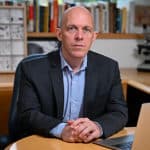
Dr. Robert (Rob) Dunn is a professor in Applied Ecology at NC State, where he also serves as Senior Vice Provost for University Interdisciplinary Programs. Dunn received his Bachelor of Arts in biology from Kalamazoo College, and his Ph.D. in ecology and evolution from the University of Connecticut. Dunn has published more than two hundred peer-reviewed articles as well as articles for broader audiences in National Geographic, the New York Times, and the Wall Street Journal. He is the author of eight books, including A Natural History of the Future and Delicious, The Evolution of Flavor and How it Made us Human, with Monica Sanchez and, most recently, The Call of the Honeyguide: What Science Tells us About How to Live Well With the Rest of Life.
Theme song and credits music by Breakmaster Cylinder. Other music in this episode by Babel, courtesy of Shutterstock, Inc.