Seeking Wholeness in a Fractured World
By listening back across years of dialogue, we discover fresh insight into how science and faith help us mend what’s broken.

Image used under license from Shutterstock.com
By listening back across years of dialogue, we discover fresh insight into how science and faith help us mend what’s broken.
Description
A season of reflection led us back into years of past conversations, where unexpected threads began to intertwine. In this episode, we bring those threads into conversation with each other—voices like Makoto Fujimura, Praveen Sethupathy, Krista Tippett, Mike McHargue, and Bill Newsome—to explore how both science and faith gesture toward wholeness in a world marked by fracture. Themes of mending, spiritual hunger, rest, and stubborn hope surface anew as these earlier moments speak to one another in ways we couldn’t have anticipated at the time. What emerges is less a retrospective and more a fresh way of seeing: an invitation to notice the cracks, name them honestly, and discern the gold that might do the work of mending.
- Originally aired on December 18, 2025
- WithJim StumpandColin Hoogerwerf
Transcript
Stump:
Welcome to Language of God. I’m Jim Stump.
Hoogerwerf:
And I’m Colin Hoogerwerf. Maybe about 5 years ago you gave a little speech at a staff meeting. It was during COVID, maybe our first time meeting as a staff after being stuck in our homes. Your speech was about the importance of taking time to reflect. Do you remember any of that?
Stump:
That sounds like me… but I couldn’t find a paper trail of that particular speech. If I had to guess it probably was something like this: I’ve kept a journal for most of my adult life—often just keeping track of things that happen. But sometimes it goes deeper into existential questions of life and what I’m currently thinking and feeling. Then I have this custom now at New Years and in the middle of the summer around my birthday, pulling out old journals and reading through them.
Hoogerwerf:
There’s two levels of reflecting going on: the initial writing of a journal forces you to think about your day or week or whatever, when you write down the important parts that stood out to you.
Stump:
Yep. That’s related to the claim I make fairly often that writing is what helps me figure out what I think about something. When I make a journal entry, I’m reflecting back on my experience, rehearsing what happened, and trying to understand it. So that’s the same kind of thing as why I write a Substack account of the adventures we take, like to COP30 in Brazil a few weeks ago. Instead of just letting the experience wash over me, I reconstruct it by writing about it.
Hoogerwerf:
OK, so why the second level of reflection: going back over the first level of reflection years later?
Stump:
Reflecting on my reflections… there’s probably a couple of levels to this too.
Hoogerwerf:
Of course
Stump:
I’d say that it is part of a spiritual discipline I’ve kept, that trains me to see the providence of God in my life. For me at least, that’s not always so easy to see in the heat of the moment, in the short term. But when I look back at my life from a little more distance, it makes more sense to see how the good times and the hard ones might be part of some bigger plan. I’m not a determinist or fatalist in thinking that everything had to be just the way it was, or even that there was some reason God wanted things to happen the way they did. I think God has given the created order more freedom than that, and that sometimes we do things that God wishes we hadn’t done. But I do believe that God can bring good out of any situation, and when I review the twists and turns my life has taken, I can’t help but see God’s faithfulness in the big picture of the way things have gone.
Hoogerwerf:
That’s one level
Stump:
Yeah, the other level is a lot less spiritual sounding: it’s kind of fun. I suppose reading back through my journals is a way of re-living them — not that different from rewatching episodes of Seinfeld or Harry Potter. I like re-reading novels too, as you always get something more out of them.
Hoogerwerf:
Well maybe producing podcast episodes is kind of like keeping a journal — it’s certainly a record of conversations we have had and things we’ve done. And I admit I’m not always good the second part, where I go back and look at what’s been done. There is always a long list of podcast episodes in front of me and new ideas to chase. But it’s December, which is a time when we sometimes pause to look back. And this happens to be episode 200, which had us both start thinking back over 7 years of conversations and stories and relistening to some of those moments. And as I was listening back, I noticed something. A pattern started to emerge. And I realized that the conversations we had remembered and highlighted were saying something together, something they didn’t necessarily say on their own at the time we recorded them.
Stump:
That’s one of the benefits of reflection, is that things start to come together in ways that might not have been obvious in the moment. And it may be no surprise that the pattern that emerged has to do with the fact that we live in a fractured world. You don’t have to be on one side of the political divide or the other to feel that. But for those who are curious about science, it may feel like an especially fractured time as we see growing distrust in science and face ethical questions about how science and technology should be used.
Hoogerwerf:
And for Christians, this idea of the world not being in its perfect state is a central part of our story. It doesn’t mean that we just throw our hands up and walk away. We strive for wholeness, we work to bring about the kingdom of God where the fractures will be healed. The pattern that emerged from the conversations wasn’t just about the fact that everything is messed up, it was much more about the ways in which both science and faith can lean toward wholeness amidst the fractures.
Stump:
So for today’s episode we’ve got four acts, all drawing from conversations we’ve had in the past, pulling together some of those threads into something new and responding to the desire to find wholeness in a fractured world.
Act One: Beauty in the Break
Hoogerwerf:
Act One: Beauty in the Break
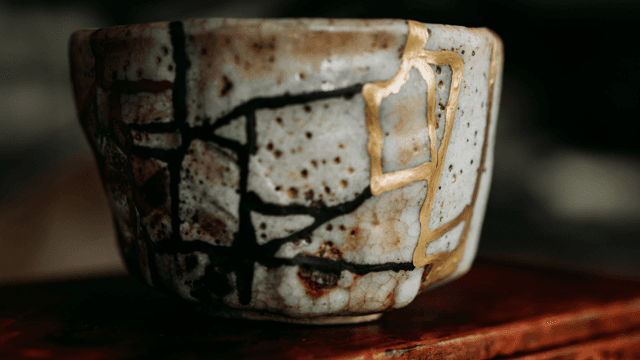
I first learned about Kintsugi from our interview with Makoto Fujimura, which was a live interview we did at our BioLogos conference back in 2022 in San Diego. And I’ll not give too much more context here about what Kintsugi is because Makoto will describe it for us.
Stump:
But we can give a bit more context for who Makoto Fujimura is. Makoto Fujimura is a leading contemporary artist. His work has been featured in galleries and museums around the world. He’s also an advocate for the arts and for culture care through the International Arts Movement and the Fujimura Institute. He’s written several books, including Silence and Beauty and more recently Art and Faith. It was that second book that formed the basis for much of our conversation with him. Here’s Makoto describing the art of kintsugi:
Fujimura:
Kin is gold, tsugi means to mend. Tsugi also means to pass on to the next generation. And it’s this art of taking broken pottery, sometimes very important teaware will break in Japan because of many earthquakes and tsunamis. And the family of tea masters will often hold on to the fragments of an important teaware for several generations, and then they will give it to Japan lacquer master—urushi master—to mend. But the urushi master doesn’t just fix the bowl to make it look like it was never broken. The urushi master decides on how the fracture, depending on how the fracture is done, to accentuate the brokenness just like this, and highlight and to make the fractures beautiful with gold. The end result kintsugi bowl is far more valuable than the original, even though the original may be very valuable. So this idea of new creation, the idea of thinking about as Christians post resurrection appearances of Jesus, he comes not just as a human being full human being glorified, but he comes back as a wounded human being with nail marks. That’s a remarkable reality. And so I think of kintsugi as a way of understanding new creation, the post resurrection journey that we ought to be on ourselves, where our fractures and our woundedness, our hearts broken, can become an entry point into something more beautiful, because God is the ultimate kintsugi master.
Stump:
That really is beautiful. And I don’t want to press this metaphor too far, but I can’t imagine that people are taking their valuable tea sets and intentionally smashing them just in order to take to a kintsugi master. But rather, this is seen as this is something hard and tragic that has happened, but that we’re able to create something beautiful out of that tragedy.
Fujimura:
Absolutely. You’re not actually glorifying brokenness to that extent. Nakamura San, the kintsugi master, who co-founded Academy kintsugi with me and my wife Haejin says, we have enough broken things in the world. You may think coming into a kintsugi workshop or experience that you don’t have anything broken. But that’s not true, we just don’t know how to look for it. We have built this cultural facade, wearing masks to look perfect, to look like we are whole. In fact, all of us, I don’t think anybody can say today, especially after the pandemic, that we’re not broken. But how we see that, how we tend to it and mend that, is critical for the future of understanding our culture. Science has a great role to play here, because the pieces cannot fit together if the physics doesn’t work, if the rushi doesn’t hold. So, it’s critical that the engineering part works in tandem with the aesthetic part.
Hoogerwerf:
This idea of kintsugi has become a metaphor that has been really powerful for me. And this interview happened to come at a time when I was working on a series of episodes called Creation Groans which ended up airing later in 2022. The series is kind of a personal journey of mine to figure out how to respond emotionally to the idea that there are going to be unavoidable consequences from climate change and environmental degradation. I had done a lot of my interviews for that series, but I didn’t really know how to end it, which was partly because I still didn’t know how to feel myself. What was I going to say? Well, it was while I was in San Diego at our conference that I heard Makoto talk about Kintsugi and also had an interview scheduled with Praveen Sethupathy. Praveen is a geneticist at Cornell University, and a long time member of the BIoLogos community. Here’s Praveen:
Sethupathy:
When I was becoming a Christian, thinking about the wounds inflicted upon Christ, right, I actually stopped reading and didn’t get to the resurrection. And that was really hard to swallow. It was very confusing, right? Here’s the sort of protagonist of the story that is naked and disfigured and pathetic on a cross and taking this abuse and the shame. I think you have to sit with that for a little bit before you go. But then three days later, he rose again, right, demonstrating the victory over death. And then for us too, from a symbolic or figurative standpoint, when we experience self inflicted externally inflicted wounds, right, we can know that there’s hope, that hope is powerful because of those wounds, right? Because then it makes you ask, why did he do that? Why did he have to endure all of that? Couldn’t he have snapped his fingers? Couldn’t you have done this or that? But there are reasons for that. And the hope is there because of the wounds. We have to sit with the wounds that are exposed by coming to terms with what’s happening, that will be done to the environment and the way that we’re hurting ourselves. I think we have to sit with it in order to appreciate the hope that we’re trying to bring about.
Hoogerwerf:
The idea that woundedness might become beauty is complicated. It doesn’t mean that we can just be ok with any brokenness we encounter and we definitely shouldn’t romanticize the real suffering that takes place. That’s not the point here. The point is that healing the wounds doesn’t mean ignoring the wounds, but instead it tenderly acknowledges what is broken and repairs it…sometimes with gold lining. These ideas came together for me in a way that has really helped me respond not only to climate change and the environmental crisis, but to any of the brokenness that we experience in this world.
Act Two: New Paths to Old Wisdom
Stump:
Act Two: New Paths to Old Wisdom
There’s been quite a lot of research in the last few years from social scientists looking at the changing dynamics of religion. The trend for a long time was that the number of Americans identifying as Christian was declining, and the religiosity of Americans is down considerably. Those people who left religion over the past decades are becoming parents now, which means there are many young people growing up without any kind of religious background at all.
Hoogerwerf:
Lots of young people have either distanced themselves from religious institutions because of how the church is seen in society or they have grown up without any religious framework at all, but many of them still seem pretty hungry for spirituality and they are feeling the fractures of the world quite sharply.
Stump:
That brings us to this next section. Way back when we were just starting the Language of God podcast, we got connected with Krista Tippett and the On Being podcast through a mutual supporter. We ended up traveling out to Minnesota where the On Being offices are located and we got to spend a couple days watching them do their thing, learning about the process they have honed, and we got to interview Krista while we were there, which was kind of a surreal experience, having heard her interview so many people over the years. The interview ended up being pretty long and we had to cut some sections from it for the final aired episode.
One of the sections I have often thought back to. And it’s another tie into this idea of how to find wholeness in a fractured world.
In the conversation Krista was talking about building relationships across difference and how being open to other ways of thinking and knowing is not something we should fear will dilute our own convictions, but will actually enrich us. That led to asking about “the nones” as in the people who check the box “none” on surveys under the question of what religion they ascribe to. I asked Krista if this was a new phenomenon or just a new way of talking about something that has always happened. Here’s her answer.
Tippett:
I think they’re the desert fathers and mothers of our time. This moral hollowness that they grew up in, hollowed out institutions, these places where they ask these things we actually all want to be talking about and thinking about all the time about what it all means, that you set that aside and compartmentalize it. And then I think on top of that, what’s so interesting is a lot of these young people growing up now, have grown up without any religious or spiritual formation, which is a completely unique condition in the history of our species for the most part. And rather than stamping out the spiritual or theological curiosity that might have been cultivated and inside church or tradition or synagogue, what I find about them is that unlike their parents, they also come to a rediscovery of these questions and they have absolutely no baggage, right? They’re not rejecting anything. They’re wide open to learning.
Stump:
In the sense, you mean that many of these religious traditions formed themselves in opposition.
Tippett:
But we have this generation, kind of these couple of generations between the 1960s and now where a lot of people, I mean 50 years ago, just about everybody in this country went to church. And I went to church three times a week, right, if people went to church and most likely, and you know, this is still true in some communities, but it’s much less true all over that you also likely went to the same church that your parents and grandparents went to, right? And in a very short period of time, you know, a blink of the cosmic eye, we went, you know, in this period we suddenly had this generation that was disillusioned, that didn’t feel bound to do that out of duty anymore. And that fell away and raised their children–the millennials now–with absolutely no formation or experience. And that generation was really clear what they did not want to transmit to their children, right? The baggage they did not want to load onto their kids. As a result, their kids have no baggage and are coming at this with very fresh eyes and open hearts.
I mean, I was with, a couple months ago—there’s this movement, nationally called nones and nuns. Have you heard about this? Nun—N-U-N-S—and nones—N-O-N-E-S—where there are these friendships and I would say spiritual companionships and mentoring happening between these communities of sisters, many of whom are really aging rapidly. And because of the way women’s lives have changed so much in this half century, not being renewed by young women in the same way. And so a lot of them are really thinking about the future of their legacy and what they want to be mentoring and eldering in this emerging world. And there’s this world of nones (N-O-N-E-S) who are so hungry for spiritual eldering and they—I’ve been with a lot of them and they will use that language precisely that we want spiritual elders, even if they’d be hard pressed to tell you how they would define what the word spiritual means or their own spirituality. And there are these friendships and they’re not just emotional experiences, they are these practical relationships that are forming.
And I was at a convent in Northern California that once had this huge physical plant. There were once hundreds of sisters living there and it’s now a retreat center. And these nuns, people from the nones and nuns have moved in and are sharing life with the sisters and they are kind of putting themselves at their feet to learn what these, in fact, very powerful women, you know, that to become a nun, 50, 75 years ago was an emancipated choice. So, you know, I remember one of the sisters I met is helping run this major hospital system. I mean these women also started schools and hospitals and some of them are lawyers. But they’re learning from these women as role models and they are learning the complexity of intentional community of religious community. It’s beautiful. And together across generations and across these religious affiliations that you know, that we have trouble thinking outside of, but like something new, they are thinking new thoughts. And on the one hand, it is planted in this world that is becoming. And the other hand is planted in this deep, ancient monastic tradition.
Stump:
Yeah. So that’s an example of some nones that didn’t inherit that tradition but have chosen it intentionally to come alongside. For many of the others that are kind of spiritually promiscuous, sometimes they’re described, do you lose anything when you’re not, when your spiritual life is not tethered to an institution or to that kind of deep rooted guidance?
Tippett:
Yeah…I, yes. And this is not to say that everyone who is a none has a deep spiritual life. Although I would also say that everyone who goes to church three times doesn’t have a deep spiritual life right, like you know? (laughs) I mean, some people do and some people don’t. My observation from having watched this now for a couple of decades, I think something new—again, I’m not generalizing about everybody, but I, you know, I was very critical in like eighties and nineties of—and I used to use that language of spiritual promiscuity. The new age, you know, the new age of the eighties and nineties. I, yeah, to me there’s a superficial… I mean, this is just my opinion, but there’s a shallowness to that. And I even, I think even in a disrespect of the depth of the traditions, in many cases. I think like, you know, this kind of smorgasbord religious life, I’ll take a little bit of new native American ritual and do Sabbath and right and take my prayer from here. My observation is that the way in which people are reaching to craft spiritual life when they have been given no formation, that there’s a depth to that now. And that there are a lot of ways growing up to accompany that with depth and that is new. That was not there in the eighties and nineties. I don’t think this is like the new age.
And what I also see is that, and I just think this is true, that as people go, you know, it was certainly in the beginning, if you have somebody who has no formation, nothing given they’re, you know, you’re going to read books, you’re going to, I don’t know, listen On Being—I mean I hear that a lot, you know—you’re going to listen to On Being, you’re going to— There are a lot of beautiful programs forming and projects and ways you can even get kind of, you know, a taste of theological education. But that at some point, as people get serious about it, they do start to gravitate towards community, towards a ritual, towards text, towards some of the fundamentals of the traditions. And I think the question is how do the institutions rise to this to meet them? And what I mean by that is so much the opposite of changing your message to appeal to the millennials. I think that they are ready for depth and you know, the language of virtues. I see that.
Stump:
So when you interview somebody, you almost always start by asking them about the spiritual environment of their youth, of their childhood even. And I wonder if you project that out, another generation to when the people you’re interviewing are primarily these nones who grew up without that institutional at least formation and what their answers might be like, or why is it that you ask that question of people now and I wonder how you, uh, how you think that question is going to be answered and how it will affect the kinds of spiritual conversations you have with people when they’re the ones who grew up without any of that?
Tippett:
Yeah, that’s such a great question. When you talk to people in this generation where everybody had something, you know, sometimes the answer is my mother took us to church, my father stayed in the car and read the newspaper and I always wondered why he stayed in the car and read the news. Right, like, even when there was an absence and a presence, you know, the pondering the absence was part of the formation. And you know, the French philosopher who told me that he had, you know, his parents, his father was a great atheist, philosopher, you know, truly raised without any religious teaching or tradition and yet went off in a boat with his uncle who was not religious but read everything he could devour about philosophy and theology. And so, you know, people find their way to books or to role models or to communities. And to practices.
I mean, I also interviewed this young man, Nathan Schneider. Do you know him? Who was maybe one of the first people I interviewed who truly was somebody raised by—in fact, I hear a lot of these stories now too that, you know, parents who say, we’re going to expose you to everything. Right? So like we went to synagogue, sometimes we went to church, he visited many different kinds of, had many different kinds of spiritual experiences. And then when he was 18, he converted to Catholicism and is now more Catholic than a lot of cradle Catholics. So I think there will be stories like that.
And Yeah, I do think that they— Monasticism was this spiritual renewal movement with these real rebels, you know, Christianiy, Catholic Christianity, I mean the church, the Roman church was the only way to be religious in that world. And the monastics, these rebels, who we’ve now made much more respectable in hindsight than they were at the time, they were calling the church back to its own truest, deepest, deepest self, to its service orientation. And that’s another thread I would say that I feel runs all the way through so many younger people I talked to. Even people who might not even call themselves, you know, who wouldn’t be associated with some of these things. I’m talking about this desire to be of service and they want and need teachers and elders. That’s something I think about a lot and it’s something I think about as we produce On Being.
Stump:
Krista’s reflection lands right in the center of our theme here. Wholeness doesn’t come from retreating into safer or smaller versions of ourselves, but from opening up to each other across real difference. Her description of the nones as modern desert mothers and fathers probably challenges us and raises some legitimate questions, but it’s provocative to see them not as a generation adrift, but as people unburdened by baggage, newly curious and hungry for depth. I love the practice of pairing them with elders who are rooted in ancient communities. Maybe we can even see these unlikely friendships and bonds as kind of living kintsugi: fractures acknowledged, generational gaps still visible, but the whole thing repaired with relational gold.
And Krista’s insistence that serious spiritual searching eventually bends toward community, ritual, and even texts challenges institutions to meet seekers not with gimmicks but with substance. In a fractured world, this posture of mutual learning—elders offering steadiness, seekers offering fresh eyes—gives us a glimpse of a more integrated future, where the old and the new hold one another up.
Act 3: Learning to Rest
Hoogerwerf:
Act 3: Learning to Rest
Part of the reason why we don’t take the time to reflect back as much as we should is because of the assumption that success only comes when we work relentlessly, never breaking. That can also be pretty harmful to health when we forget the need to rest. The church calendar builds in many times like this…lent and advent, and weekly sabbath.
Stump:
The fractures of the world aren’t always huge, immovable things like climate change or the messiness of religious institutions. Sometimes they are sicknesses, stress, or simply a hard season of life. Seeking wholeness in those moments might require a different kind of approach.
Hoogerwerf:
This is from a conversation we had in 2019. We were out in San Diego for a conference at Fuller Seminary called Theopsyche. And you knew that Mike McHargue, also known as science Mike, lived nearby and reached out…
Stump:
Yeah Mike was the cofounder of the Liturgists podcast that was enormously successful back in the day. And he and I had some communication between each other. And so I reached out to him and he said “Sure, let’s record and episode. Meet me here.” And so you and I took an Uber into the back of this residential neighborhood, and got out and didn’t really know where we were. And walked back a driveway and a dog barked at us pretty loudly. And one of the neighbors poked their heads out wondering what was going on. And eventually Mike came walking up. It wasn’t his house, but this was the studio where he worked and we went inside and sat there and recording for about an hour.
Hoogerwerf:
Mike also hosted the podcast, Ask Science Mike, and was also the Author of Finding God in the Waves. In our conversation he tells the story of a mystical experience he had on the ocean shore. But he also shared another personally story with us:
McHargue:
I’ve had a really bad year. It’s been a bad year. I’ve been in the hospital. My daughter had an eating disorder, has an eating disorder. Treating her eating disorder and my heart condition drove us to the brink of financial collapse. I’ve been in a constant state of stress and anxiety. I’ve been really compelling in the public eye because my willingness to be transparent and effectively have repeated mental breakdowns on stage and on podcasts, which is great radio, but it’s a tough way to be. And I had a conversation with a cardiologist and she said, “well you have a heart disease that people usually get in their seventies and eighties and it’s hard to treat in your eighties, but you’re in your forties. I don’t know how you got this other than you show the biomarkers of incredible stress. So you can do what I tell you and in three months your heart disease is going to be healed, or you can keep doing what you’re doing.” And she said, “I think you could be dead in six months. You’ll have a heart attack and you’ll die.”
And so I had to make some immediate and radical changes. It was really hard to think like, how can I reduce my stress level when I’ve just racked up all these medical bills? We’re already in medical debt, but then the listeners of the podcast banded together and paid off all my family’s medical debts. That was just a couple of weeks ago and my cardiologist said, “you’re a workaholic and you do noble work, and that’s a dangerous combination.” She’s said, “I’ve checked in, I’ve seen what people say about you.” And she said, “for someone with your temperament, having strangers say, you saved my life, that’s a call you can’t resist.” And she said, “you work too hard.”
And in her words, I heard a personal God that loves me, reminding me of how I became Science Mike in the first place, and that was being still and quiet in the pursuit of a God who loves me. And she said, “you need to rest. And if I tell you to rest, you won’t. I’m going to give you two jobs. You’re going to plant a vegetable garden and you’re going to start birdwatching.” And I’m autistic and so I have literally the perfect birdwatching, bird feeding set up for native and indigenous birds in this region. And I was out changing their feed as I do every day and cleaning the bird feeders and watering my garden. I have a beautiful garden. And a dove came and landed, Jim, as close as you are to me, where I was watering a plant. I didn’t want to spray the bird so I moved the sprayer away and the dove hopped down from the bush and hopped even closer to me and did that little dove coo and I realized the dove wanted the bath. So I changed the sprayer to a soft mister. And without any fear of me, this wild bird took a bath in a hand mister for, I don’t know, six or eight minutes and then hopped up and shook its feathers and kept me company for another 20 minutes while I watered the garden. And to an atheist, this is nonsense. But that little dove to me was a messenger from a God that I love, that’s personal and has agency and said, “It’s time for you, Science Mike, to have some peace.”
I understand that for many listeners of this podcast, I’m probably really frustrating to listen to, my reticence to ever make definitive claims about the divine. But what you have to understand about me is that I experience a personal and loving God all the time. And that experience is the driving force behind every single thing that I do. Not only on podcasts and on stage, but when I tuck my children in at night, when I pass a homeless person on the street, or when I see someone at an airport who looks like they’re having a bad day. In every one of those moments, I stop and I listen for what a personal, loving God has for me to do in that moment.
[musical interlude]
Stump:
In many years of these conversations, there have been a few very emotional moments when our guest was willing to be vulnerable and when the best response to an answer was silence and then gratitude for being willing to share with us.
Hoogerwerf:
I like here that the doctor told Mike to engage in two very grounded practices—planting a garden and watching birds—two things that require attention to something outside of ourselves and that slow us down from the relentless pace of work and technology. We spend a lot of time talking about abstract ideas when we talk about science and faith. And sometimes to actually live out the harmony of science and faith we need to use our bodies. Mike’s story reminds us that practices like these can help us better understand the world in both scientific terms and also in more mysterious ways.
Act Four: Sheer Unadulterated Hope
Stump:
Act Four: Sheer Unadulterated Hope
For a while, during our interview episodes, I’d end by asking guests what books they’re currently reading.
Hoogerwerf:
Why’d you stop doing that?
Stump:
I don’t know… Maybe I forgot a couple times, then it seemed weird to just do it some of the time?
Hoogerwerf:
And there was another pattern for a while, you’d end by asking our guest: “What gives you hope?”
Stump:
Yes, We got some good answers to that along the way, but eventually we stopped asking that too. Partly just because we wanted to change it up, but partly because that question was too often interpreted to mean: what progress are you observing in the world? and I’m not sure hope is quite as simple as that.
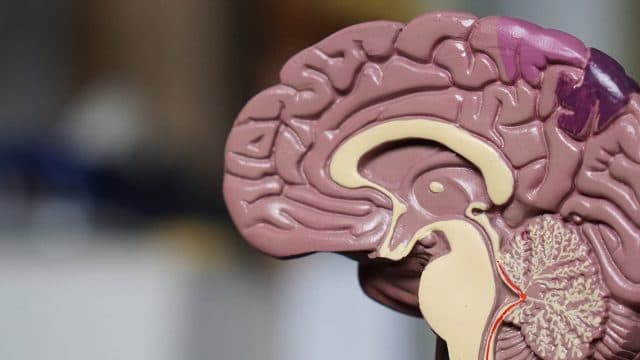
Bill Newsome is a neuroscientist at Stanford and a long time friend of BioLogos. We interviewed him in 2021 and had a wide ranging conversation about the brain and about free will. But there was something he said in that interview that I have come back to over and over.
Stump:
So I like a line from one of the articles by you that I read. In your “Life of Science, Life of Faith”, you said “as Richard Dawkins observed, the emergence of the theory of evolution in the 19th century made it possible to be an intellectually fulfilled atheist”, but you go on to say “it had relatively little effect, I think, on the possibility of being an intellectually fulfilled theist.” So you consider yourself an intellectually fulfilled theist, do you think it’s also possible to be intellectually fulfilled in other ways? Or is that some necessary component of being intellectually fulfilled?
Newsome:
I think for me, it’s, I would say it’s necessary just because I haven’t found a better alternative and now 68 years of searching in this life, so you know, if I’ve been reading widely been attuned to different cross currents of modern thought, and been paying attention and willing to have some detachment and critical stance on my own culture, my own family, my own milieu that I grew up in, and I haven’t yet found a better alternative then that’s getting close to being necessary. You know, the faith view of life, the theological, the Christian anthropological view, is the one that makes the most sense to me of my life as I experienced it from the laboratory to the church pew. It’s a broader enterprise than science. I mean, science is by far the best way to go to learn things about the age of the earth and how life appeared on earth, and how to send people to the moon and ultimately, maybe to Mars. But there’s just so many questions that science cannot answer. Those are actually the questions that are most important to us in life.
Stump:
Give us some examples of those that you think.
Newsome:
Yeah, I think I think most people would agree that it’s an important question that many people are asking right now, is it better to live or to die? And I think that many people listening to this podcast may have been there at one point or the other in their lives, and certainly, you know, people for whom that’s been a live issue. So I think its importance is obvious. And yet, I can’t think of a program of experimental work, you go into a scientific laboratory and do to get an answer to that question. Yeah, that’s undeniably important. And all of us need to all of us humans, theists, non theists alike need to pull on extra-scientific sources of wisdom and knowledge, and belief to address questions like that. I think another simple one that faces most people at one time or the other in their lives is should I marry this person? Do we have what it takes to create a lifelong bond and a lifelong, sort of collaborative life together? And if you wait for scientific evidence to answer a question like that, before you’re willing to take the step, you’re gonna be waiting a long, long time to get married.
Stump:
I think I know a few people who have tried to subject that decision to scientific analysis, and I don’t think it went so well for them.
Newsome:
I agree, I think, Jim, for us to say, doesn’t, when you’re making decisions like this, that doesn’t mean you check your brain at the door, right? You better not check your brain at the door before making a decision like that. There are many, many sources of wisdom, many sources of evidence, many words of advice, that we can consult before making a weighty decision like that. But in the end, it does not amount to scientific proof, which means you should jump or not jump and in the end, it takes some knowledge and, and belief in a cognitive sense. And it takes some intuition. And it takes some sheer hope and faith and you have to jump and make a commitment and live out the life in the absence of certainty about the answer. And I think that sums up in a nutshell what the human condition is in the most important decisions we face in our lives. And I would point out that that’s exactly what the religious quest is like. I often say that I think religious belief is about a third cognitive assent and about a third intuition, and about a third sheer unadulterated hope. And I’m comfortable with that characterization. Just because I think it’s where we are as humans, it’s just the nature of things. It doesn’t matter whether you’re a theist or a non-theist, you’ve got to come to grips with that central nature of what it is to be human.
Stump:
I love that phrase: sheer, unadulterated hope. It’s not just wishful thinking. It’s not even the same as being optimistic. I think you feel pessimistic based on the immediate circumstances, and yet still hold to hope, because it’s not just a feeling, it involves commitment to working toward a desired outcome, even when that outcome isn’t just up to us.
In the talks I give, I almost always talk about hope being different from optimism, and that hope requires some action on our part. But I also don’t want to convey that in order for hope to be realized, we have to bring about some wonderful or compelling results through our work. In that sense, I quote Mother Teresa, who said “We are not called to be effective; we are called to be faithful.” So we do our work as faithfully as we can, and let the results up to God.
That seems a fitting way to end an episode celebrating 200 episodes worth of work we’ve put in on this language of God podcast.
Hoogerwerf:
I hope that we have been faithful in our work! And I hope that it brings some wholeness to the fractured world we can’t ever fully escape.
Stump:
Hear hear… That’s a wrap for us on episode 200 and the year 2026. Here’s to 200 more! Merry Christmas everyone.
Credits
Language of God is produced by BioLogos. BioLogos is supported by individual donors and listeners like you. If you’d like to help keep this conversation going on the podcast and elsewhere you can find ways to contribute at biologos.org. You’ll find lots of other great resources on science and faith there as well.
Language of God is produced and mixed by Colin Hoogerwerf. That’s me. Our theme song is by Breakmaster Cylinder. BioLogos offices are located in Grand Rapids, Michigan in the Grand River watershed. Thanks for listening.
Go Deeper
The clips from the episode are from the following podcast conversations:
Podcast Episode


Podcast Episode
Krista Tippett | Life Together

Podcast Episode
Science Mike | Intimate Mysticality
Podcast Episode
Featured guests
Praveen Sethupathy

Krista Tippett
Krista Tippett is the Founder and President of the On Being Project
Mike McHargue