Fault Lines: Am I Bad or Sick? | Wonderology
If biology shapes our behavior, do our struggles make us bad, sick, or both? This week, Wonderology searches for the line between morality and biology.
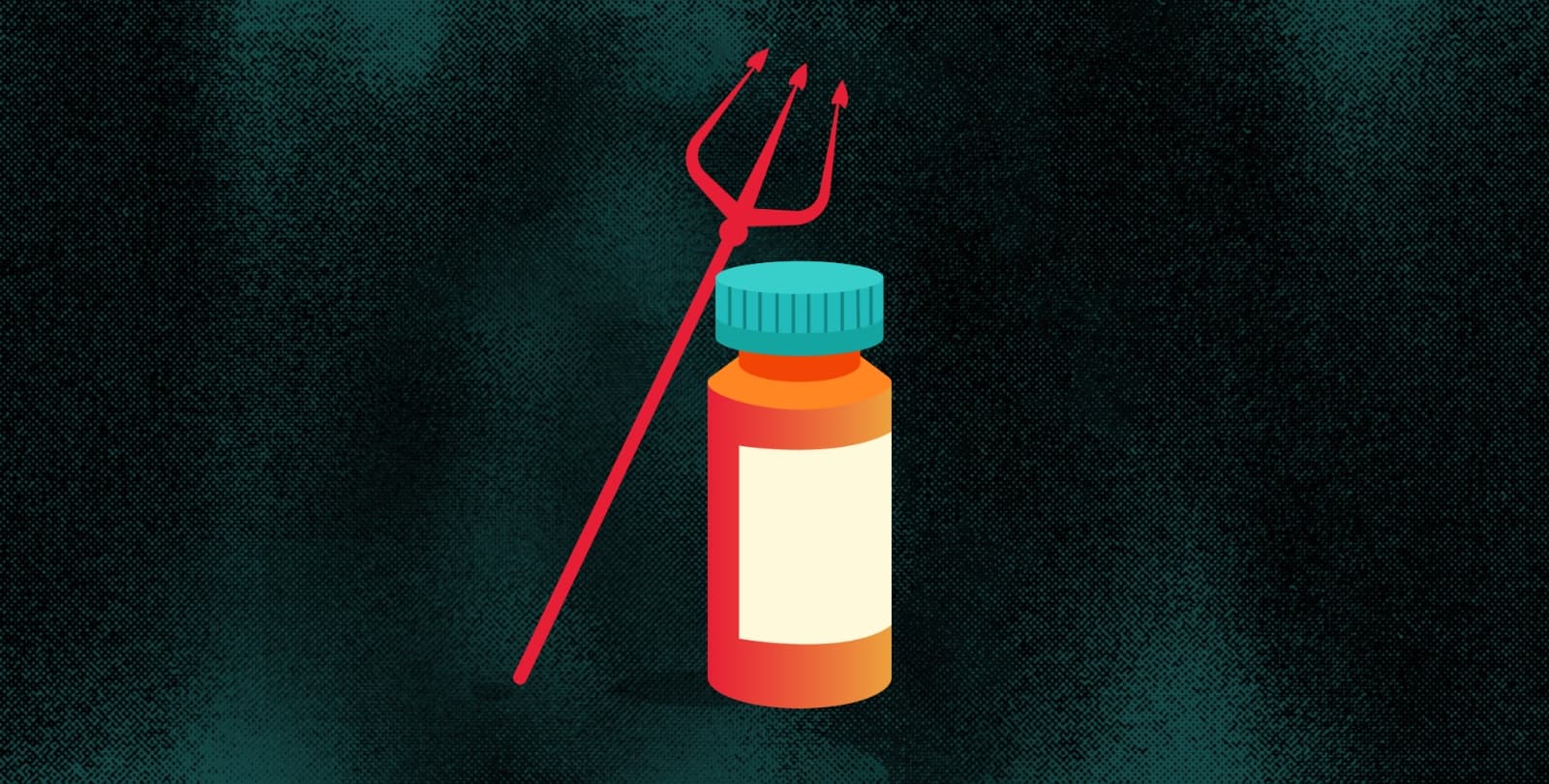
If biology shapes our behavior, do our struggles make us bad, sick, or both? This week, Wonderology searches for the line between morality and biology.
Description
Lindsay has lived with disordered eating since childhood. For decades, she felt her struggle represented a moral failure.
But then she tries a new medication. As if someone flipped a switch, the compulsion that had shaped her life went quiet in a single day.
This experience raises a profound question. If one shot could silence a lifelong behavior, were all those years of struggle really a matter of morality? Or was something biological at work the whole time?
This week on Wonderology, we examine court cases, explore the behavior-shaping power of gratitude, and talk with a man battling depression to ask: Where is the line between morality and biology, and what does that mean for our responsibility?
- Originally aired on November 25, 2025
- WithJesse EubanksandFaith Stults
Keep Exploring
If this episode sparked new questions—or stirred something personal—you’re not alone.
Check out articles, podcasts, and resources that explore how faith and science together make sense of our struggles and our world.
Discover More: Sin in a World Full of Wicked Problems
Questions of morality and sin are already difficult at the personal level. But what happens when the brokenness we encounter goes beyond the individual and becomes tangled in complex issues like climate change and inequality?
Theologian Rebecca Copeland joins the Language of God podcast to offer another way of understanding sin—one that helps us recognize our complicity in broken systems and our capacity for repentance and healing.
Rebecca Copeland | Wicked Problems and Unoriginal Sin
Rebecca Copeland explores how ideas of sin fall short for today’s wicked problems and how a new vision of repentance can help us live faithfully in a tangled, unjust world.
Keep Chasing Life’s Big Questions
There’s always more to explore. Join BioLogos’ email list to receive new Wonderology episodes and other resources that spark awe and invite fresh discovery.
Investigate More Big Questions
Curiosity doesn’t stop after a single question. Keep exploring how faith and science together illuminate life’s biggest queries.

Common Question
Common Question

Common Question
Transcript
Lindsay Eubanks
I know nothing about this. This is all foreign to me. Somebody had a gun in my head and said, figure this out. I would be dead.
Lindsay Eubanks
Just like you would be if they said, name all the bones of the body.
Jesse Eubanks
This is Lindsay.
Lindsay Eubanks
Here I go, here I go. Here I go again. Girls, what’s my weakness, man? Okay, then chill.
Jesse Eubanks
And if she sounds casual like she is at home, it is because she is. Who are you to me?
Lindsay Eubanks
I’m your wife.
Jesse Eubanks
Lindsay joined me in the studio because today’s episode started with her asking a question that I did not know how to answer. But to get to that question, we need to rewind a little.
Lindsay Eubanks
I thought I was fat since I was nine. Looking back, I’m like, oh my goodness. I was fine.
Jesse Eubanks
Her dynamic with food started when she was young.
Lindsay Eubanks
From a young age. Food was with me when I was happy, sad, mad. Every emotion you could imagine, bored. It was my best friend. It was personified, it was my companion.
Jesse Eubanks
And like any loyal companion, it stayed. But as she got older, something changed.
Lindsay Eubanks
You know, those habits got ingrained and then they did start affecting me when my metabolism slowed down as I aged, but the habits did not slow down.
Jesse Eubanks
I asked her, what would someone have seen if they followed you around a couple of years ago?
Lindsay Eubanks
They would’ve seen someone who had a good plan in the morning, made a nice lunch, got to work, saw a candy bowl, or the donuts in the break room, and then went crazy because I felt so guilty ’cause I didn’t stick to my plan.
Jesse Eubanks
So she turned to her faith and some of it brought genuine hope, some of it did not.
Lindsay Eubanks
Most of what I was learning in the church world was you’re a glutton. You’re not seeking the Lord enough if you’re choosing food over him, and that’s your idol.
Jesse Eubanks
Disordered eating, the church. Shame. Sometimes they all collided.
Lindsay Eubanks
I can give you an example. I would have to close my eyes in communion because every woman that walked past, I would say I’m bigger or smaller than her. And so that’s just what I wore: the comparison. And if I was bigger, that means they were better than me or they had it under control or something was really wrong with me. I remember somebody once said, “I don’t understand those people that eat after dinner.” And I remember thinking, I don’t understand those people who don’t. And then I felt so embarrassed ’cause I was like, man, I must be really weird.
Jesse Eubanks
Did you feel like a lesser Christian?
Lindsay Eubanks
I felt like a lesser human.
Jesse Eubanks
She tried everything.
Lindsay Eubanks
Writing down everything I eat. Weight Watchers many times, many versions of that weigh down diet, intermittent fasting, signing up for races, mini marathons. I did the Whole 30. All of the fads, I’ve done. Oh yeah, I’ve done multiple expensive online accountability Christian type groups. I’m talking thousands of dollars.
You give up hope because, I mean, the more times you fail, the odds are you’re not gonna be able to do this. Why even try at this point?
Jesse Eubanks
Then about a year and a half ago, her doctor suggested something different. A GLP-1 agonist. You’ve probably heard the names.
News Clip
Discover the power of Wegovy. I lost 35 pounds. Adults lost up to 14 pounds.
Jesse Eubanks
These drugs do two things. They quiet the part of the brain that keeps shouting, “eat more.” They slow the stomach so that food stays longer.
Before moving on, after some consideration, Lindsay decided to take the shot and almost immediately something changed.
Lindsay Eubanks
It was within the first 24 hours and my goodness I… I just, I didn’t care. Do you remember when we went to the fair and we got my favorite ice cream and I gave half of it to you? ‘Cause I just didn’t want it anymore. It is like a switch went off in my head that said, food is just not in control. It is not in control.
Jesse Eubanks
For the first time in her life, she felt like food wasn’t steering the wheel.
Lindsay Eubanks
I mean, life was still stressful. You know, hard things have happened in the past year and a half since I’ve been taking it.
Jesse Eubanks
But how she responded—it was different.
Lindsay Eubanks
I didn’t run to food to comfort me. I didn’t even think to do that, which is crazy to me.
Oh my goodness. Maybe—maybe there is freedom here.
Faith Stults
Her story is crazy to me.
Jesse Eubanks
What do you mean?
Faith Stults
Like just… that that worked, that just like within 24 hours.
Jesse Eubanks
It’s nuts. It’s insane. Yeah. But that change, the sudden relief—it brought this question and it’s one that’s haunted us. It’s one that I still don’t know how to answer.
Lindsay Eubanks
Now that that has been literally—switch has been turned off in my brain… was I sinning all that time or was it a medical condition?
Jesse Eubanks
If medicine can cure addiction, where does that leave sin? If a shot can stop bad behavior, was it ever really a choice?
Faith Stults
That’s the question tonight. A question that pushes into both science and faith. Am I bad or sick?
Jesse Eubanks
Tonight at Wonderology, we step into courtrooms, a psychiatrist’s office, and even a science lab running secret experiments to test the line between biology and morality.
Faith Stults
We’re asking if the problem is spiritual or medical. What happens when we get the diagnosis wrong—and whether science and faith, two things we usually keep separate, might be the exact partners we need.
Jesse Eubanks
I’m Jesse Eubanks, a storyteller and journalist.
Faith Stults
I’m Faith Stults, a science educator.
Jesse Eubanks
So… let’s get curious.
Jesse Eubanks
Okay. You guys ready? To explore the question, Am I bad or am I sick? we’re turning to a place where biology and morality collide every day: the courtroom.
Faith Stults
Our associate producer, Mackenzie Hill, brought us three cases all involving someone on trial for killing other people—in courts trying to decide what made them do it.
Jesse Eubanks
Mackenzie takes us to our first case.
McKenzie Hill
Case number one. This takes place in 2013.
News Reporter
Ethan Couch killed four people and injured several others in a drunk driving crash in Burleson, Texas.
McKenzie Hill
So there’s a 16-year-old boy. His name is Ethan Couch, who is leaving a high school party and he’s driving him and several of his friends down a small road in Burleson, Texas. Meanwhile on that same street, a young woman driving home from work that day has just knocked over a mailbox on the same street and is parked on the side of the road. The residents of that home see her in her struggles and they come outside to help her.
Jesse Eubanks
So there’s this young woman, she’s pulled over because she hit a mailbox. There’s family members that have come out.
McKenzie Hill
Yeah. Four people outside helping with the car. So while this is happening, Ethan has been driving with a BAC of three times the legal limit.
Jesse Eubanks
That’s blood alcohol content. He is way over the line.
McKenzie Hill
He swerves off the road and crashes into that broken-down vehicle and kills four people who were present at the scene.
Faith Stults
Flips his truck. It pushes the parked car into traffic, causing more injuries. Neighbors say it sounds like an explosion.
McKenzie Hill
Ethan admits to four counts of intoxication manslaughter, two counts of intoxication assault, and the typical sentence for this should be anywhere from two to twenty years in prison.
Jesse Eubanks
And this is where things get interesting.
McKenzie Hill
Couch’s legal team calls in psychologist Dr. G. Dick Miller to testify on Couch’s behalf.
News Reporter
Couch’s attorneys argued that the teen had no moral compass, not knowing what was right from wrong due to his affluent upbringing.
McKenzie Hill
He argues that Couch’s wealthy parents had coddled him and pampered their son so much, it caused him to suffer from what he diagnoses as “affluenza.”
Jesse Eubanks
They argue that his privilege has become a pathology.
McKenzie Hill
He went as far as to argue that Ethan needed to be separated from his parents and that their parenting style enabled the accident.
Jesse Eubanks
Well, I could agree with that.
McKenzie Hill
Yeah, and I think to go as far as coming up with what sounds like a medical term of affluenza, right?
You know—it’s like he caught affluenza.
Jesse Eubanks
So does the judge buy it?
News Reporter
… and asked for 20 years of incarceration turned into just 10 years of probation.
McKenzie Hill
Seriously?
Jesse Eubanks
That’s it.
McKenzie Hill
Yeah. Ten years of probation.
Jesse Eubanks
So—clear example of like, this guy made a series of really dumb choices, ended up killing a bunch of people, and then instead of taking moral responsibility, he blames it on his psychological condition. I’m gonna give that a big old thumbs down on my side.
Faith Stults
Yeah, agreed.
Jesse Eubanks
So, case one: that is not biology. That is unchecked privilege and power. But notice how quickly we look for a reason—some way to explain away our awful behavior. So far, no one gets a free pass because of their biology.
Faith Stults
Let’s take a look at case two.
McKenzie Hill
Back in 1981 in East London, Sandy Craddock is a barmaid and she’s accused of stabbing a coworker to death.
Jesse Eubanks
Craddock seemed to have an unstable life.
McKenzie Hill
She has 30 previous convictions and had also previously attempted suicide before all of this.
Jesse Eubanks
It would be easy to hear that and think she’s just a criminal. But something strange happened once Craddock was in prison.
McKenzie Hill
While Craddock is in jail waiting for her trial, for 28 days of the month she would be noted as a well-behaved prisoner. However, on the 29th day, the prison’s psychiatrist noted that she would engage in what she called “attention seeking behaviors” like slitting her wrists or attempting to strangle herself or even setting herself on fire.
Jesse Eubanks
The claim is that Craddock was her usual self, but then—tick, tick, tick—on the 29th day, Dr. Jekyll became Mrs. Hyde. And according to her defense team, this cycle didn’t start in jail.
McKenzie Hill
Her attorney took a look at some of the journals that she’d had from over the years and was able to see that the previous offenses that Craddock was convicted of all happened at a similar time during her menstrual cycle.
Jesse Eubanks
I was really tracking with you—gotta say, I didn’t see this coming.
Faith Stults
It was the 28 days, Jesse. That should’ve queued you in.
Jesse Eubanks
Yeah.
McKenzie Hill
Any woman will hear that one line and be like: “Oh yes, I see where this is going. I could—”
Jesse Eubanks
Murder someone, yeah sure.
McKenzie Hill
Yeah. So anyway, they bring in a gynecologist, an expert witness. Her name is Dr. Katina Dalton. And she diagnoses Craddock with severe PMS.
Faith Stults
PMS is a real thing. Let’s just start there. Have you ever murdered anyone on your period, McKenzie?
McKenzie Hill
No. I haven’t. Don’t worry.
Faith Stults
But Craddock wasn’t just experiencing PMS.
Reporter
So what is Premenstrual Dysphoric Disorder, or PMDD? PMDD symptoms can include depression, anxiety, irritability, and anger.
Faith Stults
PMDD is like a storm rolling through the brain. With PMS, you might get clouds, a little rain. But with PMDD, it’s a raging thunderstorm. The whole system floods. Your emotional defenses aren’t just tested—they’re overwhelmed.
McKenzie Hill
I mean, 30 convictions all within this same time period in her menstrual cycle? I’m like—the evidence speaks for itself, in my opinion.
Jesse Eubanks
And they would always happen during that precise window and no other time. This isn’t just being moody. This is your body hijacking your mind.
Faith Stults
The same way a diabetic can’t control blood sugar without insulin, some women can’t regulate mood without hormonal balance.
McKenzie Hill
And so what should have been a first-degree murder charge and a lifetime in jail was reduced to manslaughter, based on the argument that Sandy Craddock was suffering from severe PMS every month.
Jesse Eubanks
So was Sandy Craddock morally responsible, or did her biology fail her? Well—there is one easy way to tell.
Faith Stults
They put her on progesterone almost immediately. Her behavior evens out. The monthly countdown passes. No aggression. She does so well—
McKenzie Hill
— that she’s put on probation, contingent on the fact that she carries on with this progesterone treatment plan.
Jesse Eubanks
She stays on the plan, keeps doing well, but then—
McKenzie Hill
It’s within the next year, and she’s convicted again of threatening the life of a police officer and carrying a weapon.
Jesse Eubanks
Goes back to court.
McKenzie Hill
And her doctor testifies: “Oh, I was reducing her progesterone, and that’s why this came up.”
Jesse Eubanks
For us, that made the case pretty clear. So if I have to render a verdict on this one, I would render that there was clearly some degree of—call it what you want. You could call it hormonal imbalance. You could call it psychosis. But there was something at play that made her not herself. So I do not think that this one is just an issue of morality, and I don’t think she’s just trying to sidestep things.
Faith Stults
Yeah, I agree.
Jesse Eubanks
So—one point for moral guilt, one point for biology. On to case number three.
McKenzie Hill
Third case is in October of 2012. Anthony Yepez is charged with first-degree murder for beating to death his girlfriend’s step-grandfather.
Jesse Eubanks
He tries to cover up the evidence by setting a fire.
McKenzie Hill
And then steals his car. Yepez admits to attacking the 75-year-old victim during a drunken dispute, but he says he couldn’t remember much of it and could not explain why he’d reacted so violently.
Jesse Eubanks
As they’re preparing for the trial, Yepez’s attorney attends a conference—
McKenzie Hill
— where he learns of a murder defendant in Tennessee who received a reduced punishment due to a genetic deficiency called the MAO-A gene. That is a gene that regulates aggressive behavior in men. Sometimes called “the warrior gene.”
News Clip
On the next Dr. Phil: “Is there something in their DNA? We tested each of you for the warrior gene that causes them to rage — and the results are in.”
Faith Stults
The MAO-A gene is the brain’s cleanup crew for mood chemicals. When it runs low, the trash builds up — especially after early trauma. Some studies link it to violence.
Jesse Eubanks
There may be some genes associated with violent criminals, and they are 13 times more likely to commit violent crime if you have these genes.
McKenzie Hill
So the attorney thinks of Yepez in this and orders him a test via FamilyTreeDNA to see if he has the gene. He reaches out to a geneticist and a psychiatrist, both of whom say Yepez has the gene mutation — and along with some childhood trauma…
Jesse Eubanks
Those experts say, “Yeah, his violent behavior does make sense because of his gene mutation. He can’t regulate his aggression like the rest of us.”
Faith Stults
Research has shown that not all people have the same moral capacity. Some people are wired for more empathy than others. And early trauma can blunt a person’s ability to develop moral reasoning at all.
McKenzie Hill
Prosecutors argue that the science behind the gene mutation is unreliable and weak, and the judge doesn’t allow it to be included in the trial.
Faith Stults
The MAO-A debate comes down to complexity. There just isn’t a neat one-to-one link between a gene and a behavior. Genes interact with life experience, environment, a dozen other things. You can’t just say, “If you have this mutation, you’ll act this way.” So scientists stay cautious. Judges even more so — because if DNA explains away our guilt, what happens to personal responsibility?
Jesse Eubanks
Before this, Yepez had no record, no pattern of rage. Without the admittance of a gene mutation as evidence…
McKenzie Hill
Yepez is convicted of second-degree murder.
Faith Stults
The science just isn’t there yet. We don’t fully understand how genes shape behavior. It’s complex, and the research is still catching up.
Jesse Eubanks
So for case number three, our verdict: we have no idea. I mean — what do you walk away with from these cases? What’s the takeaway?
McKenzie Hill
You might not like the answer, but I think it just emphasizes the gray area that exists there. You have to accept the reality of like — yes, with the PMDD example, it’s like people are working at a disadvantage… and also, the consequences of the action are severe. Sorry, am I answering your question or am I just rambling at this point?
Jesse Eubanks
Yeah, I’m not sure why I wouldn’t like that — but yes, I liked your answer.
Faith Stults
Yeah, Jesse hates gray space.
Jesse Eubanks
I mean, to your point though — I think that’s part of what we’re getting at. We’re getting at this idea that a lot of times we look at circumstances and we simplify them because it’s the easiest way to make sense of it. And then in the course of simplifying, we can easily go to the space where it’s like: “It’s 100% moral,” or “It’s 100% psychological.” And we’re saying — it’s harder than that. When you’re talking about the gray space, I think that’s what we’re trying to get at. It’s not as clean-cut as we sometimes think.
Jesse Eubanks
Well, thank you, McKenzie, for helping us make our way through these cases.
McKenzie Hill
You are so welcome.
Jesse Eubanks
So that’s where we’re left. The courtroom doesn’t give us clarity. It just exposes how hard it can be to determine where culpability ends and biological condition begins. To understand whether we’re bad or broken, we have to look closer at sin and sickness.
Faith Stults
And what happens when we confuse them.
Jesse Eubanks
Up next, a man in pain is caught between two diagnoses — unsure if he needs to repent or be healed. We’ll be right back.
Jesse Eubanks
Welcome back to Wonderology — Jesse Eubanks.
Faith Stults
Faith Stults.
Jesse Eubanks
Before the break, we looked at court cases where criminal behavior was attributed to biology — some with good reason and some with none.
Faith Stults
But now let’s turn toward a more personal lens. We want to look at two categories: moral failure and medical condition. How they’re different, how they blur, and the consequences of confusing one for the other.
Lance Black
So I played football in college and became a Christian when I was 18, and got involved in this college ministry and tried to be what I thought I was supposed to be.
Jesse Eubanks
This is Lance Black. In his teens and early twenties, he filled his days with classes, workouts, ministry, community — a steady rhythm of faith and responsibility.
Faith Stults
For years, that rhythm kept him steady. Until his mid-twenties, when it all broke.
Lance Black
My dad was a good dad and we were close, and I had just moved home from a year in Mongolia and that November — Thanksgiving — we found out he had metastatic brain cancer. And he was gone within about six months.
Jesse Eubanks
Twenty-seven days after his dad died, Lance got married.
Faith Stults
The honeymoon most couples dream of — for Lance, it sat under a shadow.
Lance Black
A lot of beauty, a lot of good things were happening, but it was all kind of marred by this tragic event.
Faith Stults
Something inside him dimmed.
Lance Black
I retreated inward, and sometimes you feel like you’re buried. Sometimes you feel like you can’t get out.
Jesse Eubanks
It crept in quietly — the small losses, the fading joys.
Lance Black
You just want to escape a lot of things.
Faith Stults
The weight stayed for years. He needed an explanation, and the only language he had was moral.
Lance Black
Why don’t I have any desire to go and have a quiet time? Why don’t I have any desire to be a part of this group over here? You know — what’s wrong with me?
Jesse Eubanks
To Lance, desire itself was the test. If he didn’t want to pray or worship, it had to be sin.
Lance Black
I definitely thought that that was sin on my part because I was choosing to do something, and it was my sin that was burdening me.
Faith Stults
He felt like a spiritual failure.
Lance Black
I was really, really good at being totally depraved — and I couldn’t do anything right, in my mind and in what I thought in God’s mind too, you know? And that’s how I thought He looked at me.
Faith Stults
Sometimes others noticed his lack of interest.
Lance Black
If you weren’t doing these things, then it was evidence of some kind of problem that was spiritual, not physiological — and that was then addressed in the same way.
Jesse Eubanks
So he doubled down — seminary, church work, prayer, confession, counseling. But the harder that he worked, the worse it got.
Faith Stults
He came to believe his own depravity was why he couldn’t get out of bed. No one had to say it — it was implied. If you’re not doing the things you’re supposed to, the problem is spiritual. So grab spiritual tools. For many people, the word sin is loaded. A shorthand for guilt, a license to judge.
Simeon Zahl
It’s got a lot of baggage.
Jesse Eubanks
This is Simeon Zahl.
Simeon Zahl
I’m professor of Christian Theology at Cambridge University. So sin has become a much narrower category that’s about morality. Basically: sin is “bad stuff.” Things that religious people think are bad that you do.
Faith Stults
In other words, we’ve shrunk sin down to moral failure. But Simeon says that’s only part of it.
Simeon Zahl
We can all agree that people have various forms of brokenness that they didn’t choose — and yet really cause a lot of suffering and affliction in their life.
Jesse Eubanks
Think about the word injury. It can mean a broken bone — but also trauma, chronic pain, or wounds that no one can see. Sin works the same way. Yes, sin can mean doing wrong — but it also means more than that. It names the pain we carry, the burdens we didn’t choose.
Simeon Zahl
The category of sin is a diagnostic framework that seeks to describe what’s wrong with human beings from a Christian perspective.
Faith Stults
So what is sin diagnosing? Not just rebellion alone — but also burden and suffering.
Simeon Zahl
You know the old Pilgrim’s Progress image of the guy with the giant burden on his back? People feel that way. People feel burdens that they can’t fully name or explain, and I think that’s part of what the language of sin is trying to give words to and diagnose.
Jesse Eubanks
Maybe Lance wasn’t wrong. What he was experiencing was sin — just not the kind he could repent his way out of, and not for the reasons he thought.
Lance Black
It was kind of starting to get worse.
Jesse Eubanks
Years pass. Lance and his wife Julia adopt a daughter. He gets a job — and loses it.
Lance Black
It was kind of a mutual thing, to be quite honest. Like, “Man, I don’t want to be here.” And they’re like, “Yeah, maybe you need to find something else to do.” He gets another job…
Jesse Eubanks
… loses that one too.
Lance Black
I was doing the bare minimum, and so that pattern started to emerge in my work life.
Faith Stults
By now, he can name what’s happening: depression.
Lance Black
I kind of just crawled into a hole — which I think a lot of times is one of the best descriptions of depression.
Faith Stults
Over the next decade, he tries everything — medications, gene testing, therapy. Nothing works.
Lance Black
My wife — our relationship took a massive hit because of this. She’s providing, and we’re spending tens of thousands of dollars to adopt, and she’s having to shoulder a lot of this load that I should have been there to help with.
Julia feels powerless. She’s worried about me because I’m not the same person that I once was — and it’s progressively getting worse and worse to the point where it’s hard for her to even recognize the old me. I remember a very distinct time where — not in any kind of mean way at all — but just this lament from Julia, where she’s just so sad that she hasn’t seen me in so long, and it broke her heart, you know?
Faith Stults
And through it all, Lance keeps blaming himself.
Lance Black
Man, did I believe I was just a rotten human being — constantly. And it fit in really well with my depression.
Dr. Bob Stewart
Sadly, depression is such a painful issue that people struggle with, that people will — and their doctors will — settle for 50% better because they sure don’t want to go back where they were, and they’re afraid to complain about where they are.
Jesse Eubanks
This is Dr. Bob Stewart. He’s a psychiatrist in Kentucky, and he’s been treating mood disorders since 1980.
Dr. Bob Stewart
And I have a discussion about suicide every week. People can hurt so much that they feel like that’s a rational treatment for what they’re feeling.
Jesse Eubanks
He says that depression isn’t just sadness — it’s damage.
Dr. Bob Stewart
… the brain. By cells, I mean neurons.
Faith Stults
Bob’s view is that it doesn’t just change your mood. It changes your brain.
Dr. Bob Stewart
What is it that is causing this destructive impact on the brain? Stress, loss… grief, insufficient sleep, poor diet — a whole lot of things can be destructive of neurons in the brain.
Faith Stults
That part of the brain where we store memories and regulate emotion is smaller in people with depression. And the longer depression lasts, the more it seems to damage connections between brain regions — especially those regulating stress.
Dr. Bob Stewart
Sometimes people come in here, sitting right where you are, and they’ll say, “Oh, I never thought I’d be in a place like this. I must be really bad off.”
Jesse Eubanks
One of the most significant ways that Bob helps people with depression today started nearly 50 years ago. Back in the 1970s when he was in med school, Bob spent the summer working abroad, and one of the things he did was assist with surgeries. And in his suitcase — ketamine, a user-friendly anesthetic. And just as Bob was putting this to use, doctors all over the world were beginning to see something about ketamine.
Dr. Bob Stewart
We began to notice that people came out of surgery often in surprisingly good moods — sometimes even after surgeries that they should be kind of depressed about, like a cancer surgery. And so it was just noted: this is kind of a weird antidepressant.
Faith Stults
Those brain cells Bob said die during long depression — it turns out this anesthetic can help them grow back.
Dr. Bob Stewart
Ketamine is successful in well over 70% of treatment-resistant depressions.
Faith Stults
That’s nearly double the success rate of traditional antidepressants.
Dr. Bob Stewart
We know that any SSRI will put 30-something percent of people into remission, and ketamine — for the most difficult-to-treat people — puts more than twice that amount of people into remission.
Jesse Eubanks
You know, that’s a game-changer for people who are treatment-resistant, like Lance. Ketamine isn’t just about feeling better. It offers a chance to…
Dr. Bob Stewart
And when we are able to treat somebody into full remission, we have grown back their hippocampus.
Jesse Eubanks
This is why Bob rejects the idea that depression is connected to moral failure.
Dr. Bob Stewart
I do not believe that depression is a sin, and I don’t believe that treating depression appropriately is a sin.
Faith Stults
In other words, treating the brain isn’t a shortcut around spiritual work — it is spiritual work, because healing the body matters too.
Jesse Eubanks
Lance decides to give ketamine treatments a try. He goes to Bob Stewart’s practice for his first treatment.
Lance Black
You know, it’s just a normal room with a recliner, and you can choose your music if you want to. So the first time I just rolled with what they recommended or what they already had on — kind of like spa music.
Jesse Eubanks
A nice recliner and an album later, he feels relaxed — but that’s it. So he goes again. And again. Still nothing — until one day he walks past a door in his house.
Lance Black
So we had recently moved into a new house and there were a million things that needed to be done. And I can remember looking at something, thinking, I need to fix that, which I wouldn’t have said for years and years and years.
Jesse Eubanks
He doesn’t just notice it — he wants to fix it.
Lance Black
This urge to do it, this push to get up and actually take the steps — right? And that was just crazy.
Jesse Eubanks
Do you remember what you needed to fix?
Lance Black
It was just a doorknob that needed to be tightened and set. It was a little off and wasn’t closing all the way. And it took me a few minutes, but I can’t tell you how monumental that task would’ve been. In my worst, I wouldn’t have done it. But even when things were pretty good, it still would’ve been a very, very difficult thing that I definitely would not have done. And I just remember thinking: gosh… this is something that’s — this is different, you know? For sure, there was this flicker of life — and man, that was all I needed.
Jesse Eubanks
A few weeks later, he and Julia are lying in bed.
Lance Black
I started just talking to her like I had done early in our marriage and kind of sharing how I was feeling — without being prompted and without me apologizing for the state I was in. She recognized me again — not the person that had been buried in this hole for so long.
Faith Stults
This wasn’t just a mood shift — it was neurochemical. A healing brain, new synapses forming, a broken circuit coming back online.
Lance Black
There was a little bit of hope — and that can go a long way.
Jesse Eubanks
But misdiagnosing something biological as moral failure has consequences, especially when it comes from people in spiritual authority. Lance says that a lot of the messages that he heard came from church leaders.
Lance Black
You have all these people with very, very good intentions that are ill-equipped to speak on anything that is related to mental health.
Jesse Eubanks
The lack of understanding has consequences.
Lance Black
It would be like thinking you were better than someone else because you didn’t get cancer, you know? But it’s so dangerous for the people around them that are struggling. It just takes away the capacity for those individuals to really love those other folks. And if anything — that’s what we’re supposed to do: be able to love others.
Jesse Eubanks
All the guilt, the suffering, the shame — it’s put a lot of stress on his faith.
Lance Black
I would’ve walked away from the faith if it weren’t for Jesus. And what I mean by that is — I was so angry and so frustrated, and here’s this person, Jesus, that I couldn’t get away from. And it’s still that way. And I was just lamenting to a friend one day and I said, “Man, I don’t even know if I’m a Christian anymore. I just don’t know what I believe.” I said, “But man… I can’t stop thinking about Jesus.” And he said, “Man, that sounds pretty Christian to me.” And I was like — oh… that’s a good point.
Jesse Eubanks
As his depression began to lift, Lance started to reengage, reconnect, and eventually rebuild. After years of feeling misunderstood, he wanted to help others who are too.
Faith Stults
Today, he teaches high school in a part of town most people avoid. The hard days still come, but thanks to treatment, they pass quicker than they used to.
Simeon Zahl
Martin Luther once scolded some people during a plague in the 16th century who were saying that we shouldn’t take medicine because God will save us. He said, “God is saving you. That’s why he gave you medicine.”
Faith Stults
In the Christian story, God doesn’t separate body and soul. He created both. He heals through both. Even something as ordinary as a pill can become a channel of grace.
Simeon Zahl
Our religious life is constantly being affected by our biological life. So once we’ve recognized that that’s the case, then it’s not so strange that something like medication would have an effect on things that are also morally and spiritually significant.
Jesse Eubanks
Before we wrestle with the tension between biology and moral responsibility, we need to look closer at how our bodies shape our values. If our biology is so powerful, does it always control our character? When we come back: a science experiment tries to trick people into becoming more virtuous. We’ll be right back.
Jesse Eubanks
Wonderology, Jesse—
Faith Stults
Faith.
Jesse Eubanks
We’ve spent a lot of time exploring just how powerful biology is — how it shapes who we are, hijacks our behavior, even makes choices for us.
Faith Stults
If our biology is so powerful, does it always control our character?
Jesse Eubanks
In extreme cases, like severe mental illness, biology can take over completely.
Faith Stults
But in everyday life — when we can choose better and don’t — that’s murkier.
Jesse Eubanks
Take generosity. Biologically, we’re wired for survival: keep yourself safe, protect what’s yours. But morally, we celebrate the opposite: give, share, help.
Faith Stults
And yet so often we don’t. We ignore the person in need. We keep the last slice. We look out for ourselves. The instinct to protect what’s ours is ancient.
Jesse Eubanks
If our primal desires pull us toward self-interest… what pulls us the other way?
Faith Stults
That is exactly what one researcher wanted to find out.
Dave Desteno
I am Dave DeSteno. I am professor of psychology at Northeastern University, and I’m also the host of the podcast How God Works: The Science Behind Spirituality.
Jesse Eubanks
Dave is a social psych.
Dave Desteno
I study people’s social behavior, and what I’m really interested in is issues around morality and social connection.
Faith Stults
When Dave was an undergrad in college, he got really interested in some pretty big questions.
Dave Desteno
What makes a person good? What is a good life? How can we be more compassionate? How can we be more fair and generous?
Jesse Eubanks
Years later, those questions led him and his research team to a new one:
Could a single emotion make us act more morally?
Faith Stults
Because Dave studies religious traditions, and in spiritual traditions around the world, two things kept showing up.
Jesse Eubanks
An emotion…
Dave Desteno
Gratitude.
Faith Stults
And an action—
Dave Desteno
Being a more generous person.
Jesse Eubanks
So Dave wondered: can one produce the other?
Faith Stults
Can a simple feeling — thankfulness — actually make us more giving?
Jesse Eubanks
The problem is: you can’t just ask people.
Dave Desteno
What are they gonna say? They’re gonna say yes. And I don’t think it’s because they’re lying and think they wouldn’t. I think it’s because they expect they would. But when push comes to shove, what I need to know is: would you actually do it?
Faith Stults
In a world where biology is blamed for bad behavior, what if it could also be the source of good?
Jesse Eubanks
To find out, Dave decided to run an experiment. Something simple. Something sneaky. Here’s how it worked. Okay, picture this: you’re sitting in a lab staring at a computer screen—
Dave Desteno
You’d be at one, and another person would be next to you. And this other person you believe is just another participant in the research — but it’s actually an actor who works for us, but you don’t know that. And so you start doing this task on the computer…
Faith Stults
The task? Miserable. Logic puzzles, backwards letters, counting. Fifteen minutes of pure tedium.
Dave Desteno
We put up matrices of tiny letters filling the computer screen, and it’s like: “Find… count the number of small E’s that are backward.”
Jesse Eubanks
Then, just when you think you’re done — the screen goes black. Crash. The experimenter says, “Sorry, you’re gonna have to start over.” Except—
Faith Stults
The person next to you — this stranger — leans over. He says, “I’m pretty good with computers. Let me take a look.” A few taps of the keyboard — boom. The screen comes back on.
Dave Desteno
People feel immensely grateful for this. Like, “Thank you, thank you for helping me not have to do this terrible thing again.”
Jesse Eubanks
And of course, you feel relief, gratitude — you’re off the hook. And then the actor leaves the room. You finish up, the researcher thanks you, and you think it’s over.
Dave Desteno
They’re walking down the hall and suddenly the person they’d been in the lab with — the person who helped them — comes up and says, “Hey, you know, I’m working for another professor. I need to get people to complete these surveys. Would you mind doing it? It would help me out.”
Faith Stults
It’s not required. They don’t get paid. They can walk away at any time.
Dave Desteno
And we simply time how long — out of the kindness of their heart — they help this guy out.
Faith Stults
Some people quit after a minute. Others stay 20.
Jesse Eubanks
And what makes the difference? If they feel grateful.
Dave Desteno
They spend a lot more time helping.
Jesse Eubanks
Now you might think: sure — that is just returning the favor.
Dave Desteno
And I’d say, well, that’s fair. So we run the experiment in a different condition.
Faith Stults
This time, it’s not the helpful lab partner who asks for help. It’s a total stranger.
Dave Desteno
Someone they’ve never met before comes up to them and asks them for help doing surveys in the same way.
Jesse Eubanks
Same pitch. Same tedious task. Completely different person.
Faith Stults
And here’s the twist: it doesn’t matter.
Dave Desteno
The degree of gratitude they felt when that one person helped them in the lab directly predicts how much time they’ll spend helping this stranger who’s asking for it.
Faith Stults
In some versions, people got help with a broken computer and felt grateful. In others, they didn’t get help — and therefore didn’t feel grateful. The more grateful they felt, the more time they gave. Not-so-grateful people? Two or three minutes. Deeply grateful people? Ten times longer.
Jesse Eubanks
So gratitude doesn’t just make you pay back kindness. It makes you pay it forward.
Faith Stults
But Dave wanted to know: does it still work if nothing good happens first? No fake computer crash. No rescuer.
Dave Desteno
How about if we just bring people in the lab and have them count their blessings?
Jesse Eubanks
That’s it. Just write down what you’re grateful for.
Faith Stults
Some write to God, some write about family. No one saved them, no one helped them. Just a piece of paper — and an emotion.
Jesse Eubanks
Then they walk out into the hallway — and waiting there, someone asking for help again.
Dave Desteno
Same thing happens. It’s identical — even with no real act of kindness to trigger it. Because it doesn’t matter what evokes that emotion. It’s just that you evoke the emotion. Once you’re feeling it, it doesn’t matter where it came from.
Jesse Eubanks
That gratitude becomes measurable.
Faith Stults
And it makes us more generous — not just generous, more honest too.
Jesse Eubanks
In another study, when people had a chance to cheat, evoking gratitude beforehand cut dishonesty by 30%. If they thought their actions might hurt someone else, cheating dropped to just 2%.
Dave Desteno
And again — the probability that they were going to not cheat, to be fair, was directly predicted by how much gratitude they felt.
Faith Stults
Gratitude doesn’t just feel good — it changes how we interact with the world. Makes us more generous. More honest. Less trapped in the worst version of ourselves.
Jesse Eubanks
Which brings us back to the question we’ve been circling. If biology is that powerful, does it always control our character?
Faith Stults
It shapes it, for sure. But it doesn’t lock it in — because gratitude isn’t just a feeling. It’s a practice. And over time, practice changes the brain. It reshapes who we become.
Jesse Eubanks
And this isn’t new. In the New Testament, the Apostle Paul does it again and again — he gives thanks, and then he calls people to love and to give.
Faith Stults
He’s not just being polite — he’s modeling something. Gratitude trains people to live differently.
Jesse Eubanks
And now science is saying the same thing — that the Christian vision of generosity? It doesn’t just sound good. It works.
Faith Stults
Because biology isn’t fixed. It can change. And practices like gratitude help change it.
Jesse Eubanks
Biological instincts are powerful — but they don’t have to define our character. They can be reshaped. They’re not destiny.
Dave Desteno
If you’re a scientist, you hate being scooped. When you’re scooped by millennia… it’s pretty humbling.
Jesse Eubanks
Sure, sure.
Lindsay Eubanks
I went to a lot of AA meetings with my family because we did have alcoholism in my immediate family. I was a kid and they didn’t have a babysitter, so I had to go with them.
Jesse Eubanks
This is Lindsay again.
Lindsay Eubanks
I mean, I remember five years old, coloring in the back, listening to people tell these crazy stories about things they’ve done in their life and the lessons they’ve learned, and they would all pray together at the end.
Jesse Eubanks
As a kid, she didn’t know that one day her struggle with food — her shame, her guilt — would raise the same question. Was I morally failing, or was I medically sick? And in those AA rooms, she heard an answer: both.
Lindsay Eubanks
AA does come from the aspect, from what I understand, that it’s a disease. Alcohol is a disease, and you’re totally responsible for the things that you’ve done due to having this.
Jesse Eubanks
You’re sick — and still responsible.
Lindsay Eubanks
But you’re not off the hook. So if you get caught drunk driving, you have to go to jail or pay a fine. If you damage all your relationships because you can’t quit drinking, you do have to go try to make amends. Yes, it’s a disease. Yes, you’re responsible. Yeah — you just have to hold ’em all together.
Lance Black
I’m still responsible every day for getting up and tending this garden. Tending to my wellness. Eating better. Sleeping good. Because as soon as I don’t do those things, I can be right back where I was. And so there’s responsibility for sure in how we tend to what’s been given to us.
Faith Stults
It’s a strange tension. We are powerless and responsible. How does this paradox hold together?
Jesse Eubanks
Lindsay points to what addicts in AA call a miracle.
Lindsay Eubanks
There was this message of: you need to surrender to a higher power to make this work. Like — you are not going to do this yourself, and only the higher power, aka God, can in the end remove this from you. My parents always say: it is a miracle. It is a true miracle when people become sober in any form. So in the end — it’s all God.
Simeon Zahl
Jesus is never saying, “Oh, everything’s fine.” There’s such a sense of moral seriousness to a desire to heal, to fix, to transform. We are good creations gone wrong who desperately, radically need external help — but that external help from God, the only one who can really move the needle, is real and is something we can trust and rely on.
Dr. Bob Stewart
I think often AA programs behave more like what the church was intended to look like than churches do — because AA works so hard on not being judgmental. Let’s say if you start judging, then you are already sliding back into where you’re trying to get out of. So I wish the church — we could walk into it and say, “Hi, I am Bob. I’m a sinner.” And they say, “Welcome, Bob. We’re all sinners too.”
Jesse Eubanks
We are more broken than we admit — and more loved than we can imagine.
Lance Black
Jesus said that he came to give us life — and abundant life. And I did not experience abundant life for a very long period of time, due to my own physiological limitations. And I feel like I am able to grasp a little bit of abundance now. I’m not just surviving.
Faith Stults
That abundance didn’t come through willpower — and not from medicine alone. It came from grace. Grace that reaches body, brain, and soul. Grace that works through scripture, through science, and through each other.
Jesse Eubanks
And for Lindsay, one of the ways that that grace shows up is in a shot.
Lindsay Eubanks
I don’t know that I have a conclusion except to say that I’m not so sure that was me sinning — choosing food over God. The fact that a switch was turned off in my brain from a medication, and now I don’t do that so quickly… I mean, that’s not sanctification — that’s a button that was pushed. I’m not saying I’m not a sinner, but our brain is part of our body. We treat every other part of our body with medicine, you know, in some fashion. But we think the brain is just supposed to figure it out itself. It’s all moral. And no — the brain is what keeps our body going. It’s like the mothership of everything, and its health impacts us. So if my brain was sick and you gave it medicine… was I sinning? I don’t know.
Jesse Eubanks
As for the medical shot that continues to change her life, she sees a spiritual truth beneath it.
Lindsay Eubanks
Even the drug is… you know, he made brains that could figure this out, that gave us this drug to help us with the disease. But it was still him.
Jesse Eubanks
The Christian story doesn’t flatten the human condition. It doesn’t flatten us. It says: we’re sick and we’re sinners. Not either — both.
Faith Stults
And it doesn’t offer a quick fix. It offers redemption, not just for the spirit, but for the whole self.
Jesse Eubanks
Grace that meets us where we are, and refuses to leave us there.
Faith Stults
Your journey into wonder doesn’t have to end here. If today’s episode sparks something in you, we’ve got more.
Jesse Eubanks
Check out Science With Faith, our exclusive after-show where Faith unpacks the deeper layers of science and faith behind each episode.
Faith Stults
Or dive into Everything from Nothing, our special mini-series hosted by Jesse exploring evolution and Christian faith.
Jesse Eubanks
Both are free and waiting for you at ologyshow.com. That’s wonderologyshow.com. Special thanks to Lindsay Eubanks, Lance Black, Simeon Zahl, Bob Stewart, and Dave DeSteno. Additional thanks to Matt Stevens and Crystal Dudy. Wonderology is a production of Christianity Today in partnership with BioLogos.
Faith Stults
It’s hosted by Jesse Eubanks and Faith Stults. Today’s episode was written by Jesse Eubanks. Science fact-checking and guidance from Faith Stults, Jim Stump, and Colin Howorth. It was produced by Jesse Eubanks. Our associate producer is Mackenzie Hill. Music by Jesse Eubanks.
Jesse Eubanks
Editing by Rachel Akers. Post-production by Wind Hill Studios, with sound design, scoring, mixing, and additional story editing by Mark Henry Phillips. Additional music by Mark Henry Phillips.
Faith Stults
Eric Petrich and Mike Cosper are the executive producers of CT Media Podcasts. Matt Stevens is our senior producer.
Jesse Eubanks
Wonderology is generously funded by the John Templeton Foundation.
Explore the profound questions of life that inspire awe and wonder by visiting templeton.org.
Faith Stults
If you enjoyed this episode, send it to a friend and leave us a rating and review to help more people find the show.
Jesse Eubanks
God invites us to experience the awe of all He has made — both the known and the not-yet-known. So let’s get curious.