Artemis II and Our Faith: Why We Reach for the Stars
As Artemis II takes astronauts farther from Earth than ever before, an aerospace engineer reflects on how space exploration deepens our faith and wonder.
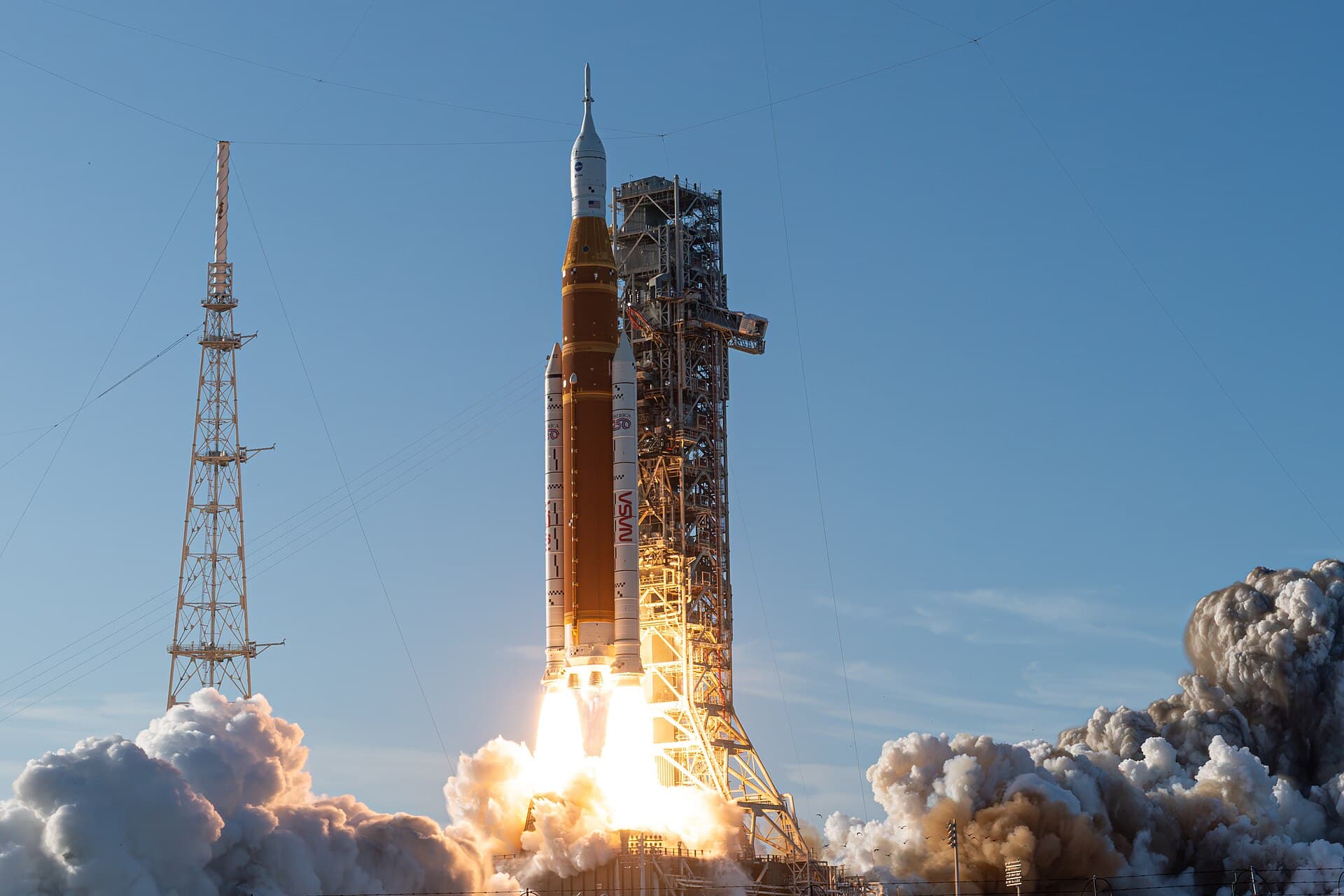
Photo: NASA Kennedy Space Center / NASA/John Kraus, Public domain, via Wikimedia Commons
Every time I step outside on a clear, starry night, I imagine traveling to space.
I have yet to personally experience the bone-rattling roar of a crewed space launch. However, I’ve spent much of my career supporting the technology, hardware, and human hopes that sit atop those iconic launch pads.
I’m overwhelmed by a sense of humility when I study the staggering vastness of the universe. Against the backdrop of distant stars and our Milky Way galaxy, our massive rockets are but tiny, fragile metal slivers pointing toward the heavens.
As the Artemis II crew begins their journey home, my heart swells—not with the arrogance of human conquest, but with a deep, quiet awe. What a humbling privilege it is that the Creator of this vast universe has enabled and inspired us to explore even a small corner of his masterpiece!
That’s why missions like Artemis II matter. In expanding our scientific understanding of the universe, they deepen our wonder, clarify our place in creation, and draw us closer to God.
Leaving the Shallows: A New Era of Deep Space Exploration
It’s been more than fifty years since the final Apollo astronauts left their footprints in the lunar dust.
In that time, human spaceflight has been limited to low Earth orbit (LEO), just a few hundred miles from the Earth’s surface. This relatively close-to-home neighborhood is where both the International Space Station and the Hubble Space Telescope fly.
But with the Artemis program, we are once again testing our mettle beyond the shallow end of our solar system’s neighborhood pool. Humanity is venturing beyond the protective magnetic field of our planet for the first time in more than half a century.
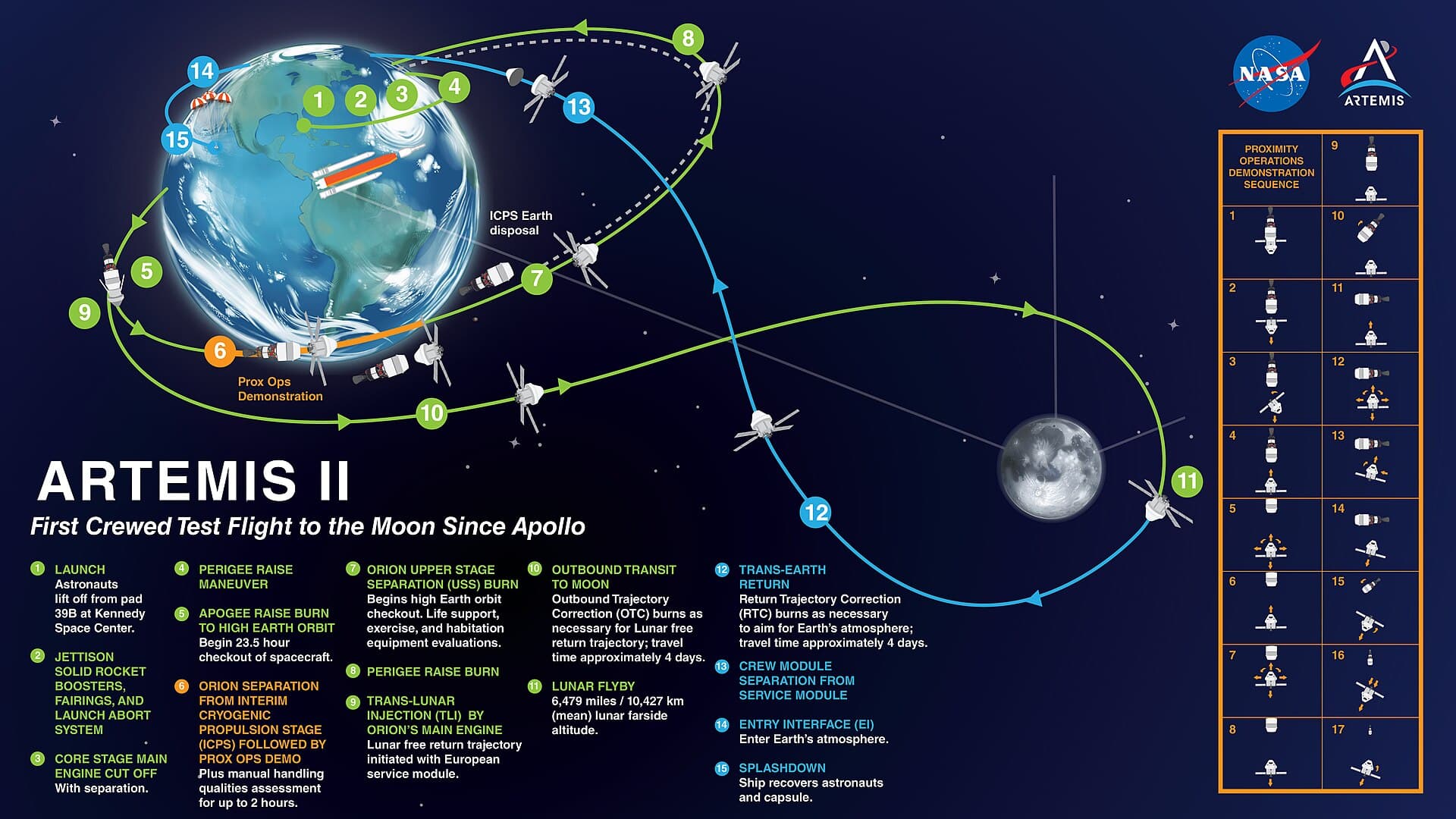
Diagram of the Artemis II mission’s flight path. NASA, Public domain, via Wikimedia Commons
Launched last week, Artemis II’s crewed flight past the far side of the Moon has now taken humans farther from Earth than ever before. This mission will be followed by Artemis III’s rigorous orbital tests, then Artemis IV’s return of humans to the lunar surface, and eventually Artemis V’s work to begin building a permanent lunar base.
I’m struck by the significance of this endeavor. We are returning to the Moon, and we’re going there not merely to plant a flag. We’re doing so to learn how to live off-world, to seek out the life-sustaining water ice in the permanently shadowed craters of the lunar South Pole, and to prepare for the vastly more challenging leap to Mars.
Space Exploration and Faith: Why We Reach for the Stars
Missions like Artemis II do more than expand our scientific understanding of the universe. They illuminate our place in creation, reveal the scale and wonder of God’s handiwork, and help us live more fully in his image.
In these ways, they deepen our faith and draw us closer to God.
Witnessing the Wonders of Creation
For several decades, I’ve had a front-row seat to space exploration through my work in the aerospace industry. My work has continually reminded me of our human frailty juxtaposed with God’s infinite majesty.
Working on the International Space Station program, we did our best to mimic God’s life-giving provisions of a breathable atmosphere, water, and food.
This work put the amazing nature of God’s creation into focus. While the “miniature Earth” we engineered was sufficient for the ISS, we knew full well that it was inferior to the original, requiring frequent resupply missions, regular maintenance, and continual upgrades.
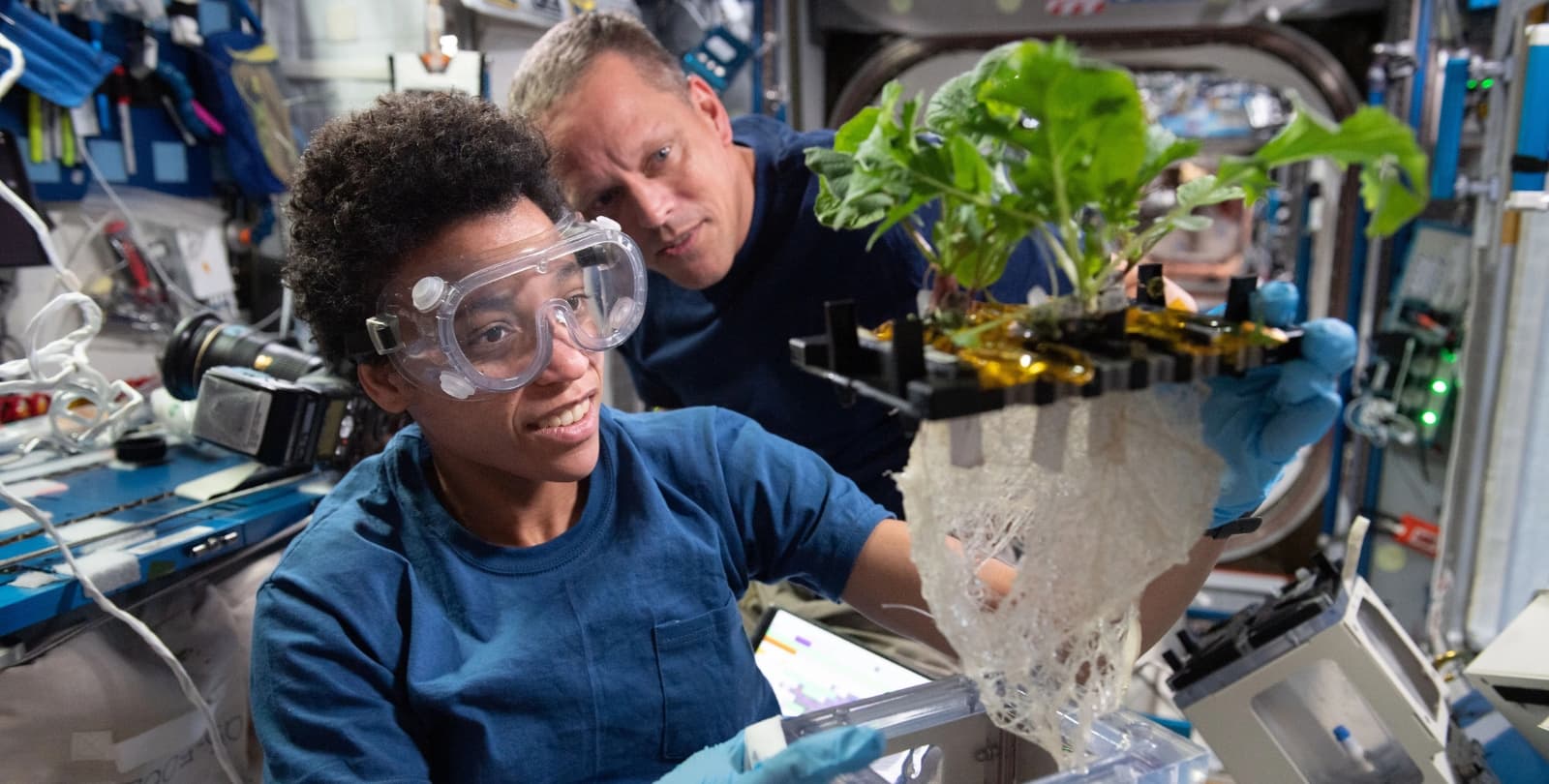
NASA astronauts aboard the International Space Station experiment with soilless hydroponic and aeroponic plant growth. Image: NASA, Public domain, via Wikimedia Commons
Still, we celebrated sustaining life in a small man-made outpost floating in the harsh void of space. The project gave us a newfound appreciation for the miraculous combination of life-friendly renewable resources God consistently and seamlessly provides for us on Earth.
My years working on the Hubble Space Telescope program were also profoundly humbling.
Before Hubble, we could really only guesstimate the scale of the universe. That’s why those first deep-field images took our collective breath away.
They didn’t just pull back the curtain on myriad ancient galaxies, colorful nebulae, and swirling star nurseries. They showed us that the width of the observable universe is more than 300 times greater than we previously thought. Even more than before, we began to think of our solar system as a single grain of sand on an infinitely stretching beach.
That scale makes God’s love even more remarkable.
The Creator who spoke billions (or possibly even trillions) of galaxies into existence is the very same God who numbers the hairs on our heads. King David marveled at this divine dichotomy in Psalm 8:
“When I consider your heavens, the work of your fingers, the moon and the stars, which you have set in place, what is mankind that you are mindful of them, human beings that you care for them?” (Psalm 8:3-4)
Imago Dei and the Spirit of Exploration
We live in a world fraught with pressing and immediate problems. As a result, critics often ask why we should spend our resources gazing at the stars.
The answer, I believe, lies in our own Judeo-Christian theology.
In Genesis, we read that humanity is created in the image of God. While this includes things like relationship and purpose, it also speaks to our innate desire to create, to understand, and to explore.
God is the ultimate Creator. He is the Founder of physics, the Mastermind behind genetics and biology, and the Artful Genius responsible for all the wonders of nature.
Because we bear his image, we are not merely smart creatures driven by survival instincts. Nor are we robots programmed for mindless productivity. We are curious, creative souls.
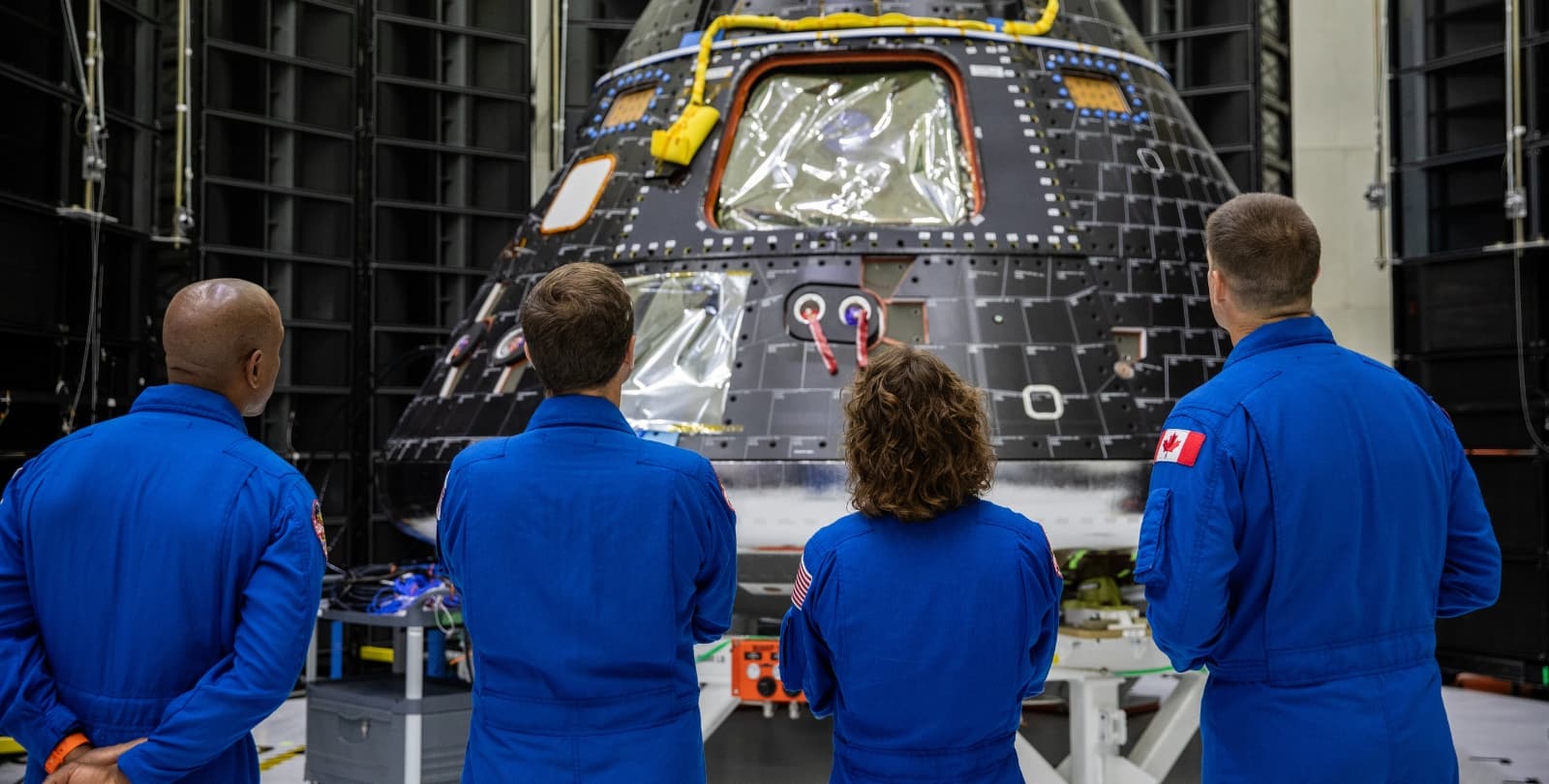
The crew of Artemis II view the Orion crew module. Image Credit: NASA/Kim Shiflett
Exploring the cosmos is an expression of the God-given curiosity that makes us unique. Our drive to build telescopes, calculate rocket trajectories, and design spacecraft is a divine echo of the Creator himself.
If we restrict ourselves from exploring the universe, we deny a fundamental part of how God designed us.
The human spirit of exploration is, at its core, a spiritual pursuit. It is an act of worship that seeks to learn more about God himself through the intricate physical reality he spoke into existence.
Our Profound Vulnerability
These scientific pursuits demand our utmost humility.
When the Artemis astronauts climbed into the Orion capsule, they became entirely reliant on a relatively thin shell of space-qualified aluminum and advanced composites to protect them from the temperature extremes, radiation, and vacuum of space.
I am soberingly aware of how little room there is for error once we leave Earth’s protection behind. I’ve spent years working on the systems designed to keep crews alive, from the Crew Exploration Vehicle to the Artemis program itself.
Space does not yield to our arrogance. It demands our respect and meticulous preparation.
The Stewardship of the Cosmos
On reaching lunar orbit, the Artemis crew experienced a rare perspective indeed. Looking back across about 250,000 miles of silent expanse, they saw Earth.
They did not see borders, factions, or disputes. They saw a beautiful blue and white marble hanging in black space, glowing in the warm light of the Sun it orbits.
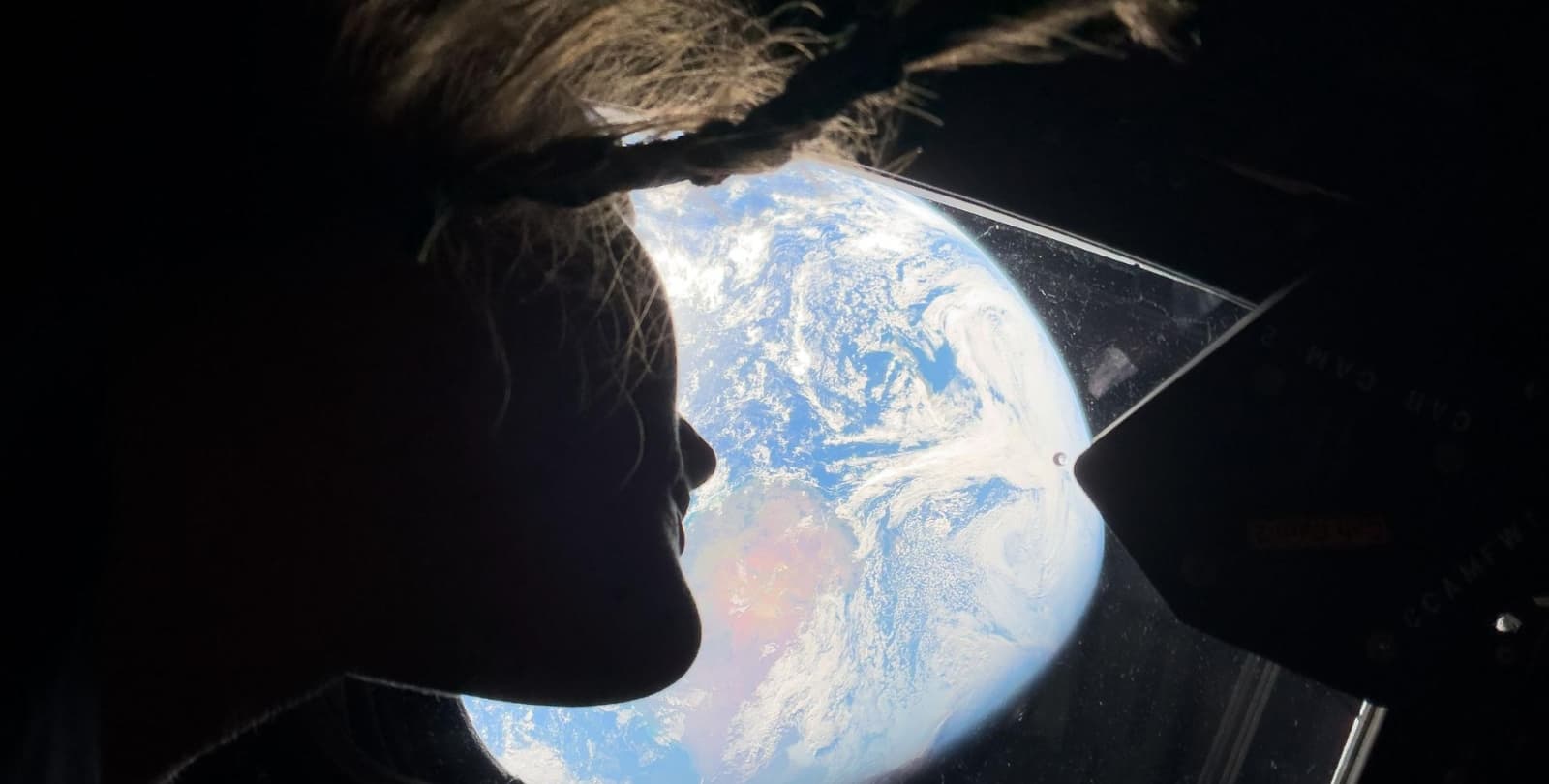
Artemis II mission specialist Christina Koch looks back at Earth through one of the Orion spacecraft’s main cabin windows. Image: NASA
This view elicits a deep sense of awe. So many astronauts have experienced this feeling that it has a name: the overview effect.
It involves the realization that we are all passengers on this fragile spaceship we call Earth. It’s a deeply spiritual epiphany, one that inspires a sense of reverent stewardship.
We must carry this theology of stewardship with us on our journeys to the Moon. As we contemplate stepping into pristine extraterrestrial worlds, let us remember that we are called to be good caretakers of all God’s creation.
A Prayer for the Journey Ahead
The complex task of reaching for the stars demands the surrender of individual ego.
No single person can put together everything it takes to get to the Moon. It requires the cumulative efforts of hundreds of engineers, mathematicians, technicians, and scientists.
The Artemis program is a beautiful mosaic of humanity working together with a unified goal. In a world so often fractured by pride and conflict, it is a small, hopeful glimpse of the unity God desires for his children.
As Artemis II’s crew returns home, I’ll be looking upward. I will reflect on the power of human creativity and the will to push the frontiers of exploration.
More than anything, I will be overwhelmed by that feeling of deep awe—that the God of the universe has created us in his image and has endowed us with what we need to explore his creation.
Also read/listen:
- In a Universe So Vast, Do We Still Matter?
- The Space Race and Exploring the Unknown
- Jennifer Wiseman | Light in Space
- No Dark Sky | Wonderology
And as the spacecraft approaches Earth, I will pray for the continued safety of the brave explorers onboard. I will offer a prayer of overwhelming thanksgiving to the God of all creation.
I will praise him for the wonders of the cosmos, for the beautiful, fragile but life-friendly planetary home he gave us.
I will thank him for the gracious gift of imago dei—the spirit he breathed into us, giving mere dust the capacity to dream, to wonder, and to reach back out into the starry sky.
About the author

Leslie Wickman
Related Resources

Podcast Episode
Jennifer Wiseman | Light in Space

Podcast Episode
No Dark Sky | Wonderology