No Dark Sky | Wonderology
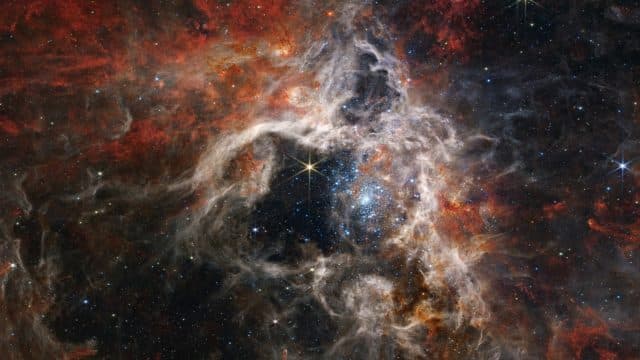
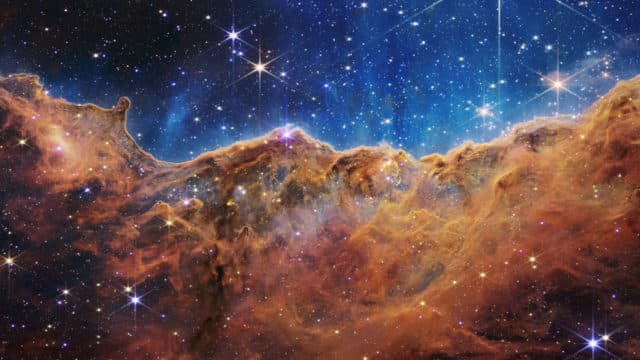
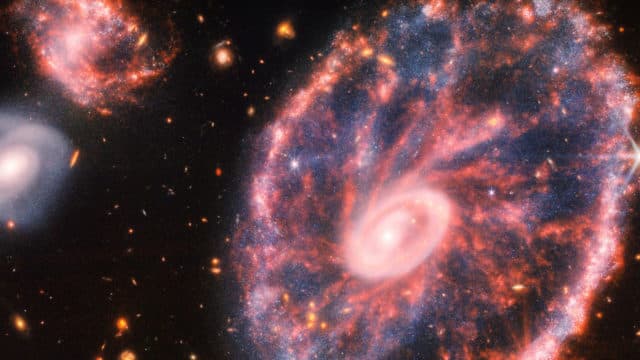
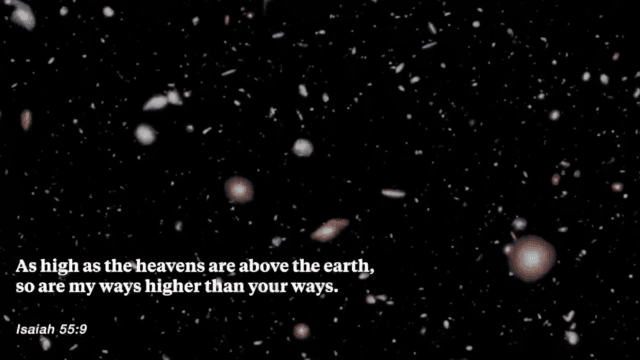
The James Webb Space Telescope captured ten thousand galaxies in a single image. The first episode of Wonderology asks: In such a vast universe, do we matter?

The James Webb Space Telescope captured ten thousand galaxies in a single image. The first episode of Wonderology asks: In such a vast universe, do we matter?
Description
The James Webb Space Telescope captured ten thousand galaxies in a single image. A sight like this can’t help but inspire awe, but it also raises a question: If we’re just one tiny dot in the scope of the universe, do we still matter?
In the first episode of Wonderology, we follow the Webb Telescope—and the story of those who built it—to better understand our place in God’s universe.
Wonderology is a project of Christianity Today in partnership with BioLogos.
- Originally aired on October 15, 2025
- WithJesse EubanksandFaith Stults
Keep Exploring
If Wonderology sparked your curiosity, we’re here to help you dive deeper.
Explore articles, podcasts, and resources that expand on the ideas from this episode and connect them to the broader story of faith and science.
Discover More: The Cosmos, Creation, and Meaning
The James Webb Space Telescope reveals a universe more vast than we could imagine. This collection of articles seeks to unpack what its discoveries tell us about the Creator, his universe, and our place in it.
Podcast Episode
Deb Haarsma | James Webb Space Telescope
Podcast Episode
Jennifer Wiseman | Light in Space
Keep Chasing Life’s Big Questions
There’s always more to explore. Join BioLogos’ email list to receive new Wonderology episodes and other resources that spark awe and invite fresh discovery.
Investigate More Big Questions
Curiosity doesn’t stop with one question. Keep exploring how faith and science together illuminate life’s biggest queries.
Common Question
Common Question
Common Question
Show Notes
Get a full episode transcript and learn more about our guests below:
Transcript
Jesse Eubanks
The year is 1968. If Earth has a pressure gauge, the needle is stuck in the red.
Audio Clip
The new communist campaign in Vietnam continues. The Reverend Dr. Martin Luther King was assassinated in Memphis tonight. Made to be reported that Senator Kennedy had been shot. He’s been shot. That’s right. Most delegates to this convention do not know. That thousands of young people are being beaten in the streets of Chicago.
Eubanks
Protests are up. Leaders fall, streets burn. For many, the world is coming apart at the seams.
Stults
There is no timeout coming to the rescue. No balm for the chaos. No moment to catch your breath.
Eubanks
Just the next hit, and then another and another.
Stults
The future isn’t hopeful. The future is broken and scary. And then six days before the year is about to end, something unexpected breaks through.
Eubanks
It’s Christmas Eve. As families are baking cookies and wrapping last-minute gifts, three men orbit the moon.
Stults
They aren’t landing, they aren’t walking. They’re just circling in a cone-shaped capsule, 240,000 miles from home — further than any human has ever traveled.
Eubanks
Three astronauts: Bill Anders, Frank Borman, Jim Lovell — drifting in silence above the cratered rock sliding past beneath them.
Stults
It’s their fourth time circling the moon and the capsule has just rotated, its windows no longer aimed at the surface but now opened out into the black of space. None of them knows to look for what’s about to appear, which is why the next moment takes them by surprise.
Audio Clip
Oh God. Look at that picture over there.
Eubanks
All three men lean forward. Their eyes lock on the same spot.
Audio Clip
They’re coming up. Wow, that’s pretty.
Stults
The black of space begins to lift, and in the distance a blue marble appears — Earth. Its lower half shrouded in night, its top half glowing in sunlight.
Audio Clip
That a color film, Jim? Hand me a roll of color, quick. Oh man, that’s bruising quick.
Eubanks
They scramble. Hands fumble with the camera. Film. Voices rise. Every second threatens to steal the moment.
Audio Clip
Yeah, I got it right here.
Stults
They catch it — that tiny world off-center, a cloud-covered globe rising above the moon’s barren edge.
Audio Clip
I got it right. Oh, that’s a beautiful shot.
Eubanks
The photo becomes known as Earthrise, the most famous image of Earth ever taken — not just a picture, a revelation.
Stults
For the first time, we are seeing our planet whole and in color. No borders, no enemies, just one fragile sphere. After a year full of wreckage, these men are glimpsing home from far enough away to see it unbroken.
Eubanks
That night, the astronauts open a Bible and share ancient words: “In the beginning, God…”
Stults
“…created the heaven and the earth.” Ten verses broadcast from space, heard by nearly one quarter of everyone alive.
Eubanks
Years later, one of these astronauts, Bill Anders, will reflect on this moment. He’ll remember what it felt like to see our planet in context — not at the center of everything but a single speck in a vast, unfeeling void. Questions will rise up inside of him that will follow him the rest of his life. He’ll ask aloud, “Are we really that special?” And then answer himself: “I don’t think so.”
The same moment that drew out amazement also revealed just how small humanity is, and whether our existence truly has any cosmic significance.
Stults
So is this true? If we’re just a speck on a speck floating in an endless sea of darkness, do we still matter?
Eubanks
Tonight on Wonderology, we chase the story of the biggest thing ever photographed — something so vast it makes Earth look microscopic. And we ask: Does living in a vast universe make humanity more valuable or less? I’m Jesse Eubanks, a storyteller and journalist.
Stults
I’m Faith Stults, a science educator.
Eubanks
So let’s get curious.
Part One
Audio Clip
9, 8, 7, 6, 5, 4, 3… and liftoff! Decollage liftoff from a tropical rainforest to the edge of time itself.
Eubanks
Fast forward 53 years plus one day from the Earthrise photo. It’s Christmas Day 2021, and while many of us open gifts and settle in with cinnamon rolls, a man is watching a rocket as it leaves Earth. The rocket is carrying the James Webb Space Telescope.
Stults
Webb has been a major undertaking — more than two decades, thousands of people, 14 countries. Too big to launch assembled, so it’s folded up inside the rocket, headed for a destination one million miles away. There’s no repairs possible if anything goes wrong.
Eubanks
Its price tag: ten billion dollars — one of the most expensive scientific instruments ever built, which is why the question started long before liftoff.
Stults
Why put that much money into space?
Eubanks
Why not end world hunger?
Stults
Why not build affordable housing?
Eubanks
Why not fix healthcare?
Stults
Why throw ten billion dollars into outer space? Because if Webb works, we’ll see farther back in time than any human ever has — the first stars and galaxies that ever existed, over thirteen billion years ago.
Eubanks
That’s the wager. If Webb succeeds, we see the beginning of our universe.
Stults
And if it fails, it will be one of the biggest financial failures ever — maybe the last time we try something this ambitious.
Audio Clip
James Webb begins a voyage back to the birth of the universe.
Eubanks
As the rocket lifts into the sky, the world watches together.
Audio Clip
Pitch program reported.
Eubanks
People clap, some cry. But that man — for all his enthusiasm — he also feels the weight of it, because inside that rocket isn’t just a scientific gamble.
Scott Acton
I was quite nervous about it. It’s my gamble too. I had this recurring nightmare — it’s six months after the launch of the Webb Telescope and I’m standing in front of Congress trying to explain why it didn’t work. And it was my fault, you know.
Stults
Scott Acton spent more than 20 years making sure Webb’s mirrors would align once in deep space — technology so advanced it didn’t even exist before Scott invented it.
Eubanks
Scott also knows what it means to give years of your life to a dream and still watch it collapse. When Scott was in college, he majored in physics, but he believed he had another purpose in life — to ride his bicycle around the world.
Acton
Everything else was secondary.
Stults
He even told this to the woman who would become his wife on their first date.
Acton
It was under these conditions that I met and courted and eventually married my wife Heidi, and Heidi was in. They trained, they prepped, and we were all set to do this bicycle-around-the-world adventure together.
Eubanks
But just before their first big ride, Heidi crashed.
Acton
And broke her elbow in nine places. Everything that could go wrong, did. She could barely use her arm again. And so, with that, her bicycling days came to an end.
Eubanks
As a result, Scott had to do the really painful thing so many of us have to do sometimes — he had to let the dream go. He tried to move on. He built a life, he raised kids, he invested in his work, and he says all of those things were fulfilling for him.
Stults
But when that dream ended, it took a piece of him with it.
Acton
It’s just that part of me died with the death of that dream. So when Scott has nightmares about standing in front of Congress and having to explain why the telescope didn’t work, his fear isn’t theoretical.
Stults
Scott knows what it’s like to believe in something, to be certain it will work, and then watch it fall apart anyway.
Eubanks
And Webb — this dream — is far bigger than his alone.
Mike Menzel
Hello. Well, this is, um, this is a pleasant surprise. Yeah. Uh, my name is Mike Menzel and I am the mission systems engineer for the James Webb Space Telescope, and I work at the NASA Goddard Space Flight Center.
Eubanks
Mike joined the mission back in 1998, and the goal from the very beginning sounded less like science and more like science fiction.
Menzel
The overall driving goal for the mission never changed, and that was to see the very first galaxies that turned on in our universe — the first stars that turned on.
Stults
Scientists think the universe began with the Big Bang about 13.8 billion years ago. For the first 380,000 years, it was too dense for light to travel, but then the universe cooled, and around 13.5 billion years ago, the first stars ignited.
Eubanks
That’s what Webb was built to find — not the Big Bang, but the moment the universe lit up.
Stults
To do that, Webb has to see a kind of light that our eyes can’t — infrared. It’s light so ancient, it’s been stretched by the expanding universe until it’s invisible to us, and now we can only detect it as heat.
Eubanks
To pick up that faint heat, the telescope has to stay extremely cold, which means it needs to get far away from the heat of our planet and the sun — and that means it needs to go a million miles from Earth.
Stults
To achieve all of this, Webb has to overcome one major challenge — its size.
Menzel
The telescope itself is going to be bigger than the rocket that would put it up there.
Stults
The telescope needs to be roughly the size of a tennis court and the height of a three-story building, but it needs to fit inside the rocket, which is a space about the size of a school bus. And there’s only one way to make it fit.
Menzel
We would have to fold up the telescope to launch it.
Stults
And if it folds up like origami to launch, that means…
Menzel
We would literally have to rebuild it on orbit — not only rebuild it, but refocus it. Realignment that had never been done before.
Eubanks
It’s going to have to do all of this for the first time in space. No human hands, no test run, no do-over.
Stults
Making Webb capable of folding means designing a mirror alignment system that will defy comprehension.
Menzel
And it was Scott and his team that achieved that miracle.
Stults
The scale of Scott’s job is almost impossible to picture. Webb’s mirror is so large it couldn’t fit inside the rocket, so engineers built it from 18 hexagonal segments, each one designed to unfold in space. And once open, they have to realign until they behave like a single flawless mirror. But here’s the catch — the adjustments aren’t in inches or even millimeters. They’re microscopic.
Acton
So we knew right off the bat that it was going to be a real challenge to unfold this telescope and put all those optics where they needed to be — to within, you know, a handful of nanometers. So that’s a meter divided by 10 to the ninth power — a very, very small amount.
Stults
A human hair is about 100,000 nanometers wide, and Scott’s team needs to align the mirror not to 100,000 nanometers but to just three nanometers.
Acton
It’s unbelievable. These dimensions are just — you just can’t get your mind around it. And so that’s what had to be done, to move these mirrors that precisely.
Eubanks
Feels like you guys were asking, “How do we locate and fix a needle in one million haystacks?”
Acton
Yeah, like you say — very early on we knew this was doable. A solution exists. There are mathematical theorems that say a solution exists. But when you don’t know the answer, even the simplest solutions can be elusive.
Eubanks
Still, something in Scott won’t let him quit. Every setback, every trial — he just keeps believing they’ll figure it out.
Acton
I’ve got this theory that the universe wants to be understood — it wants to be discovered. Therefore, there must be a solution.
Eubanks
Scott feels like the universe wants to be discovered. He might even say that he believes God wants to show us the universe.
Stults
But there’s another side to this. If we succeed — if we find what we’re looking for, if we learn more and more about how minuscule our planet and even our species is in the whole timetable of the universe — what does that mean for us? Does that change how we see ourselves? Does it change how we see God? What are the things we assume are true that we might have to reconsider?
Eubanks
Even this, though — the fact that we ask these questions at all — is strange. How can something as small as us consider things of this magnitude?
Menzel
But if you can stare at this stuff and not ask those questions — well, you’re brain dead. You must be a waste of DNA. ’Cause I can’t even — I can’t imagine looking at these things and knowing that I can contemplate that. Even if only one-tenth of the things I believe are right, the fact that I could learn about a tenth of this truth — it’s mind-blowing. It’s incredible.
Eubanks
Back when this telescope was first pitched, NASA figured ten years, launch date 2007. Price tag, half a billion dollars. Ambitious, but not unthinkable.
Stults
I was interning at NASA in 2010, and by then it was already behind schedule. Deadlines were slipping, costs were rising. But, I mean, they were building technology that didn’t exist. They were solving problems no one had solved before. Sometimes that’s just how science works — discovery and problem-solving don’t always care about our deadlines or budgets.
Eubanks
Instead of ten years, it took twenty-five. Instead of half a billion, it cost ten billion — twenty times more. And no surprise, there were a lot of people upset about this price tag.
Stults
In July of 2011, the U.S. House Appropriations Committee made an official proposal to cut all funding for Webb, stating the project was billions of dollars over budget and plagued by poor management.
Eubanks
A 2019 article in the National Review referred to Webb as “a black hole for taxpayer money.”
Stults
Even fellow scientists were concerned about how expensive Webb had become. A 2010 Nature article described Webb as “the telescope that ate astronomy,” and said its ballooning budget was overshadowing other important scientific projects.
Eubanks
In other words, the longer and more expensive Webb had become, the more upset people became. It just required a massive amount of resources to try to get this telescope to work — and people weren’t even confident it would.
Stults
In the end, roughly 20,000 people worked on it from 14 different countries.
Eubanks
And in the middle of it all is Scott Acton’s team, tasked with aligning the telescope’s mirror segments in deep space so that they functioned as a single seamless mirror.
Stults
But eventually, after 20 years, the telescope is finally ready.
Acton
In that moment when we finally achieved this — for me, it was like, you know, thank God.
Eubanks
And that takes us back to where we started — Christmas Day 2021. After 25 years, after ten billion dollars, after criticisms and budget struggles and impossibly hard science — the James Webb Space Telescope is finally launching.
Audio Clip
Liftoff from a tropical rainforest to the edge of time itself. James Webb begins a voyage back to the birth of the universe.
Eubanks
Scott watches it from home, his family around him. Publicly, the team radiates confidence. But Scott — he’s not as confident as he wants to be.
Acton
And of course, you know, our program manager, Bill Ochs, got on 60 Minutes shortly before the launch. The guy interviewing says, “How confident are you that the Webb Telescope is gonna work?”
Audio Clip
I’m a hundred percent confident.
Acton
And that’s what he had to say. Me, I tend to — I was thinking more than 50, maybe 70 percent chance. I was a hundred percent certain that we would have to adapt. That we wouldn’t — that we were gonna have to do something that was not in our plans to make everything work.
Audio Clip
What are you most concerned about unfolding?
Menzel
The entire telescope is what you worry about.
Stults
The final stage of unfolding the telescope is aligning all of those mirrors.
Eubanks
Scott’s job — and this is why he keeps having that nightmare.
Menzel
We all knew the pressure. We all knew our lives — our professional lives — were gonna be over if it failed. No doubt about that, because there’s always assumptions in these math models, right? And if you get the wrong assumption, you get on orbit and find out — uh oh, ten billion dollars down the drain.
Stults
People might assume if something goes wrong that someone screwed up.
Eubanks
Probably thinking to themselves, you had 25 years and billions of dollars to get this right.
Stults
But here’s the truth: there is no way to fully test this thing on Earth. They had to model how the telescope would respond to launch, deep space, zero gravity — the way the fuel shifts in weightlessness, even micrometeoroids — all with just math.
Eubanks
No real-world measurements, no full trial runs — just simulations, theory, and educated predictions.
Stults
Because when you send something into space, you’re launching it into a storm of unknowns. There’s simply no way to know exactly what it will do.
Eubanks
Real space behavior can’t be fully tested on Earth. So they run simulations over and over for years, testing every possible failure.
Stults
Because once the telescope is a million miles away, even one failure — just one — could end the whole mission. They need that not to happen. They’re doing everything they can to make sure it won’t.
Eubanks
And then it did. Scott is watching another dream unravel — only this time, the whole world is watching too. We’ll be right back.
Part Two
Eubanks
Welcome back to Wonderology. Jesse Eubanks, Faith Stults. When we left off, the Webb Telescope had launched — 25 years, thousands of people — and now it’s out there unfolding itself like origami, a million miles from home.
Stults
And with deployment complete, the riskiest stage is behind them now — but maybe not the most delicate, because now comes alignment. Eighteen mirror segments, each one the size of a coffee table, and all of them have to function as a single mirror, perfectly aligned to within nanometers.
Eubanks
And this is where Scott Acton steps in. This is the moment his 20 years of work has been building toward. The team begins the process of aligning the mirrors, but something’s wrong.
Acton
The telescope — we couldn’t point it accurately enough.
Stults
Now, to be clear, they expect some misalignment. This thing just survived launch vibrations, zero gravity, minus 370 degrees Fahrenheit, space radiation — all this crazy stuff. But now they’re trying to assemble it to within one one-hundredth the width of a human hair.
Eubanks
But this — this is more than they bargained for. The mirrors are actually off by a factor of 30 to 40 times more than predicted.
Stults
Yeah, and that makes things really tricky. The alignment software is built to work just like your brain does with your eyes. You’ve got a left eye and a right eye, and each sees a slightly different image. Your brain uses the differences to create a single clear picture. That’s what the software’s trying to do — compare the reflections from all 18 mirrors and use those differences to bring them into alignment. But that’s not what comes back. Instead of 18 distinct reflections, Webb sends back 18 nearly identical ones.
Stults
It’s like trying to see depth with 18 left eyes — no variation, no contrast, nothing to compare against.
Acton
You end up just seeing — you’re gonna see 18 copies of every star.
Eubanks
The algorithm can’t untangle which mirror made which reflection.
Acton
So we pointed to a bright, isolated star, and we get 18 copies of those. And the question is, you know, which segment is which? And furthermore, how do you move them so that they all line up at a certain point?
Eubanks
But they have a backup plan. If the software ever fails, Scott will take over — no script, no shortcuts — just him and his team working the problem, armed with math, instinct, and 20 years of obsession. Scott won’t wait on an algorithm. He’ll become it.
Eubanks
Scott stares at those 18 scattered stars, refusing to form a single picture. Something else starts to come undone — not just the telescope. Scott himself.
Stults
It’s easy to think of this kind of work as abstract — math, mirrors, algorithms — but what you’re actually watching is someone shouldering a tremendous burden.
Eubanks
Imagine every other part of the telescope is working except yours.
Stults
Gosh, no wonder he’s having nightmares about standing in front of Congress. I mean, eventually your soul can’t hold that kind of pressure.
Eubanks
Months of tension, years of sacrifice, the gnawing fear — “What if I’m the one who breaks it all?” And now it’s catching up with him, because when you’re the one everyone’s counting on to pull off the impossible, there’s no guide for what to do when your own body starts to give out. He’s not sleeping. He’s forgetting to eat. His mind just won’t shut off.
Acton
You know, I got tired of feeling bad, so I went to an urgent care place.
Eubanks
He walks in and tells them that his anxiety has become overwhelming. He hopes that they can give him something for his nerves. Their response?
Acton
They gave me this piece of paper called Managing Anxiety in Adults, and I just couldn’t believe it. I don’t know what I expected.
Eubanks
And that’s it. A handout. No medication, no plan — just bullet points printed on a piece of paper.
Stults
I mean, it’s almost satire at this point. You help launch the most complex telescope in human history and someone hands you breathing tips.
Eubanks
I mean, I guess you can’t tell the doctor, “The reason I feel anxious is because humanity’s knowledge of the universe is sitting on my shoulders.” You’re gonna end up getting a whole lot more attention from the doctor than you bargained for.
Stults
Fair enough.
Eubanks
Eventually a possible solution starts to take shape in Scott’s mind — a potential way through. So he does the only thing left to do. He sits down and writes. He starts writing code — instructions.
Acton
I calculated all the commands by hand — just getting the units all right and the directions and the signs, trying to figure out where each star was based on a mosaic and what we needed to do. Using information that we didn’t even know we were gonna get, but we had it when we were focusing the telescope roughly. And I generated those all by hand.
Eubanks
He finishes, looks at the page — the math checks out. It looks solid, but the fear won’t go away.
Stults
He keeps wondering, what if I get this wrong?
Eubanks
So he does what any wise man does when panic takes over — he calls his wife.
Acton
So I’m talking to Heidi. I don’t know what to do — what if this is wrong and all that. That’s where she said, “Look, you know, that’s why you’re here, Scott.” I mean, basically, “What do you think? This is gonna be easy? What were you expecting?” You know, she tells it in a much more nurturing way than I did, but I kind of saw that as her telling me to cowboy up — go and get a good night’s sleep, eat something, go back and double-check your calculations, and then just trust your gut.
Stults
Yeah. Sometimes the smartest move in science — or just life — is to eat dinner and go to bed. So he does.
Eubanks
He eats something, he goes to bed. And the next morning, he types every line of his handwritten code into a spreadsheet. Then he walks it over to the team at NASA.
Acton
We went through looking at the values and agreed that, yep, best judgment — that’s what the solution should be.
Eubanks
They go over it, copy and paste his solution into the computer, and they hit send. And then Scott and everyone else — they just wait.
Stults
Can you imagine what these hours must feel like? Knowing you did everything you could, and realizing it still might not be enough. For all the ways that Scott doubts himself…
Eubanks
Mike Menzel does not.
Menzel
I was watching how they solved the problems, and their team was just incredibly talented. So, you know, whatever Scott was doing — I know he was in his private little hell — but he was in there for about a couple days, and he fixed it.
Eubanks
Scott’s calculations work. He moves the mirrors just enough to bring the system back online. The algorithm can see clearly again, and the mirrors finally start shifting into alignment.
Stults
They fix the mirror system.
Eubanks
Yes — but will this thing actually work? Will the telescope show them what they built it to see — those distant galaxies from billions of years ago?
Acton
In this case, the telescope was not yet completely aligned, but it was getting really close.
Eubanks
They’re still tuning the system, tweaking the gears, prepping for the real moment — the one that will justify it all. They snap some photos. They’re not quite aligned. But after a series of test photos, they take one more — a second disposable image.
Stults
Okay, that throwaway image — it actually really matters. This part’s easy to miss, but it’s crucial. After Webb takes a photo, it lands in a buffer — basically a one-photo waiting room. That image just sits there until something else comes along to push it out. So the team adds one more image — not to study it, but just to flush the system. It’s like blowing an air bubble through a straw to clear the last bit of liquid. And eventually, even that final push — the throwaway — gets downloaded too.
Eubanks
They just need something to push the last photo out. So they pick a secondary camera, not the main one — they’re still fine-tuning — and they take a quick throwaway shot again, just to clear the buffer.
Acton
We put an image — a very simple exposure — on one of the instruments known as the Fine Guider, not even a science instrument. It’s really there as a tool, a diagnostics tool, to help stabilize the pointing of the telescope.
Eubanks
They give it a forty-second exposure — click, snap, done. Just another system flush. The images download. Scott thumbs through them until he gets to the throwaway shot. Scott glances at it, expecting a blurry image.
Acton
And I see that single image, that complete throwaway image, and I stretch the contrast on it.
Eubanks
Scott leans in. The image sharpens. And then he freezes. This is not a blur. One of Mike Menzel’s colleagues calls out to him.
Menzel
Mike, Mike — you gotta see this. So he called me in the back, and I saw that first image.
Eubanks
The room erupts. The image meant to be a throwaway is filled with tiny specks. Everyone thinks — stars. But Mike looks again, and he says, “Those aren’t stars that you’re seeing. Those are galaxies.” It’s not a blurry photo. Everyone is looking at something that no human eyes have ever seen.
Acton
I realize that single forty-second exposure contained over five hundred galaxies.
Stults
At first glance, it just looks like specks — red specks everywhere, dots and smudges scattered across a black sky. But when you zoom in, you realize they’re not dots — they’re structures. Some are cigar-shaped, some have spirals, and each one is actually its own galaxy, each with billions — maybe hundreds of billions — of stars.
Eubanks
Scott has spent more than 20 years helping build Webb, but now, seeing this image, he finally understands what he’s built.
Acton
I was not expecting to see it. I had the idea that if we pointed in the right place, maybe we’d see a galaxy, you know? But the reality is, in that moment, I realized that there is no dark sky — that there are galaxies everywhere.
Menzel
That isn’t a star — that’s a galaxy. You can see hundreds of galaxies. My God, it was incredible.
Eubanks
Mike’s colleague turns to him.
Menzel
His first words are, “This damn thing’s gonna work.”
Eubanks
Okay, one last thing before we move on. Later, Scott actually found the scrap where he scribbled his solution — the mirror instructions that saved the whole mission. He flipped over the piece of paper and realized it was the anxiety pamphlet they gave him at urgent care.
Stults
No! Stop it.
Eubanks
It was like God handed him both a prescription for his nerves and the answer to the problem he had been sweating over.
Acton
So, ironically, they had the right idea. I didn’t need medication. I needed a piece of paper — and that solved the whole problem. That’s what enabled us to align the telescope.
Eubanks
That image with 500 galaxies — it was a throwaway, snapped on a backup camera. If that’s what we find when the system’s not even fully online, what else is out there? What’s been waiting in the dark for billions of years? And if we find it, will it change our place in the universe?
Stults
After the break, we look deep into the corners of the cosmos. We’ll be right back.
Part Three
Eubanks
Wonderology. Jesse. Faith. So when we left off, the Webb Telescope had just sent back its first image — revealing not 500 stars but 500 galaxies.
Stults
Each one packed with billions of stars. That photo — it wasn’t from the main camera; it came from a secondary one, less powerful, just a utility tool.
Eubanks
But eventually they power up the big one — the primary camera.
Stults
The one they spent decades building, designed for a single mission — to capture the first galaxies that ever existed.
Eubanks
And when the first image from the main camera comes through, Mike is stunned.
Menzel
When I first saw that picture, I saw it about two days before the president saw it, and I turned to one of the astronomers and asked a technical question: “What’s the brightness of the faintest thing in there?” And when he told me, literally the hairs on the back of my neck stood up. If you take a child’s nightlight — it puts out about five watts — put that nightlight on the moon and look at it from Earth, we were seeing something twenty times fainter than that.
Eubanks
Think about that. Picture a child’s nightlight — and then dim it twenty times — and now put it on the moon. That is how faint this light is. And Webb can see that.
Menzel
And that, to me, was — you know, that was my moment.
Eubanks
And for Scott, that awe keeps escalating. That image they took with the secondary camera — the one with 500 galaxies in it — it was just a forty-second exposure.
Acton
Remember, I got so impressed over forty seconds. Now we can create an image that has a fifteen-hour exposure. And I sent that image to an astronomer at UCLA, and he estimates that that single image had over 10,000 galaxies in it. If you hold up a grain of sand and ask yourself how many galaxies it’s blocking from your eyes — it’s about 10,000. There is no dark sky.
Eubanks
There is no dark sky. There never was.
Stults
Our eyes are simply failing to see everything that is hanging over our heads.
Eubanks
Webb’s goal is clear — find the first galaxies. So has it delivered?
Menzel
Well, we have yet to see the first stars, but we’re not done searching. In one of the first images that James Webb took, we weren’t even trying — we took a picture of a bunch of galaxies very, very far away.
Stults
Mike’s being pretty humble here.
Menzel
Very, very back in time.
Stults
They’ve actually found many galaxies that are more than 13 billion years old. In those first images, they were supposed to be the baby photos of the universe. We expected something fragile, underdeveloped — galaxies that were more simplistic. But that’s not actually what Webb is finding.
Eubanks
What are they finding?
Stults
They’re finding that these galaxies are actually big and bright — and way more mature than we expected. It kind of doesn’t add up. Even though they are still young, they look too grown up, too massive, too luminous for how early in the universe they’re appearing.
Eubanks
Like, in other words, these galaxies should look like the baby photos — but instead, they look like preschool photos.
Stults
Yeah, except we’re looking at the time that we thought they were babies. So scientists now are rethinking how fast the early universe took shape. In fact, some scientists have called it a “crisis,” because these galaxies — they break important aspects of the timeline we mapped of the universe.
Eubanks
Because if the universe developed faster than we thought, then that means we are missing something pretty big from our models.
Stults
Yeah, exactly. But here’s the twist — scientists aren’t frustrated by that; they’re delighted. Because in science, the real thrill comes when something breaks your assumptions. That’s where discovery begins.
Eubanks
It’s like reaching a new level in a super-nerdy video game — new challenge, bigger rewards.
Stults
Yeah, exactly. And Webb’s just getting started. It’s already found water ice forming around newborn stars — which is the raw material for oceans. Wow. It’s studied the atmospheres of over a hundred distant planets. On one of those, it picked up a specific type of gas that, on Earth, kind of actually only comes from living things.
Eubanks
Whoa. So are they thinking they might have found life?
Stults
Okay, no — nobody’s claiming that. We haven’t found life. But we are getting closer than we’ve ever been before.
Menzel
God is teasing us with the data. We haven’t seen a biomarker yet, but we’ve had some close calls. And I think that, in the end, I hope in my lifetime we’ll start answering the questions — yeah, there are a lot of habitable planets out there, and the Earth is just one of many places where life can start.
Eubanks
And here’s the thing — we are still in Webb’s early days. In just one image, it actually captured 25,000 galaxies.
Stults
Our solar system only has one star — our sun. But in that one image, Webb actually captured more stars than there are grains of sand on every beach on Earth.
Eubanks
Ah, that is amazing.
Acton
If you have an instrument that enables you to look somewhere that no one’s ever seen before, everything you see is going to be a scientific discovery.
Eubanks
So Webb isn’t just changing science; it’s disrupting our assumptions about things.
Stults
Yeah. It’s not just what we’re seeing — it’s what we thought we’d see, but we just aren’t.
Eubanks
Things like galaxies too big, too soon; stars that shouldn’t exist; potential signs of life.
Stults
These photos are causing our whole understanding of the early universe to shift. And of course, that leaves us with some questions.
Acton
Many, many questions. You know, more questions. We have more problems to solve now than we did before building Webb. But that’s the way it always works, right? You do answer some questions, but you get two, three more for every one you answer.
Eubanks
Shortly after those first photos start arriving, Scott walks home from work and he calls his wife, Heidi.
Acton
I just — this telescope, it’s unbelievable. I didn’t — I had no idea. There are galaxies everywhere. And I will confess, there were some tears involved, right? So I got off the phone with Heidi, and I remember looking up at the sky at that moment and realizing for the first time that, although I can’t see it, there are billions of galaxies in my field of view.
Stults
Next time you’re outside at night, try just looking up at the night sky and finding a blank, empty patch. And the thing is — that’s not empty. You might not be able to see anything, but anywhere you look, any pinprick of a point in the sky lands on a galaxy that has billions of stars in it.
Eubanks
As Scott walks, an impression rises inside of him.
Acton
Please don’t misunderstand me. I’m not saying I had a vision or was hallucinating, but in my mind I imagined that the galaxies were singing. And I think it probably went back to a scripture that I remember from Job — I don’t even know the scripture, but something about stars singing.
Eubanks
The passage that he’s recalling comes from Job 38: “Where were you when I laid the Earth’s foundation? Tell me if you understand. Who marked off its dimensions? Surely you know. Who stretched a measuring line across it? On what were its footings set? While the morning stars sang together and all the angels shouted for joy.”
Acton
So the galaxies were singing — and not in any kind of language that we can understand, but the emotion was clear. It was joy. It’s like the universe was expressing joy because, for the first time in all these millennia, humanity could finally see it. And so that was a life-changing experience for me — to have that realization.
Eubanks
A while later, it comes time to celebrate. So Scott and a colleague actually buy something special — a big bottle of cognac from 1906, the year that NASA administrator James Webb was born.
Acton
Enough to give about 70 people a little one-ounce pour. So we had this party where we raised a glass to James Webb and the telescope that bore his name.
Eubanks
Scott hasn’t had a drink in years, but for this special occasion — he does.
Acton
I had about four glasses of this 1906 cognac, and I got very, very tipsy — which is a grown-up way of saying drunk.
Eubanks
Just like Jesus turned water into wine for a party already full, it seems like God is doing the same thing for Scott — because as Scott walks home, he looks up, and this time he knows what is up there, even if his eyes can’t see it. He pulls out his phone and sends a message to a friend.
Acton
Something like, “Boy, I wish you could see the universe from my perspective.” And I had that clarity of thought — you know what I’m talking about — that alcohol is a way of removing your inhibitions. So I said, “I wish you could see the universe from my perspective. We are surrounded by a symphony of creation.”
Eubanks
Later, NASA asks him for a quote — something to sum up his experience.
Acton
What am I gonna say? I don’t know. And I remembered that message that I’d sent, so I copied that and pasted it, sent it to NASA, and it went viral. It was, “We are surrounded by a symphony of creation.” And I didn’t have the heart to tell anyone I only said it because I was snockered on pre-Prohibition alcohol. But yeah — it seemed to capture the moment.
Eubanks
It’s easy to think that we are at the center — our planet, our country, our people — especially when all we’ve ever seen is here.
Stults
But that gets harder when you realize the universe is unimaginably vast, with quadrillions of stars.
Eubanks
Apollo astronaut Bill Anders said that seeing Earth from space made him question whether we are special at all. And he didn’t mean that we are insignificant — he just meant that we are a tiny piece of a very big universe.
Stults
We’re a fraction of a fraction of a fraction of everything that exists. And that can be overwhelming, or even discouraging — but I don’t think it has to be.
Menzel
It’s incredible. You know, everything that I love and everything that I care about is within a light-year — it’s right here. But yet, we are part of something bigger. We are all part of something bigger. And the more we learn about that bigger thing, the more we learn about our own context — our own self.
Eubanks
But if the universe is this vast, then what does that make us? What possible significance could we hold?
Menzel
I get asked the question of, when you talk about the scale of the universe — how insignificant we are, how small we are — and yeah, we’re incredibly minuscule, right? But what gives me total awe is not that we’re that small — and we are — it’s that something as small as us can contemplate and ask those questions and start fathoming something that large. It’s like a bacteria in your pancreas figured out what you look like, that you’re part of a community, and what you do for a living. That’s the thing that blows my mind.
Eubanks
So maybe significance was never about size. Maybe it was always about nearness.
Stults
In the Christian story, the same God who speaks galaxies into being also shows up as a human. He places the stars in the sky and then steps into the story to know the people He made. It’s like He operates on both scales at once — cosmic and personal. So no, we’re not the center of creation. I mean, we barely register on the scales of the universe. But we’re still seen.
Eubanks
I guess it’s like — a giant universe doesn’t make it any less personal when the creator of that universe actually knows you.
Stults
Yeah. The more we grasp just how big the universe is, the more staggering it becomes that a God like that would focus on the people of one tiny planet — and choose to love us. That actually sounds like the opposite of insignificance.
Eubanks
Years ago, a boy dreamed of biking across the world to see all the wonders of Earth. He grew up and helped the rest of us see far more. Ask Scott what drives people to explore, to ask, to reach — and as he’s talking, suddenly he breaks into Rudyard Kipling.
Acton
“We have fed our seas for a thousand years, and still she calls us unfed.
There’s never a wave but marks our dead.
We have sent our best to the weeds’ unrest, to the shark and the searing gull.
If blood be the price of admiralty — Lord God, we have paid in full.”
And there is just this thing that is inside of many people that says, “You need to go. You need to travel. You gotta see.”
Eubanks
What’s there. I think that Scott’s naming something that we all feel — this ache, a pull to know more.
Stults
Maybe the ache itself is a clue — a sign we’re meant to search for more than only what we can measure or photograph.
Acton
It’s very difficult to not approach — I don’t care who you are — to not approach this from a spiritual perspective. Because it just… how else do you get your mind around this?
Eubanks
We came looking for answers, but what we found instead was an invitation — not to resolve all the mystery, but to live awake to it. Because the great mysteries of life keep calling to us. And maybe so does someone else.
Menzel
If anyone wants to start talking about faith or whatever like that, I tell them, “Look, I could share my faith with you if you want, but I would really encourage you to start asking your own questions and start searching for it. I’m not gonna tell you my faith is right or wrong, but I’m gonna tell you — I think you should start looking for that.” One of the things that I would ask them is, “Don’t you find it funny that something as insignificant as us has the ability to contemplate these questions, or even ask them in the first place? It’s almost like something is daring us to ask the question.”
Eubanks
One more thing. In 2016, Scott finally did it — he started his lifelong dream of biking around the world. He pedaled across the U.S. and parts of Canada, through New Zealand and across Europe. And his official mission for the ride: to tell people about this wild new telescope he’d helped create — one that, if all went well, would launch in just a few years.
Stults
Special thanks to Scott Acton, Heidi Acton, and Mike Menzel. Learn more about the James Webb Space Telescope by going to webbtelelscope.org. Your journey into wonder doesn’t have to end here. If today’s episode sparks something in you, we’ve got more.
Eubanks
Check out Science With Faith, our exclusive after-show where Faith unpacks the deeper layers of science and faith behind each episode.
Stults
Or dive into Everything From Nothing, our special miniseries hosted by Jesse — exploring evolution and Christian faith.
Eubanks
Both are free and waiting for you at wonderologyshow.com — that’s wonderologyshow.com.
Eubanks
Wonderology is a production of Christianity Today in partnership with BioLogos.
Stults
It’s hosted by Jesse Eubanks and Faith Stults. Today’s episode was written and produced by Jesse Eubanks.
Eubanks
Our associate producer is McKenzie Hill. Editing by Rachel Akers. Music by Jesse Eubanks. Post-production by Wind Hill Studios — with sound design, scoring, mixing, and additional story editing by Mark Henry Phillips.
Stults
Additional music by Mark Henry Phillips, Blue Dot Sessions, and Scott Holmes. Eric Petrich and Mike Cosper are the executive producers of CT Media Podcasts. Matt Stevens is our senior producer. Special thanks to Jim Stump and Colin Hoogerwerf.
Eubanks
Wonderology is generously funded by the John Templeton Foundation. Explore the profound questions of life that inspire awe and wonder by visiting templeton.org.
Stults
If you enjoyed this episode, send it to a friend and leave us a rating and review to help more people find the show.
Eubanks
God invites us to experience the awe of all He’s made — both the known and the not yet known. So let’s get curious.
Featured guests
Scott Acton
For more than two decades, Dr. Scott Acton as a wavefront sensing and control scientist for the James Webb Space Telescope.
Mike Menzel
Mike Menzel has been the NASA Mission Systems Engineer for the James Webb Space Telescope since 2004.