Frankenstein: When Technology Outruns Wisdom
Drawing on Frankenstein, Jim Stump reflects on the perils of creating without wisdom—and how Christians can shape conversations around new technologies like AI.
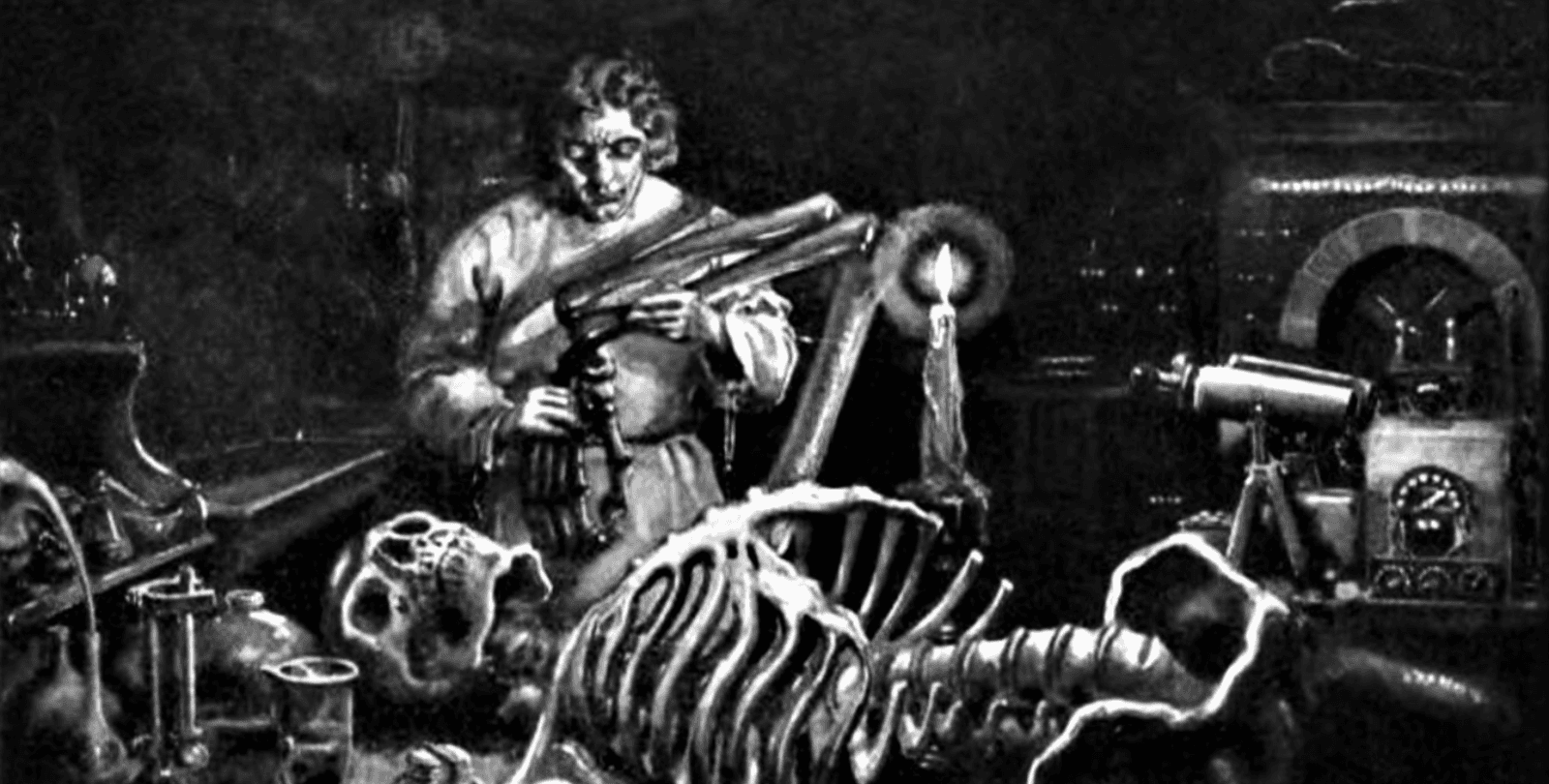
Mary Shelley, Public domain, via Wikimedia Commons
We are creators.
It’s not surprising that people who were created in the image of God (Genesis 1:27) are themselves creators. From the very beginning, the biblical story gives humans a charge: to fill the earth, subdue it, and cultivate the garden of creation (Genesis 2:15). That means building, shaping, and imagining new possibilities.
At the same time, it makes sense that people who evolved from other creatures face limitations—not just in our technical capabilities, but also in the wisdom of knowing how to use what we create well.
We have taken tremendous strides in overcoming that first limitation. Bipedalism freed our hands for sophisticated tools. Bigger brains gave us imaginations that could conceive of what does not yet exist. Cooperation led to communities and cultures that accelerated all of it. The advancement from the wheel to computer-controlled rocket ships happened in the blink of an eye on evolutionary scales.
Our growth in wisdom has not been nearly so speedy.
Don’t get me wrong—we’ve made some progress. Our ethical traditions have developed profound principles for love, justice, and responsibility. But these moral frameworks are often slow to adapt to the changing terrain that new technologies introduce. Too often, we deploy powerful new tools without asking: What kind of people will this make us? What kind of world will this leave behind?
To think more about these questions, I recommend that we turn to a 19th century horror story: Frankenstein.
Seeing What’s Truly Human
When I heard that Guillermo del Toro was making a movie adaptation of Mary Shelley’s Frankenstein, I figured I should read the book first.
Pulling my copy off the shelf, I was surprised to see that I had read it many years ago (I have a curious habit of writing the date I finish a book inside the cover). Of course I knew the basic outline of the story, but with an idea as culturally pervasive as Frankenstein, I wasn’t sure which parts I remembered from the book and which I had simply absorbed from culture.
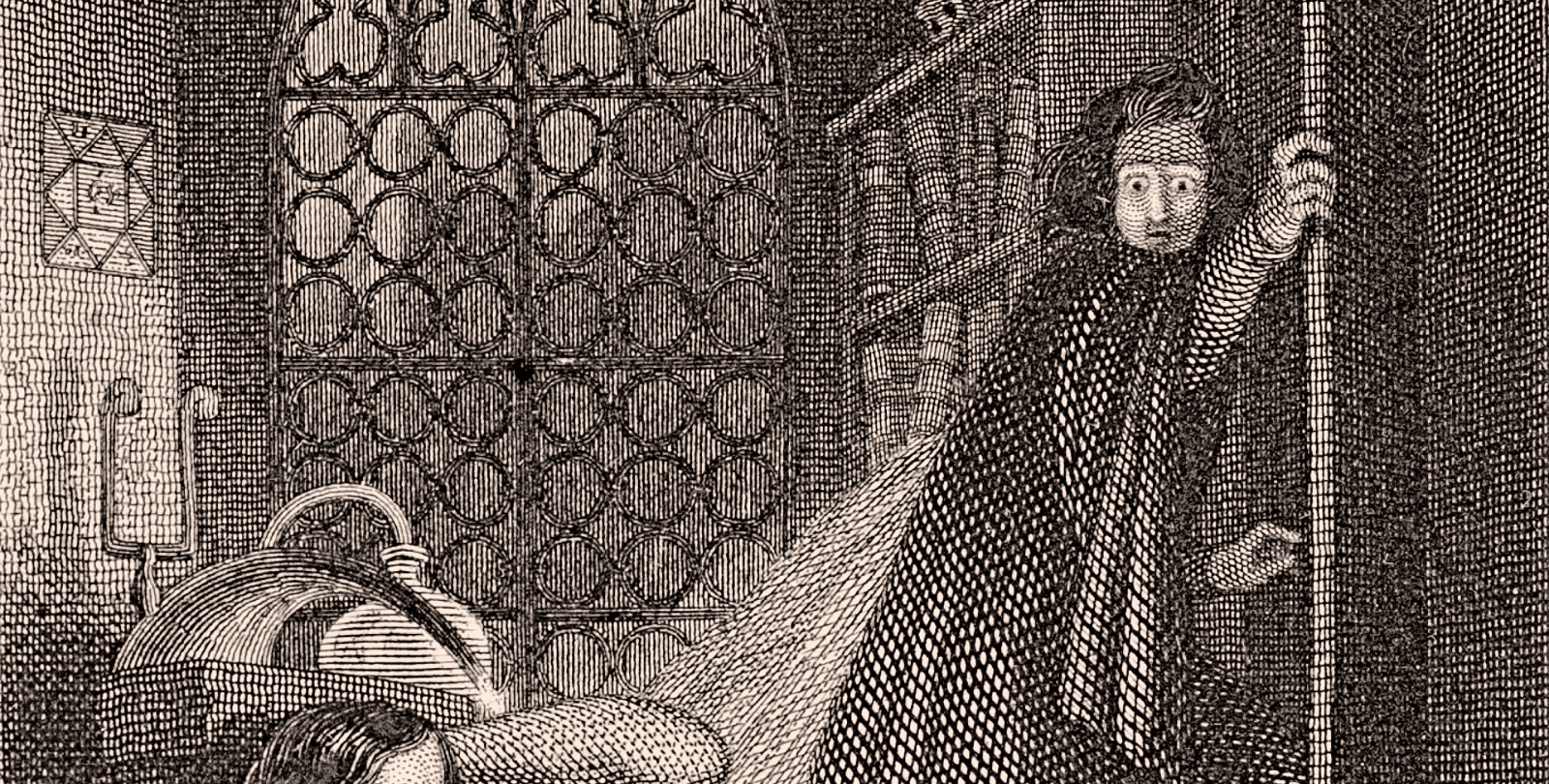
Dr. Frankenstein recoils at his monster. Theodor von Holst, Public domain, via Wikimedia Commons
For starters, according to pop culture, “Frankenstein” is the green-skinned monster who was created in a laboratory. He’s big, clumsy, and talks like a caveman. But in Shelley’s original story—written when she was just 18 years old—Victor Frankenstein is the scientist, not the monster, who is actually never given a name.
Shelley’s creature is indeed large and strange, but he’s not a brute. He has near-superhuman agility and speaks with the kind of refinement and emotional depth that would be at home in a Jane Austen novel. He is definitely a person in the philosophical sense.
We’ve become inured to the monstrousness of Victor Frankenstein’s creature. We see instances of it today as cartoonish, even comedic. But Shelley’s monster is grotesque and horrifying in appearance. When Victor finally brings his creation to life, he does not rejoice or pronounce it good. He’s repulsed. And everyone else who encounters the creature is repulsed too. They can’t see past its appearance. They judge it instantly.
Shelley’s monster is articulate, compassionate, even morally aware. But he is judged a monster simply because of how he looks. In that sense, Shelley critiqued a world that fails to see humanity where it truly resides.
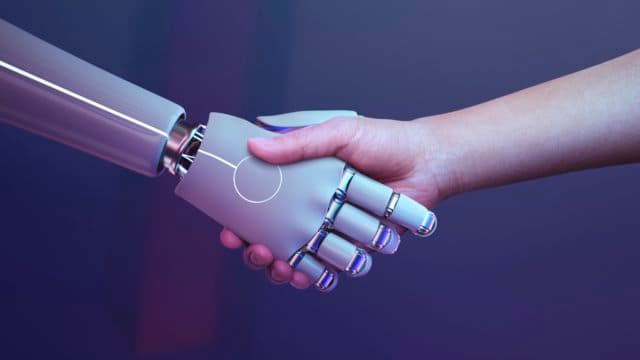
We certainly have that problem today too, but we also risk making the opposite mistake: treating machines as if they are human.

AI Friends and Christian Virtue: Why AI Shouldn’t Replace Human Community
An AI friendship is convenient, comfortable—and spiritually empty. Here’s why Christians should push back.
The chatbots and virtual companions now talking to children in lonely bedrooms are designed to seem empathetic. But they have no interior life. They do not really understand. They have no conscience. We are increasingly willing to project humanity onto what is essentially computation.
In Shelley’s story, people rejected a creature with a soul because he looked inhuman. We embrace creations with no soul because they sound human.
The Christian claim is that being human is not about appearances or processing power. It’s about being made for relationship—with God and with all God has created.
When we forget that, we project humanity onto things that cannot love us back, and we withhold humanity from people who can.
Wisdom Takes a Village
One of Frankenstein’s clear critiques of the scientific process is the moral danger of isolation. Victor Frankenstein works obsessively on his project all alone. He hides his research from colleagues. He keeps his family in the dark. When his creation turns destructive, there is no one to correct him and no one to help bear the burden.
Del Toro’s adaptation of the story expands the cast. His movie is still set in the 19th century, but it has a much more modern gloss. No one today could create something world-changing in complete isolation. So del Toro’s Victor has a venture capitalist funding the experiment, and assistants to help with the technical labor.
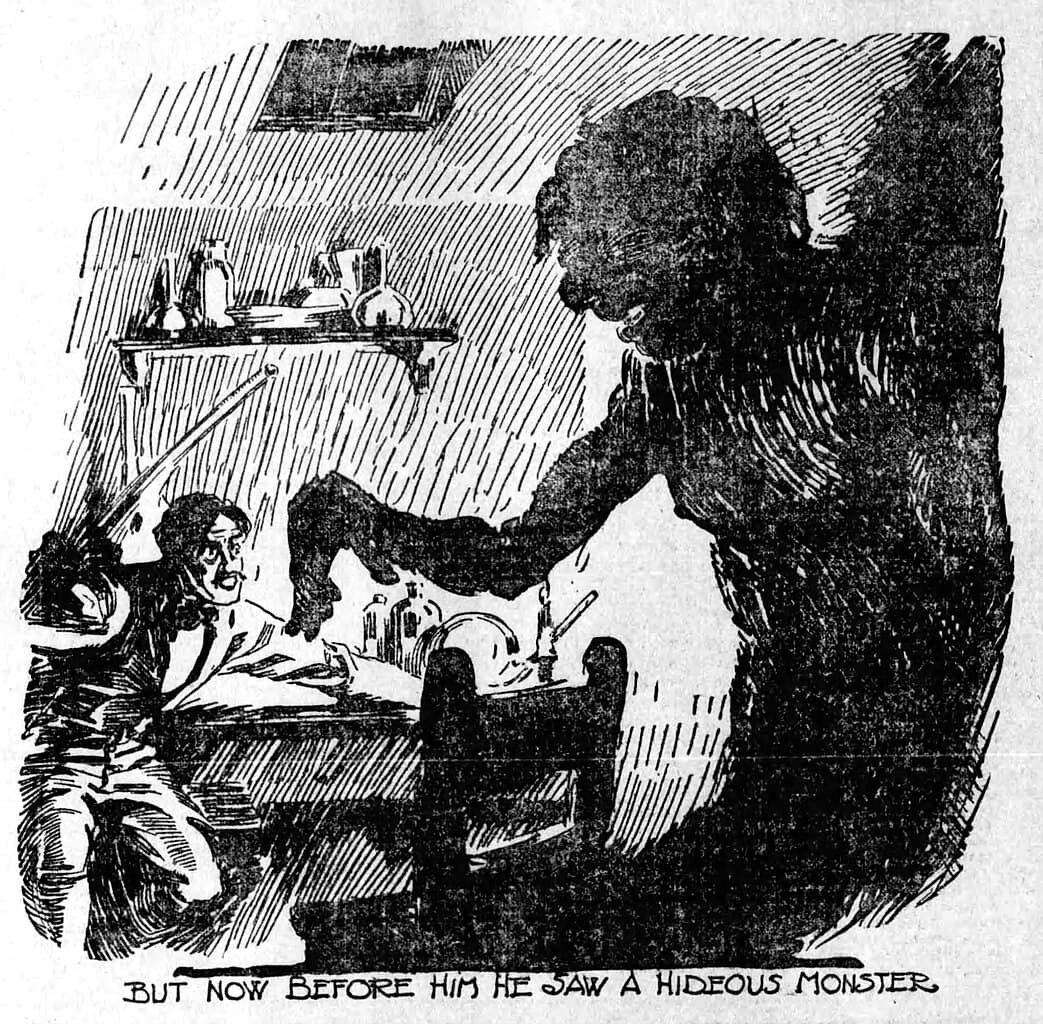
Dr. Frankenstein encounters his monster alone in his laboratory. Birmingham Post-Herald, Public domain, via Wikimedia Commons
But these do not help with the wisdom of discernment. The process of creation is still isolated from those who will be affected by it. There is no genuine community involvement where it might be asked: Is this a good idea? What are the consequences? What will this creation do to us?
That, too, is an insightful reflection of our present moment. Many of the technologies shaping our future—social media, genetic editing, LLMs—are developed by small teams in private companies. These teams are insulated from the communities who will live with the consequences of their inventions.
Imagine if social media had been subjected to clinical trials the way new drugs are. Given their demonstrably negative effects on teenage mental health, there is no way these platforms would have been approved for widespread use among adolescents.
I know it’s not practical to subject every digital innovation to clinical trials. But there must be more meaningful involvement from communities, and more engagement with our ethical traditions.

Image used under license from Shutterstock.com
Christian faith has always insisted that discernment is communal. The church is not only a place of worship; it is a place of moral imagination. Before we unleash new powers into the world, we should ask together: Should we? And for whose good?
A theology of technology must emerge from a community. Frankenstein is a warning about what happens when creation is severed from the broader community it should be serving.
The Peril of Domination
Finally, we might also consider how easily our theology of creation has been shaped not just by the Bible, but by Francis Bacon. In the early modern period, Bacon championed a vision of science as the mastery of nature—a way to recover what he believed was lost in the Fall. His goal wasn’t just to understand the world, but to dominate and control it.
Both versions of Frankenstein reflect on our ability to master nature. There’s no denying that we’ve become very good at harnessing nature in some cases. But nature has a way of bucking against our attempts to control.

Image used under license from Shutterstock.com
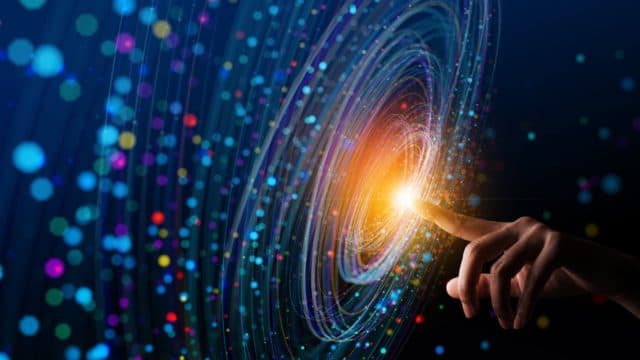
We domesticate animals for food and labor, and in doing so, we create environments for new zoonotic diseases to emerge that kill millions. We mine fossil fuels to energize our lives like never before, and the carbon released into the atmosphere changes the global climate—now threatening to radically upend the way billions of people will live. We invent digital computing to increase efficiency and convenience, and we end up tethered to our devices, compulsively checking notifications and losing the capacity for sustained attention. And no one yet knows the effects of greater integration of AI into our work and lives.
This trajectory echoes both versions of the Frankenstein story. In Shelley’s novel, Victor is driven by curiosity and ambition—an insatiable desire to uncover the secret of life. In del Toro’s retelling, grief and even revenge are the motivating forces: a desperate attempt to reverse death and transcend human limits.
But in both cases, the result is the same. Their creations exceed their intentions, slip from their control, and cause immense harm. What began as an exercise of mastery becomes a form of bondage.
Our Role: Guide Technology Toward Wisdom
In both the book and the film, the moral of the Frankenstein story remains the same: our technical expertise has outpaced our wisdom. Applying this to our current circumstances, it seems that the faster we innovate, the more alarming this mismatch becomes.

The Church’s Esther Moment in the Era of AI
For Joanna Ng, the Church is called to shine Christ’s light in dark places, and the world of technology is no exception. Like Esther, we were created for such a time as this.
I fear that we don’t have the cultural guardrails we need to control and limit our creations any more than Victor Frankenstein had the moral imagination to control his. The only thing that saved anyone from the monster in Shelley’s novel or del Toro’s film was that the creature itself learned and understood. It grew in wisdom.
Can we rely on that happening with artificial intelligence? Will the thing we have made learn wisdom we ourselves have not yet mastered? I wouldn’t count on it.
We are creators. That’s part of our calling. But it is also a profound responsibility. If we are to make things well, we must not create in isolation. We must not confuse power with goodness. And we must not forget that what we make will, in turn, remake us.
Also Read:
- Science Tells Us What Is True, But Not What Is Right
- What Does AI Mean for the Church and Society?
- Christian Wisdom in the Biotech Age
These cautions require intentionality and foresight rather than reactions after the fact. This is why Christian communities must take a more active role in shaping the moral and spiritual conversation around technology. We bring with us a rich tradition of ethical reflection, a long memory of human flourishing, and a commitment to the dignity of every person.
At BioLogos, we are committed to helping foster this kind of thoughtful engagement. We endeavor to be a space where scientists, theologians, ethicists, and everyday believers can discern together how to wield our creative power wisely.
Join the conversation
Subscribe to our email list for reflections, stories, and insights on what it means to live and create faithfully in this scientific world.
Get reflections, stories, and insights on what it means to live and create faithfully in this scientific world. Subscribe to our email list today.
About the author