Live from COP30: Daily Stories of Faith and Climate
BioLogos' Jim Stump and Colin Hoogerwerf share daily insights and moments of hope from this year’s UN Climate Change Conference in Belém, Brazil.
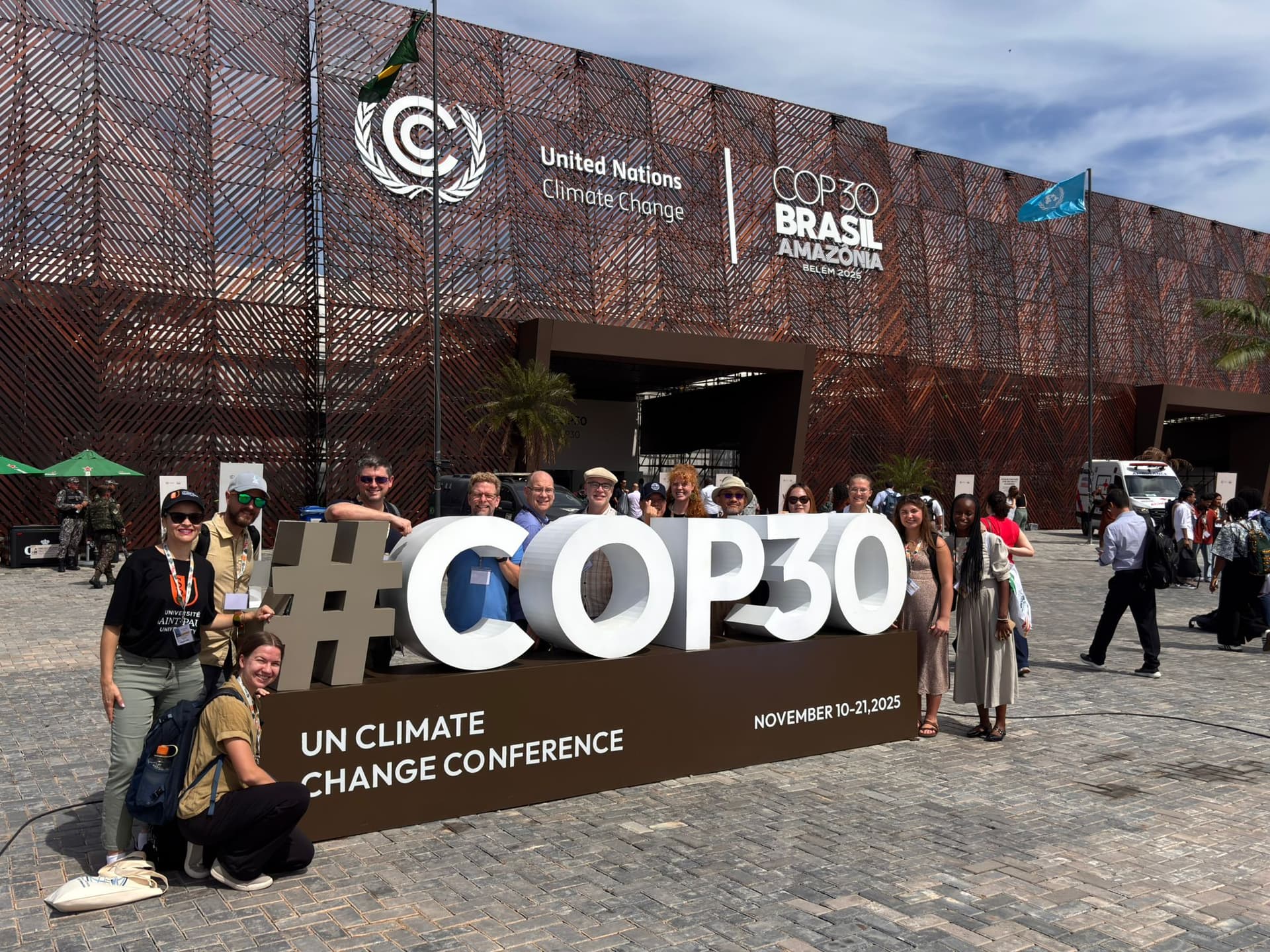
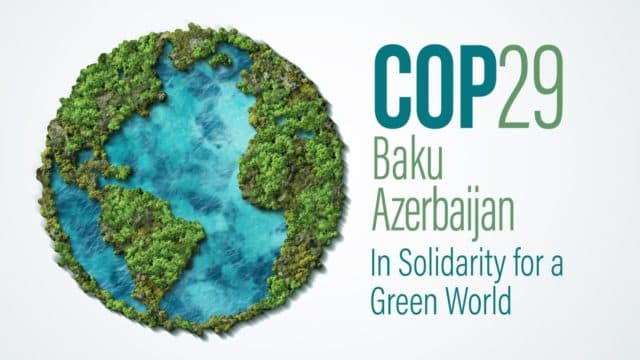
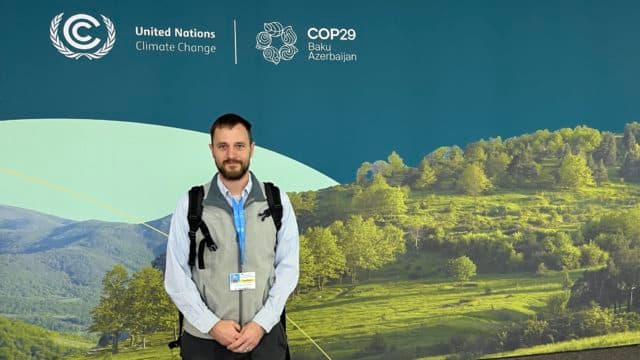
Photo from COP29.
Over the next two weeks, the international community will gather in Brazil for COP30, the world’s largest annual climate conference—and BioLogos will be in attendance.
We have a responsibility to act as stewards of God’s creation. So when nations come together to grapple with climate change, it’s vital that we bring a Christian witness.
We’ll be using this blog as a journal of our time at COP30. Each day, we’ll share the stories of attendees we meet and reflections from on the ground. Be sure to check in regularly!
Friday, December 12 – Reflections
Now that the dust has settled, we can look back at COP30 with fresh eyes.
COP30 ended much as it unfolded: with real flashes of courage and conviction from vulnerable communities, but with a negotiated outcome that fell short of the urgency this moment demands.
There was no agreement on phasing out fossil fuels, and the Amazon rainforest—whose health shapes the entire planet’s climate—didn’t receive the clear protections many hoped for.
Yet there were meaningful steps too. COP30 saw increased support for communities adapting to the impacts of climate change, new commitments to a fair and just transition to clean energy, and additional recognition of Indigenous land rights.
For us, COP30 was as much about the conversations had in hallways as it was about those had in the negotiating rooms. We met people carrying the weight of climate impacts in their own communities, and others who came simply because their faith won’t let them look away.
Their stories made the scale of this crisis impossible to ignore—and gave us renewed hope that faithful, imaginative action is still possible.
Thanks for following along. We’ll be working on putting the stories we heard and experiences we had into a Language of God podcast episode in early 2026. Stay tuned!
Jim Stump and Colin Hoogerwerf
P.S. Colin has written a longer reflection about the question everyone asked when we got home—“So, how was COP?”—and what it meant to witness both the beauty and fragility of the Amazon. You can read that piece here.
Saturday, November 22nd – Homeward Bound
COP30 is officially over. The gavel has fallen. We’ll be back with a bit more commentary on what exactly happened in another post next week. But for now we are making our way through airports and security lines on our way back home. Here’s what happened since the last post:
Yesterday we made our way back into the Blue Zone. Despite the fire, the venue was mostly normal. There were several areas gated off and they had hung large sheeting over some areas so that we couldn’t see the spot where the fire had taken place, but otherwise, everything proceeded as it had all week. The last day of COP is always a bit strange. Much of activity that doesn’t have to do with negotiations dies down. The negotiations themselves, at this point in the game, are happening in rooms that are not open to observers or press. There are some last minute press conferences where organizations get their last chance to urge the parties to find a way to agree. Yesterday was also the People’s Summit, which is an event put on by indigenous people and youth who don’t have official power in the UN process but get a chance to make their voices heard. There were powerful stories and lots of shouting, clapping and chanting. Afterward though, is only a long wait to see if the negotiations will come to anything. Most of us found our way back to the Bible Boat where we enjoyed our last evening with the CCOP team.
This morning I (Colin) woke up early to go take a last walk through a rainforest trail and record some of the sounds of birds and bugs waking up for the day. It’s good to remember what we are here for. It’s not all about formal speeches and procedural documents. Ultimately this is about our shared home and all that inhabit it. The Blue Zone this week was a constant hum of giant air conditioners. The rainforest also had a constant hum, but it is was made by the living things whose fate is tied to the outcomes of what happens here at COP30 and what we take home from it.
Check back in soon for a final post on the outcomes of the official proceedings.
Thursday, November 20th – Fire in the Blue Zone
It’s the second to last day of COP (though it almost always takes more than the pre-set two weeks for the negotiators to agree on the final documents). The pressure is rising and this morning started off with a press conference from the Secretary General of the UN, Antonio Guterres, urging the negotiators to find a way to come up with something ambitious to take away from COP30. Only a few hours later a literal fire broke out in the Blue Zone and the tens of thousands of observers, delegates, and press were evacuated from the building. There were fortunately no injuries and everyone from CCOP is safe and accounted for. It was, however, a major impediment to getting the work done that needs to be done. As of this evening, the facilities have re-opened. Surely the delegates have returned and will be facing a late night of conversations.
Prior to our evacuation, Jim and I had a very nice interview with Guilherme, a Brazilian engineer with the Anglican Church who told us about floods that have affected his home community and how Christian communities have responded. Yesterday we had several great interviews, including with a priest who made her way to COP by land over 3 months, stopping in 25 different communities along the way. We’re starting to contemplate our travel home and how we will begin to put all that we have heard and learned together into a story that can do justice to good work that has happened here these two weeks.
Tuesday, November 18 – Tears to Dissipate Grief
Colin: Much of COP is surrounded by a level of poise and professionalism. Most speeches begin with a long line of formal addresses. Rules and procedures are set and re-set. The language used is measured and careful. Many of the talks are technical and full of jargon. It is not a place where you expect to see a lot of emotion. And so the moments when emotions come out are all the more remarkable. Occasionally someone will make an impassioned speech from the stage, unable any longer to hold in the need to shout for justice. We’ve witnessed a few of those moments and hope to witness more.
Today’s emotion came not from the stage, but from our morning devotions, which we’ve mentioned in previous updates. As we were talking about justice, mercy and love, one of our CCOP team members broke down in tears as he talked about some of problems facing the communities in his home country. He said he was embarrassed as he tried to pull it together but we assured him he should not be. His tears started to break something in all the rest of us. Many of us build up walls which we put up to protect us from the grief of the world. Sometimes those walls need a a creak. We enter hope through the process of grief. The tears we shed are not something to ashamed of. In fact, maybe the crazy thing is not to cry or shout on occasion. May we find the tears that might dissipate our grief and lead us to hope.
Jim: Inside the Blue Zone today, I joined an official negotiation session on the “Global Goal on Adaptation,” a key part of the Paris Agreement that asks how well the world is preparing for the impacts of a warming planet. These “informal consultations” are where negotiators labor over draft text before anything becomes official, and the work is every bit as painstaking as it sounds. The current draft—forty paragraphs long and filled with bracketed disagreements—reveals a sharp divide between countries ready to adopt a new set of adaptation indicators and those worried that such metrics could evolve into burdensome obligations for developing nations. The indicators themselves form a kind of global dashboard, tracking everything from water scarcity and food security to ecosystem health and infrastructure resilience, along with whether nations are actually implementing and monitoring their adaptation plans. It’s an ambitious attempt to assess how humanity is coping with climate change, but the process is complicated by limited resources and the urgent need for far more adaptation funding. The meeting ended with many delegations still waiting for their turn to respond, a reminder that this text is far from finished. And this was only agenda item 8(a)—one small corner of the immense, grinding work unfolding here at COP.
Monday, November 17 – Security, Survival, and Small Discoveries
Jim: Week 2 at COP30 began today, and it was the first time our current cohort from the Christian Climate Observers Program (CCOP) entered the Blue Zone—the secure, credentialed space where the official work of the COP happens. CCOP exists to bring emerging Christian leaders, especially from under-represented communities, into the heart of these global negotiations. It’s meant to be a kind of discipleship-in-public: learning how climate action, justice, and Christian witness fit together on the world stage. This year’s 35 participants come from across the Americas, Europe, and Asia, and each day begins with teaching and reflection in the common room of the “Bible boat” where we’re staying.From there we head into the Blue Zone. After some property damage during demonstrations last week, riot police lined the entrances today—a strange sight at a COP hosted in a democracy, and a reminder of how fraught the politics around climate action have become. Once through security, the Blue Zone unfolds into its usual four worlds: the painstaking government negotiations over the final text; the big plenary sessions where officials deliver three-minute national statements; the country and thematic pavilions; and the impromptu demonstrations that erupt in the hallways.The most powerful moment of the day for me came in one of those plenary sessions. Several representatives gave routine speeches about national achievements. Then the delegate from Jamaica stepped to the podium. He spoke plainly about Hurricane Melissa—“the new face of climate change,” as he called it—whose 30-foot storm surges and catastrophic rainfall devastated the country. Scientists estimate that such an event is many times more likely because of warming oceans. Damages now stand at roughly a third of Jamaica’s GDP. “We did not cause this crisis,” he said, “but we refuse to stand as mere victims. We are resilient. Our only defense is ambition. But we call on developed countries to contribute meaningfully to the damage you have created around the world. For Jamaica, this is not about abstract problem-solving; this is about survival.” It was the kind of statement that cuts through the usual diplomatic fog and reminds you what’s really at stake.
For the CCOP participants, hearing a plea like that from a vulnerable nation is part of the formation we hope for: a deepened moral imagination shaped by real stories of loss, courage, and responsibility. It’s why we bring these emerging leaders here in the first place. As Week 2 unfolds, we’ll continue listening, learning, and looking for ways the people of God can bear faithful witness in the midst of a wounded and warming world.
Colin: One of my favorite parts of CCOP is the morning devotions given each morning by our leader, Lowell. Today’s devotion drew from Matthew 13 and the parable of the pearl. In the parable, the pearl is a metaphor for the Kingdom of God. It is something priceless which is worth searching for. One of the main takeaways from the devotion is that there is a pearl to be found even in the Blue Zone at COP30 and so we can enter knowing there is something of the kingdom to be found. Some days the pearl seems very well hidden. But today, for me, it felt like I landed in a rich oyster bed.
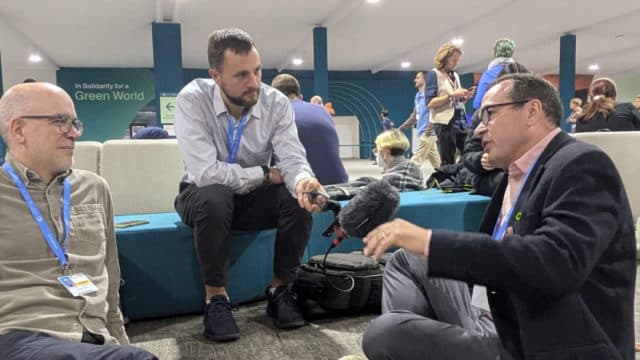
I have been working on several interview leads and a few of them began to work out today. It began with a short interview with Kim Stanley Robinson, author of Ministry for the Future. One of our CCOP team members, Everett, has had a long email correspondence with him and ran into him today in the Blue Zone. We found him again just before he gave a reading from his book and he allowed us to sit down with him and Everett asked him several questions while I recorded. Then we had a chance to sit down with a few of our CCOPers and hear about their experiences so far. We ended the day with an interview with a polar scientist and policy specialist who told us about the work of making sure the COP process continues to draw on the best science as it works toward solutions. She also told us about the polar regions and their importance in the global climate. All of our interviews included wise words and encouraging ideas, the pearls of the day. May the pearls continue to show themselves in the days ahead.
Weekend at COP 30
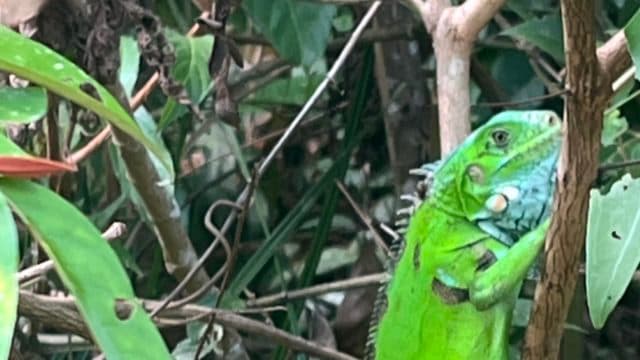
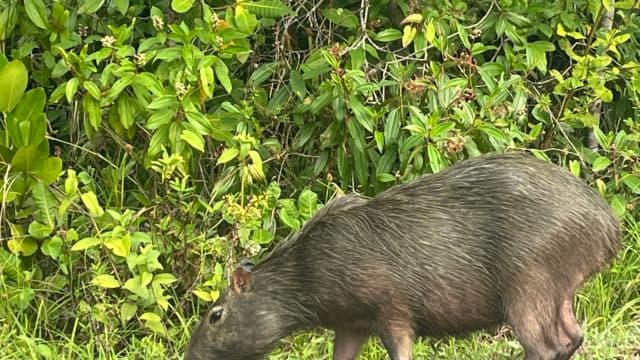
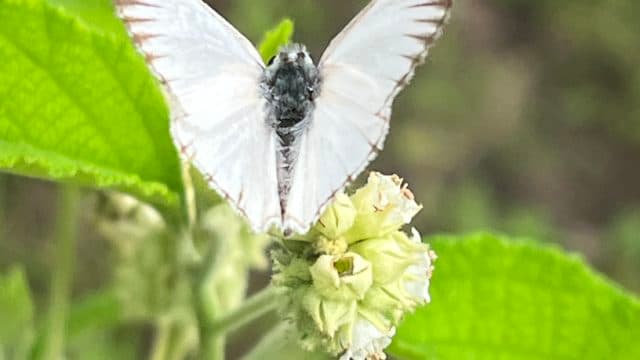
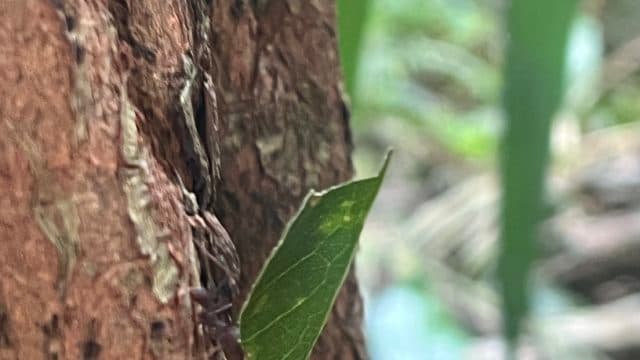
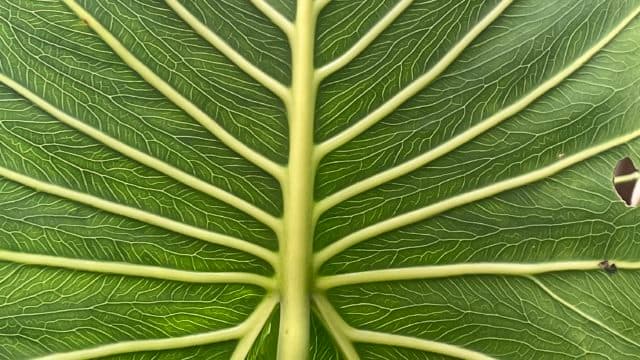
It’s the weekend at COP30 and Jim arrived on Saturday. Negotiations continue in backrooms but the public side has a bit of a rest. Which means that we’ve had a chance to see some of the Amazon. This COP was held in Belém for a reason: because the Amazon plays a major role in global climate. It holds a massive amount of carbon, helps to shape and stabilize global climate and is one of the most biodiverse places on earth. So while we don’t have as much news on what’s happening in the Blue Zone, we have a little bit of natural wonder to share, something to give us all a little bit of relief from the hard work of finding solutions.
Tomorrow starts our time in the Blue Zone in earnest. We’ll be back with more updates.
Friday, Nov 14 – Arrival in Belém

From Top left, clockwise: Land is not a resource, it is enchantment; Without leaves, there is no spirit; Caring for our common home is an act of faith; I believe in climate action.
Colin here. I arrived in Belém yesterday evening and am becoming acquainted with the city, the culture, and the community of the CCOP team. I stopped by the conference grounds yesterday evening to pick up my badge but today is my first full day immersing myself in the COP. The conference grounds are like an indoor city (which seem to be mostly made of a giant inflatable.) At one end are a series of meetings rooms with intimidating sounding titles (e.g. “CMA 10 (g) Sharm el-Sheikh dialogue on the scope of Article 2, paragraph 1(c), of the Paris Agreement and its complementarity with Article 9 of the Paris Agreement – Informal consultation”) and at the other end is a array booths set up by countries and interest groups, each of which have panels and talks going from morning to evening. The hallways are constantly filled with people wearing clothing from every country in the world. Peaceful protesters sign and chant at the entrance. All that to say: there’s a lot going on. How to find oneself in such a frenzy is not easy. But this morning already, I was able to attend a talk on how faith communities are taking part in responding to the climate crisis where four people talked about the different ways that faith communities in Brazil are responding to the climate crisis. On the wall of the booth were several beautiful posters in Portuguese. It’s good to see the church showing up.
Welcome to COP30
As you read this, I’m boarding a plane to Brazil for the 2025 United Nations Climate Change Conference—called COP30.
I’m headed there as a credentialed observer. Our podcast producer, Colin Hoogerwerf, and I will spend the next ten days in the rooms where decisions are negotiated, and in the hallways where the real work of listening, learning, and persuading often happens.
This is my third COP, after attending COP28 in Dubai and COP29 in Baku. Why do I keep going, and why should the BioLogos community care about COP?
Because caring for creation isn’t a side project of Christian faith; it’s discipleship. These gatherings are messy, imperfect, and sometimes exasperating—and they’re also where nations reckon with responsibility and possibility.
Our role in being here is to bring a grounded Christian witness: hopeful without being naïve, truthful without being cynical.
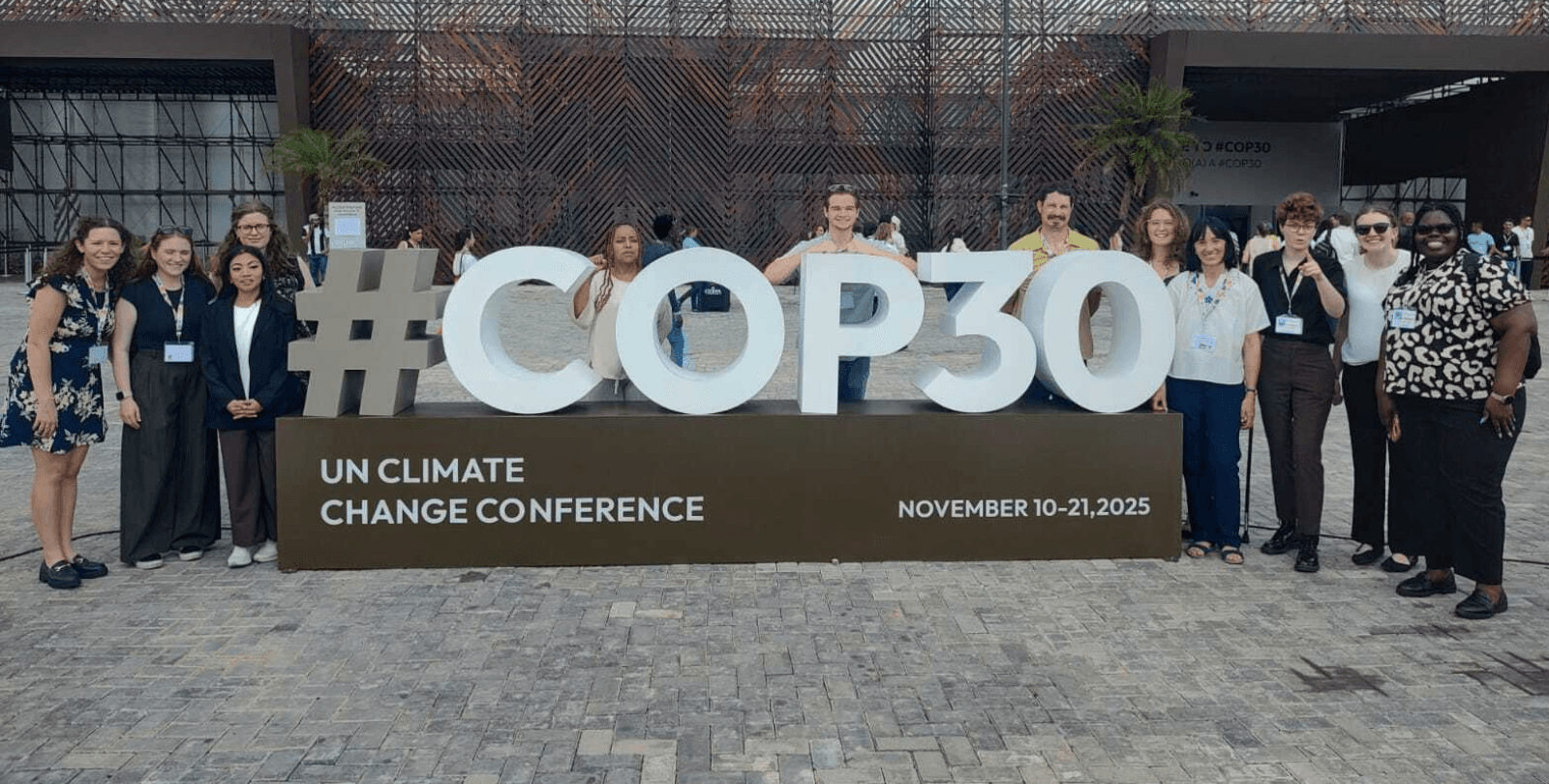
Members of the Christian Climate Observers Program team already at COP30. Image courtesy of CCOP.
Besides the professional involvement, I have personally found the experiences enormously rewarding. Meeting people from all over the world (195 countries) and hearing their stories about climate change, resilience, and hope has been very meaningful.
That’s why we’ve set up this live blog. Each day, we’ll be sharing new insights from COP and the hopeful and heartbreaking stories of its attendees. We hope that for you these entries provoke thoughts about our responsibility to act as stewards of God’s creation.
I’ll also be sharing reflections from the ground at jimstump.substack.com.
[We’re here] because caring for creation isn’t a side project of Christian faith; it’s discipleship. These gatherings are messy, imperfect, and sometimes exasperating—and they’re also where nations reckon with responsibility and possibility.
While we’re here, we’ll be spending our nights on a boat in part of the Amazon River delta with 22 other people who are here as part of the Christian Climate Observers Program (CCOP).
CCOP brings emerging Christian leaders from around the world to experience the COP and participate in a discipleship program. BioLogos is helping organize the team’s daily communications; you can sign up to receive them here.
Please pray for all the participants in Belém, Brazil, for clear minds, steady hearts, and words that build trust. And join us as we bear witness to God’s good world and our shared call to tend it.
Jim Stump
November 13, 2025
About the authors
Jim Stump