Awe and Wonder: Seeing Creation Through God’s Eyes
Awe and wonder draw us closer to the God who delights in all God has made. Here’s how to make seeking out wonder a spiritual discipline that deepens faith.
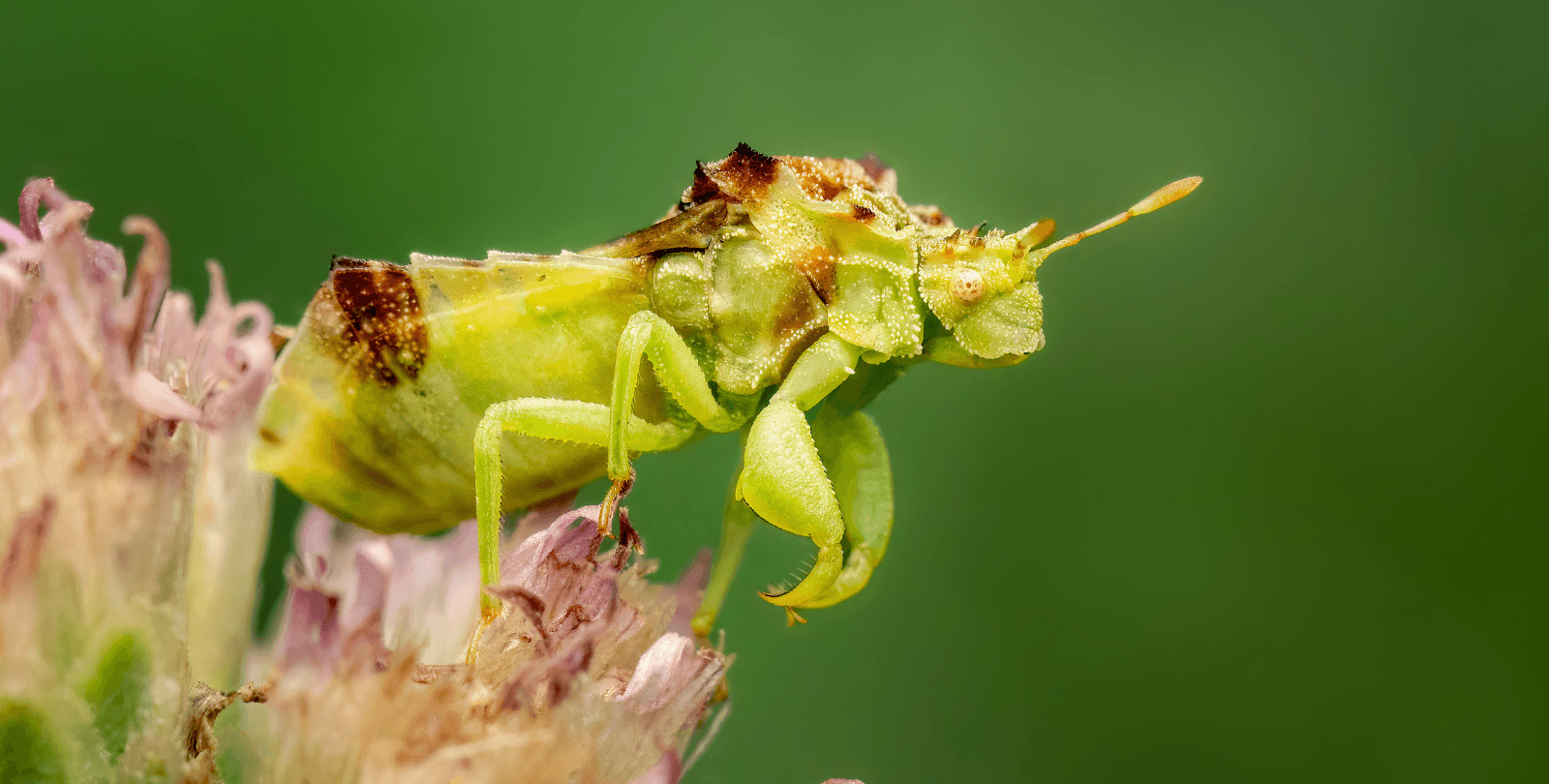
Image used under license from Shutterstock.com
Recently, one of our community members (BioLogos’ own Colin Hoogerwerf) told me a story.
He said he had been out in his garden cataloging pollinators (as one does) when he found a bug he had never seen before.
He was understandably excited. After all, someone who catalogs pollinators is no slouch in their knowledge of bugs, so it’s a big deal to find a new one.
The bug he found is called a jagged ambush bug, and it looks like a monster. He showed me a picture—several, actually.
The jagged ambush bug looked like some combination of leaf, rock, and terrifying alien. He told me that they sit atop flowers, waiting for the pollinators to come, then they use their huge claw arms to grab them and feast.

Image used under license from Shutterstock.com
When Colin told me about his bug and showed me his many, many pictures, I asked him what day he saw it, expecting him to say, “yesterday” or “last weekend.” But he said, “sometime in July.”
July was months ago.
I stared at him and asked, “You’re still showing everyone pictures?”
I teased him, but the truth is, I think it’s beautiful. Colin was and continues to be bowled over by something he found in his own front yard. What Colin experienced was awe and wonder, which I am coming to believe is an important, if overlooked, spiritual discipline.
Awe and Wonder as a Spiritual Discipline
Wonder is that sense of awe that wells up when we slow down enough to pay attention.
Sometimes it strikes us accidentally, like when we happen to look out the window and catch a gorgeous sunset. But more often, we have to go looking for awe and wonder with the careful intention of someone who, say, catalogs pollinators. We have to pay close attention.
On Our Knees with Bees: The Spirituality of Paying Attention
Acts of deep, compassionate attention to the world can be a form of profound spiritual engagement—and maybe even a kind of prayer.
This is harder than it sounds.
Smartphones and the endless digital distractions of our culture don’t foster the necessary attentiveness. And culturally, we also tend to dismiss feeling awe as being silly.
When I was in seventh grade, I remember telling a friend about some wonder-filled moment. A popular kid overheard and said something like, “small things amuse small minds.”
He was just a kid trying to be clever, but his scorn scored points because it sounded more adult, as if boredom and cynicism are more serious ways to be in the world.
But I think Scripture tells a different story.
Awe in Scripture: God’s Own Wonder in Job
The book of Job betrays God’s heart on this matter.
In Job 39, God works to provoke wonder from Job as a way of giving him a little perspective. But it’s almost as if God, in speaking, also gets caught up in that wonder.

A panoramic view from Mt. Ada in Canterbury, New Zealand. Michal Klajban, CC BY-SA 4.0 <https://creativecommons.org/licenses/by-sa/4.0>, via Wikimedia Commons
In the book, Job is suffering terribly and he has been bearing his friends’ theology of suffering. Exasperated, Job demands an audience with God.
But when God speaks to Job, beginning in chapter 38, God does not tell him why he has been suffering. Instead, God asks a mountain of questions.
At first, the tone seems sharp: “Where were you when I laid the earth’s foundation? Tell me, if you understand. Who marked off its dimensions? Surely you know!” (Job 38:4-5)
But God isn’t angry—he is returning Job to his place as a creature.
Job, it seems, has forgotten himself and has demanded answers to questions that are beyond him. God spends chapters 38 and 39 reminding Job that there is an awful lot that he doesn’t understand.
Near the end of chapter 38, the tone gentles significantly and the questions start to get more and more particular. It begins to feel like God has become swept up in God’s own delight and wonder at creation.
Chapter 39 begins with lines like this:
Do you watch when the doe bears her fawn?
2 Do you count the months till they bear?
Do you know the time they give birth?
3 They crouch down and bring forth their young;
their labor pains are ended.
Their young thrive and grow strong in the wilds;
Have you ever thought of God counting the months until a doe gives birth? It’s so tender and intimate.

A chital fawn photographed in Sundarbans National Park, West Bengal, India. Tisha Mukherjee, CC BY-SA 4.0 <https://creativecommons.org/licenses/by-sa/4.0>, via Wikimedia Commons.
Then come the birds: “The wings of the ostrich flap joyfully, though they cannot compare with the wings and feathers of the stork” (Job 39:13).
And later, God returns to the ostrich: “God did not endow her with wisdom or give her a share of good sense. Yet when she spreads her feathers to run, she laughs at horse and rider” (Job 39:17-18).
It’s almost as if God can’t help but delight in what God has made.
Wonder in Genesis and God’s Delight in Creation
We see this same lesson in Genesis.
In Genesis 1, God makes all things from scratch and repeatedly calls it good. God plants a garden and calls it Eden, which means Delight. God places the humans in the Garden of God’s Delight so that they might join in that delight (Genesis 2:15).

The Garden of Eden by Thomas Cole, 1828. Public domain via Wikimedia Commons.
Then when everything is done, God calls it “very good” (Genesis 1:31) and takes a day to rest and enjoy it all, later commanding that we do the same.
Robert Capon, Anglican priest and a writer for the New York Times food section, once wrote:
“That, you know, is why the world exists at all. It remains outside the cosmic garbage can of nothingness, not because it is such a solemn necessity that nobody can get rid of it, but because it is the orange peel hung on God’s chandelier, the wishbone in His kitchen closet. He likes it; therefore, it stays. The whole marvelous collection of stones, skins, feathers, and string exists because at least one lover has never quite taken His eye off it…”
God likes it. Therefore, it stays. You stay and I do. And every bit of soil, and every jagged ambush bug, and every pregnant doe, and every ostrich who spreads her feathers to run.
You and I get to join that delight. Only, unlike God’s, ours does not come so much from a place of intricate understanding. After all, every knowledgeable person will tell you that the more they learn, the more they realize they don’t know.
Instead, our delight becomes wonder. It becomes awe.
How Awe and Wonder Humble Us
Awe also right-sizes us.
It reminds us, like it did Job, of who we are. We are fellow creatures, not gods. We were created on the same day as the animals. The breath of life breathed into us, just like them.
But we have been given a task that is different from the rest of creation: We are called to tend and keep what God has made and are given the honor of naming what we find. We are invited to share in the delight, to wonder at it all, and even to know the God who made it.

Image from the Wolf Creek Research Basin. Mark Ferguson/Global Institute for Water Security and Global Water Futures, CC BY-SA 2.0 <https://creativecommons.org/licenses/by-sa/2.0>, via Wikimedia Commons.
But our knowledge is only ever partial. We know just enough to recognize that it is beyond us, and to marvel at it, and so too, to marvel at its Creator.
Yet we are tempted, and often succumb to the temptation, to elevate ourselves as something more than creatures. We look down at the rest of creation, dissecting and dominating, as if we owned it.
Wonder plants our feet back on the ground. It humbles us back to ourselves. Wonder reminds us that we, like the ostrich and the jagged ambush bug, are creatures, formed from the dust.
Why Awe and Wonder Matter for Creation Care
We need this humility because our lording it over creation has come at great cost to the rest of the creatures.
Many say that the climate crisis is a spiritual crisis. It is a failure of love, of compassion.
It is a failure at our first vocation: to tend and keep what God has made, to delight in it, to hold it in sacred trust.
But it doesn’t have to be this way. We can return to ourselves, to our God, to our first calling. And we can begin that return by pressing into wonder.
When we give God’s creation our attention, it reminds us of who we are. We can sit under God’s questions to Job ourselves, and instead of being the ones with all the answers we can revel in how much we don’t know.
That takes some effort, particularly when companies treat our attention as a commodity. We have to be intentional. But it is not impossible, because wonder is available everywhere, in every moment.

Image used under license from Shutterstock.com
My call to you: Notice the flicker of a flame. Marvel at the fact that you could recognize your best friend’s voice on a telephone, distinct from every other voice in the world. Wonder at the feeling of the ground under you, or the roughness of your own fingerprints. Feel awe at the curl of a leaf, or a crooked smile, or at all the things that you don’t know that you don’t know.
Practicing Awe and Wonder in Everyday Life
Another way to cultivate wonder is to look for things you don’t understand, and see if you can see something you’ve never seen before. It sounds funny, but sometimes you can’t see things until you look for them.
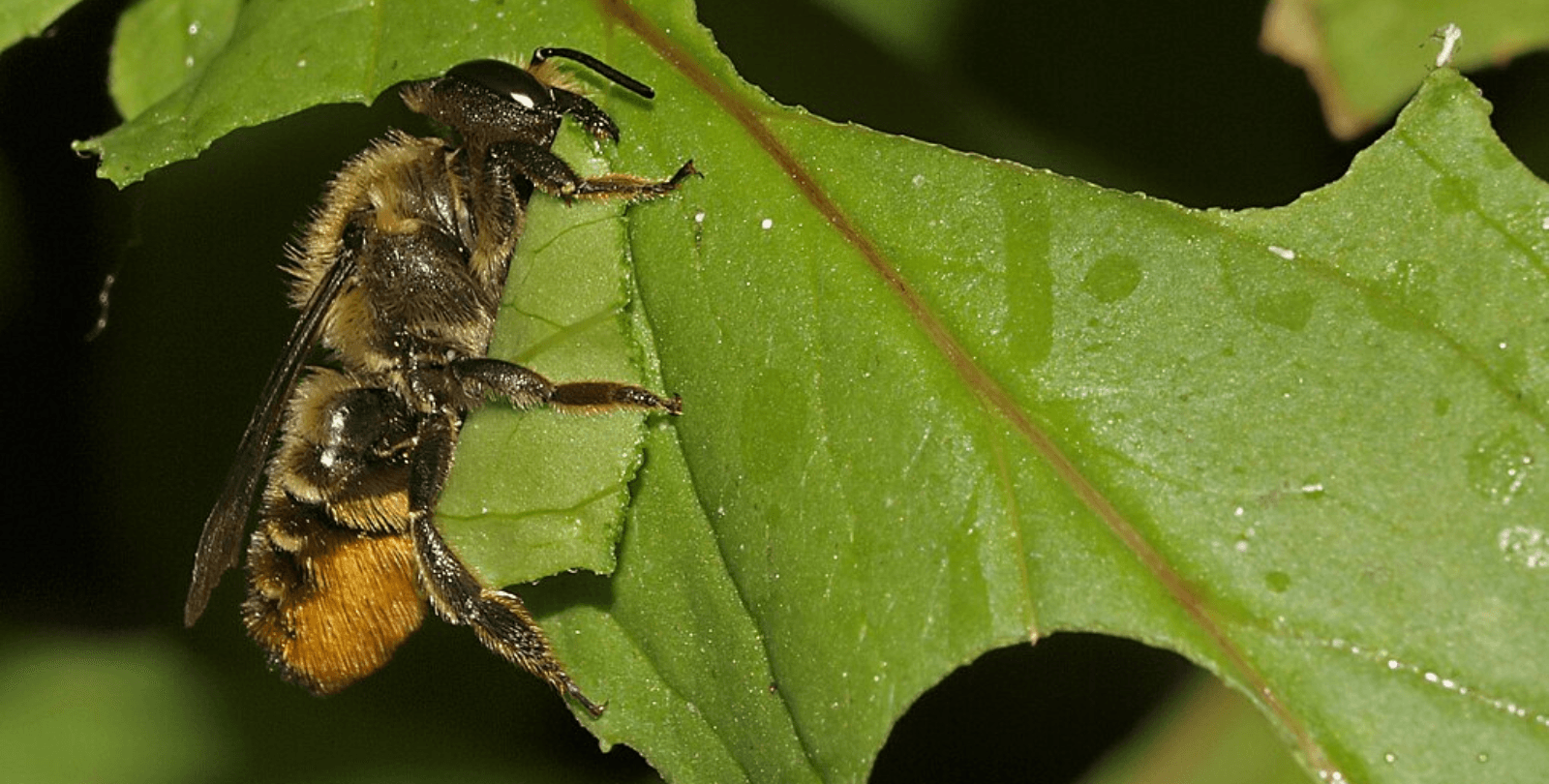
In my own front yard, I have an Eastern Redbud tree. I have always thought it beautiful, but only a couple of years ago did I notice the circles, smaller than a dime, cut neatly into several of the leaves.
Line Sabroe from Denmark, CC BY 2.0 <https://creativecommons.org/licenses/by/2.0>, via Wikimedia Commons
A friend of mine explained that those missing circles were taken by leaf cutter bees. These solitary bees stuff bits of leaf into a hollow twig, making a nest so that they can lay eggs.
I had never seen these little cuttings before—and now I see them everywhere. And I marvel at these tiny architects who know the materials they need and how to use them.
There are over 240 varieties of leaf cutter bees in North America, and each one uses a different native plant for their handiwork. The world is truly overflowing with wonder.
Turning Awe and Wonder Into Worship
When you have gathered up your wonder, remember that all that you see is not an end in itself, but points beyond itself to its Creator.
Then, turn your wonder to the God who, in delight, would create all of this intricacy.

Image used under license from Shutterstock.com
Marvel at the God who would count the months until the doe gives birth, who would celebrate the difference between the feathers of the stork and those of the ostrich, and who, when things were going so terribly wrong in that beautiful creation, would step into it himself to rescue it.
Feel awe at the God who would subject himself to the violence of its wayward caretakers so that he could rescue them, resurrect them with him, gathering the whole thing to himself again.
Wonder at a God who stands behind this whole marvelous collection of stones, skins, feathers, and string, the Lover who has never taken his eye off it, or off of you.
About the author

Related resources
If you enjoyed this article, we recommend you check out the following resources:
Podcast Episode
Cool Creatures | Ferns
Podcast Episode
Jeff Hardin | Science & Wonder

Common Question

Podcast Episode