Gene Editing in Human Embryos
We need to think carefully together about how new technology should be used, even as we give thanks for the fruitfulness of modern science, medicine, and technology.
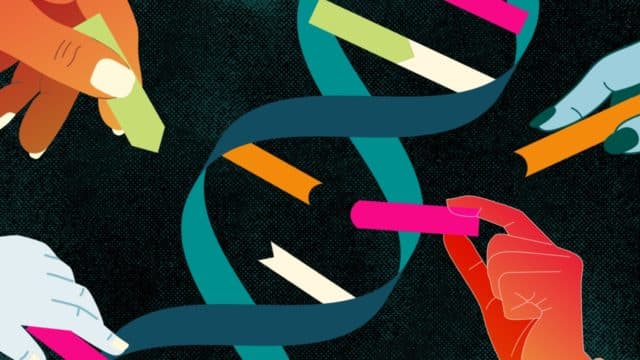
Last month, a team of Chinese scientists reported that they edited the genome of human embryos. This international first has raised widespread alarm and some debate in the scientific community.
The research appeared in the April 18 issue of Protein & Cell. The group first submitted their results to top-ranking journals Nature and Science, but both journals rejected the submission due to ethical concerns. On April 28, an editor at Protein & Cell defended the journal’s decision to publish the study:
In this unusual situation, the editorial decision to publish this study should not be viewed as an endorsement of this practice nor an encouragement of similar attempts, but rather the sounding of an alarm to draw immediate attention to the urgent need to rein in applications of gene-editing technologies, especially in the human germ cells or embryos.
The research group performed gene editing on non-viable embryos, but it is nevertheless troubling to many. The powerful new technology they used, called CRISPR/Cas9, has been used routinely for gene editing in other organisms since 2013, but until now had not been applied to human embryos. The group attempted to correct a faulty form of a gene that causes a severe blood disorder. Results were poor; many embryos in the experiment did not survive, and some of the remaining ones exhibited unexpected mutations.
On April 29, Dr. Francis Collins, Director of the National Institutes of Health (NIH) (and BioLogos founder), released a statement, in which he described the research and outlined the risks:
The concept of altering the human germline in embryos for clinical purposes has been debated over many years from many different perspectives, and has been viewed almost universally as a line that should not be crossed. Advances in technology have given us an elegant new way of carrying out genome editing, but the strong arguments against engaging in this activity remain. These include the serious and unquantifiable safety issues, ethical issues presented by altering the germline in a way that affects the next generation without their consent, and a current lack of compelling medical applications justifying the use of CRISPR/Cas9 in embryos.
NIH, the largest funder of biomedical research in the world, does not support research involving gene editing of human embryos. The Society for Developmental Biology, the main professional society for scientists working in that field, also issued a position statement to voice concern about the work, calling for a “voluntary moratorium by members of the scientific community on all manipulation of pre-implantation human embryos by genome editing.”
How do I, as a Christian and a biologist, think about this development? I’m both troubled and encouraged. I’m troubled because the potential for harm with this new technology is real. It’s good that the Chinese researchers didn’t use viable embryos, but somebody, somewhere, might decide to do so. What if they create a human with some horrible, heritable defect? That would be a grievous event, indeed.
I’m also encouraged. The popular stereotype of scientists as godless atheists who try to push the ethical envelope just isn’t accurate: the scientific community as a whole takes safety and ethical considerations very seriously, as evidenced by the strong reaction to this paper. Important conversations will take place and new safeguards will be implemented.
I’m not a bioethicist, or even a working scientist at present. I hope there are many in both fields who will take up this issue. Life is precious–especially human life, made in the image of God. We, both in the church and in broader society, need to think carefully together about how new technology should be used, even as we give thanks for the fruitfulness of modern science, medicine, and technology.
About the author

Kathryn Applegate
Related resources
If you enjoyed this article, we recommend you check out the following resources: