Jay Butler | The Ministry of Public Health
Dr. Jay Butler discusses public health as a ministry, the science behind the MMR vaccine, and the challenges of trust in medical research
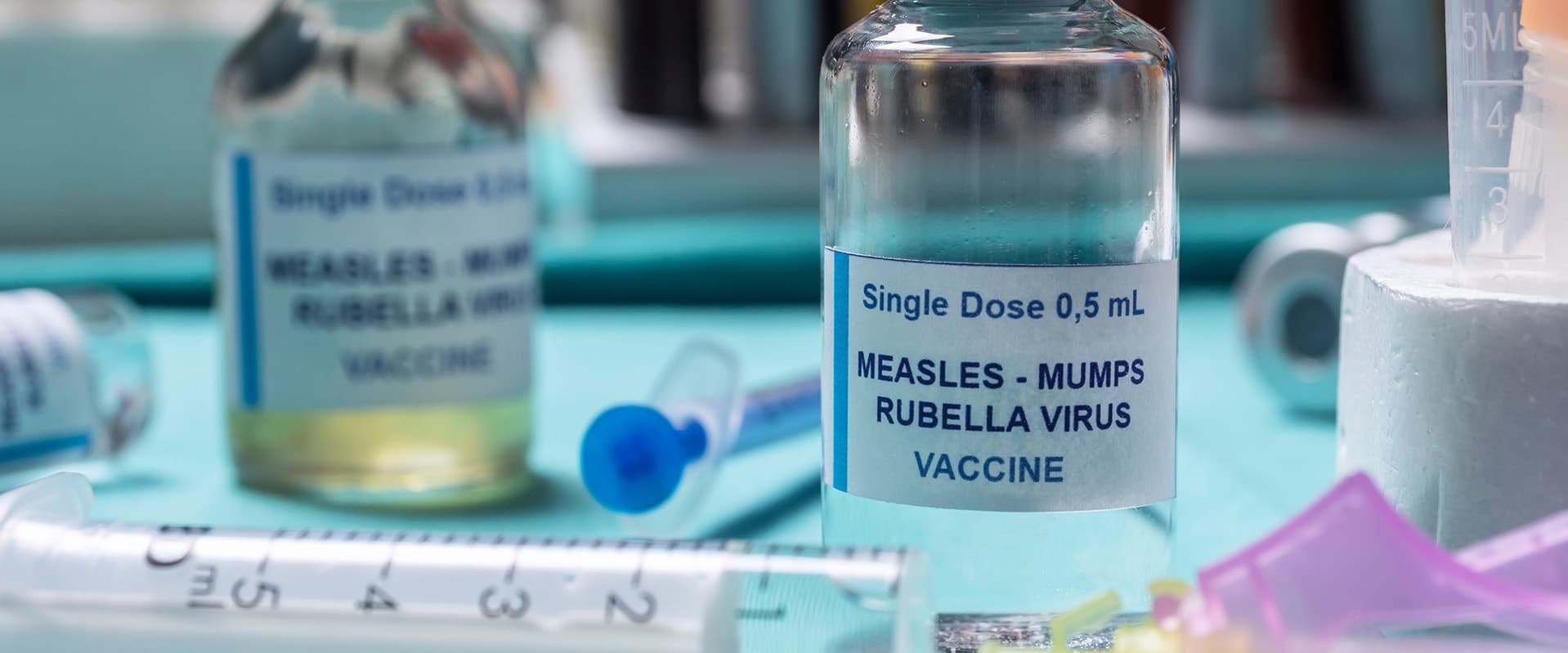
Image used under license from Shutterstock.com
Dr. Jay Butler discusses public health as a ministry, the science behind the MMR vaccine, and the challenges of trust in medical research
Description
Dr. Jay Butler is an infectious disease physician, epidemiologist, and former Deputy Director for Infectious Diseases at the CDC. We had the joy of hosting Dr Butler in the BioLogos offices recently where we shared his perspective on public health as a ministry, discussing his career journey from the CDC to working with Alaska Native communities. He also delves into the history of measles, its impact, and the groundbreaking development of the MMR vaccine, which has saved millions of lives globally. The conversation explores the challenges of public trust in medical research and institutions, especially concerning vaccines, and how science and faith can come together to pursue truth and improve public health outcomes.
Theme song and credits music by Breakmaster Cylinder. Other music in this episode by Dark Blue Studio courtesy of Shutterstock, Inc.
- Originally aired on July 03, 2025
- WithJim Stump
Transcript
Butler:
It was during that time that I really began to see public health as a ministry. It was service to provide health, not just to the patient in front of me, but to improve health for everyone and for me that really fit with Matthew 25 where Jesus says I was sick and you came to me, seeing Christ in individual patients was a big part of medicine to me. But now I came to see the face of Christ in surveillance data.
My name is Jay Butler. I’m an infectious disease physician, epidemiologist and public health practitioner in Anchorage, Alaska, and former Deputy Director for Infectious Diseases at the Centers for Disease Control and Prevention.
Stump:
Welcome to Language of God. I’m Jim Stump.
We first met Jay Butler in the early days of the COVID vaccine. We had put up a statement about the vaccine, celebrating the development and the public health good it could bring about and had it open for signatures, and one of the signatures that popped up one day was from Dr Butler. It turns out he’d been following BioLogos and had been a podcast listener for a while.
We got back in touch with him recently as the national conversation around medical research and especially vaccines has heated up. He was just on the verge of transition from a position at the CDC to one back in his home state of Alaska. Better yet, he was traveling through Grand Rapids, so we were able to have him to the office and talk face to face.
Over Jay’s career in public health, he’s had the chance to see some really amazing scientific achievements—developments that have brought relief to many people who previously would have experienced a great deal of suffering. And he’s always seen the work of medical research as ministry. And so it is with some dismay that he has watched a kind of unraveling in recent years; of the trust people have in this work, and of the institutions themselves, which have worked to deliver healing and life to so many sick and weary people. The day before we recorded this interview was when it was announced that the entire vaccine advisory panel was being let go, and it wasn’t clear then what would happen next. Since recording, entirely new people have been appointed and they’re in the news again now for recommending significant changes to the childhood vaccine schedule. This is worrying lots of experts in the field. Even with such developments, though, Jay is not without some ideas and he’s not without some hope for the future.
Let’s get to the conversation.
Interview Part One
Stump:
Well, Jay Butler, welcome to the podcast.
Butler:
It’s a pleasure to be here. I’m a longtime listener to the podcast, so I’m used to hearing your voice in the EarPod. This is a little strange because it’s like I’m sitting down face-to-face with one of the disembodied voices in my head, so it seems a little weird, but it’s a pleasure to be here, Jim.
Stump:
Well, thank you. It’s very fun to have you here. We’re actually recording in the BioLogos offices this time, which doesn’t happen very often, but you’re in town for a meeting of some sort, and we took advantage of you being here to stop by the office and do this in person. So, this is fun. Well, you have just finished how many years at the CDC?
Butler:
Well, this time, six years.
Stump:
You’ve been there six years.
Butler:
I have altogether probably about 25 years at CDC. I’ve also worked in the State Health Department in Alaska and also spent five years with the Alaska Native Tribal Health Consortium both as a provider and as a part of the executive team.
Stump:
Well, you’re just transitioning back to Alaska now. And we’ll get talking about CDC and vaccines and measles in just a minute. But as always in these conversations, we like to situate them in your own story, so start by giving us a little autobiography, if you would. Where’d you grow up? What was your family like? How’d you get interested in science and medicine?
Butler:
So, I grew up in Greensboro, North Carolina. I was in a family of first generation to go to college, but always was raised that education was important, that it was part of how you could make a difference in the world and move ahead. I didn’t know really what I wanted to do. At one point in my life, I wanted to drive trains, then drive trucks. I think I always liked the idea of operating big things.
Went to college at North Carolina State University initially in the School of Forestry, but took a class in ecology and was just really intrigued by the interaction of in life systems and ultimately changed my major to zoology. What do you do with that other than go work in a zoo? Well, you go to medical school, or to vet school, but I chose medical school and was very fortunate to be able to attend the University of North Carolina in Chapel Hill. I think we know other alumni of that institution. I went really with the idea of being a general surgeon in a rural area or maybe in the mission field. I really didn’t have a vision of being in public health. But what I found, particularly once I was on the wards, was I really did enjoy procedures, but what really inspired me were the tough cases that were usually solved by the cognitive specialists. Given that, and my interest in systems and interactions and ecology, infectious disease became a no-brainer for me. So, this interaction, not only of the host and the parasite, but also climate, vectors, what we now call the social determinants of health, all of this way that things influenced health just fascinated me.
So, at the time, I talked about those interests with some of the faculty members, some of whom said, “Oh, you need to do a rotation at the CDC,” which was advice I completely ignored. I had a vague idea of what they did at CDC was in high school during Legionnaires’ disease and followed all that. But I wanted to be a doctor, not a government, whatever they are at CDC, so I really didn’t think a lot about that. Went on to residency at Vanderbilt University in Nashville. And during my four years there, practically all of my mentors had gone through CDC’s Epidemic Intelligence Service, or EIS program.
Stump:
Sounding like you were destined to make it there eventually, huh?
Butler:
Eventually. It took a while. I like to say I didn’t set my eyes on public health and pursue that goal, I backed into it. And really glad that I did.
So, I eventually did apply to EIS. My mentors had encouraged me to do that. So, it was during that time as an EIS officer that I really began to see public health as a ministry. It was service to provide health, not just to the patient in front of me, but to improve health for everyone. And for me, that really fit with Matthew 25 where Jesus says, “I was sick and you came to me.” Seeing Christ in individual patients was a big part of medicine to me, but now I came to see the face of Christ in surveillance data. There’s an old saying in public health, perhaps you’ve heard, that statistics are people with the tears removed. So, for me, just looking at numbers, somehow since the people who are there as well as the calling to be able to serve God through public health. And to this day, I continue to see public health programs is how we come to Christ to serve Him as well as the least of these.
Stump:
Well, rewind the tape there a little bit then and tell us some of your faith background. Was this part of your family growing up, or where did this impulse come from to see your professional work through those faith lenses?
Butler:
Well, I grew up, of course, in the South going to a United Methodist Church, which interestingly, I learned fairly recently, the reason we went to this particular church actually has an infectious disease story behind it. I snuck up on my parents late in life, but my siblings are at least 10 years older than me, but they were first settling into Greensboro and looking for a church during the polio epidemics in the 1950s. And my mother was looking for a church where the nurseries were relatively small, where there wasn’t exposure to a lot of other children because this was before the time of any polio vaccines. So, that was the church we were still going to when I came along, when I grew up. It gave me some familiarity with concepts of faith and Christianity. I can’t say I really embraced it. It gave me a sense that God existed. I had a vague sense that He might be pissed at us, but it was okay. [laughter] I think I hoped, and I wasn’t much of an academic at that time, but I hoped that I did my best and He would grade on the curve. It would all be fine. But like many people who come to faith, my thinking was refocused by a question, and the critical question came to me at a weekend parachurch organization retreat I went to because there were friends, especially girls, a lot of food.
Stump:
This is teenage years?
Butler:
Yeah, teenage years. I was 16 or 17 at the time. And the question was, do you try to be a Christian? And, well, try. But then the follow on was, well, if someone asks me if I’m married, my wife doesn’t really like it if I say, “I try to be.”
Stump:
“I’m trying to be married.”
Butler:
So, that got me thinking. It really stimulated my curiosity in two ways. First of all, well, what does that mean? And, well, if it means what I think it means, that’s really important. This is just not something that’s off maybe a part of life or how you engage socially, but I need to know, is this true? Because this really is going to restructure how I live my life.
And ultimately, this, again, was a process over several months trying to read as much as I could. Started reading the Bible for the first time, read a lot of C.S. Lewis, and came to the conclusion that I think what is taught in Christianity is true and what is in the Bible is true. So, that’s ultimately what pulled me in, and I think that then relates to my interest in science also because when I—
Stump:
Yeah, I was hoping we’d unpack that a little.
Butler:
Yeah, so science was also a way to understand what’s true in the world, and that was a much longer process than a few months in terms of education and understanding concepts such as research and what’s good research, what’s good science and bad science, to understand that the scientific process is a way we move towards a better understanding of what is true.
Stump:
Wow, that’s fascinating. And it sounds like in your career then you really saw these coming together, and I want to come back to that point maybe toward the end of our conversation, but let’s keep going here now in your story of getting involved in public health and infectious disease and your role at the CDC then. What was the specific work that you had been engaged in there?
Butler:
So, I joined the Respiratory Diseases branch at CDC as a preventive medicine resident. And that was a great year. CDC was like the home I never knew existed, and I was like a kid in the candy shop. There were just so many cool lab tools, amazing colleagues. The subject matter experts of global renown were there. People who had studied sometimes just one or two pathogens their entire life and knew everything that there was to know, and there was just so much to learn from these people.
So, I was able to stay on as a staff member at CDC, meanwhile also completing a clinical ID fellowship at Emory University, which was also a great time. So, this was, of course, during HIV. It was a really cool time to be in infectious diseases because the first antiretroviral drugs were becoming available. Just over the course of a three-year clinical fellowship took us from just treating opportunistic infections and providing end-of-life care, which we did a lot of, sadly, to being able to honestly talk with patients about being able to control the infection. And when we look at where we are now, I think that shows the power of science because people infected with HIV have life expectancies and quality of life that’s not very different from people who are not infected with HIV.
Stump:
That’s a huge change from, when was this? The eighties or nineties?
Butler:
Yes. I remember actually the first HIV patient that I interacted with, and this gentleman was basically admitted to a room that was kept dark so he could die peacefully and his friends could come and go. We knew almost nothing about how to manage the disease. So, that was another one of those things that was really inspirational in terms of seeing what science could do to improve the lot of mankind.
So, after clinical training, my family and I were settled into life in Atlanta, thought we would always be there, but one day, that was January of 1998, I got a call from the boss’s boss’s boss’s secretary saying, “He’d like to talk to you.” And I thought, oh, what have I done now? But it was actually because there was a position that CDC had in Alaska, and so they were looking for someone to go up. This was the position of director of the CDC’s Arctic Investigations Program. It was a group focused on particularly Native American health issues. And I had been involved with some outbreak response in the Navajo Nation before, so I had some familiarity with Indian country down in the lower 48. Also, they had done a lot of early work around vaccine impact. Haemophilus influenza type B had a devastating impact in Alaska, particularly in Western Alaska where one in 50 children would not make it to their fifth birthday without experiencing Hib meningitis.
I still remember the first time I visited Kotzebue, Alaska in late 1998. Visited the hospital. There were two patients on the pediatrics ward, both 14-year-olds, both had severe impact of post-infectious sequelae of having had haemophilus influenza meningitis when they were infants. So, it was a group that excited me because they were also doing some exciting work around vaccines. I was very interested in the pneumococcal vaccines, which we still didn’t have effective vaccines for children at that time. And I, had as a resident, not only treated kids with haemophilus meningitis, but also with pneumococcal meningitis. So, that was exciting.
My wife and I visited in February. We actually were very favorably impressed. Maybe that should have warned us that we were going to either put down roots or get frozen to the ground. But bottom of the end of the story is we loaded up the truck and a van and five kids, three dogs, two cats, four or five rabbits, we made the 5,000-mile drive—
Stump:
Drove to Alaska.
Butler:
—to Anchorage. And my family is still there. Four of my five kids are in Anchorage. All of my grandkids are there. The one who’s not in Anchorage is in Seattle. So, I really see the Pacific Northwest as my home now.
I was with CDC for seven years at Arctic Investigations Program. Have had the privilege to be able to move on but stay in Alaska, serve as the state epidemiologist, twice as the state health official under two governors at very different extremes of the political spectrum, at least by Alaska’s standards. And also, as I mentioned, worked for five years in the tribal health system, both as a clinical provider, a health researcher, and also on the executive team there.
In 2019, I committed to maybe the ultimate long-term commute, accepting the position at CDC as deputy director for infectious diseases. And of course, 2019, maybe timing’s not my strong suit.
Stump:
Right before a pandemic.
Butler:
Yep. I walked into a buzzsaw, and, of course, things pretty quickly got crazy and weird. But that’s how I wound up here today.
Stump:
Yeah, for sure. So, the CDC is one of those health agencies, government health agencies, that we hear a little bit more about, but many of us still are like, what exactly do they do there? And in further parts of our conversation where we get asking about current climate for such things, that might become a little bit more, but give us just broad overview for people who are generally science-minded but don’t really know what it is that happens at the CDC or especially what a deputy director of infectious diseases does. What’s the work that’s going on behind the scenes for all of us that actually affects our lives and our health outcomes?
Butler:
Well, I find it’s probably useful, particularly for people who are in academic research, to think of CDC as analogous to NIH. NIH is focused on clinical practice of medicine, the individual patient. CDC is focused on the practice of public health and populations of people and how we best manage the population of the health of entire populations. So, the work comes down to a number of different things. The real public health authority in this country lies at the state or local level.
So, CDC does not have a big regulatory role like, say, FDA might have. There’s a few exceptions to that, but not many. So, CDC plays the role of being the research agency to generate new knowledge that is useful to the management of population health. This would include evaluation of vaccines that may have been initially studied in NIH and approved by FDA, but then once they’re on the market, assessing the effectiveness and safety of those vaccines.
Stump:
So, CDC is primarily providing information that the more the state or local levels act on. Is that a fair way?
Butler:
I think that’s a fair statement. And certainly in some situations, CDC is very involved in national health campaigns and in communications. And we can get into more detail on this later, but we know that who people trust the most is their individual provider and to even some degree the local or state health official that they may know a little more personally than, say, some federal official that they see on TV.
Stump:
But it’s those individual providers who are probably basing their decisions on the information that comes out of CDC.
Butler:
That’s exactly right. And of course, part of the way that CDC generates new knowledge is also in the context of outbreak responses. States and counties have a lot of capacity to do that, but sometimes it exceeds their capacity, and that’s where CDC is sometimes called in to be able to assist and ideally get to the bottom because, getting back to my story of being the kid in the candy shop, there is incredible expertise at CDC as well as the laboratory capacity.
Stump:
Yeah, good. Well, the reason I sent you an email a few weeks ago is because the measles has been in the news here again recently. And measles is one of the infectious diseases that you, I think, know something about. So, let’s talk about measles. Start with some of the basics. What is measles? How does someone acquire it? What is this disease?
Butler:
Yeah, so let’s start with the virus itself. Compared to some of the other headline viruses like Ebola or Nipah virus or certainly SARS-CoV-2. Measles is a comparatively old virus. Unlike when we’re talking about mammalian species, when I say old, I’m talking about millennia, not millions of years. There’s writing in the ninth century from Persia describing a disease that really matches what we today know as measles, as an illness that’s manifest by the three Cs, to use medical jargon, cough, coryza, meaning runny nose, and conjunctivitis, red eyes, together with a high fever, which commonly spikes even over 104 degrees Fahrenheit, or 40 centigrade, and then a characteristic rash that usually appears three to five days into the illness. And we’ll get back to the significance of that later, I’m quite sure.
There’s reports of similar illnesses as early as about the fourth century BCE. By the mid 18th century, it was suspected this disease was caused by an infectious agent. There was a lot of miasma theory, all kinds of things, but this was one of the earliest ones that was recognized that a person could infect a lot of other people when they developed the symptoms. It’s thought that where the virus came from is that it made that classic jump from an animal to a human back some 2,500 years ago and may have actually be a descendant of an early type of rinderpest. It really liked its new host species apparently. It’s really well adapted to infecting only humans, and there’s no human reservoir. So, if anybody’s keeping a score at home, they’ll note the description so far is beginning to check many of the boxes for a disease that might be suitable for eradication. But I’m getting ahead of myself, because there’s problems.
Some of the challenges to measles control first is that period of infectiousness starting three or four days before the rash appears, so the symptoms may look just like a bad cold. And that is a major issue, is it is so infectious for such a long period prior to the onset of symptoms that usually it will help a clinician who’s seen measles recognize it as such. Other challenge we have right now is oftentimes many clinicians don’t recognize it as measles.
I actually like to tell the story of one of my first calls as an EIS officer was from a provider who, in the midst of a measles epidemic in Milwaukee, called to say, “I just wanted to talk to you to confirm that giving a patient IVIG can cause a false positive IgM test for measles.” And I said, “No, it doesn’t.”
Stump:
Uh-oh.
Butler:
And he said, “Okay, then I’m calling to report a case of measles that I thought was Kawasaki disease.” So, it’s one of the challenges in disease eradication is when you haven’t seen something for a long time, it’s a lot harder to recognize. That’s true not only for the public, but also for clinicians.
Stump:
Yeah, so clinicians these days aren’t used to seeing it at the—
Butler:
That’s right.
Stump:
So recognizing it is more of a challenge. I assume it spreads airborne?
Butler:
That’s right.
Stump:
People sneezing or coughing, that spreads it in…
Butler:
Yeah, so you’re really touching on two of the great challenges in measles control. First of all, it is the most infectious virus among humans. There’s a term that I was amazed to see it in the lay media so much during the COVID pandemic, the R naught.
Stump:
R?
Butler:
Yes.
Stump:
The R naught.
Butler:
Which is the value that represents the number of non-immune persons who will become infected if exposed to a single infectious person in the community. That value for measles is estimated to be anywhere from 12 to 18.
Stump:
And for COVID, it was more like one or two or something, if I remember right.
Butler:
It was much, much lower, yes. Now, COVID is tricky because, like SARS, we also had what are still poorly characterized super-spreader events, where it seemed like one person was extremely efficient, yet if we saw the kind of efficiency that we see with measles, I don’t think we would’ve had months between the first identification in China and when we saw it around the globe.
But that’s a challenge, and it is very easily spread. There’s been a lot of controversy since COVID about the various ways that viruses can be transmitted through the air. But measles is a classic example of a virus that has aerosol spread. It can float in the air and remain infectious. There’s a classic paper from the 1980s in JAMA by Pat Remington describing transmission to three susceptible children in a physician’s exam room with recirculated ventilation where a coughing child with measles had been more than an hour earlier.
Stump:
And it was still there.
Butler:
Yes. And there’s been much more elegant studies, but Pat’s study I think really began to help all of us realize that this is not just an infectious disease challenge, but an industrial hygiene challenge to be able to address how measles is spread.
Stump:
Okay, so do you have at the tip of your tongue here some of the statistics about how many people were getting measles and how many people were dying from measles, play that forward a little bit, and how the landscape has changed because of the development of a vaccine?
Butler:
Yeah, so when we get into the 20th century, early on, nearly 6,000 deaths due to measles were reported annually in the US.
Stump:
In the US.
Butler:
Not globally, but in the US.
Now, by the mid 20th century, that number had come down to about 500 but was getting stuck there. It seemed to have bottomed out. Why had it dropped so much? It most likely had to do with improved living conditions as well as the role of better nutrition, but it didn’t get a lot lower. So, that’s where interest in a vaccine began to arise.
So, getting back to the fifties again and the isolation of the virus, they worked on passing the virus, going through cell culture to achieve attenuation. That’s where you basically create a virus replicating with the goal of an attenuated virus that will elicit the lifelong immunity the wild-type measles virus would make, but without causing the disease.
Stump:
But doesn’t give you a disease.
Butler:
Yes.
Stump:
That’s the goal.
Butler:
And it took a number of years, but Enders lab was successful in coming up with a vaccine strain known as Edmonston B, isolated in 1958. It’s named for David Edmonston, who was 12, 13 years old. He was the source patient of that original wild-type virus. Side note, what happens to these people? Mr. Edmonston went on, in the 1960s he was actually a member of the Student Nonviolent Coordinating Committee and was a civil rights advocate as a student down in Mississippi. Anyway, side note there.
So, after five years of evaluation, and note how long it took to get vaccines to the market at the time, a live virus vaccine was approved in 1963. Maurice Hilleman, a absolute giant in virology and vaccinology, further attenuated the Edmonston B strain to make it even less reactogenic. That is safer.
Stump:
Because the first version with some people might still get—
Butler:
It caused some rash. It caused fever, certainly much milder than actual measles, but we could improve it. And he developed the strain that still bears Edmonston’s name, but it’s called Edmonston-Enders virus, and it’s been used in vaccines in the United States since 1968. Hilleman also developed the highly attenuated Jeryl Lynn strain of mumps. He named that for his daughter from whom he isolated the wild-type mumps virus. So, combining these together—
Stump:
There’s two of the Ms. We still have an R to get into there.
Butler:
We have an R, which is rubella, also known as German measles, a much milder infection, but one that when it occurs in pregnant women can be absolutely devastating in terms of birth defects, including deafness, heart malformations. So, also a disease that we want to be able to prevent.
Stump:
Our new president, Christine Torjesen, told me just today that she had German measles when she was a kid.
Butler:
I believe that I did also. I still received MMR a number of times for various reasons, but I believe I also had rubella when I was a child. Had mumps also. I think that’s an important take-home is the majority of people who have measles, mumps, or rubella do survive, do well, but the impact is still unacceptable in terms of the number of children who die, the number of children who are hospitalized.
When we look back to the fifties, we still had three to four million children who had severe complications and oftentimes were hospitalized as well. They oftentimes went on and did very well, such as David Edmonston, but he was hospitalized because of the severity of his illness.
Stump:
And I assume worldwide it’s a very different story in terms of how many people were dying as a result of these diseases that could have been prevented.
Butler:
Yeah, that’s absolutely right. And it continues to have a global impact that’s significant, and we can talk about what role that plays in terms of the current situation in North America. But I think there’s really a landmark study that suggested between 1974 and 2004, 154 million lives were saved globally due to vaccination, and 94 million were attributable to the MMR vaccine.
Stump:
94 million people’s lives were saved because of this MMR vaccine.
Butler:
Right, which basically has been in use now for half a century. So, this is not so much a cutting-edge technology. The main update has been the option of the addition of varicella, or the chickenpox vaccine, in 2005, creating a vaccine we call MMRV. But some people get that, some people get MMR, some people get separate immunization for varicella. It really depends. There’s options.
[musical interlude]
Interview Part Two
Stump:
All right, so this sounds like a great success story of vaccines. It appears, though, as though we’re starting as a culture to turn the other way from some of this, measles misinformation in particular. Maybe start by, what does the science really say about the efficacy and safety of the MMR vaccine?
Butler:
Yeah, so we have literally now decades of experience with MMR and, yes, it can cause a rash after vaccination. It is a live virus vaccine, so we don’t recommend it for pregnant women, for instance. It can cause a low-grade fever, but it’s extremely safe. It’s also very effective, and I think that’s where there’s been some misinformation recently as well.
There were epidemics of measles in 1989 through 1991. That’s where I learned a lot about measles around the outbreak that occurred in Milwaukee. At that time, between ’89 and ’91, there were over 55,000 cases in the United States with 123 deaths. Again, emphasizing that this—
Stump:
These were people who were vaccinated, or?
Butler:
These were people not vaccinated for the most part.
Stump:
These were people who chose not.
Butler:
But there were two things that helped drive that epidemic that occurred, really, in multiple cities around the country. First of all, a single dose of MMR provides protection just over 90% in those who are vaccinated. That’s real good.
Stump:
That’s pretty high. That’s pretty high for a vaccine.
Butler:
It’s in my dreams that we have that kind of efficacy for, say, influenza vaccine. When the first controlled trials of COVID vaccine came out, I was pinching myself. I was hoping that maybe it would be as good as our seasonal flu vaccines, but it was—
Stump:
Which are what? 50%?
Butler:
50% on a good year. Well, a really good year, 70%. Other years, even lower. I still get my flu vaccine every year, but I would love to see better flu vaccines in the future.
But the problem, we get back to the virus itself, how infectious it is, it makes it such that even a 90%, 92%, 93% effectiveness is not adequate. We really need higher levels of protection to stop transmission. It’s been modeled and estimated that we need about 97% of the population to be immune to the virus to be able to stop transmission of measles altogether.
Stump:
And what are those numbers in terms of the percentage of people who are vaccinated for MMR?
Butler:
Well, let’s get to that in a minute.
Stump:
All right.
Butler:
Let’s talk a little bit about what happened next and why do we use two doses now. So, this was then a process that went to a question that went through the CDC’s Advisory Committee on Immunization Practices, or ACIP, something that’s been in the news quite a bit lately, and we can talk about that more later.
So, they spent quite a bit of time reviewing the data and determined that, based on some studies, that you could get that protective efficacy up over about 97% with a second dose of vaccine, probably ideally at school entry. This actually led to the schedule that we currently have with the first dose around age 15 to 18 months, the second dose prior to school entry.
In those epidemics though, some more than 30 years or 35 years ago now, there was a second issue, and that was access to vaccine. So, while there were people who were vaccinated that had disease, the vast majority were unvaccinated, and oftentimes these were people in the inner city that had multiple barriers to getting the vaccine, physical, social, financial. This was the reason why. Many of them even had seen a provider in the months prior to the onset of measles, but the vaccine wasn’t given. Maybe because the provider didn’t think of it. More likely, the cost was relatively low, but many of these people had limited income. I know from just anecdotal reports, sometimes they were told, “Well, go down to the health department and maybe you can get it there,” if they had limited income. And that’s yet another barrier. Say if you’re a single mom with multiple kids, it involves another bus ride. Oftentimes those first doses weren’t administered. But that ultimately led to creation of Vaccine for Children, something we call VFC, that was instituted in 1994. And that really removed cost as a barrier to access to vaccines.
So, we were getting into the coverage rates now.
Stump:
Yeah, because now there’s a different kind of barrier to vaccine that we might call ideological as opposed to just economic or some of these other reasons that people didn’t get vaccinated then. It’s just that they believed that it might cause autism, that there are all of these other… How does this arise? Where does that sort of misinformation come from culturally for us?
Butler:
Yeah, so let’s go back to a little more history. 1998, a physician, Andrew Wakefield, a surgeon in Great Britain, published a case series in the Lancet in which he suggested that the MMR vaccine might cause autism. In his case series, the children had experienced some neurodevelopmental issues beginning around H2, and most of them also had some intestinal abnormalities including lymphoid hyperplasia.
Now, Dr. Wakefield, a surgeon by training, had previously proposed that MMR caused Crohn’s disease, a form of inflammatory bowel disease. Hints his interest in the bowel. Most of the parents had actually associated the receipt of MMR some three to six months earlier with development of autism. So, this was a rumor that was already circulating. Despite the small sample size, it was 12 kids, uncontrolled design, I’ll say some overconfidence in the nature of the conclusions.
When I read the paper, I have to admit, I thought this merits further investigation. I interpreted it as nothing more than a hypothesis generating observational report. In fact, in the paper’s discussion, I actually pulled the paper back up and re-read it recently, the authors have a one-sentence paragraph where they say the report doesn’t prove an association between MMR and the findings in the children, which, knowing what I know now, I suspect was either required by the Lancet editors or a peer reviewer to soften some of the conclusions that were posited in the discussion.
But hypothesis generating report is not how it was perceived in the media or by the public. There were further investigations. So, there were people thinking, interpreting it the way I did, and the results were basically not able to be replicated. And other types of studies were done to look at this posited association that did not confirm that. In fact, using the normal way we evaluate scientific rigor, I would say it’s even reasonable to say that Dr. Wakefield’s findings were refuted. But you know the old saying, I don’t know who actually said it, a lie will go around the world while the truth is still pulling on its boots. We could do a 21st century version of that. A lie will be retweeted 20,000 times while truth is still trying to find a place to plug in its phone.
But the impact was quite devastating. MMR uptake fell, particularly in Great Britain. There were questions about the study, and it was an investigative journalist, Brian Deer, who reported evidence of fabrication of the data as well as undisclosed conflicts of interest. When you publish in most literature, particularly in the medical literature, you’re required to disclose any financial or potential financial conflicts of interest. Dr. Wakefield had worked for some legal firms that were involved in suits against the pharmaceutical industry, vaccine manufacturers, and those were not disclosed.
Ultimately, Lancet retracted the paper and Dr. Wakefield even lost his license to practice medicine in England. He was asked actually to replicate his findings and he refused to do so, but he certainly had created a following. And they to this day hail him as basically a prophet who was martyred by the medical establishment. I can’t say for certain what motivates Dr. Wakefield or his followers, although I do think we can learn a lot from Dr. Wakefield and the people who believe in him when they say he treats them with dignity and respect. I heard one person say, “He hears us.” In science, we think that just presenting the data will present people, and that’s not how it works in health communications in reality.
Stump:
Is it too strong of language to say that this was a hoax that was being perpetuated, or were they just honest mistakes that happen sometimes in the research process?
Butler:
Well, that’s a good question. Where did that line of thought run off the tracks? But certainly if the evidence of fabrication of data are true, and at least one of the parents of one of the children involved has affirmed that, as well as the ethical failure to disclose conflicts of interest that lead to financial gain, that’s deeply troubling. We’d be speculating whether or not the initial intent was to basically make up a hoax.
Stump:
Regardless, it’s had an impact and has gotten into the air that we breathe, if you can use that kind of metaphor for infectious diseases.
Butler:
Oh, yes, we can. Misinformation is infectious, and there’s an epidemiology to that.
Stump:
Oh, where’s the vaccine for that then? What do we do about that? How do we try to correct the record? You already mentioned that just citing statistics doesn’t have the same kind of effect that even stories do, so I’ve been wondering a little bit about this because there are some risks with vaccines. And so I can tell you, I personally have a cousin that had a bad reaction to the COVID vaccine. There’s somebody in the BioLogos network, they’re in Great Britain, and whose daughter had a life-altering effect to an H1N1 vaccine. Those things happen, and those are the stories that stick with us more than if I told a story of, “Oh, I know someone who got vaccinated and then they didn’t get a disease.” That doesn’t stick with us quite as well, so how do we counteract that? How do we counteract those really powerful stories with the truth that the statistics are telling us about what we ought to do? Any wisdom for us in those?
Butler:
Yeah. Well, I think you’re also getting into that question of where we are today because when we go back 30, 35 years and some of the drivers to vaccination or our current practices for testing and treating group B streptococcal infections in women to be able to prevent neonatal sepsis, these were actually driven by the stories of the bad outcomes and the parents who talked about the devastating impact of haemophilus meningitis or a child who died of group B streptococcal sepsis. We begin to forget those stories. It always was interesting to me during the 2009 H1N1 pandemic that it was the towns that were most being impacted by the virus was where vaccine demand was the greatest. The disease itself, the virus itself was better than any of the spokespersons in favor of getting the vaccine.
So, I think for individuals deciding whether or not to receive a vaccine, as well as their provider, it comes down to a risk benefit ratio analysis. That is something that also goes into deciding what vaccines are available, what is in the vaccine information statement that everybody gets when they receive a vaccine. The idea is that everyone can make an informed decision as much as possible. I think one of the challenges right now is that we have begun to question that balance and whether or not it’s fair. Do we overemphasize the benefits and underemphasize the adverse events? And that’s a discussion that I’m sure that is going to go on.
And I think every time you get a vaccine, usually you’re advised in terms of what you might expect. And I have to confess, I haven’t gotten my second dose of the shingles vaccine yet because, I usually don’t have any issues with a vaccine, but that was one that I worked from home that day and I’ve just still not quite gotten up, decided when I want to spend a day at home feeling lousy. But I-
Stump:
Even though you know the statistics of how susceptible you might be to getting the actual disease.
Butler:
I know the statistics and I’ve seen myself how bad shingles could be. Recently had a colleague with ophthalmic shingles, which can be a blinding condition. Fortunately, was diagnosed quickly and received appropriate antiviral treatment, someone who was too young to have received the vaccine. Now that I’ve said that, I’m going to have to go get my second dose.
Stump:
All right.
Butler:
Maybe we could talk a little bit about some of the challenges in infectious disease virology and communications.
Stump:
What are those challenges?
Butler:
Yeah…
Stump:
So I mean, stories versus statistics is one of those that I think we’re just hardwired to resonate more with stories than we are statistics, but what are some of the other challenges for organizations like the CDC or other public health to communicate the truth, to communicate this information to the public?
Butler:
Well, I think there’s three challenges that come to mind. The first is the challenge of the unseen, which I think is true all across microbiology and immunology. We’re talking about very small infectious agents. We cannot see viruses unaided. We can’t see the antibodies produced by those viruses or the vaccines designed to protect us against them without the help of technology. Most people have not experienced with their five senses what we’re talking about when we talk about infections or vaccines, although they may have experienced the effects when they or a loved one falls ill to an infection.
I contrast that with an experience I had. This was when I was commissioner of health and social services in Alaska. I’ll be very precise. November 30th, 2018, 8:32 AM, I was on a conference call up on the ninth floor of the Frontier building in Anchorage, and all of a sudden everything started to rock and roll. I was talking on the phone and felt the building swaying, and pretty soon it started to really move and the coffee in my cup sloshed out. It was a 7.2 earthquake centered only 10 miles away, 20 miles down. It was the beginning of a whole month of aftershocks. At home, we used to play “Name That Magnitude” every time the house shook. We’d call out a number and then use the USGS website to see who won the game. I did have a little edge in that game because I noticed that a bell on our Christmas tree would ring if it were more than a 4.8 on the Richter scale.
But through all that, I don’t recall seeing a single online conspiracy theory that the government had set off a nuclear device under Cook Inlet, and that was just to justify rebuilding parts of the Glenn Highway that slid down the mountainside between Anchorage and Palmer. We all experienced the same thing at the same time, and we all knew what it was, living in an area that’s very seismically active. People came together and they helped one another. That shared subjective experience I think is much more variable with an infectious agent.
When we think about COVID, for instance, the news from New York was terrifying. Things locked down all over the country. That may have been too early in some parts of the country. The virus didn’t really reach the South or the Midwest outside of the urban areas until several months later. And by then, people were tired of being at home and they were tired of hearing about the virus. And that was really an issue. I think in the, as I mentioned earlier, during the pandemic in 2009, it was wherever disease was high is where the demand for vaccine would be the highest.
There’s a second factor that I’ll call the idolatry of the edge, like that bell on the Christmas tree. People want the inside info or to be in on the secret that gives them an advantage. People also don’t like uncertainty, and so if there’s an explanation that’s out there that sounds very certain, they’ll sometimes grab onto it. And we see this every day from investor advice to health tips. At least once a day I get an email with a subject line like What Your Doctor Doesn’t Want You to Know or The Secret to Aging Well, and all of these promise advantage gained through information that only this purveyor can provide to you. Sometimes it’s built on a conspiracy theory. Sometimes it’s selling a product, whether it’s a nutritional supplement or ivermectin or a patent medicine.
People are just really uncomfortable with the ambiguity and uncertainty, and it takes time in the scientific process to answer questions. And I do think that’s where we oftentimes fail in public health because we want to address that desire for certainty, but we don’t really know, and particularly with a new agent, we continue to learn. That is how we process science, how we move towards a better understanding of what is true.
I think the antidote to the idolatry of the edge is curiosity, being able to ask ourselves, what’s the motive behind what’s being claimed? And what’s the motive of the messenger who’s making this claim? And I have to admit, it’s been puzzling and a little discouraging that sometimes people of faith seem more susceptible to this idolatry. Last time I checked, gullibility was not a gift of the Holy Spirit, although interestingly, discernment, knowledge, and wisdom are.
And then there’s a third phenomenon also.
Stump:
Just to recap, we’re talking about challenges of communicating.
Butler:
Yes, with infectious diseases and vaccines. So, that third challenge is the concept of population immunity and the concept of doing something that, when we balance risks and benefits, we oftentimes don’t think about the benefits to those around us. For certain vaccines, if you’re immunocompromised, the vaccination that I receive may actually benefit you more than me. That kind of motivation seems to have fallen out of favor in recent years. But again, I go back to Matthew 25, and I don’t think I’m blaspheming to apply it to life in the 21st century and say, “When did I see you immunocompromised and not try to protect your health?”
Stump:
Yeah, that’s powerful. At BioLogos here, we’ve been advancing this new initiative we’ve called Science is Good that has lots of elements to it, but we’ve used that same parable from Matthew 25 of the least of these and what you have done.
I want to ask you to comment on that a little bit more, but one more thing I want to bring up before we close on a note of faith again here. As we’re recording this, the big public health story has been that the Secretary of Health and Human Services has fired all 17 members of the Advisory Committee on Immunization Practices. You mentioned the ACIP a little bit ago. This is a panel at the CDC. In the Secretary’s words, it was he did this in order to restore public trust. Can you maybe first explain what it is that this committee does and then whether dismantling it restores public trust?
Butler:
Yeah, so the ACIP is really a national asset and has been the envy of the world for a number of years. It’s a panel of persons that are from outside of government, subject matter experts in their field who are carefully screened to be able to determine if there are financial conflicts of interest or political biases that might influence their decision-making. Some of them, because they are subject matter experts, have received funding or their institutions have received funding to be able to conduct research. That kind of thing has to be disclosed, and on occasion that actually will lead to a member to secund themselves away from participating in a vote. So, it’s a very functional, very ethically based, very science-based group that decides the vaccine practice and policy for the United States. And that has huge ramifications in terms of just thinking back to when I would be in an emergency room, I would oftentimes find the ACIP guidelines tacked to the bulletin board, things like particularly tetanus prophylaxis.
Stump:
This is when you should administer these.
Butler:
Exactly.
Stump:
They’re the ones determining that.
Butler:
Right, and then third-party payers depend on that also quite a bit, determining what vaccines they’ll reimburse.
It also has effects in terms of state and local-level vaccine policy. Rather than rewriting regulation, every time there’s a new vaccine or a vaccine is taken off the market, oftentimes they are based on what the ACIP says. I think the concern right now is whether or not going forward we can trust the ACIP, and that is a crisis that I think around the world people are concerned about. I appreciate the goal of trying to improve. I’m not sure the confidence in vaccines is so low that I would ever use the word restore, but we do need to improve confidence in vaccines, but this is not the way to do it. I think the vast majority of providers are now going to question what ACIP says. I don’t know how that will trickle down to patients, but I think many of us are looking around saying, “Well, who can we trust now if the ACIP is not the voice that we can trust?”
Stump:
I’ve appreciated how throughout this time, you’ve woven your own faith perspective. It’s obvious that this work that you’ve been engaged in is tightly connected to you as a person of faith, even though you’re been a government employee, where I assume there are rules against public expression or proselytization or something like that. But you’ve woven your faith perspective through this, and want to thank you for that.
And I wonder if you have any advice for our communities of faith of perhaps how we ought to be feeling and responding to stories like this that are coming out and what’s happening to medical science, particularly as you’ve connected it to Matthew 25 and the people who are going to suffer most as a result of some of the decisions are being made. So, how we might feel is one thing, but then is there anything we can do, communities of faith in particular? And even if it’s not just call your congressman or somehow have an influence on national politics, is there something we can do for the health outcomes of the people in our communities? Are there ways that churches can actually be involved in this?
Butler:
Yeah, so getting back to that issue of the idolatry of the edge, antidote is curiosity. Keep asking questions. I think one of the things that I find very discouraging in evangelical churches in the United States right now is having discussion, asking questions is oftentimes discouraged. And I hear that from members of these churches. So, that’s not just me saying that. I am hearing that from people. There’s lots of, I think, bright spots in terms of the opportunities and what I see happening.
Stump:
Share some of those with us. We need them.
Butler:
Well, particularly among predominantly Black churches in the United States—a big shout-out to Shiloh Missionary Baptist back in Anchorage—they’ve invited me several times to meet with their men’s group to talk about health issues of concern to Black men. We’ve also seen that in other types of faiths. In 2009, we were able to work with Imams about addressing the concern about whether or not there were pork products in the H1N1 vaccine, which was a problem for Muslims as well as Orthodox Jews. So, there are those bright spots that are out there. But I have to admit, they are not as common as I would like, particularly when we talk about what we learn from Matthew 25 as well as other parts of the Bible where we’re oftentimes asking, “And who is my neighbor?” It’s a big group of people. It’s not just the people sitting next to you in the pew.
I just gave a address at the Council of State and Territorial Epidemiologists meeting, which is why I’m here in beautiful Grand Rapids, and I was talking about partnerships in public health and talked about working with prisons and jails, working with housing agencies and service providers for persons experiencing homelessness. Talked about organizations ranging all the way from organizers for gay pride events to NASCAR. Talked about these partnerships where we could come together for discussion as well as provision of services. Actually, when I first developed the outline for that talk, I wanted to include the faith community, and I found I really didn’t have enough material to work with right now, that too often, because vaccines have become politicized, unfortunately the church has become politicized, that’s been much harder. So, maybe going beyond just asking questions, ask yourself what are you hearing from the pulpit? Are you being encouraged to follow Christ? Are you being encouraged to follow something else?
Stump:
Wow, thanks for that. It’s been a real pleasure to talk to you here, Jay, and discouraging at some of what’s going on right now and understanding that from your perspective, for sure. Also, reassuring to know that there are people like you who have been involved in this work. And so I just want to thank you for the work that you’ve done over these years and for the positive influence you have had on public health outcomes, for sure. And thank you so much for stopping by the office and talking to us.
Butler:
Well, thank you, Jim. It’s been a pleasure. And I hate to end on a down note, but there’s a lot of things right now that are of concern that we can’t just stick our heads in the sand. We have to talk about what’s going on. The church has had, throughout its history, times when we’ve been misled, and we have to be very careful that this is not another one of those times.
Credits
Language of God is produced by BioLogos. BioLogos is supported by individual donors and listeners like you. If you’d like to help keep this conversation going on the podcast and elsewhere you can find ways to contribute at biologos.org. You’ll find lots of other great resources on science and faith there as well.
Language of God is produced and mixed by Colin Hoogerwerf. That’s me. Our theme song is by Breakmaster Cylinder. BioLogos offices are located in Grand Rapids, Michigan in the Grand River watershed. Thanks for listening.
This podcast episode was created as a part of our Science is Good initiative. You can find our more about this campaign by visiting the Science is Good dashboard.
Featured guest