The Beauty of Climate Science in a Broken World
Earth is in a climate crisis. Rising sea levels, heat waves, and floods can easily lead to despair, but this climate scientist finds reasons for hope.

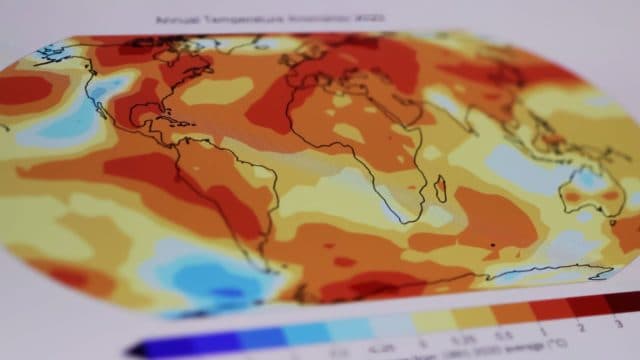
As a climate scientist, I am confronted by the brokenness of a world ravaged by climate change regularly. I cannot escape what the data are saying, and the evidence that abounds. Rising sea levels are threatening communities. Disrupted rainfall patterns are driving floods and drought. Extreme heat waves are killing the vulnerable. And as the world continues to warm, I know that worse is coming.
Amidst this overwhelming darkness, it can be easy for me to get discouraged and lose hope. And yet, as a climate scientist and Christian, I must keep going with the work God has called me to do. I must find ways to remain positive about my research and avoid succumbing to despair and eco-anxiety.
Appreciating the beauty of the earth is one way that has been effective at curbing my despairing and anxious thoughts. It sounds simple, almost too simple. Yet, it is important and necessary, in our increasingly bleak environmental crisis. Appreciating the earth’s beauty does not mean disregarding its brokenness. For me, appreciating the earth’s beauty helps me better recognize and understand the brokenness for what it is. It also gives me more reasons to hope, rather than despair.
For me, appreciating the earth’s beauty helps me better recognize and understand the brokenness for what it is. It also gives me more reasons to hope, rather than despair.
Appreciating Beauty
I find it helpful to appreciate the beauty of the earth through observation and experience. Gazing at wandering clouds that float high over valleys and hills can be enchanting. Smelling flowers or watching them dance in the breeze can be grounding. Listening to rustling leaves, rippling waves, and singing birds reminds me of the Creator who sustains all things. As Gerard Manley Hopkins said, “The world is charged with the grandeur of God.”
Importantly, appreciating beauty doesn’t stop at simple observations like those I described above. Appreciating beauty can be as simple as using our senses as a guide to help us start noticing the beautiful movements, motions, and patterns in the natural world. But as a scientist and Christian, I know it doesn’t have to stop there.
We can further appreciate the beauty of the earth through science. We can study the clouds that keep us cool by reflecting sunlight away from the Earth. We can study the ocean currents that regulate surface temperature by redistributing heat. We can study the climate system that has enabled life to flourish for so many generations.
I was first captivated by the beauty of climate science during the third year of my physics degree. I was impressed by both simplicity and complexity. On the one hand, simple equations can successfully describe many features of Earth’s climate. On the other hand, the earth’s climate system is a complex system that we do not fully understand. Although modern climate science has radically improved our understanding, we have much more to learn. For me, climate research is an adventure that explores the borderlands between what is known and what is unknown.

Gazing at wandering clouds that float high over valleys and hills can be enchanting. Smelling flowers or watching them dance in the breeze can be grounding. Listening to rustling leaves, rippling waves, and singing birds reminds me of the Creator who sustains all things.
I have learned to appreciate myriad components of the climate system, from ice clouds to ice sheets. I am intrigued by the complex relationships that connect them, bridging diverse domains of natural science.
Climate science derives its beauty from the interconnected system it seeks to understand. But this interconnectedness has a dark side: the carbon dioxide emissions of the wealthy drive climate change, which unfairly impacts the poor in other parts of the world. Yet even this dark side reminds us of our shared humanity and shared responsibility to care for one another and God’s creation. We are called to be gardeners who seek to understand, nurture, and work harmoniously within the systems God has created.
For me, the beauty of interconnected systems is not limited to nature. I see the Global Church as a beautiful interconnected community too. Perhaps this reflects something of the relational nature of our Triune Creator. Empowered by his love, I pray that we may better care for the interconnected systems in which we live—from communities to countries, to ecosystems, to the ends of the earth.
Responding with Hope
The Bible tells a true story of beauty, brokenness, and hope. We must hold these themes in tension as we care for the world in which we live. If I focus only on the brokenness of climate change, I may find myself succumbing to either denialism or despair.
To guard myself against these extremes, I find it helpful to cultivate gratitude for the beautiful climate system God has created. Cultivating gratitude helps me also cultivate hope that anticipates the renewed life we will experience when Christ returns to make all things new. In the present, this hope strengthens me to respond with and act in love.
In closing, dear reader, I pray that you and I will learn to appreciate the beauty of the earth’s climate system. I pray that we will respond with gratitude by seeking to care for our beautiful home. And I pray that we will look beyond the earth’s beauty to our beautiful Lord and Savior, through whom and for whom all things exist. May he enlighten the eyes of our hearts, that we may know the hope to which he calls us. Amen.
Empowered by his love, I pray that we may better care for the interconnected systems in which we live—from communities to countries, to ecosystems, to the ends of the earth.
About the author

Benjamin Grandey
Related resources
If you enjoyed this article, we recommend you check out the following resources: