Owner’s Manual - Part 2: Find And Replace | Wonderology
Who do we become if our power outpaces our wisdom?
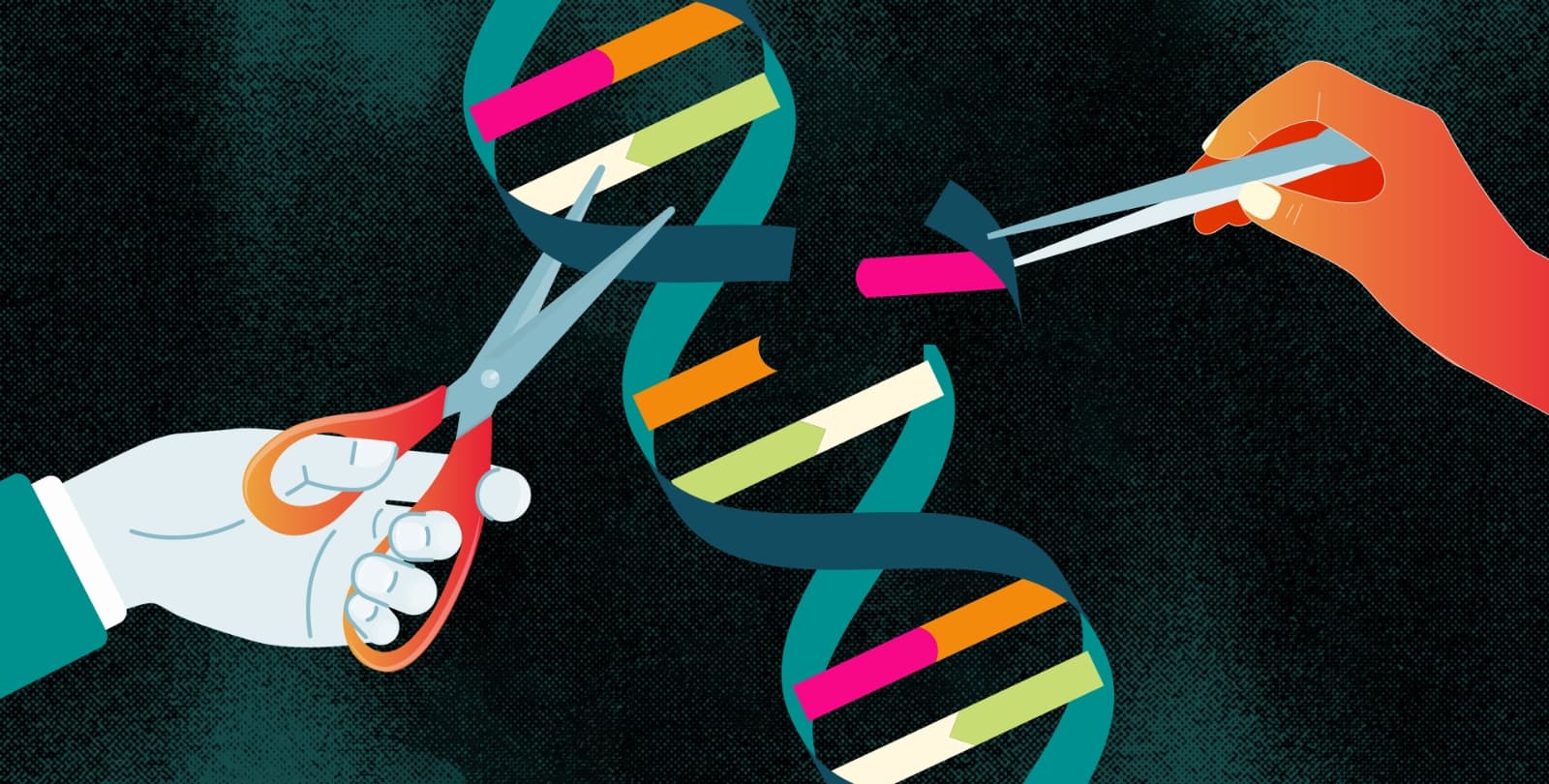
Who do we become if our power outpaces our wisdom?
Description
Who do we become if our power outpaces our wisdom?
Scientists studying bacteria discover something strange: a natural system that can recognize invading DNA and cut it out. What happens when humans learn to do the same?
A blind man volunteers for an experimental trial, hoping to regain his sight. A scientist conducts one of the most controversial experiments of modern science. And families discover a cure exists—but must survive the maze to reach it.
- Originally aired on March 27, 2026
- WithJesse EubanksandFaith Stults
Keep Exploring
If Wonderology sparked your curiosity, we’re here to help you dive deeper.
Explore articles, podcasts, and resources that expand on the ideas from this episode and connect them to the broader story of faith and science.
Discover More: Science, Faith, and Widsom
From genetics to artificial intelligence, we're challenged by technology whose power threatens to outpace our ability to use it wisely. In the resources below, we explore how our faith can guide the ways we choose to engage with these advancements.
Podcast Episode
Chase More of Life’s Big Questions
There’s always more to explore. Join BioLogos’ email list to receive new Wonderology episodes and other resources that spark awe and invite fresh discovery.
Explore More Big Questions
Curiosity doesn’t stop after asking just one question. Keep exploring how faith and science together help us find wholeness.
Common Question
Common Question

Common Question

Common Question
Transcript
President Clinton
With this profound new knowledge, humankind is on the verge of gaining immense new power to heal.
Francis Collins
It’s humbling for me and awe inspiring to realize that we have caught the first glimpse of our own instruction book previously known only to God. What a profound responsibility it is to do this work.
Antuan Sartin
We go to probably two and three appointments a week sometimes.
Jesse Eubanks
This is Antuan Sartin again. He’s talking about his daughter Callie.
Sartin
Five to six to seven, eight appointments a month.
Faith Stults
Sickle cell isn’t one problem. It’s a maze.
Eubanks
Morning meds, evening pills, blood work, paperwork, phone calls, insurance.
Sartin
I used to tell my guys at work, they’d be like, oh, he called in today.
Oh, he’s calling in today and I would tell them when I come back to work, I will quit this job in the heartbeat to be there for my child. I will quit today.
Stults
And eventually all those appointments, all those bills, all that daily care, it catches up.
Sartin
You’re on Medicaid to cover these expenses, but though it comes with a price to be on that you can’t work.
But, you know, there’s things that I would love to be doing and, you know, being a, a golf caddy, going into the field of training, going back to training athletes like I used to do, traveling the world, you know? But I can’t do those things because I’ve decided to make a financial sacrifice to make sure that I’m there for her at the drop of a dime.
Eubanks
Antuan can’t plan like other parents because with sickle cell, a normal day can flip.
Sartin
One day she can be fine, and then literally five minutes later she can be ill.
Eubanks
Each time you start to think, maybe we’ve turned a corner, maybe this is the stretch where she just gets to be a kid.
Sartin
But unfortunately, life just doesn’t work like that.
Eubanks
And after enough days like that, you start asking a different question. What if there’s a way out of this maze, a way to cure illness at the source?
Stults
In the last decade, an advancement in medicine emerged so profound, it changes what we think is possible. If the human genome is the instructions, this new technology is find and replace.
Eubanks
Tonight on Wonderology, part two of Owner’s Manual. We’ve learned how to read our DNA and now we’re learning how to rewrite it to see what it can heal, what it can alter, and whether the people who need it can access it.
Stults
We’re asking the question, who do we become if our power outpaces our wisdom?
Eubanks
I’m Jesse Eubanks, a storyteller and journalist.
Stults
I’m Faith Stults, a science educator.
Eubanks
So let’s get curious.
Once we learn to read the human genome, what power did that unlock?
Michael Kalberer
I was experiencing underwater sensations or things that I would look at would appear to be underwater.
Eubanks
Michael Kalberer was a kid when the world started looking different. Everything around him looked slightly submerged and the distortion, it did not go away. So, he was taken to a specialist.
Kalberer
Has anybody ever diagnosed you with a renal degenerative disease?
Stults
This was a prediction.
Kalberer
Borrowing medical advancements, you’re probably going to slowly and permanently lose your sight.
Stults
It didn’t take long for the world to fade.
Kalberer
I was officially labeled as legally blind at the age of 12.
Eubanks
Here he is talking to Fox Five, New York.
Kalberer
My central vision was very obscured, varying between a Q-tip and dime.
Eubanks
Even picking up a glass of water became difficult.
Kalberer
My visual field was so constricted that my muscles would tense up and I would tense up when I was trying not to spill it.
Eubanks
The story for people like Michael always ended the same way. But in 2020, that ending suddenly did not feel inevitable anymore.
Kalberer
I was coming home from a meal with a friend and I said, I see pink. And, she’s driving, she pulls over and she says, yeah, you see the sunset.
Stults
His vision, which had only ever run one way, had a chance to change course. How? The answer starts somewhere microscopic.
Eubanks
In the mid 2000s, scientists studying bacteria noticed short sequences in their DNA strands with no obvious function. At first, they seemed like meaningless repetition.
Stults
Until someone compared them to viral DNA. They matched fragments of viruses the bacteria had survived. The bacteria had taken mugshots.
Eubanks
Which meant that the bacteria weren’t just defending themselves. They were keeping records, a kind of genetic, most wanted list.
Stults
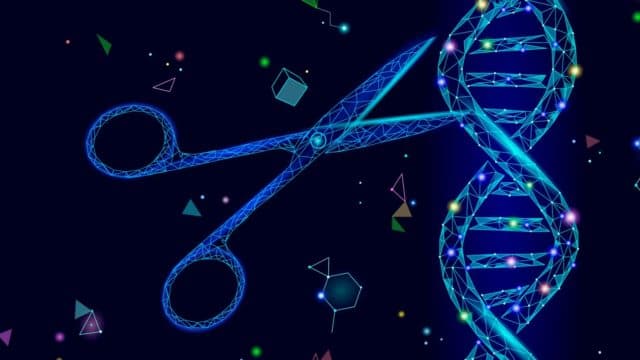
And when the virus returned, the bacteria hunted it down and cut it out with molecular scissors. A type of built-in protein that slices the virus right out of the DNA.
Eubanks
That system sat in petri dishes for years, but then in 2012, two researchers asked a different question.
Stults
What if you could guide those scissors? What if you could send them to any stretch of DNA?
Eubanks
So, they tried it and to their amazement it worked. And suddenly, DNA wasn’t just something we could read. It was something that we could change.
Stults
The tool became known as CRISPR.
MEDIA — PBS NEWS HOUR
It’s been called the Scientific Breakthrough of the Year, and a development that could revolutionize medicine. It’s all about a way of editing genes known as CRISPR.
MAYO CLINIC VIDEO
In a document, if we suspect we’ve misspelled a word, we can use the fine function to highlight the error and correct it or delete it. Within our DNA, that function is taken on by a system. Call CRISPR-Cas9.
Stults
A way to target a precise stretch of DNA.
Eubanks
Find it, cut it, and then let the cell repair the break.
Stults
For decades, if you found a mistake in your DNA, that was it. A typo in a book already printed. CRISPR changed that.
Eubanks
CRISPR’s been used to treat muscular dystrophy in dogs to edit cholesterol genes in monkeys and in humans to reprogram immune cells to fight cancer. But, these edits were done outside the body cells removed, edited, and then returned.
Stults
For Michael, the cells that need fixing are inside his eye. No one had ever used CRISPR directly inside a living human.
Eubanks
Michael volunteered.
Kalberer
This is a tremendous opportunity. What do I have to lose? Without this procedure I’m going to go blind anywhere.
Eubanks
In September, 2020, surgeons injected a solution beneath his retina.
Stults
Inside it were billions of harmless viruses carrying gene editing instructions. Then, they waited.
Eubanks
A few weeks later.
Kalberer
I remember a day in late September where I was able to see what I would describe as perceptible, just noticeable differences between the height of a sandwich and the height of potato chips on my plate. The underwater sensation is now gone in my right eye.
Stults
This is a reporter talking with Michael.
REPORTER
Do you see me now?
Kalberer
Yes.
REPORTER
What do you see?
Kalberer
Your hair, but I can’t see your facial face.
REPORTER
What color is my hair?
Kalberer
Brown.
REPORTER
You’re right.
Eubanks
As for getting something to drink,
Kalberer
I can grab it a little bit easier because my eyes relax my brain.
But if I don’t get a single thing more, I’ve already, I already consider, uh, victory.
Eubanks
For years, the line pointed one way and now it bends. We have become editors of our own instruction manual.
Stults
But, if we can change it, where’s the line?
Eubanks
By 2016, one scientist decided to see just what CRISPR could really do. He crossed a line that no one had crossed before. What he changed, we are still trying to understand. We’ll be right back.
Welcome back to Wonderology, Jesse Eubanks.
Stults
Faith Stults.
Eubanks
Before the break, we followed what CRISPR can do. At its best, a new kind of medicine, one designed around a person’s genes.
Stults
We have become people who can fix typos in our own instruction manual, but we may also have become people who can introduce them.
Eubanks
November, 2018. A video starts spreading online. A biophysicist in China is making an announcement.
MEDIA – JIANKUI HE – ANNOUNCEMENT
Two beautiful little Chinese girls named Lulu and Nana came crying into the world as healthy as any other babies a few weeks ago.
Eubanks
At first, it sounds ordinary, just a birth announcement. Twin girls, Lulu and Nana. But that’s not what shocks the scientific world.
MEDIA – CNN CLIP
A line has been crossed that should not have been crossed.
It’s very disturbing. It’s inappropriate.
Oh, this is huge.
Eubanks
Because Lulu and Nana weren’t just born. Their DNA had been edited before they were born.
Stults
And when people hear that: DNA edited before birth, the question is immediate.
What does that even mean?
Eubanks
To understand we need to go back.
Stults
Before the video, before the twins. Back to when Jiankui He is still young.
MEDIA – JIANKUI HE – ANNOUNCEMENT
Okay. Thank you. Uh, my name is Jiankui He uh, you call me JK.
Eubanks
2011. He is a postdoctoral researcher at Stanford. He looks young, nervous. Excited.
Stults
Because even then he’s imagining a future where biology isn’t just studied, it’s designed.
MEDIA – JIANKUI HE – ANNOUNCEMENT
And uh, only with that we could design real complex and useful organisms. Thank you.
Eubanks
Designing organisms. At the time, that sounds like the future.
Stults
But a few years later, CRISPR appears and suddenly the future is here.
Eubanks
By 2016, CRISPR’s everywhere labs use it to study disease dead cells to alter animals,
Stults
but their work is guarded by one clear line editing human embryos and implanting them to begin a pregnancy because that’s not treating a patient that’s altering the start. Of a human life
Eubanks
Around this time, He reaches out for advice from Stanford Bioethicist, William Herlbut.
WILLIAM HURLBUT – WORLD SCIENCE FESTIVAL
I realized very quickly that he did not have much of a background of thought on ethical issues, so I was trying to get to know him a little better. Seed in ideas and concern.
Eubanks
Herlbut believes embryos are the earliest stage of human life and he’s trying to slow He down. They meet, they talk for hours.
WILLIAM HURLBUT – WORLD SCIENCE FESTIVAL
I did not understand that he was pushing quite so fast.
Stults
He hears the caution, but he also has a story in his head. A story where he’s helping.
MEDIA – JIANKUI HE – ANNOUNCEMENT
They are needing me to help them to find a cure for the disease for themself or, for their next generation.
Eubanks
Years earlier, He walked through a place that made HIV feel like more than a diagnosis.
MEDIA – JIANKUI HE – ANNOUNCEMENT
I visit a vineyard in central province of China.
Eubanks
In the 1990s. People in that region sold blood for cash, but the collection process was not sterile. Needles were reused, blood pooled, and as a result, HIV spread.
Stults
So many people were infected that the area became known as an HIV village. A community of stigmatized outsiders.
Eubanks
He walks to it later. Meets families, meets kids.
MEDIA – JIANKUI HE – ANNOUNCEMENT
Even if they are healthy, public schools refuse to take them.
Eubanks
Healthy children shut out from an education, from a future. Not because they were sick, because HIV had touched their home.
Stults
They inherited the stigma.
MEDIA – JIANKUI HE – ANNOUNCEMENT
So that’s really sad and I wanna do something to change that.
Eubanks
So when CRISPR arrives, He starts thinking. What if you could stop HIV before a child is even born.
Stults
There’s a gene called CCR-5. Think of it like a doorway. HIV uses it to get inside cells, but a small number of people carry a mutation that shuts that door. They’re naturally resistant to HIV.
Eubanks
So He decides to recreate that mutation using CRISPR. In embryos.
Stults
And once you do it in an embryo, it’s not one organ. It’s every cell for the rest of that child’s life. And if they have kids someday, it passes on.
Eubanks
In 2017, He moves forward anyway. In secret, without public disclosure, without global consensus, without clear oversight.
Stults
His team recruits HIV, discordant couples. The father, HIV positive. The mother, HIV negative.
Eubanks
They’re told it’s part of an AIDS vaccine project. They’re offered free IVF where doctors fertilize an egg outside the body and then place the embryo in the uterus.
Stults
But here’s the ethical hinge. Modern medicine can already prevent HIV transmission to children. By sperm washing, antiretroviral drugs, the risk can be reduced to nearly zero. So this wasn’t a last resort. It was an upgrade.
Eubanks
But helping prevent HIV in children wasn’t the only motive.
WILLIAM HURLBUT – WORLD SCIENCE FESTIVAL
He was under a lot of pressure in the environment he’s in. He works in Shenzhen and there’s this concept called Shenzhen speed. Everything’s happening fast.
There’s lots of push for scientific discoveries and young scientists in China under pressure, as they are elsewhere.
Eubanks
CRISPR
Stults
They target CCR-5, but it doesn’t go according to plan. The edit doesn’t create the mutation expected. Instead of creating the known mutation, the repair process produces something new.
Eubanks
A version no human has carried before. A mutation, no one recognized something entirely untested in humans. He implants the embryos anyway.
WILLIAM HURLBUT – WORLD SCIENCE FESTIVAL
And I did not know that he had implanted embryos, although the last time I met him, I strongly suspected it.
Stults
A pregnancy begins.
Eubanks
October, 2018. Twin girls are born. He gives them pseudonyms.
MEDIA – JIANKUI HE – ANNOUNCEMENT
Named Lulu and Nana.
Stults
And this is the part that leaves scientists in shock. If something goes wrong, you don’t find out in a lab, you find out in a child.
Eubanks
Days after He releases his YouTube video, he travels to Hong Kong, the second international summit on human genome editing. Many of the people who built the field are in the room.
Stults
And now the person who used it on babies is walking to the microphone.
MEDIA – WSCethics
Please can you, um, allow him to, um, speak without interruptions.
Eubanks
You can hear the tension in the room.
MEDIA – WSCethics
Um, as I said, I have the right to just cancel the, the session if, if there’s too much, um, noise and interruption.
Eubanks
He paces behind the moderator. Then, he starts explaining what he did when he finishes the audience, presses him for answers.
MEDIA – AP ARCHIVE
So I think we still need to understand the motivation for the study and what the process was for informed consent and how the children will now be monitored.
And I don’t know the answers because we didn’t hear them today.
Stults
For years, the rule had been clear. Not yet.
Eubanks
Now the rule has been broken.
MEDIA – AP ARCHIVE
He didn’t answer properly most of the questions. In particular, the question about why was this worth doing? Was there any medical basis for doing it? I don’t think he answered that.
Eubanks
Within days, Chinese authorities shut the project down. His university distances itself, an investigation begins, and in December, 2019,
MEDIA – WION
The scientist has been sent to prison for three years.
Stults
He goes to prison. The twins disappear from public view and information about their health becomes tightly controlled.
Eubanks
But the real consequences didn’t go to prison because the babies already exist. Somewhere in China, Lulu and Nana are growing up with a genetic change that no human lineage has carried before.
Stults
And we don’t know yet what that will mean for them or for the children they may have one day.
Eubanks
And once you start thinking about this, the questions start getting much bigger.
Stults
For most of human history you got the child you got. Now, we can test embryos, rank genetic risk, choose which ones get implanted.
Eubanks
CRISPR pushes that frontier further from treating disease, to preventing disease, to potentially rewriting traits, and companies are already exploring that edge, offering what they call genetic optimization.
Selecting embryos, not editing them yet, but ranking them for predicted traits like height, eye, color, even cognition.
Stults
Critics call them designer babies.
Eubanks
But the combination of this type of selection, along with CRISPR’s ability to edit genes, offers a glimpse of where this leads. In the 1997 film, Gattaca, a couple sits with a geneticist discussing their upcoming pregnancy.
FILM – Gattaca
You have specified hazel eyes, dark hair, and fair skin. I have taken the liberty of eradicating any potentially prejudicial conditions: uh, premature baldness, myopia, alcoholism, and addictive susceptibility, uh, propensity for violence. Obesity.
Stults
The parents hesitate. Removing disease is one thing, customization is something else.
FILM – Gattaca
You want to give your child the best possible start. Believe me, we have enough imperfection built in already. No, your child doesn’t need any additional burdens. And keep in mind, this child is still you, simply the best of you. You could conceive naturally a thousand times and never get such a result.
Stults
Ray Bradbury once said, “science fiction is really sociological studies of the future.”
Eubanks
After serving three years in prison, He was released in April of 2022. He now lives in Beijing. His passport is confiscated. He holds no formal academic appointment. But, he says he has returned to gene editing research. This time? On mice, not humans.
Stults
He insists he was simply ahead of his time. Meanwhile, Lulu and Nana remain out of public view.
Ha has also said a third child was born later. The health of the children has never been publicly confirmed. So this isn’t just a story about one scientist crossing a line. It’s a story about what happens after.
Eubanks
Because now the power is real. And after you watch someone use it recklessly in a way that wasn’t necessary, you start thinking about the people who actually need it.
So we have to ask another question.
Stults
In Scripture, wisdom isn’t just knowing what we can do, it’s knowing the right thing to do. In a complicated moment when a technology can rewrite the code of life, who gets access to that power?
Eubanks
Stay with us.
Wonderology, Jesse.
Stults
Faith
Eubanks
CRISPR can edit DNA,
Stults
find genetic errors, fix them.
Eubanks
So now we ask when a cure becomes possible, who actually gets what?
Seavers
I ain’t trying to brag.
Eubanks
Rebecca Seavers actually loves bragging on her children and grandchildren.
Seavers
But my baby’s, he’s, he’s, can I say it? He’s smart. Yeah. You gotta meet ’em.
Eubanks
Rebecca has three children and two grandchildren with sickle cell. She has lived inside the maze.
Seavers
My daughter Jessica’s in the hospital. One lung fully collapsed and the other one partially. It’s called acute chest.
Stults
Acute chest syndrome. It can turn deadly.
Eubanks
Jessica had been in the hospital for weeks. One morning, a doctor questioned why Rebecca wasn’t there more.
Seavers
And the doctor accused me of not being there.
Eubanks
Rebecca had been sleeping at the hospital every night, but she also had other kids at home.
Seavers
Girl, who you talking to? I ain’t got the luxury having a husband as a doctor like you, get outta my face. I’m here every night. I spend the night and I get up at six in the morning and go home to the West End.
I go home and I got seven other kids I gotta take care of. And if I don’t make sure these other two kids get their medicine, they’re gonna end up here.
Stults
She wished she could be there around the clock, but that wasn’t realistic.
Seavers
Because I got to work baby, I ain’t on no section eight and no food stamps. I gotta work.
Eubanks
The doctor saw absence, but Rebecca was holding a family together.
Seavers
I apologized. I was so mad, and so I got in trouble. So I have learned to be more polished and be calmer.
Stults
Rebecca knows the system speaks one language. Families speak another, and if you don’t know how to speak it, your child pays the price.
Eubanks
So Rebecca learned how to translate. Today, she’s the executive director and president of the Sickle Cell Association of Kentuckiana.
Seavers
I love it. It’s really my calling
Stults
Now, she’s the one families call when the system stops making sense.
Seavers
They’re having problems at the hospital. They feel like their loved ones are not getting all the narcotics they’re supposed to be getting, sitting in the ER rooms longer than what they should be. NIH guidelines are, you know, the first 30 minutes they should be seen.
Stults
She knows the guidelines, the doctors, the tone you have to use, the emotional pain.
Seavers
My oldest daughter was telling me how lonely it is at the hospital.
Stults
And now there’s something new inside the system.
MEDIA – News Clip
The FDA has just approved a groundbreaking treatment, a cure for sickle cell disease that uses gene editing technology.
Eubanks
In 2023, more than a century after sickle cell was first identified, there is finally a cure.
Stults
Doctors remove a patient’s blood stem cells. In the lab, cRISPR edits them so they produce healthy hemoglobin. Then those cells are returned to the body.
Eubanks
Over time, they begin producing healthy red blood cells. The pain crises stop for the first time in history, a person with sickle cell can live without it. But reaching that cure is not simple.
Stults
Months of preparation, transfusions, clearances, then chemotherapy to wipe out the patient’s bone marrow.
Eubanks
Finally, a transplant. Weeks in the hospital, months of recovery.
Seavers
It’s a year outta your life.
Stults
A year away from work, a year of appointments, a year where someone has to stay with you every step of the way.
Eubanks
And the price,
Seavers
and it’s millions of dollars,
Eubanks
typically more than $2 million. Insurance may cover the treatment.
Stults
But not the rent, not the car payments. Not 12 months without income.
Seavers
I had a guy, “can y’all pay my rent for 12 months?” No, we can’t. I’m sorry. They feel like they’re by themselves. They don’t feel like anyone’s there for ’em. They don’t feel like anyone understands them.
Stults
So Rebecca makes sure they’re not.
Seavers
That’s the most disheartening thing about it, especially when someone’s trying to cure their child but you can’t even help to the magnitude, you know they need it.
Eubanks
The cure exists, but reaching it still means navigating a very complicated system.
Sickle cell helped launch the age of molecular medicine, the first disease ever traced to a single broken molecule. The discovery that helped open the door to modern genetics.
Stults
And now, that same science is turning back to face the disease that helped start it.
Sartin
I truly think gene therapy is the game changer. Yes, there is a risk, but there’s also a reward.
Stults
Antuan says Callie wants the treatment.
Sartin
I’ve been through the whole process. I mean, we approved for it and everything.
Eubanks
But they haven’t started yet. First, the doctors have to decide if Callie’s body is ready.
Sartin
Are they gonna have enough blood that’s compatible with her blood type?
Stults
Her immune system makes compatible blood rare.
Sartin
We don’t have enough. People not donating blood.
Eubanks
For years, the maze has been surviving the disease. Now, the maze is getting to the cure. But, Antuan has been living toward this moment since Callie was born.
Sartin
They’ve never seen a father come prepared the way I’ve come prepared. I think about the worst case scenario, but at the same time, I trust the process and I lean on my Lord and Father to guide me through it.
Stults
Now that trust leads somewhere it never led before: a consultation for a treatment that didn’t exist when Callie was born.
Eubanks
This month, Antuan and Callie head to Cincinnati to see if she is finally ready to begin her treatment.
Stults
Your journey into wonder doesn’t have to end here. If today’s episode sparks something in you, we’ve got more.
Eubanks
Check out Science With Faith, our exclusive after show where Faith unpacks the deeper layers of science and faith behind each episode.
Stults
Or dive into everything from nothing. Our special miniseries hosted by Jesse, exploring evolution and Christian Faith.
Eubanks
Both are free and waiting for you at wonderologyshow.com. That’s wonderologyshow.com. Special thanks to Antuan Sartin, Michael Kalberer and Rebecca Seavers. Learn more about the Sickle Cell Association of Kentuckiana by visiting the SKKY.org. Some of the audio in this episode comes from interviews with NPR, Fox Five New York, Eye On the Cure and Mass Eye and Ear. Additional thanks to Matt Stevens. Wonderology is a production of Christianity Today in partnership with Bio Logos.
Stults
It’s hosted by Jesse Eubanks and Faith Stults. Today’s episode was written by Jesse Eubanks with Faith Stults. Science, fact checking and guidance from Faith Stults, Jim Stump and Colin Hoogerwerf.
It was produced by Jesse Eubanks. Our associate producer is Mckenzie Hill. Music by Jesse Eubanks.
Eubanks
Editing by Rachel Akers, post-production by Wind Hill Studios with sound design, scoring, mixing, and additional story editing by Mark Henry Phillips. Additional music by Mark Henry Phillips and Blue Dot Sessions.
Stults
Eric Petrik is the executive producer of CT Media Podcasts. Matt Stevens is our senior producer.
Eubanks
Wonderology is generously funded by the John Templeton Foundation. Explore the profound questions of life that inspire awe and wonder by visiting templeton.org.
Stults
If you enjoyed this episode, send it to a friend.
Leave us a rating and review to help more people find the show.
Eubanks
God invites us to experience the awe of all these made, both the known and the not yet known. So let’s get curious.