In Rural Villages, Science Restores Land and Reveals God’s Goodness
When families in rural villages use science to strengthen the resilience of their farms, they draw closer to God through his creation.

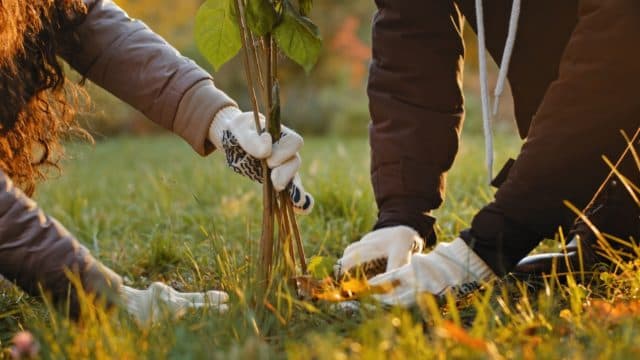
Faith in Tanzania prepares bagged seedlings to be used in reforestation efforts. Image provided by Plant With Purpose. Credit: Plant With Purpose / Floresta Tanzania
This story is part of BioLogos’ Science is Good initiative – a campaign inviting Christians to affirm science as a God-given gift for living faithfully.
Discover more about how science can help draw us closer to God through our Science is Good dashboard.
When brought together, faith and science are powerful partners for living well in God’s world. Few things exemplify this better than caring for creation.
Acts of conservation bring us face to face with nature’s mysteries and wonders, stirring a deeper reverence for our Creator.
At the same time, caring for creation also shapes how we can serve human communities faithfully. This is especially important as we face an ongoing climate crisis that often places the greatest burden on the world’s most vulnerable people.
Christians have long understood creation as a way God self-reveals. In the words of the psalmist, “The heavens are telling of the glory of God; and their expanse is declaring the work of His hands.” (Psalm 19:1).
God speaks to humanity through Scripture and the life of Jesus, and what we learn about God through nature is in perfect harmony with that message.
At its best, science is the organized effort to pay close attention to what God is already saying through creation.
The Apostle Paul echoes this in Romans 1:20: “For since the creation of the world, God’s invisible qualities–his eternal power and divine nature–have been clearly seen, being understood from what has been made, so that people are without excuse.”
In other words, creation itself points to God with enough clarity to make God accessible to all.
At its best, science is the organized effort to pay close attention to what God is already saying through creation.
It’s a way of carefully noticing God’s glory. When we engage science with humility, curiosity, and reverence, it is a ready springboard to worship.
Nowhere is this clearer than in the rural villages where the Christian environmental organization Plant With Purpose helps farming families restore their land and livelihoods. For families in these areas, science is both a tool to strengthen the resilience of their farms and a way to encounter God more deeply through his creation.
Faith and science bear witness in remote places
Where might science draw us closer to God?
Classrooms, laboratories, and research institutions can all be arenas for worship. But just as important are places far removed from formal centers of learning—like rural villages.
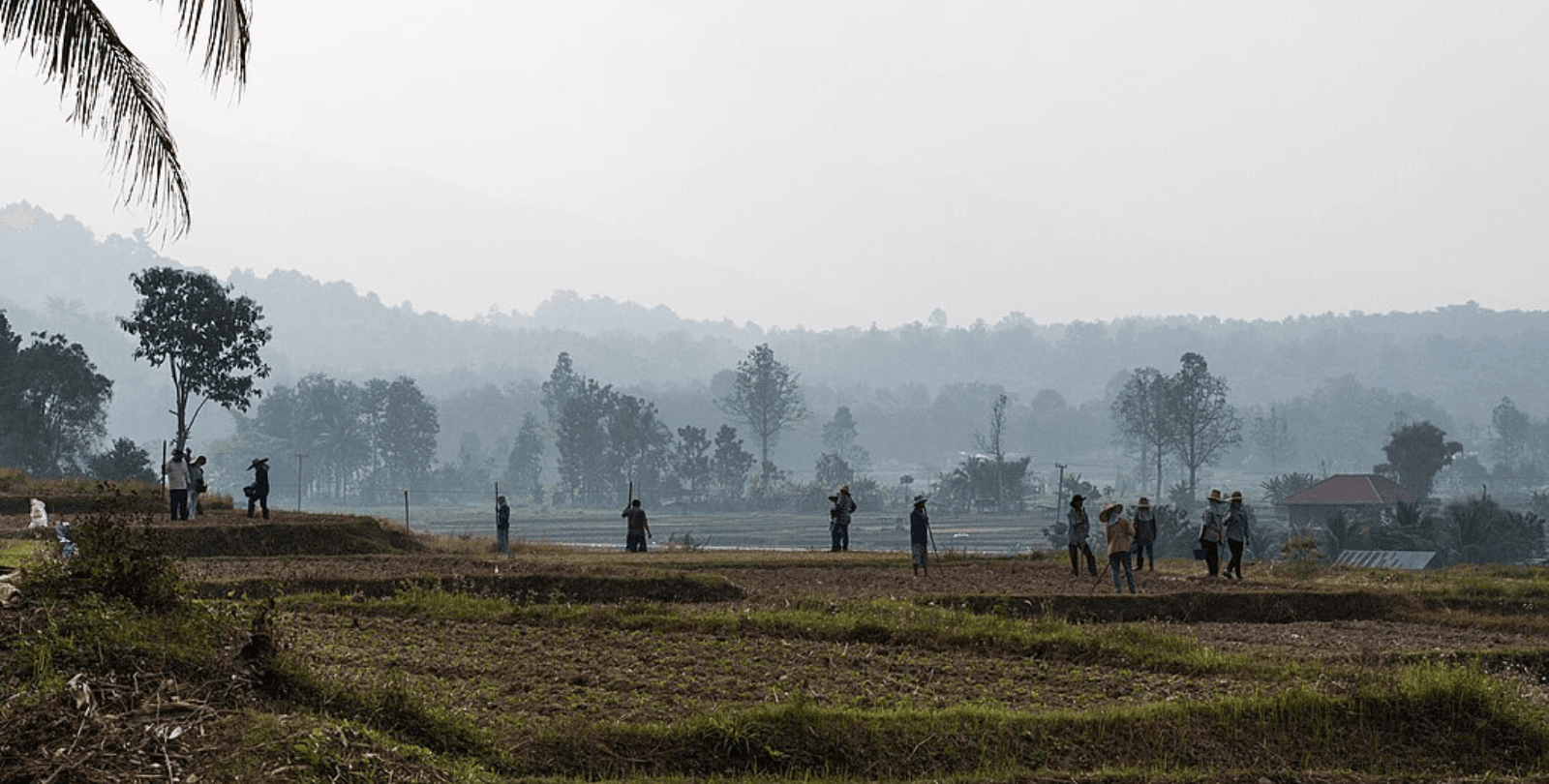
Takeaway, CC BY-SA 3.0 <https://creativecommons.org/licenses/by-sa/3.0>, via Wikimedia Commons
Poverty is widespread in these settings, where many people must work as subsistence farmers to survive. While churches may be active centers of community life, pastors and church leaders often have little formal training.
These are the spaces where Plant With Purpose partners with farming families.
Plant With Purpose’s work lies directly at the intersection of faith and science. Its process is built on a scientific understanding of soil health, watershed dynamics, crop diversity, and regenerative agriculture. But at the same time, its work is driven by the conviction that the stewardship of creation has been entrusted to humanity.
Science—and its ability to reveal God’s glory—is not locked behind academic walls in the villages of Haiti, Burundi, or Thailand. It is lived out daily on people’s farms as families contend with depleted soil, deforestation, and the harsh realities of climate change.
Lived experiences contribute to scientific understanding
Plant With Purpose bases its regenerative farming techniques on agricultural science, drawing solutions from research on soil, erosion, forestry, and biodiversity. These approaches are put to the test via regular empirical monitoring and evaluation.
Yet the farmers who put this knowledge into practice are not just passive recipients of outside instruction, but active contributors to its development.
They add to our understanding through their observations of weather patterns. They preserve generational knowledge of native plant species. Their daily interactions with the land shape a kind of citizen science.
The lesson from this is clear: People’s daily interactions with their environment can help solve pressing challenges.
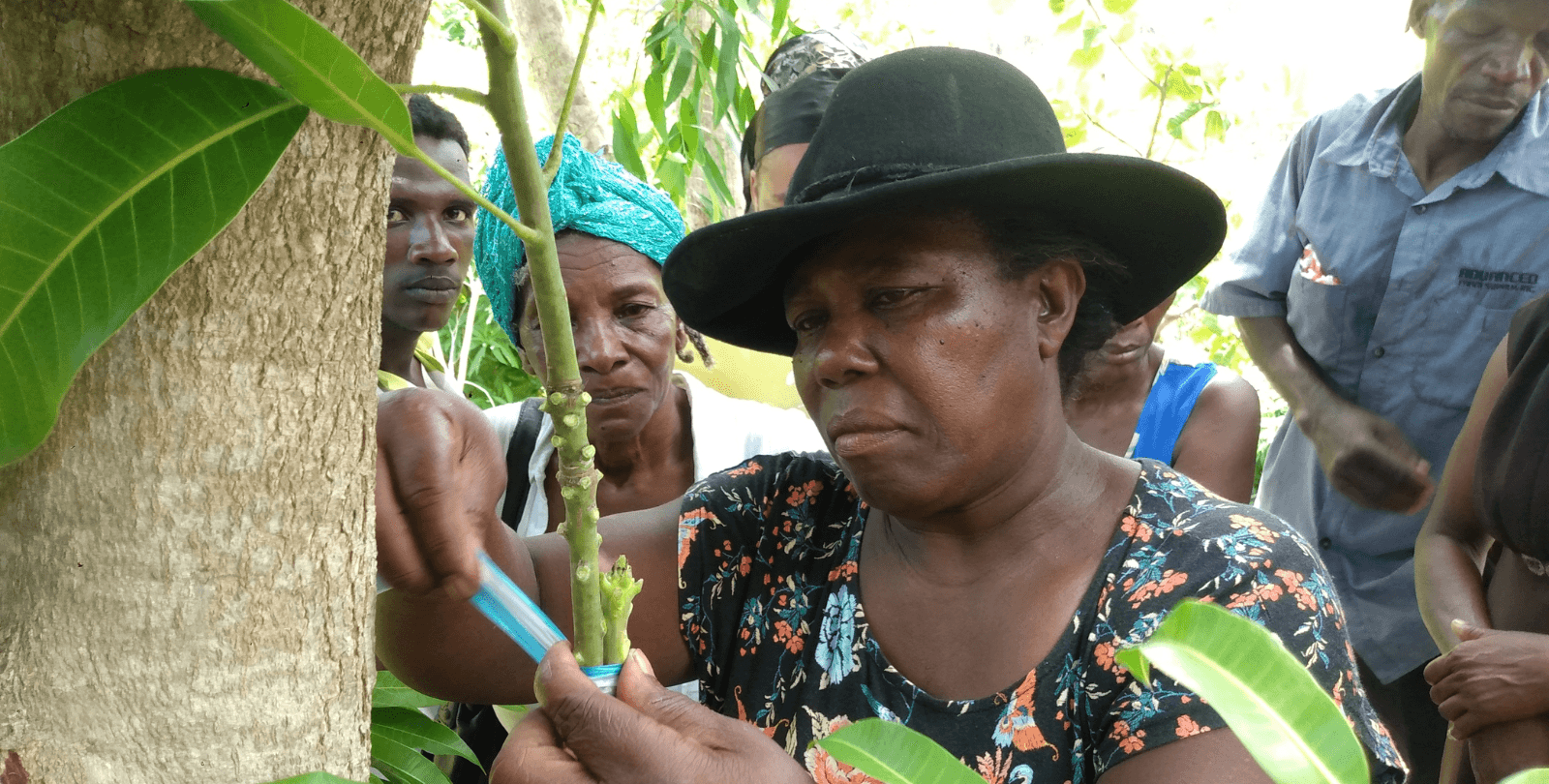
Anese in Haiti puts into practice recently learned tree grafting techniques. Image provided by Plant With Purpose. Credit: Plant With Purpose/Floresta Ayiti
These same farms also lie on the frontlines of climate change, where its effects are felt more acutely. Rising temperatures and unpredictable weather patterns mean that planting seasons shift, rains arrive late, and pests spread in ways that are hard to control.
Their intimate understanding of these changes plays a crucial role in complementing and enriching scientific inquiry.
Grassroots laboratories build resilience and deepen faith
When you think of a laboratory, what do you see? You probably imagine people in lab coats working in a sterile room, peering through microscopes and carefully measuring liquids in test tubes.
But that’s only one kind of lab. When farmers in rural villages come together to improve their techniques, they form grassroots laboratories that investigate God’s creation.
Plant With Purpose supports these grassroots labs through community-centered learning spaces called Farmer Field Schools.
As part of the program, a group of neighbors might meet on a hillside farm to observe how crops grow differently under varying soil treatments. They may strategize on how to prevent wildfires, map their watersheds, and experiment with new techniques. They learn from each other’s successes and failures.
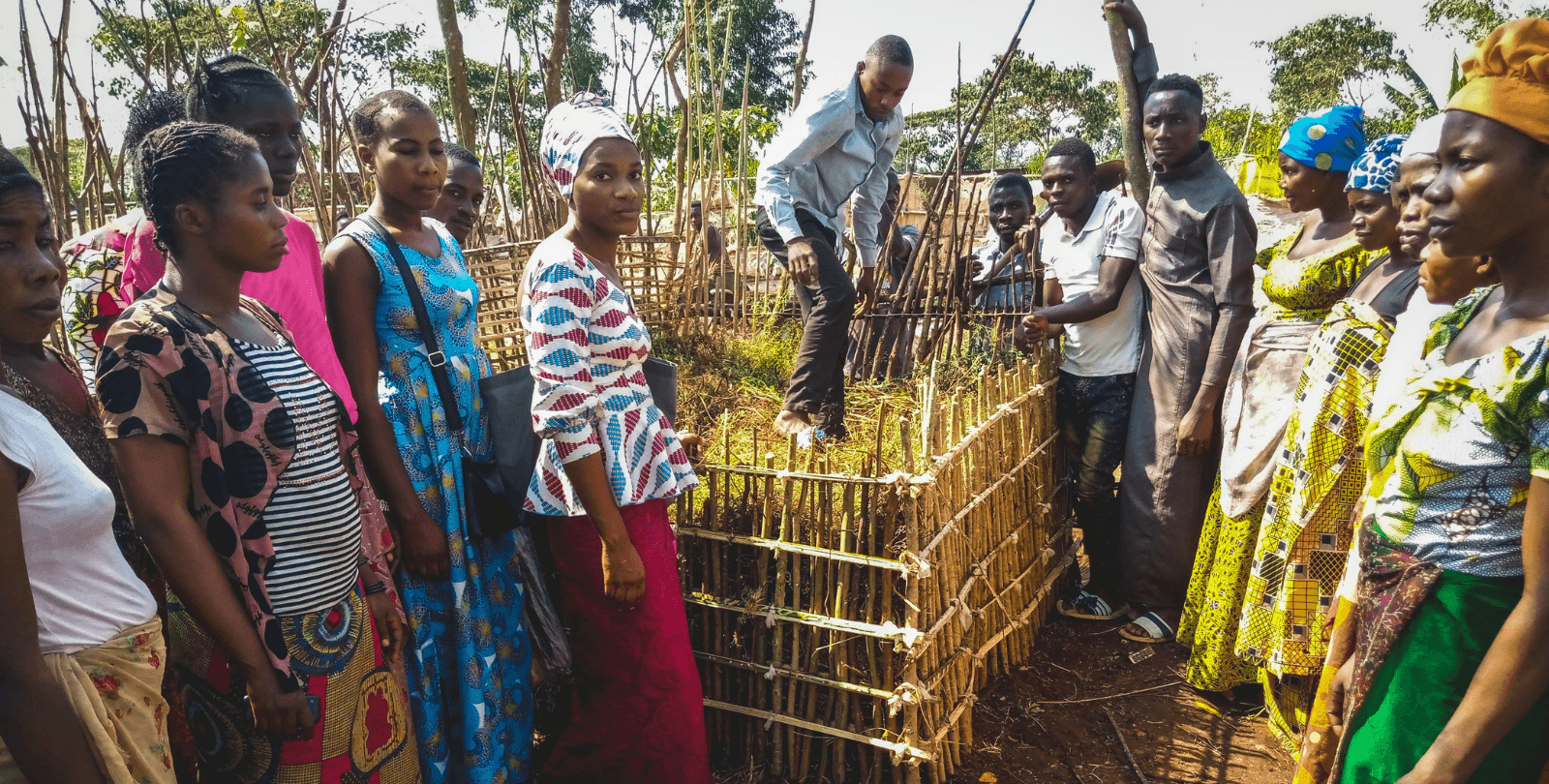
A farmer field school in Ngovi, DR Congo meets to exchange regenerative farming knowledge. Image provided by Plant With Purpose. Credit: Plant With Purpose/Eben-Ezer Ministries International
As this happens, many farmers also experience a deepening understanding of God.
Susan from Thailand shares that “what God has created is full of beauty and very important to our lives. But nature has been damaged. We can see things like climate change and other challenges that reflect environmental degradation.”
“God created everything on Earth and gave it to humans to take care of,” she notes.
This blending of faith and science has profound spiritual implications.
As community members restore their soil, plant trees, and protect water sources, they take part in God’s ongoing work of creation. Putting their hands to work becomes an act of praise.
[Science] reminds us that God is not reserved for those who have completed an education, but that God’s glory is woven into the fabric of creation itself.
For example, in Haiti, Nadége has seen rivers dry up, hillsides stripped of their trees, and crops fail. But she has also engaged with science and faith in a practical manner.
“Nature taught me God is wonderful because everything is important in creation,” she says. “When I am taking care of the trees in my yard, I feel that God is always present in my life.”
This is why science is a powerful tool for proclaiming the goodness of God to all people, including those on the margins of society. It allows them to see it, and then to experience it in their lives. It breaks down barriers of privilege and geography, inviting all to ask questions and to listen to creation’s testimony. It reminds us that God is not reserved for those who have completed an education, but that God’s glory is woven into the fabric of creation itself.
Science is Good
Science helps us serve others and better understand God's world. As distrust rises, stand with us in affirming that Science is Good.
Science is not just a technical exercise, but an act of worship.
Whether we’re mapping distant galaxies or making compost in a Farmer Field School, science shows us God’s glory.
In today’s world, rural farmers experience a high degree of uncertainty. But they also often have an unobstructed view of the harmony of faith and science, seeing it result in restored land and better livelihoods.
Science’s proclaiming of God’s goodness is not limited to classrooms or cities. It reverberates across the hillsides and farmlands of the Congo, Mexico, and beyond. It passes through the hands of those who till the soil, and it displays the glory of God to the most remote corners of the earth.
About the author

Philippe Lazaro
Related resources
If you enjoyed this article, we recommend you check out the following resources:

Podcast Episode



Podcast Episode
Podcast Episode