Five Amazing Creatures in God's Creation
The beauty of God's creation can be glimpsed in some of the wonderful creatures that inhabit it.
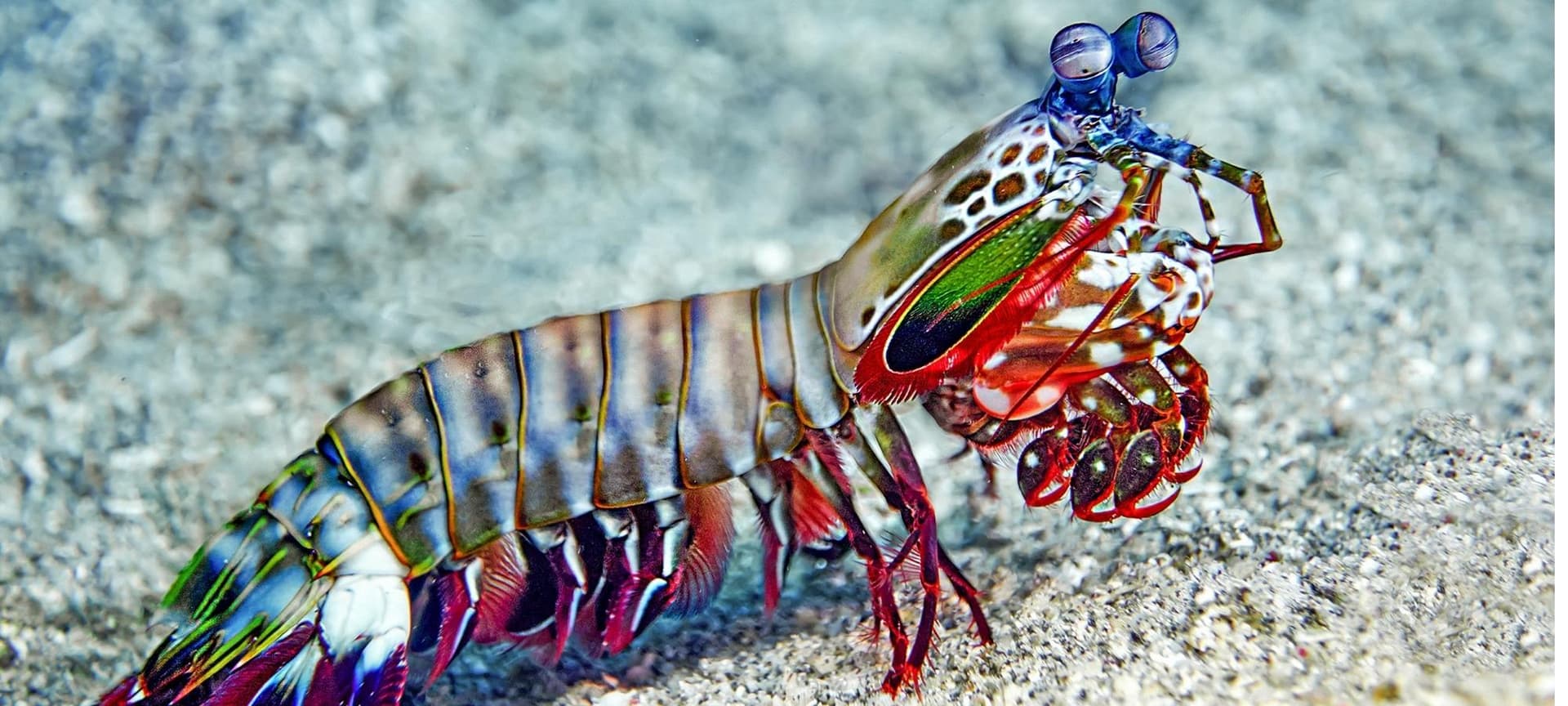
Photo by Dorothea OLDANI on Unsplash
The mantis shrimp
Deborah Haarsma, BioLogos President
My favorite creation is the mantis shrimp (pictured above), which is neither mantis nor shrimp, but a relative of crabs and lobsters.
There are over 500 species of mantis shrimp, ranging from less than an inch to over a foot long. They are fearsome predators: some species decimate crab or clam shells (even aquarium glass!) with superfast punches.
Its hunting prowess is impressive, but what I marvel at most is its vision. The human retina contains three types of cone cells, which detect wavelengths of light that we perceive as red, blue, and green. Some mantis shrimp have sixteen types of color-receptive cones, allowing them to see ultraviolet wavelengths invisible to us. Also amazing: each compound eye is divided into three parts allowing for trinocular vision, and they are mounted on stalks that can move independently!
I can imagine God saying to Job, “Behold, the ancient mantis shrimp, which sees things invisible to you and stalks the seabeds with heat in its fists!”
Do you see God’s glory in this amazing creature?
The brook trout
Dr. Rick Lindroth, Vilas Distinguished Achievement and Sorenson Professor, University of Wisconsin-Madison (Member of BioLogos Voices)
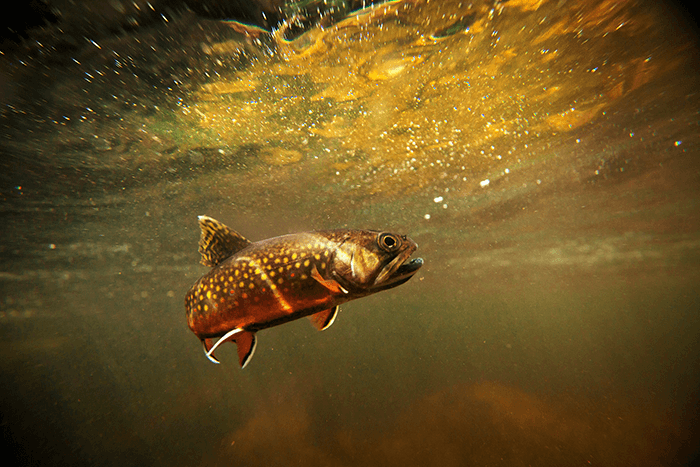
Photo provided by author.
They are stunningly beautiful yet virtually invisible. They are boldly aggressive and lightning fast. They are exceedingly secretive and uniquely sensitive. They are other-worldly. They are brook trout.
Salvelinus fontinalis: the little salmon that lives in springs. It’s the only native stream trout east of the Rocky Mountains.
I love them for what they are. Arguably the most beautiful fish in North America, their color patterns tell the story of evolutionary selection over millions of years in crystal clear water. Their backs are patterned with vermiform (wormlike) markings of green that, in rippling water, make them nearly imperceptible to predators above. Their flanks are dotted with gold speckles and red spots surrounded by blue haloes, all against a backdrop of green that is separated, by an orange and black band, from their snow-white undersides. Brook trout are territorial; their bright colors facilitate aggressive defense of feeding stations and enhance access of males to reproductive females.
To hold a brook trout in one’s hands is to cradle beauty vivified.
Brook trout are among the most cold-demanding of North American fish. Following the retreat of the last continental glacier 10,000 years ago, their range is now restricted to the cleanest, coldest waters of mountain headwater streams and Great Lakes spring creeks. Their pursuit requires time spent in pristine environments.
I love them for who I become in their presence. In the pursuit of brook trout, my scientific mind, artistic soul, and athletic body converge to the rhythm of a four-count beat. I move naturally, effortlessly, at the pinnacle of mindfulness. The world is reduced to the confluence of air, stone, and water. Liquid grace.
And, on occasion, I am treated to a completely inordinate amount of pleasure by winning a battle of wits with a creature whose brain is the size of a pea.
The jewel feathered micro-dinosaur
Sarah Bodbyl Roels, evolutionary biologist and Senior Researcher, Michigan State University (Member of BioLogos Voices)
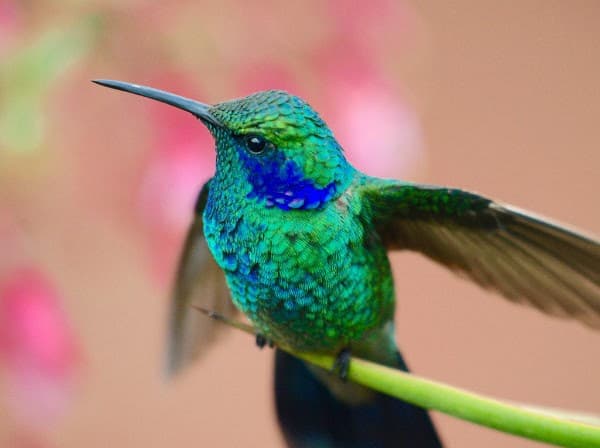
Photo provided by author.
My favorite creations are hummingbirds – all 300+ species! Who can resist their jeweled colors, incredible flight acrobatics, and outsized personalities?
Hummingbirds are found in an impressive variety of climates, from dry tropical islands to the peaks of the Andes above 4,500m. Some have miniature species distributions to match their small stature: Juan Fernandez Firecrowns only occur on a tiny island off the coast of Chile. Others cover huge swaths of land; Rufous Hummingbirds may fly 6,500 kilometers from Mexico to Alaska and back each year. What an achievement for a 2–5 gram bird fueled by mostly flower nectar.
Yet I tell you that not even Solomon in all his splendor was dressed like one of these.– Matthew 6:29
Unfortunately, there are no Bible verses about hummingbirds because the biblical authors would never have seen one; they live only in the Western Hemisphere. Most humming birds are clothed with iridescent plumage, earning them striking names like Green-bearded Helmetcrest, Frilled Coquette, and Hyacinth Visorbearer. Iridescence comes from microscopic structures that reflect and refract light like a prism, which makes the colors brilliant.
I imagine if the writer of Revelation was familiar with hummingbirds, the emerald-hued rainbow surrounding the heavenly throne in chapter 4 might have been described like the flash of a hummingbird in sunlight.
In addition to flash, hummingbirds have plenty of dash. They hold records for extreme bird flight acrobatics. They have been recorded zipping along at 97 km/h, they rotate their wings in a figure-eight pattern up to 80 times per second — faster than the human eye can register — and they are the only birds able to fly backwards and sideways. This fast-paced helicopter life comes with a high metabolic cost; hummingbirds must drink their weight in nectar daily to survive. This is the caloric equivalent of a human eating roughly 300 hamburgers each day!
Hummingbirds have a variety of bill shapes to fuel their fast-paced lives, each telling an evolutionary story. Sword-billed Hummingbird bills are longer than their bodies and are used to access nectar in flowers that are so long, only the special bill can reach. Buff-tailed Sicklebills have strongly decurved bills. Like the Sword-billed, the flowers they forage from perfectly match their bill shape. Both plants and hummingbirds benefit from these flourishing coevolutionary relationships.
Whether experiencing their brilliant colors and dazzling aerial displays, or pondering their specialized characters, hummingbirds are awe-inspiring.
I see God in these jewel-feathered micro-dinosaurs, do you?
The heart-stopping wood frog
David Buller, Program Manager, BioLogos
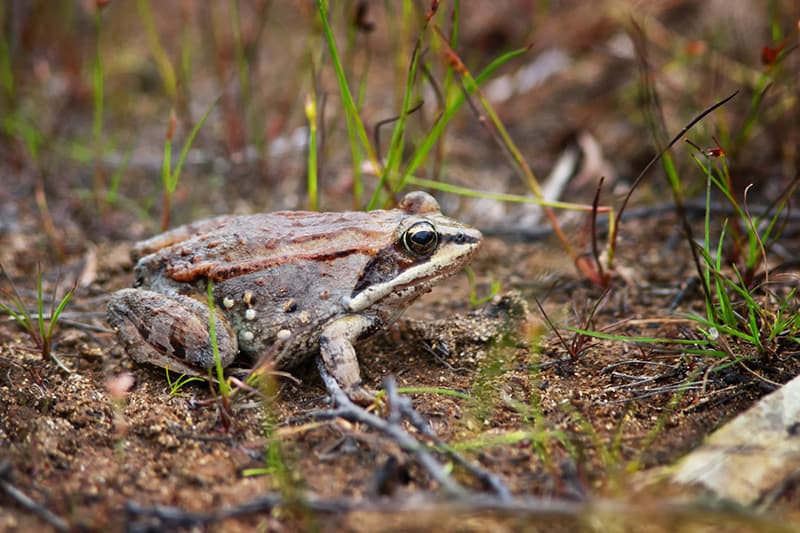
Photo provided by author.
I’d have a hard time picking my favorite creation, but one thing’s certain: When it comes to surviving winter, my hat’s off to the lowly wood frog.
The wood frog, whose range extends from the mid-Atlantic all the way to Alaska, endures winter by burrowing down a bit beneath the soil – and freezing solid. It’s a stunning survival adaptation that the frogs prepare for by protecting key body areas with natural antifreeze chemicals, while allowing up to two-thirds of their bodies to simply turn to ice.
For upwards of 8 months of the year, their blood, skin, muscles, and many other tissues are frozen. Their heartbeats cease. They do not breathe. And then when warmer weather finally comes, the frogcicles thaw out and begin hopping around, getting a reproductive head start on the other frog species that are still dormant (but unfrozen) beneath the icy surface of ponds.
Wood frogs likely evolved relatively recently, perhaps adapting pre-existing amphibian mechanisms for surviving dry periods.
When I see a wood frog, I’m grateful that God created through evolution, an ongoing inventive process to fill every changing niche on earth with myriad forms of life.
In Genesis, God called for the waters to teem with life on Day 5 and the earth to produce land animals on Day 6, and not even an icy winter keeps the overachieving wood frog from checking off both those boxes. “Very good” indeed, I’d say!
The little armored one
Kathryn Applegate, Resources Editor, BioLogos
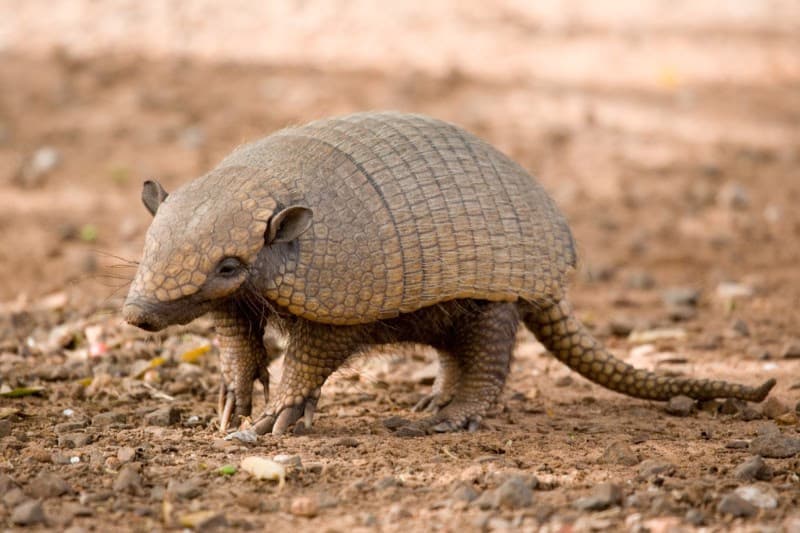
Photo provided by author.
- Armadillos are the only living mammals that sport armor. Their name means “little armored one” in Spanish.
- All 21 species alive today can be found in South America, from the pink fairy armadillo (3 oz.) to the giant armadillo (over 100 lbs.). The nine-banded armadillo is the only one found in the U.S.
- The nine-banded armadillo can jump vertically 3-4 feet in the air (their propensity to do this when surprised by an approaching vehicle is the reason they so often end up as roadkill.)
- They can hold their breath underwater for up to six minutes.
- Nine-banded females almost always give birth to four genetically-identical babies of the same sex.
- A 2016 study of ancient DNA confirmed that the giant armored glyptodont is most closely related to the armadillo. The glyptodont was the size of a small car and became extinct at the end of the last ice age.
They may be a pain to golf course owners across the Southwest, and they may not fit our standard definitions of loveliness. But I’m glad God made armadillos—the world is made more interesting by their very presence. They are part of his very good creation.
About the authors

Deborah Haarsma

Richard Lindroth
Rick Lindroth (Ph.D., University of Illinois-Urbana) is a Vilas Distinguished Achievement Professor of Ecology (Emeritus) and former Associate Dean for Research at the University of Wisconsin-Madison, and a Distinguished Fellow of The Lumen Center (Madison, WI). His research focused on evolutionary ecology, global change ecology, and trophic dynamics in forest ecosystems. He has been a Fulbright Fellow and is an elected Fellow of the American Association for the Advancement of Science (AAAS), the Ecological Society of America, the Entomological Society of America, and the American Scientific Affiliation. Funded by grants from the National Science Foundation, U.S. Department of Agriculture, and other agencies, Rick and his research group have published nearly 250 journal articles and book chapters. Rick currently works at The Lumen Center, a community of scholars working at the intersection of Christianity and culture. He speaks to public and faith-based groups about creation care, environmental stewardship, climate change, biodiversity, and science denialism/communication. Rick serves on the Board of Directors for A Rocha USA and is a member of the BioLogos Voices speaker’s bureau. He and his wife have two daughters and four grandchildren. For recreation, they enjoy road cycling, flyfishing, hiking and reading – though not necessarily in that order.

Sarah Bodbyl Roels

David Buller

Kathryn Applegate
Related resources
If you enjoyed this article, we recommend you check out the following resources:

Podcast Episode
Cool Creatures | Ferns